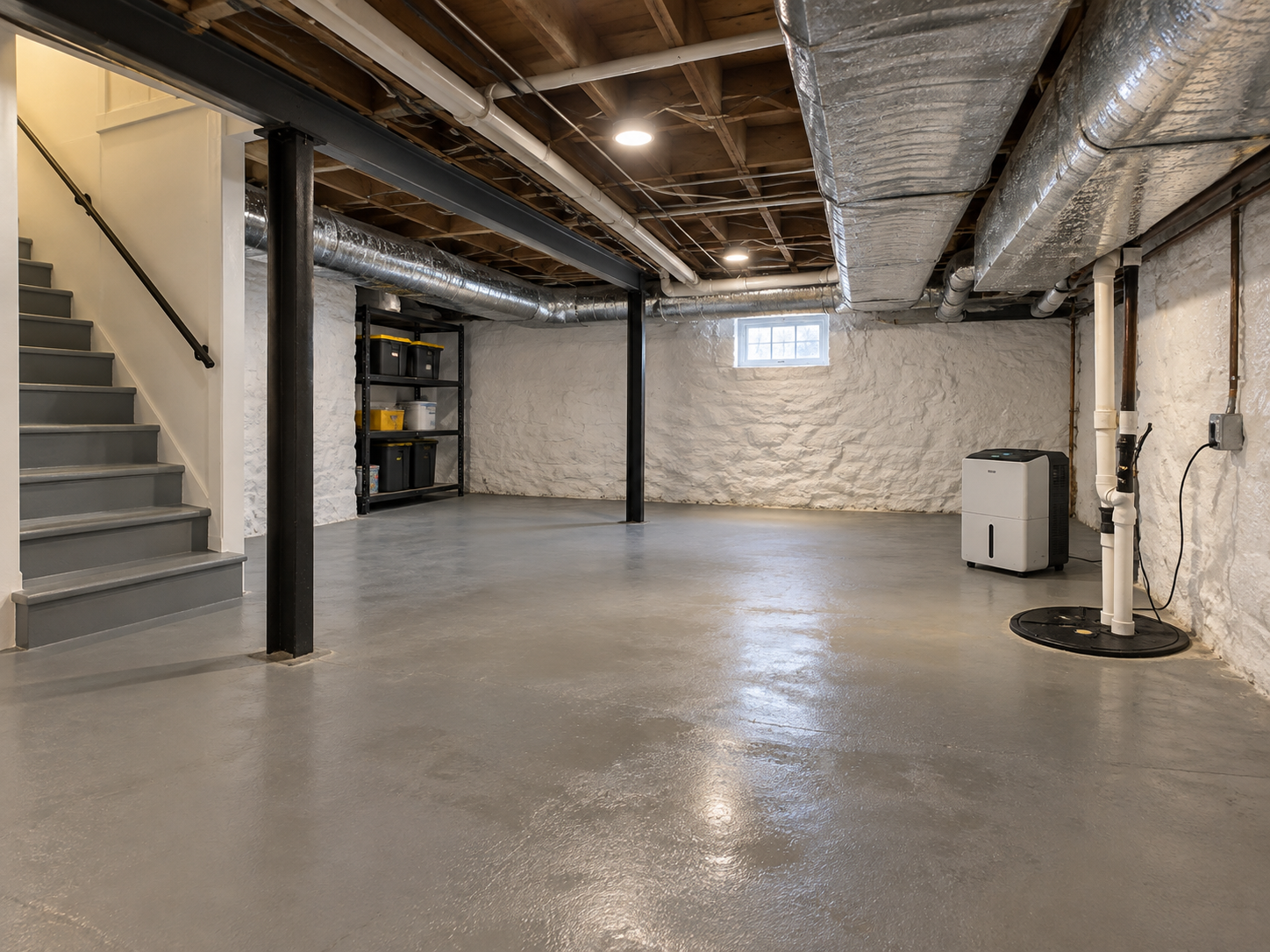
To winterize your basement in Massachusetts, focus on the four things that actually cause winter floods: a sump pump discharge line that freezes, a power outage that shuts the pump off, snowmelt dumped right against the foundation, and a pump nobody has tested since spring. Take care of those before the ground freezes and you’ve handled most of the risk. Here’s how to check each one, and when it’s time to call someone.
Why Winter Is Hard on Massachusetts Basements
Most people think of a wet basement as a spring problem. In New England, winter is usually what sets it up.
Once the ground freezes, water can’t soak into the yard the way it does in October. Snow piles up against the foundation and sits there for weeks. Then comes a thaw, or a winter rainstorm on top of frozen ground, and all that water runs across the surface looking for the lowest point. Too often, that’s your basement wall.
Cold does its own damage too. Water that gets into a small crack or a soft mortar joint freezes, expands and pushes it open a little wider. After a few rounds of that, a hairline crack that never leaked can start letting water in.
And the storms that bring the most water are the same ones that knock out power, right when your sump pump needs to run.
Test Your Sump Pump Before the First Freeze
A sump pump can sit quietly for months and seem fine. The only way to know it works is to make it work.
Lift the cover off the pit and slowly pour in a five-gallon bucket of water. The float should rise, the pump should kick on, empty the pit and shut itself off. Then pay attention to what happens next.
- If the pump doesn’t start, or hums without moving water, it needs attention now, not in February.
- If it keeps running after the pit is empty, the float switch may be sticking.
- If you hear water rushing back into the pit after it shuts off, the check valve on the discharge pipe probably isn’t holding.
- Grinding, rattling or a burning smell usually means the motor is on its way out.
While the cover is off, look at the pit itself. Silt, gravel and debris around the float are a common reason pumps fail. Check the age of the pump too. Many start to give out somewhere around seven to ten years, and replacing one on a calm fall afternoon is a lot easier than doing it in the middle of a thaw.
If the test turns up a problem, or you’d rather have a professional handle it, that’s exactly what our sump pump maintenance and inspection service is for. When a pump is past saving, we also do sump pump installation and replacement.
Keep the Discharge Line From Freezing
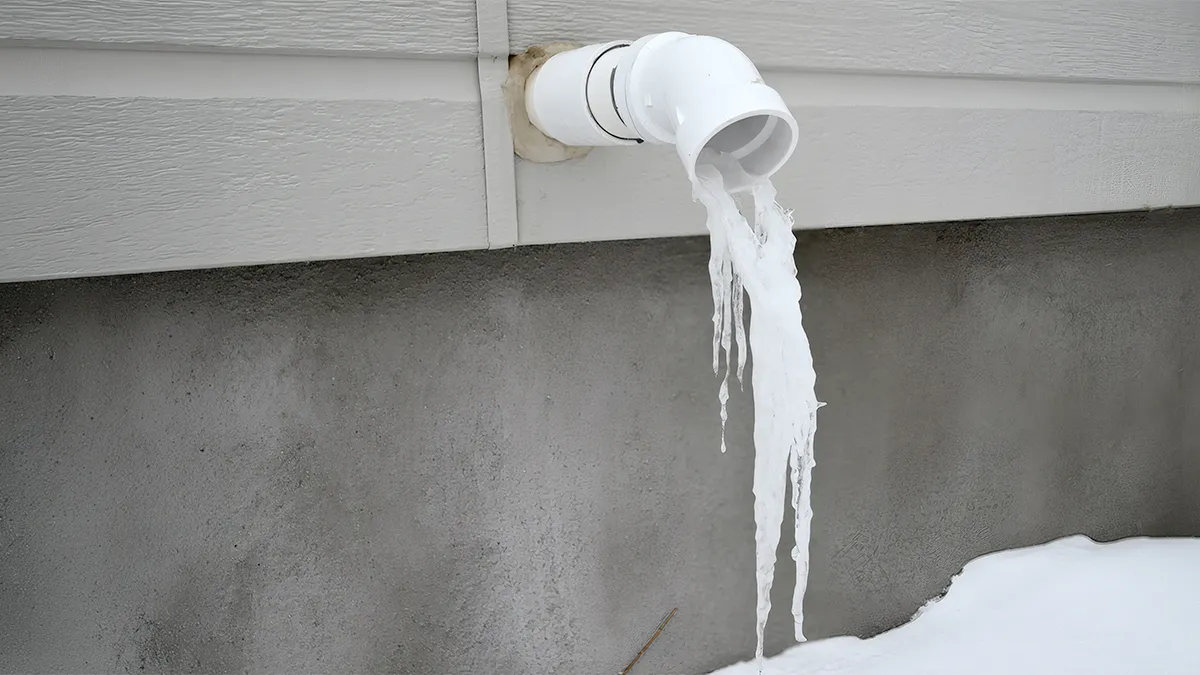
This is the one that catches people off guard. Your sump pump pushes water through a pipe that runs outside. If that pipe has a low spot where water sits, or its outlet ends up buried under snow and ice, the line can freeze solid.
The pump has no way of knowing. It turns on, pushes against a blocked line and keeps running until it overheats or the pit overflows. It tends to happen at the worst possible time, during a thaw right after a cold snap, when the pump has the most water to move.
A few things help:
- Make sure the line slopes so water drains out of it between cycles.
- Keep the outlet clear of snow, and don’t let a plow pile or a shoveled bank land on top of it.
- Add freeze protection, so one frozen section doesn’t shut the whole system down.
That last one is what Freeze Flow Protection for Sump Pumps is for. It gives the water a way out near the house if the line farther out freezes, so it doesn’t back up toward the pump. And if you ever find a frozen discharge line, don’t go at it with a torch or any open flame. Call us instead.
Plan for the Power Going Out
Nor’easters, ice storms and heavy wet snow bring down power lines every winter in Massachusetts. A standard sump pump plugs into the wall, so when the power goes, so does your protection. Outages also tend to come with exactly the kind of weather that fills a sump pit: rain on snow, or a sudden melt.
A battery backup sump pump system puts a second pump in the pit that runs on its own battery. If the power fails, or the main pump quits for any reason, the backup takes over on its own. How long it runs depends on the battery and how often the pump has to cycle, which is why the battery needs a yearly check like everything else.
A portable generator can keep a pump going too, but only if someone is home to start it and keep it fueled. A battery backup works while you’re at work, asleep or away for the weekend.
Move Snowmelt Away From the Foundation
Every bit of snow that melts off your roof ends up somewhere, and a downspout that empties right next to the house sends it straight to the foundation. Winter makes it worse. The water pools, freezes, thaws and soaks down along the wall, over and over.
Plastic extensions help until they get buried, crushed by a snowblower or kicked aside, which in a Massachusetts winter takes about a week. Before the snow starts:
- Clean the gutters once the last leaves are down, so meltwater actually reaches the downspouts.
- Check that every downspout drains well away from the house.
- Look at the grading. The soil next to the foundation should slope away from it, not toward it.
Underground downspouts solve the extension problem for good. The water runs through buried pipe to a spot well away from the foundation, with nothing on the surface to trip over, shovel around or lose under a snowbank.
Close Up the Paths Water Already Uses
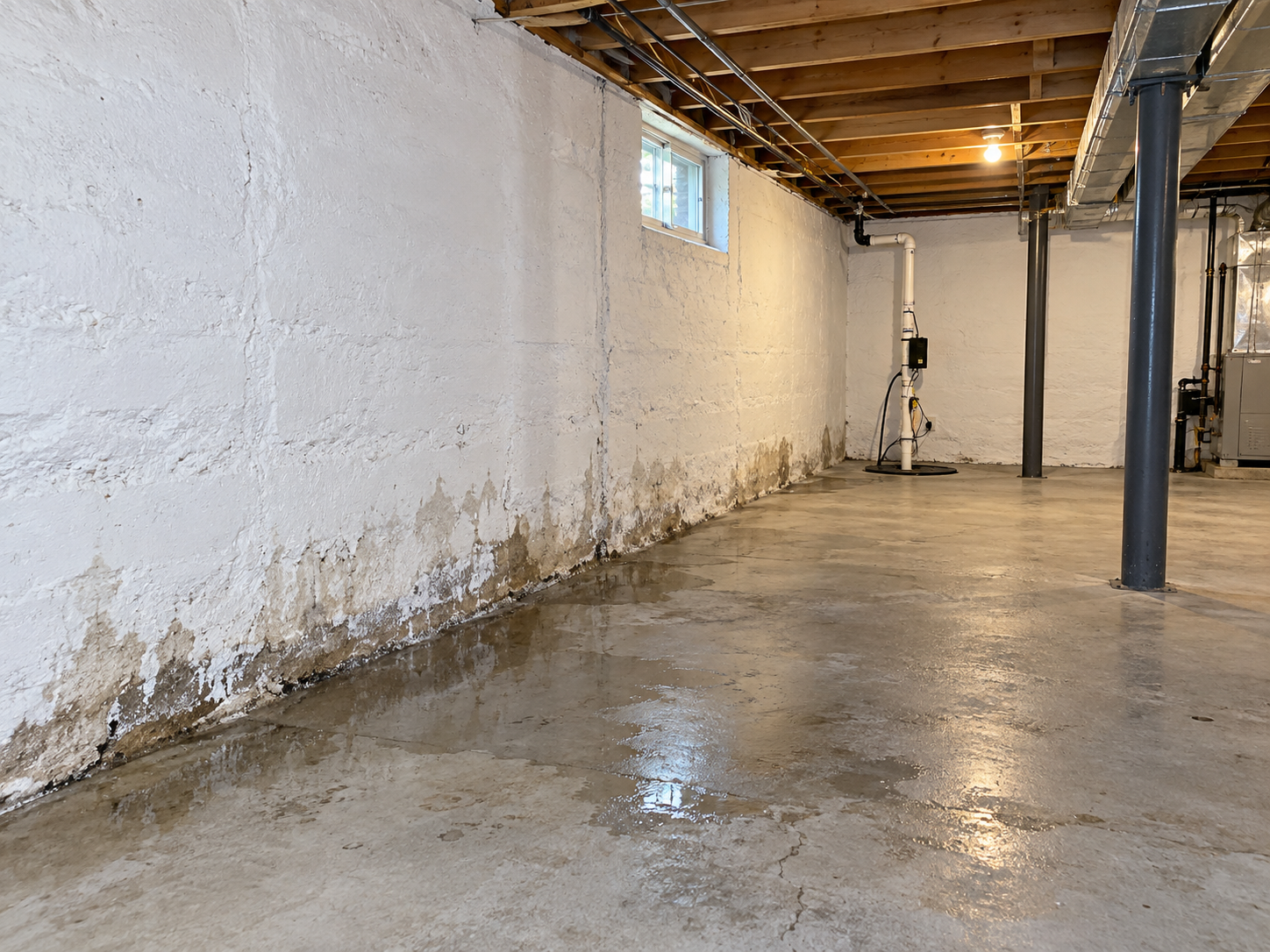
Before winter, walk the basement with a flashlight and take an honest look at the walls. You’re looking for new cracks, damp lines, white chalky residue (efflorescence, which water leaves behind as it moves through masonry) and mortar that feels sandy or crumbles when you touch it.
Here’s a simple trick: mark both ends of any crack with a pencil and write the date next to it. If it’s longer by spring, you know it’s moving.
A lot of older homes around here sit on fieldstone foundations, and their mortar joints take a beating from freeze and thaw. If you’re finding loose or missing mortar, fieldstone foundation repointing is usually the fix. Cracks in poured concrete walls are a different job, handled by our foundation crack repair service. And if water is already getting in, look at interior basement waterproofing before the snow starts to melt.
Our guide to foundation cracks goes into more detail on which ones to worry about.
If Your House Has a Crawlspace
A vented crawlspace pulls cold outside air under your floors all winter. That means cold floors, pipes that are more likely to freeze and damp air that rises into the house once things warm up. Crawlspace encapsulation seals the space off from outside air and ground moisture, which helps with all three.
Quick Checks to Do During the Winter
Winterizing isn’t a one-day job. A few minutes after big weather goes a long way:
- After a storm, clear snow away from the sump pump outlet and the ends of your downspouts.
- During a thaw or a winter rain, look in the pit. The pump should cycle on and off, not run nonstop.
- If the pump runs constantly and the water level won’t drop, suspect a frozen discharge line.
- Test the backup pump alarm once in the middle of the season.
- Check the pencil marks on any cracks.
If you’d like someone to go over your pump, discharge line and foundation before the ground freezes, call us at 508-498-1090 or request an inspection online. We’ve been keeping basements dry across Central and Eastern Massachusetts for more than 25 years, and a visit before winter costs a lot less than a flooded basement in February.