Introduction
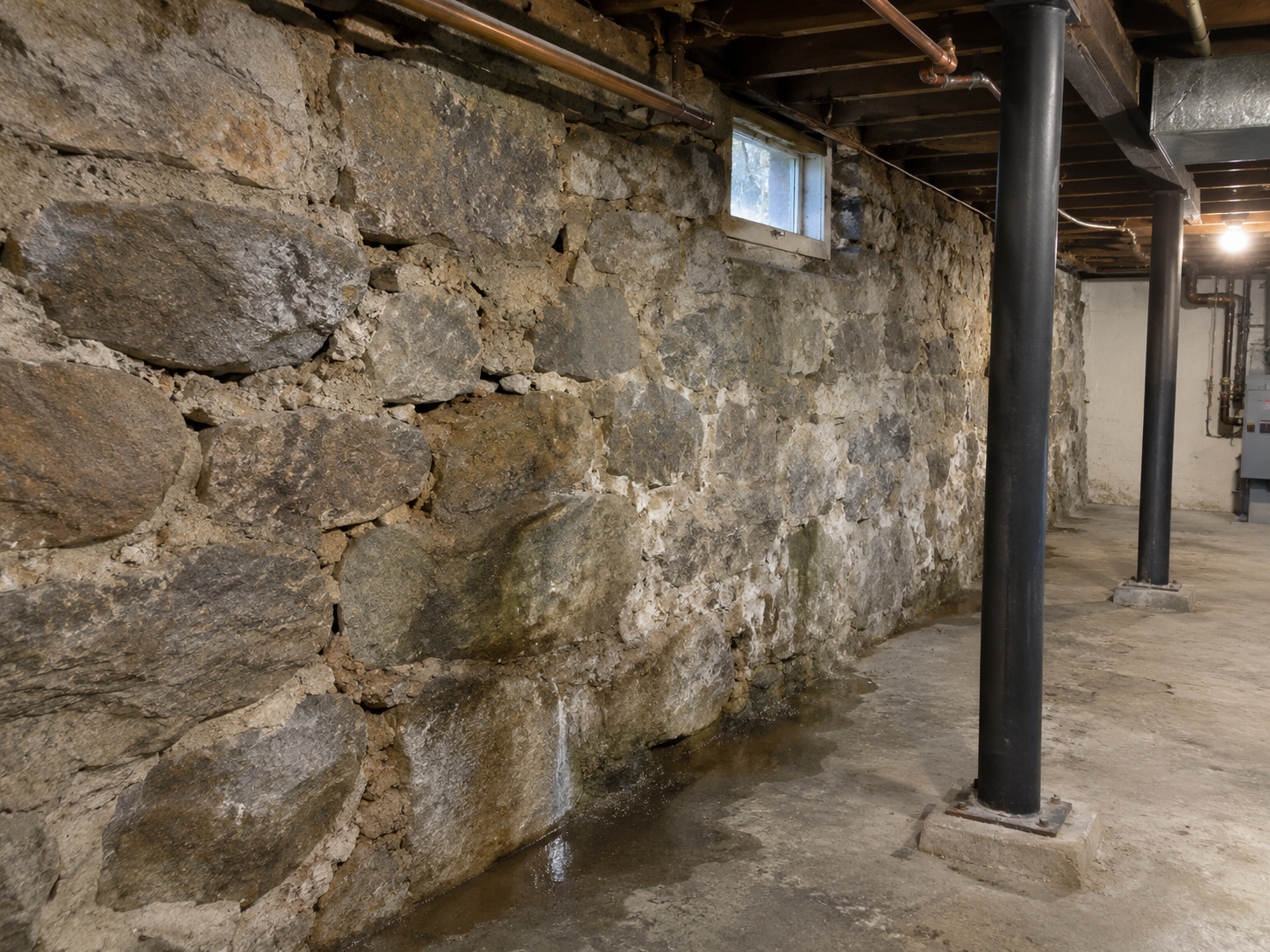
Yes. Crumbling mortar between fieldstones can create open joints that allow moisture to move through an older foundation. However, dampness may also come from groundwater, runoff, cracks, or humidity. Proper fieldstone foundation repointing in Ashland begins by identifying both the mortar condition and the true water source.
Author: All Pro Basement
Updated: November 4, 2026
In an older fieldstone wall, the mortar is doing much more than filling the visible space between stones.
It helps form a continuous masonry system around stones that naturally vary in size and shape.
When that mortar begins turning to powder or disappearing from deep joints, the wall may become more vulnerable to moisture and further deterioration.
Can Crumbling Mortar Let Water Through a Fieldstone Foundation?
Yes. Deteriorated joints can create pathways where moisture enters or moves through the masonry.
However, the mortar may be only one part of the problem.
If heavy rain repeatedly saturates soil outside the foundation, even well-repaired masonry may continue experiencing significant moisture exposure.
That is why fieldstone foundation repointing in Ashland should be considered together with drainage and groundwater conditions.
Why Is Mortar Important in a Fieldstone Foundation?
Mortar fills irregular spaces between stones and helps the wall function as one masonry assembly.
It also reduces open voids where air and moisture can move freely.
Because fieldstones are not uniform masonry units, some joints may be much wider or deeper than others.
Their condition can therefore vary across the same wall.
Why Does Mortar Between Fieldstones Deteriorate?
Mortar can deteriorate gradually because it is exposed to moisture, temperature changes, movement, and age.
Repeated wetting and drying may contribute to erosion over time.
Freeze-thaw conditions can add additional stress when wet masonry is exposed to freezing temperatures.
Poor drainage can also keep sections of a foundation wetter for longer periods.
Can Massachusetts Freeze-Thaw Cycles Damage Mortar?
They can contribute to deterioration.
Water in masonry joints may freeze when temperatures fall.
As seasonal conditions repeatedly change, wet masonry can experience additional stress.
However, freeze-thaw exposure is not the only reason mortar fails.
Age, water management, previous repairs, and masonry movement should also be considered.
What Are the Signs That Mortar May Need Attention?
Mortar deterioration can appear in several ways.
Common clues include:
- Mortar turning to powder
- Deep or recessed joints
- Pieces falling onto the floor
- Visible gaps between stones
- Loose joint material
- Damp or darkened masonry
- Efflorescence
- Moisture after heavy rain
- Small stones becoming loose
These symptoms do not automatically mean the foundation is structurally failing.
They indicate that the wall deserves a closer inspection.
Why Is Mortar Falling Onto My Basement Floor?
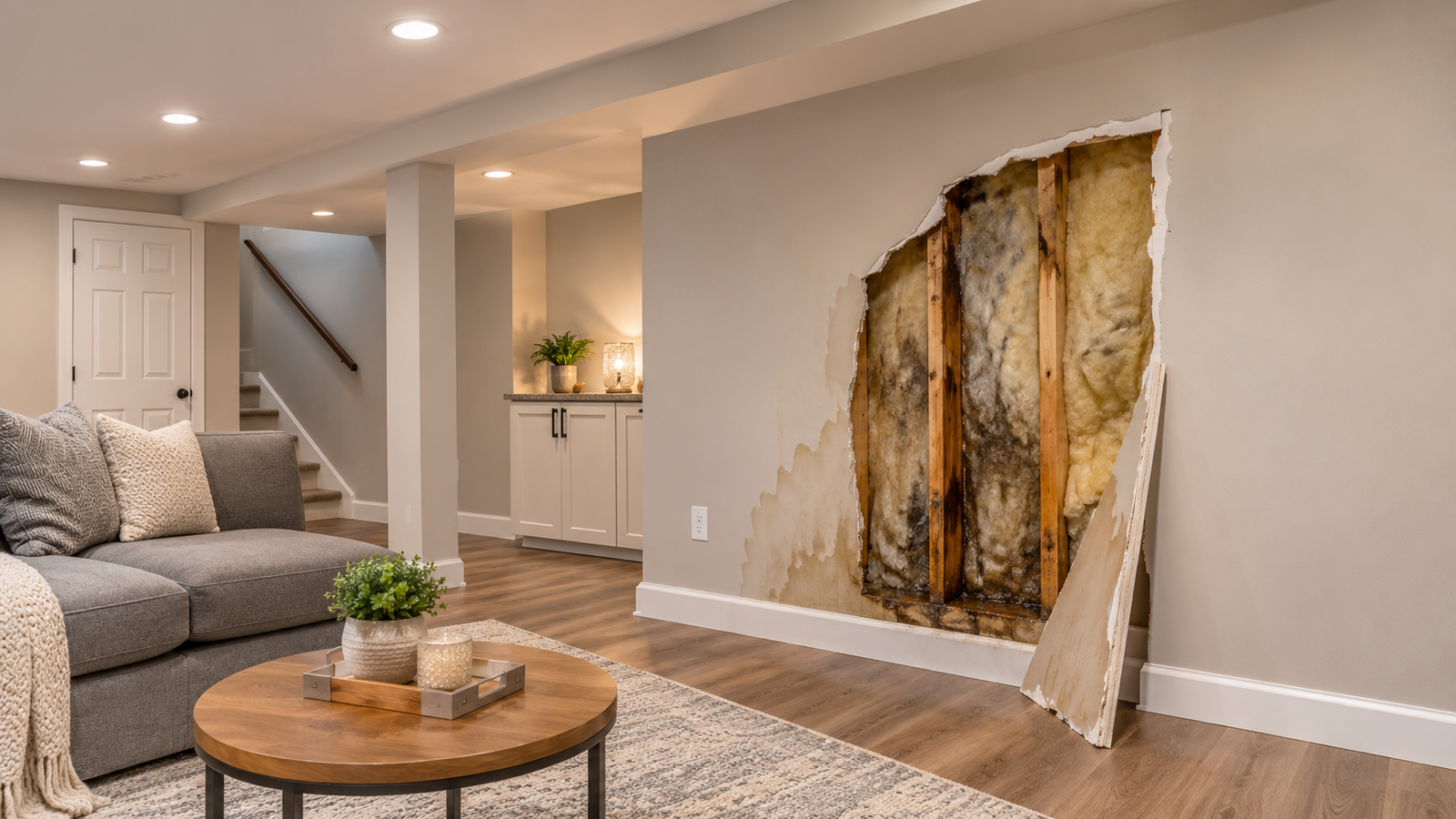
Small piles of sandy or powdery material near a fieldstone wall can come from deteriorating mortar joints.
The mortar may gradually loosen and fall from deeper areas between stones.
The amount, location, and condition of nearby joints help determine whether localized repair or broader repointing should be considered.
Can I Test Crumbling Mortar by Touching It?
Light observation may reveal obviously powdery surfaces, but homeowners should avoid aggressively scraping or removing material from an older masonry wall.
Some joints may be deeper or more important to surrounding stones than they appear.
A professional inspection can evaluate hardness, depth, loose areas, and previous repairs without unnecessarily disturbing the masonry.
Does Crumbling Mortar Mean the Stones Are Also Failing?
Not necessarily.
The mortar can deteriorate while the fieldstones remain relatively sound.
Stone deterioration and mortar deterioration are separate conditions, although they can occur together.
A professional should inspect both materials before deciding what repair is appropriate.
What Is the Difference Between Mortar Wear and Structural Movement?
Mortar wear generally involves deterioration of the joint material itself.
Structural movement may involve changes in the position or shape of the wall.
Bulging, significant displacement, changing cracks, or multiple loose stones can justify additional structural evaluation.
Powdery mortar alone does not prove that the wall is unstable.
Why Can Small Mortar Gaps Matter?
Small surface openings may connect with larger voids deeper inside an irregular fieldstone wall.
That can provide additional pathways for moisture.
However, the visible gap does not reveal everything happening inside the joint.
Proper evaluation considers depth, surrounding stones, moisture staining, and the condition of the remaining mortar.
What Is Fieldstone Foundation Repointing?
Repointing is the repair of deteriorated mortar joints using replacement mortar suited to the existing masonry.
It is more involved than covering old joints with a thin cosmetic layer.
The existing joint condition must first be assessed.
Preparation depth and replacement material should be appropriate for the wall rather than treated as a one-size-fits-all repair.
Why Is Mortar Compatibility So Important?
Replacement mortar should work with the existing stone and older masonry system.
Stronger is not automatically better.
The National Park Service advises that repointing mortar for historic masonry should generally be softer and more vapor permeable than the masonry units.
It should also be as soft or softer than the historic mortar where appropriate.
National Park Service Preservation Brief 2: Repointing Mortar Joints in Historic Masonry Buildings
Can Mortar Be Too Hard for Older Masonry?
Yes. An excessively hard or incompatible mortar can change how stress and moisture move through the wall.
The National Park Service warns that inappropriate hard mortars may contribute to deterioration of surrounding historic masonry.
This is why fieldstone foundation repointing in Ashland should not rely on a universal mortar mix.
The replacement material should be selected for the actual masonry being repaired.
Why Is Surface Patching Different From Proper Repointing?
A thin layer of new mortar can make a wall look repaired while deeper deterioration remains behind it.
That may hide the problem temporarily without restoring the joint properly.
Professional repointing evaluates how far the mortar has deteriorated before replacement material is installed.
The goal is not simply to make the wall look newer.
Can Crumbling Mortar Cause Basement Moisture?
It can contribute when deteriorated joints create pathways through the wall.
However, mortar deterioration should not automatically be blamed for every damp basement.
Water may also be reaching the foundation because of exterior conditions.
Grading, downspouts, saturated soil, groundwater, and surface runoff can increase moisture around the wall.
Can Poor Drainage Make Mortar Deterioration Worse?
Yes. Repeated moisture exposure can place additional stress on older masonry.
If runoff repeatedly collects beside the foundation, repairs may remain exposed to the same water conditions that contributed to the original problem.
The EPA recommends controlling moisture through measures that include attention to site drainage and foundations.
EPA Moisture Control Guidance for Building Design, Construction and Maintenance
Can Downspouts Affect a Fieldstone Basement Wall?
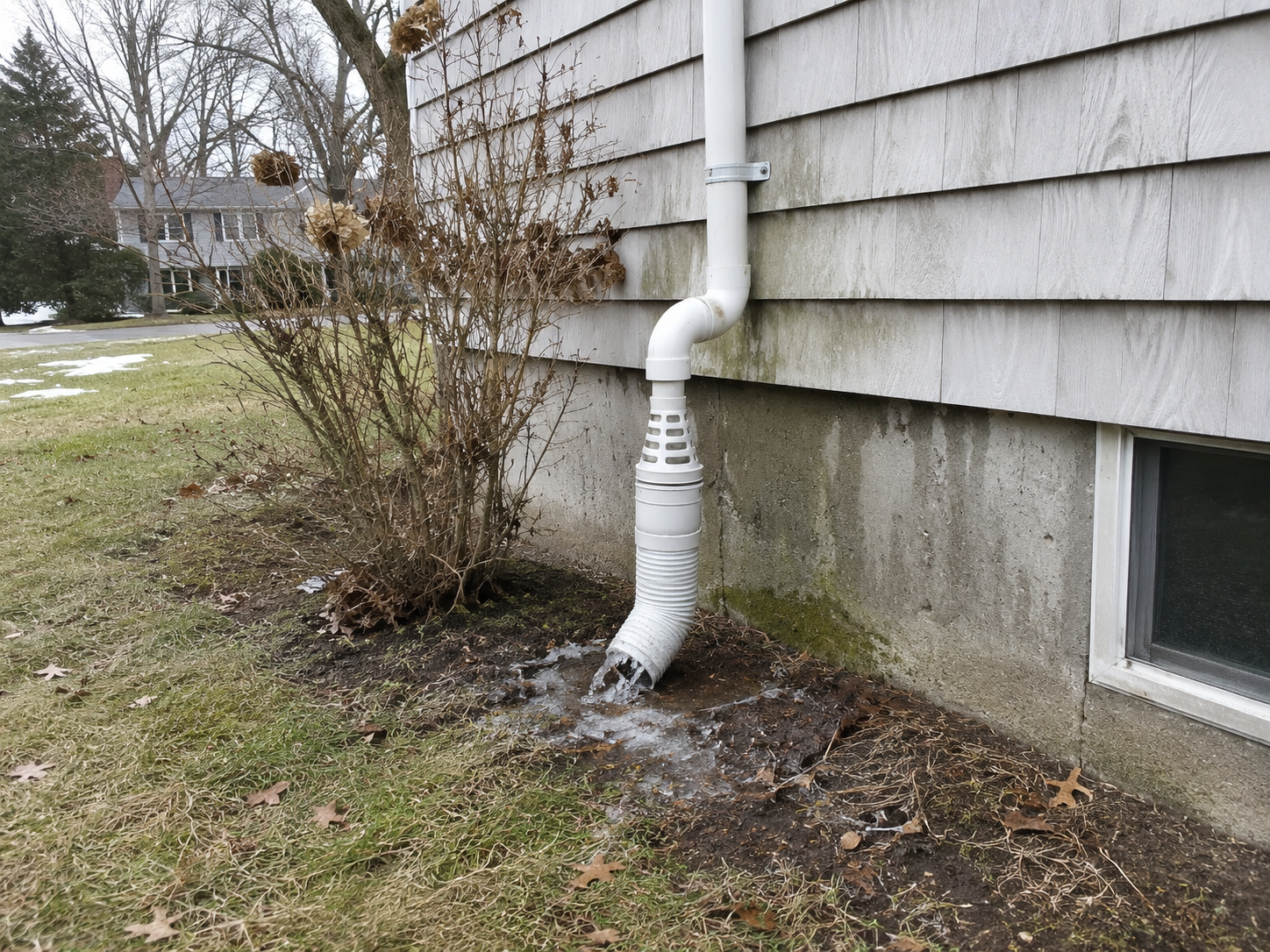
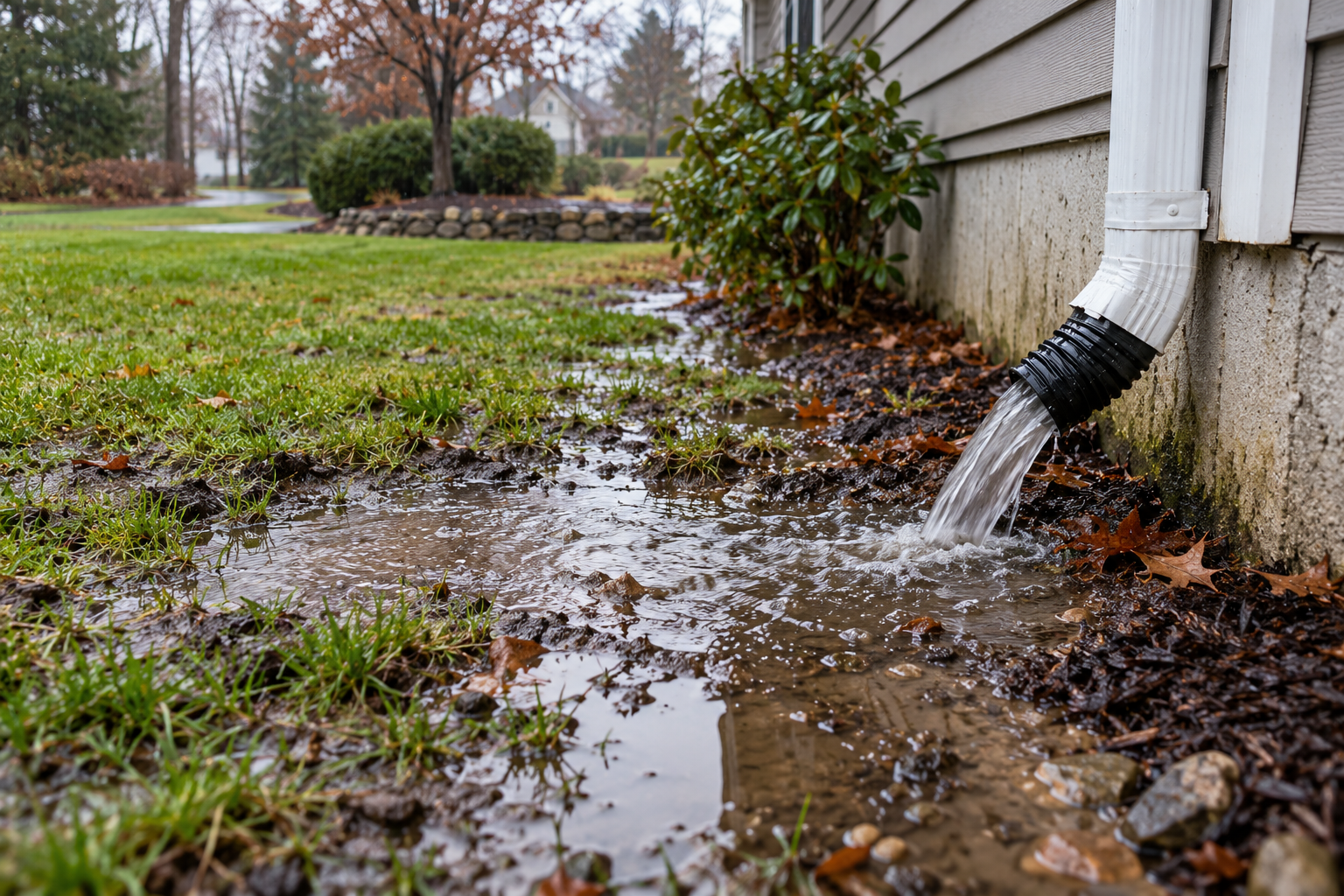
Yes. Downspouts that release roof water near the foundation can concentrate moisture in a limited area.
During prolonged rainfall, nearby soil may become increasingly saturated.
A fieldstone wall in that area may then appear noticeably wetter than another section of the basement.
Correcting mortar without considering that exterior water source may leave the wall exposed to the same moisture pattern.
Can High Groundwater Cause Similar Symptoms?
Yes. Groundwater can produce dampness or seepage even when exterior grading appears reasonable.
Water may also emerge near the wall-floor joint rather than directly through mortar joints.
That is why the location and timing of moisture are important diagnostic clues.
Fieldstone foundation repointing in Ashland may help deteriorated joints without eliminating deeper groundwater conditions.
What Is Efflorescence on a Fieldstone Wall?
Efflorescence is a light-colored mineral deposit that can appear when moisture moves through masonry and evaporates.
It can provide evidence that moisture has traveled through the wall.
However, it does not identify the exact source by itself.
The surrounding mortar, drainage, staining, and weather history should also be examined.
Does Efflorescence Mean the Foundation Is Failing?
No.
Efflorescence is primarily a moisture clue, not automatic proof of structural failure.
It can help direct attention toward areas where water has moved through masonry.
The wall should still be checked for separate structural signs such as significant bulging, displacement, or changing cracks.
Why Does My Fieldstone Wall Look Dark After Heavy Rain?
Dark areas may indicate wet masonry.
If those areas appear consistently after storms, exterior runoff or saturated soil may be contributing.
The pattern matters.
A localized wet area below a downspout may suggest something different from moisture appearing uniformly across an entire foundation wall.
Can a Fieldstone Wall Stay Dry During Light Rain but Leak During a Long Storm?
Yes. Soil can absorb and move water differently during prolonged rainfall.
A short shower may not saturate the area around the foundation.
After extended rain, groundwater and soil moisture can increase enough to reveal pathways that remain dry under normal conditions.
This is particularly important when evaluating older Ashland basements.
Why Does Spring Snowmelt Matter in Ashland?
Melting snow can add moisture to soil around a foundation.
If the ground is already wet or partially frozen, drainage may behave differently than during a summer storm.
Moisture conditions can therefore change considerably from one season to another.
A foundation that looks dry during one inspection may show different patterns during spring conditions.
Can Humid Summer Air Make a Fieldstone Wall Feel Damp?
Yes. Humidity and condensation can sometimes create damp surfaces without water actively leaking through mortar.
Cool basement masonry may contact warmer humid air.
As a result, condensation can form on or near the wall.
The EPA notes that moisture in buildings can come from leaks, seepage, humidity, and condensation on cold surfaces.
That is why dampness should be diagnosed rather than automatically treated as mortar failure.
How Can a Professional Tell Where the Moisture Comes From?
The inspection compares masonry conditions with water patterns inside and outside the home.
A professional may evaluate mortar joints, stones, cracks, wall-floor joints, stains, grading, downspouts, soil saturation, and sump activity.
Timing is also important.
Water appearing during a storm may suggest a different pathway than dampness that develops during humid weather.
No single clue should be considered in isolation.
What Should Be Checked Before Recommending Repointing?
A fieldstone inspection may consider mortar hardness, joint depth, missing material, loose stones, previous patches, cracking, movement, staining, and moisture patterns.
Exterior water management should also be reviewed.
This helps determine whether fieldstone foundation repointing in Ashland is addressing the actual problem rather than only its most visible symptom.
Can Previous Mortar Repairs Cause Problems?
They can if the material or repair method is incompatible with the older masonry.
A previous patch may be much harder than surrounding mortar.
It may also cover deteriorated joints without properly addressing deeper material loss.
The National Park Service emphasizes matching replacement mortar to the characteristics of historic masonry rather than assuming modern high-strength mortar is superior.
Why Do Older Ashland Homes Benefit From Fieldstone Inspections?
Older masonry can contain several generations of repairs, moisture exposure, and changing drainage conditions.
Some joints may still be sound while others have eroded significantly.
An inspection helps separate routine mortar wear from areas requiring more substantial masonry attention.
It also provides a chance to identify water-management problems before new mortar is installed.
Are Similar Fieldstone Issues Found Near Hopkinton, Holliston, and Southborough?
Yes. Older homes in nearby Hopkinton, Holliston, and Southborough can face similar New England weather, moisture, and freeze-thaw conditions.
However, every foundation behaves differently.
Stone type, original mortar, previous repairs, site drainage, groundwater, and wall condition all influence what a particular property needs.
Does Every Damp Fieldstone Basement Need Repointing?
No.
A wall can be damp because of high humidity, condensation, drainage problems, groundwater, cracks, or other conditions.
Likewise, a wall may need repointing even if it does not currently show obvious water entry.
The decision should be based on both masonry condition and moisture diagnosis.
All Pro Basement evaluates fieldstone foundations as part of the larger relationship between masonry condition, water management, drainage, and basement performance.
The family-owned company has more than 25 years of hands-on experience with fieldstone foundation repair, waterproofing, drainage, and sump systems.
Owner Diego Tameirao personally oversees projects, while Project Manager Keila Tameirao helps coordinate the homeowner experience.
For Ashland homeowners, the most important question is not simply whether mortar is crumbling.
It is how deeply the joints have deteriorated, whether stones remain stable, where moisture is coming from, and whether exterior or interior water management is contributing to the same foundation problem.
That broader diagnosis determines whether the next step is masonry repointing, water management, structural evaluation, or a combination of solutions.
When Does a Fieldstone Foundation Need Repointing?
Repointing may be appropriate when mortar joints have become deeply recessed, powdery, loose, or missing.
The decision should be based on joint condition rather than the age of the house alone.
Fieldstone foundation repointing in Ashland should also consider moisture patterns, loose stones, previous patches, and signs of movement.
What Happens During Professional Fieldstone Repointing?
Professional repointing involves evaluating deteriorated joints and replacing failed mortar with material compatible with the existing masonry.
It is not simply a cosmetic coating.
The National Park Service defines repointing as removing deteriorated mortar from masonry joints and replacing it with new mortar.
Proper preparation matters because deteriorated material may extend deeper than the surface suggests.
Why Is Joint Depth Important?
A joint that looks damaged only at the face may contain deeper deterioration.
Applying a thin layer over weak material may leave an unstable base beneath the repair.
A professional determines how much deteriorated material needs attention without unnecessarily disturbing sound masonry.
Why Should Aggressive Mortar Removal Be Avoided?
Fieldstone walls can contain irregular stones, deep joints, and small masonry pieces.
Aggressive removal can damage stone edges or disturb sections that were previously stable.
That is why homeowners should avoid treating deep mortar removal as a simple scraping project.
Qualified masonry evaluation is especially important when stones already feel loose.
Why Does Mortar Compatibility Matter So Much?
Replacement mortar needs to work with the existing stone and older mortar.
More strength is not automatically better.
The National Park Service states that repointing mortar should be softer and more vapor permeable than the masonry units and no harder than the historic mortar.
That allows the new joint to work with the older masonry rather than forcing stress into the stone.
Can Hard Mortar Damage Older Fieldstone Masonry?
It can contribute to problems when the repair material is substantially harder or less permeable than the surrounding masonry.
Moisture and movement still need somewhere to go.
The National Park Service warns that inappropriate hard mortar can contribute to deterioration of adjacent masonry.
This is why fieldstone foundation repointing in Ashland should not use a universal mortar recipe.
Does New Mortar Need to Match the Old Mortar Exactly?
The replacement should be compatible with the existing masonry system.
Professionals may consider hardness, permeability, texture, appearance, joint profile, and the characteristics of the historic mortar.
The National Park Service recommends matching key physical and visual properties rather than simply choosing the strongest modern product.
Is Repointing the Same as Surface Patching?
No.
Surface patching places new material over the visible face of a deteriorated joint.
Proper repointing addresses failed mortar within the joint itself.
A superficial patch may look better temporarily while weak mortar remains underneath.
That is why appearance alone should not determine whether the repair was successful.
Should Every Old Mortar Joint Be Replaced?
No. Sound mortar does not automatically need removal simply because it is old.
A professional can distinguish intact joints from areas that are loose, deeply eroded, cracked, or missing.
Targeted repair may sometimes be more appropriate than unnecessary disturbance of stable masonry.
What If Some Fieldstones Are Loose?
Loose stones should be evaluated before or during masonry repair.
They may indicate localized mortar loss or a broader problem involving wall movement.
However, one loose stone does not automatically mean the entire foundation is unstable.
The surrounding joints and wall alignment provide important context.
Which Signs May Require Additional Structural Evaluation?
Certain conditions deserve closer attention beyond routine mortar wear.
Examples include:
- Significant wall bulging
- Major displacement
- Large or changing cracks
- Sections visibly moving
- Multiple loose stones
- Major changes in wall alignment
These signs do not automatically mean failure is imminent.
They indicate that structural conditions should be evaluated before cosmetic masonry work proceeds.
Can Repointing Help Stop Basement Moisture?
It can help when open or deteriorated mortar joints are part of the water pathway.
Restoring failed joints can reduce openings through the masonry.
However, repointing cannot control every source of basement moisture.
Fieldstone foundation repointing in Ashland may need to work alongside drainage or groundwater management.
What If Water Still Enters After Mortar Repair?
That suggests another water source may still be active.
Groundwater, wall-floor seepage, grading, downspouts, cracks, or humidity may remain involved.
A successful mortar repair does not eliminate unrelated water pathways.
The next step should be based on where and when moisture appears.
Can Exterior Drainage Protect a Fieldstone Foundation?
Yes. Reducing unnecessary water around the foundation can lower moisture exposure.
Grading, gutters, downspouts, and surface runoff all influence how much rainwater reaches soil beside the wall.
EPA moisture-control guidance includes site drainage and foundations as key parts of controlling building moisture.
Correcting drainage may therefore support masonry repairs rather than leaving new mortar exposed to the same recurring water conditions.
Why Should Downspouts Be Checked Before Repointing?
A downspout that releases roof water close to the foundation can repeatedly saturate one area.
That may explain why mortar deterioration or staining is worse in a specific section.
Repairing the wall without correcting concentrated runoff may leave the same moisture exposure in place.
Can Soil Saturation Affect Repaired Mortar?
Yes. Repaired masonry still exists within the same foundation environment.
If soil remains heavily saturated after prolonged storms, moisture may continue reaching the wall.
The goal should be to reduce unnecessary exposure while recognizing that below-grade masonry naturally interacts with soil moisture.
When Is Interior Basement Waterproofing Also Needed?
Interior waterproofing may be considered when groundwater or perimeter seepage continues even after exterior conditions and masonry joints are addressed.
The appropriate system depends on the actual water pathway.
Not every fieldstone foundation requires an interior drainage system.
Diagnosis should determine whether groundwater needs to be collected and controlled.
Can Interior Drainage Work With a Fieldstone Foundation?
Yes, when the conditions call for it.
Interior drainage can collect water entering around the foundation perimeter and direct it toward a sump system.
It performs a different function from repointing.
Repointing restores deteriorated masonry joints.
Drainage manages water that still reaches the foundation area.
When Is a Sump Pump Part of the Solution?
A sump pump may be needed when collected groundwater must be mechanically discharged from the basement.
It does not replace masonry repair.
Likewise, new mortar does not replace a sump system when groundwater continues entering the drainage network.
Both components can serve different roles within the same water-management strategy.
Can Humidity Make an Ashland Fieldstone Basement Feel Damp?
Yes. A basement can feel damp even without visible seepage.
High humidity and condensation may affect cool masonry surfaces during warmer months.
This is why musty odors should not automatically be blamed on failing mortar.
The EPA notes that moisture problems may involve leaks, seepage, humidity, condensation, and other building conditions.
Why Is Year-Round Moisture Behavior Important?
Massachusetts foundations experience changing conditions throughout the year.
Heavy rain may reveal one problem.
Spring snowmelt may reveal another.
Humid summer air can create condensation, while freezing winter conditions can stress wet masonry.
Fieldstone foundation repointing in Ashland should therefore consider how the wall behaves across seasons.
Can Nearby Framingham, Natick, and Sherborn Homes Have Similar Conditions?
Yes. Older foundations in nearby communities can face the same New England rainfall, snowmelt, freezing temperatures, and seasonal groundwater changes.
However, every wall has its own masonry, repair history, site drainage, and moisture exposure.
Ashland remains the focus because the repair strategy should be based on the individual property rather than regional assumptions alone.
Frequently Asked Questions About Fieldstone Foundation Repointing in Ashland
How Do I Know if My Fieldstone Foundation Needs Repointing?
Look for deep mortar loss, powdery joints, missing material, repeated mortar debris, gaps, or loose stones.
However, a professional inspection should determine how deep the deterioration extends and whether the surrounding stones remain stable.
Why Is Mortar Falling Out of My Foundation?
Mortar may deteriorate because of age, moisture exposure, repeated wetting and drying, freeze-thaw conditions, movement, or previous incompatible repairs.
The pattern of deterioration can help identify contributing factors.
Can Crumbling Mortar Cause Basement Leaks?
Yes, if deteriorated joints provide pathways for moisture.
However, groundwater, drainage problems, cracks, condensation, and humidity can produce similar symptoms.
A wet basement should not automatically be treated as a mortar-only problem.
Does All Old Mortar Need to Be Replaced?
No. Mortar should be evaluated based on condition.
Stable joints may not require unnecessary removal.
Repointing should focus on deteriorated areas while preserving sound masonry whenever appropriate.
Can I Use Regular Cement Mortar on a Fieldstone Foundation?
A universal mortar choice is not appropriate for every older fieldstone wall.
Replacement mortar should be compatible with the stone and existing masonry.
The National Park Service cautions against assuming that harder, higher-strength mortar is automatically better.
Can Repointing Strengthen a Fieldstone Wall?
Proper repointing can restore deteriorated joints and improve the integrity of the masonry assembly.
However, repointing is not a substitute for structural repair when significant movement or displacement is present.
The wall condition should be evaluated first.
Will Repointing Completely Waterproof My Basement?
No. Repointing can reduce moisture pathways through failed mortar joints, but it cannot eliminate groundwater, wall-floor seepage, condensation, plumbing leaks, or poor exterior drainage.
A wet basement may require more than one water-management strategy.
Why Does My Fieldstone Wall Look Wet After Rain?
Rain may saturate soil around the foundation or concentrate runoff in one area.
Moisture may then travel through mortar joints, cracks, or porous masonry.
The location of the wet area should be compared with exterior grading and downspouts.
How Long Does Fieldstone Repointing Last?
There is no universal lifespan.
Durability depends on mortar compatibility, workmanship, moisture exposure, drainage, wall condition, and future movement.
A compatible repair in a well-managed moisture environment may perform very differently from one exposed to constant saturation.
When Should a Fieldstone Foundation Be Professionally Inspected?
Inspection is useful when mortar repeatedly falls out, gaps deepen, stones loosen, seepage develops, or the wall shows bulging or changing cracks.
It is also wise to evaluate the wall before extensive waterproofing or basement finishing hides important masonry conditions.
What Should Ashland Homeowners Expect From a Complete Evaluation?
A complete evaluation should look beyond the most obvious crumbling joint.
It may consider:
- Mortar condition
- Stone stability
- Joint depth
- Previous repairs
- Moisture staining
- Foundation cracks
- Wall movement
- Exterior drainage
- Groundwater
- Sump activity
The goal is to understand whether the visible mortar deterioration is the primary problem or one part of a larger moisture condition.
Why Does Fieldstone Foundation Repointing in Ashland Start With Diagnosis?
Because repointing should solve a real masonry problem rather than simply make the wall look cleaner.
An older Ashland foundation may need localized repointing, broader masonry repair, drainage improvements, or additional water management.
The correct plan depends on what the inspection reveals.
Crumbling mortar should not be ignored, but it should not automatically be treated as catastrophic foundation failure.
Many fieldstone walls can show substantial mortar wear while the stones themselves remain serviceable.
Fieldstone foundation repointing in Ashland is most effective when the repair preserves the masonry, restores deteriorated joints, and addresses water conditions contributing to repeated deterioration.
All Pro Basement evaluates fieldstone foundations together with structural conditions, drainage, basement waterproofing, groundwater management, and sump systems.
The family-owned company brings more than 25 years of hands-on experience working with Massachusetts foundations.
Owner Diego Tameirao personally oversees projects, while Project Manager Keila Tameirao helps coordinate work with homeowners.
The goal is an honest evaluation that identifies what actually needs repair without automatically recommending unnecessary work.
Contact All Pro Basement Today to find out whether crumbling mortar is allowing moisture into your Ashland basement and whether professional fieldstone repointing, drainage correction, or additional water management is the right solution.