Most foundation cracks in poured concrete are shrinkage cracks, thin vertical lines that form as the concrete cures and don’t threaten the structure. The ones worth a closer look are horizontal, stair-stepped, wider at one end, offset, or paired with a wall that’s bowing in. Either way, almost any crack can let water in, and in Massachusetts, freeze and thaw tends to make them bigger over time. Here’s how to tell the difference.
Why Foundations Crack in the First Place
Concrete shrinks as it cures. A poured foundation keeps losing moisture for months after it’s placed, and all that shrinking has to go somewhere. Usually it ends up as a few thin cracks, often near a window opening or somewhere in the middle of a long wall. Plenty of houses have at least one.
Houses also settle into the soil during their first few years, which can leave a few more hairline cracks, often running out from the corner of a basement window.
Neither of those means anything went wrong. It’s just what concrete does.
Cracks That Are Usually Cosmetic
Structurally, a crack is usually nothing to worry about when it:
- Runs vertically, or close to it
- Is hairline thin
- Is about the same width from top to bottom
- Lines up on both sides, with no step where one side sits higher or sticks out farther
- Hasn’t changed in months
That covers most of the cracks people find once they start looking. But “cosmetic” only describes the structure. It says nothing about water, and that’s where a lot of these cracks eventually cause trouble. More on that below.
Cracks That Need a Closer Look
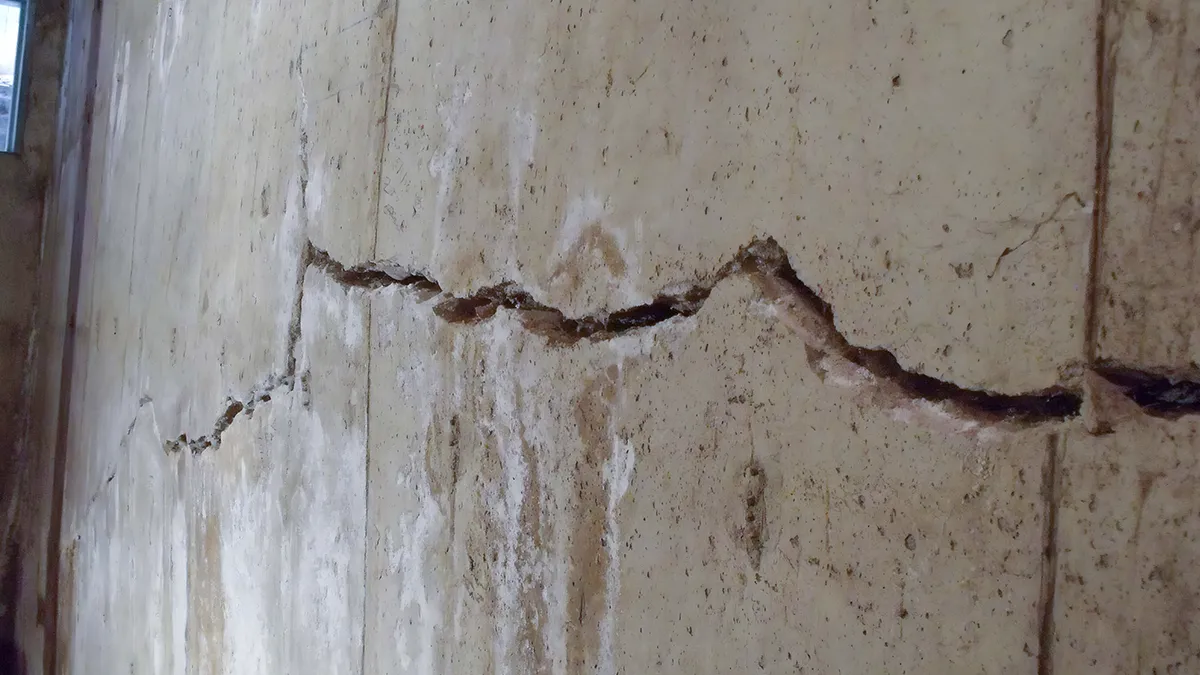
Some cracks point to something moving: soil pushing on the wall, part of the footing settling unevenly, or frost putting pressure where it shouldn’t. Have someone look at it in person if you see:
- A horizontal crack, especially one that runs along a good part of the wall
- A stair-step crack following the mortar joints in a block wall
- A crack that’s clearly wider at one end than the other
- One side of the crack sitting higher, lower or farther out than the other
- A wall that bows or leans inward
- A crack roughly a quarter inch wide or more, or one that keeps getting longer
It also helps to look upstairs. Doors that suddenly stick, new drywall cracks above doorways, or floors that have started to slope can all go along with foundation movement.
We won’t tell you from a blog post that your wall is fine or that it’s failing. Nobody can do that honestly without seeing it. What we can say is that the cracks on this list are the ones worth having looked at soon, not next year.
Why a “Harmless” Crack Still Matters in Massachusetts
Here’s the part most crack guides skip. A crack that poses no structural risk can still leak, and a lot of them do.
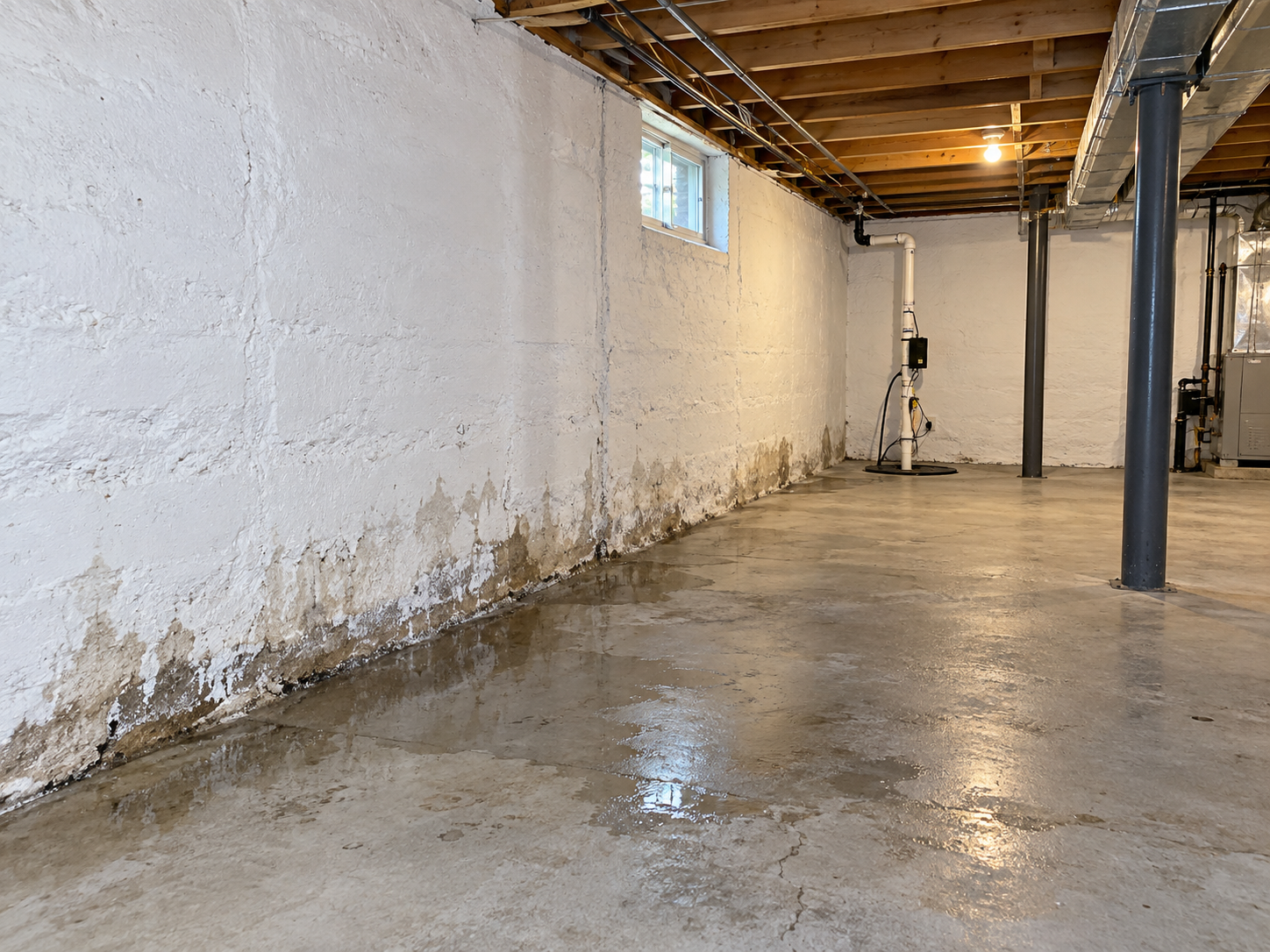
When the soil around your house gets saturated, during spring snowmelt or a week of fall rain, groundwater presses against the foundation from the outside. Even a hairline crack gives it a way in. You’ll usually spot it first as a damp line, a rust-colored stain or a white chalky trail running down from the crack.
Then there’s the cold. Water sitting in a crack near the top of the wall freezes, expands and opens the crack a little more every winter. The crack that was hairline when you bought the house can be leaking ten years later.
That’s why a leaking crack is worth fixing even when it isn’t a structural problem, especially if you ever plan to finish the basement. Most leaking cracks in poured concrete can be repaired from inside the basement, without digging up the yard. That’s the work our foundation crack repair service is built around.
If water is coming in through more than one crack, or along the joint where the wall meets the floor, you’re dealing with more than a crack, and interior basement waterproofing is usually the better answer.
How to Keep an Eye on a Crack
If you’ve found a crack and aren’t sure what to make of it, start keeping records. It costs nothing and it tells you a lot.
- Mark both ends with a pencil and write the date next to each mark.
- Take a photo with a tape measure held across the widest point.
- Check it again after the spring thaw and after heavy rain, and note any dampness.
- Don’t paint over it or fill it with caulk yet. Covering a crack hides the one thing you need to know, which is whether it’s moving.
A crack that stays the same length and width for a year and never gets wet is telling you something. So is one that has grown past your pencil marks by spring.
What About Fieldstone Foundations?
A lot of older homes in Massachusetts sit on fieldstone foundations, and those don’t crack the way poured concrete does. What wears out is the mortar between the stones. It turns sandy, falls out and leaves gaps where water gets in, and sometimes stones start to loosen. If that sounds like your basement, fieldstone foundation repointing is the repair to look at. We cover it in more depth in our guide to fieldstone foundations in older Massachusetts homes.
Not Sure What You’re Looking At?
If you’d like someone to take a look in person, call us at 508-498-1090 or request an inspection online. And with winter on its way, our guide on how to winterize your basement in Massachusetts covers the rest of what to check before the ground freezes.