Introduction
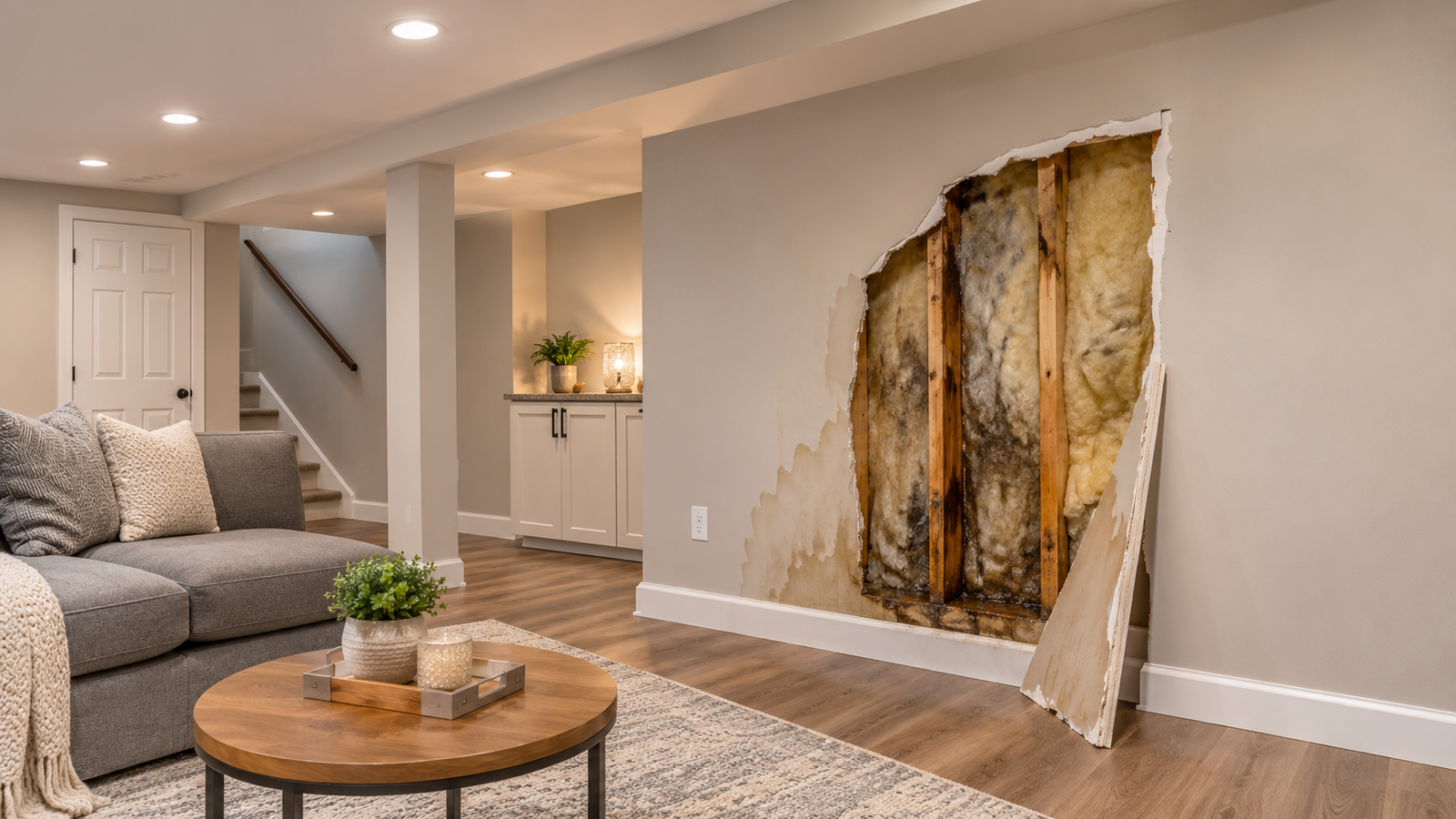
Yes. Hidden moisture behind basement walls can damage drywall, insulation, framing, trim, and flooring. A basement may look dry before remodeling, yet seasonal groundwater, condensation, foundation seepage, or plumbing leaks can appear later once walls conceal the original foundation.
Author: All Pro Basement
Updated: November 2, 2026
That is why basement finishing in Southborough should begin with more than choosing flooring, lighting, and wall colors.
Before framing covers the foundation, the basement should be evaluated for moisture patterns that may become difficult to see after the remodel is complete.
Can Hidden Moisture Damage a Finished Basement?
Yes. Moisture can affect materials that were never intended to stay damp.
Drywall may stain or soften.
Wood framing may remain damp.
Insulation can lose its intended condition.
Flooring, trim, and paint may also show visible damage.
The real concern is not simply that moisture exists. It is whether the source remains active behind finished materials.
Why Can a Basement Look Dry Before Remodeling?
A basement only shows conditions present at the time you inspect it.
A wall may feel completely dry after several rain-free days.
However, prolonged rainfall or seasonal groundwater can create very different conditions.
This is one reason basement finishing in Southborough should consider how the space behaves throughout changing Massachusetts weather.
Can Moisture Appear Only After Heavy Rain?
Yes. Some seepage occurs only after soil around the foundation becomes saturated.
A light shower may not create enough water to reveal the problem.
Several days of rain can change that.
As groundwater and soil moisture increase, previously dry cracks or joints may begin allowing water through.
Where Can Moisture Hide Behind Finished Basement Walls?
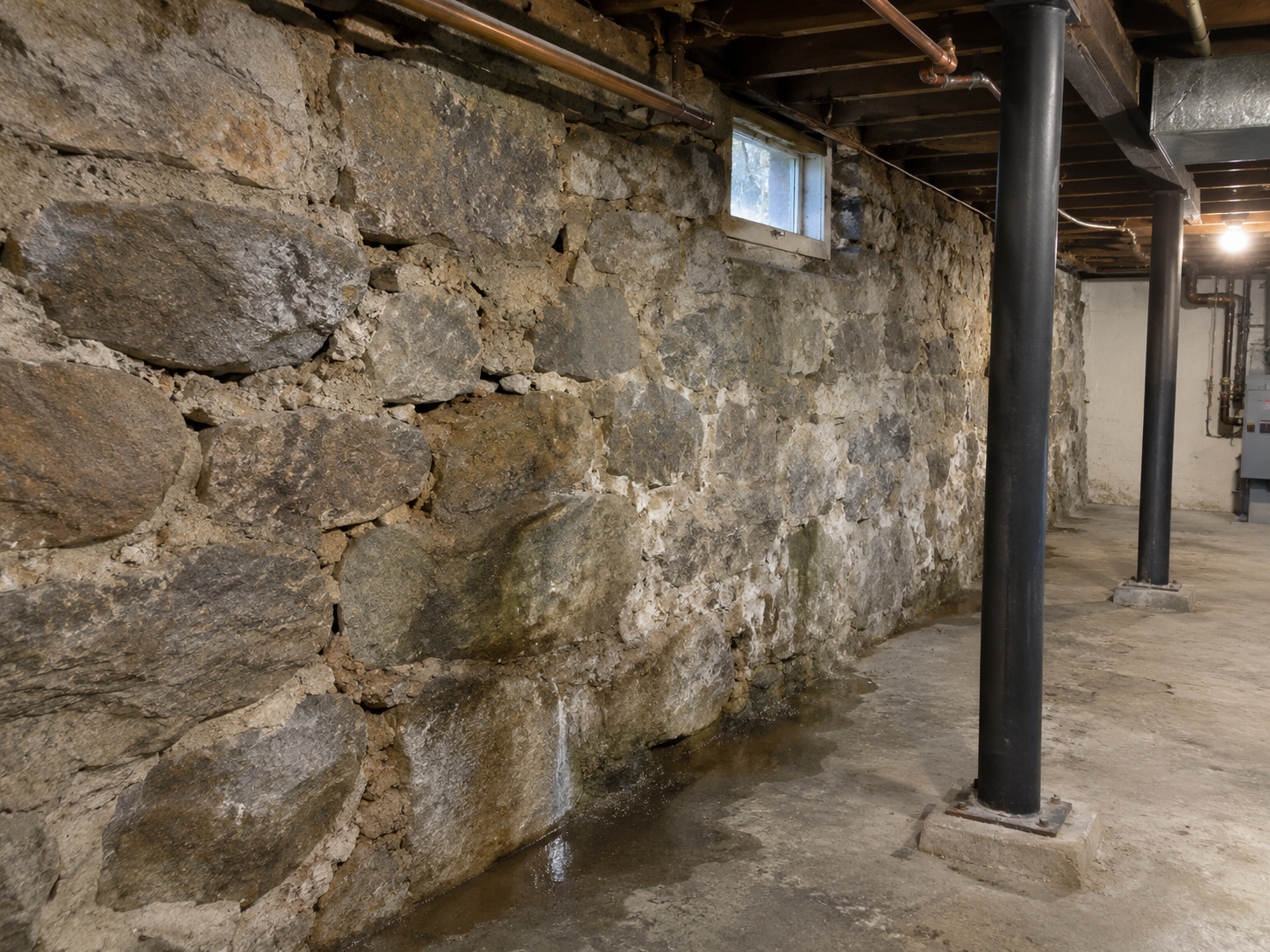
Moisture can remain between the finished wall and the original foundation.
It may also collect near framing, insulation, utility penetrations, or the bottom of the wall.
Possible sources include:
- Foundation wall seepage
- Wall-floor joint seepage
- Foundation cracks
- Condensation
- Plumbing leaks
- Window leaks
- Groundwater
- High humidity
Finding the location is only the first step.
The source still needs to be identified.
What Are the Early Signs of Moisture Behind Drywall?
The first clue is not always visible water.
Homeowners may notice subtle changes before obvious damage appears.
Possible warning signs include:
- Musty odors
- Bubbling paint
- Wall discoloration
- Soft baseboards
- Warped flooring
- Damp wall areas
- Higher humidity
- Recurring condensation
One sign alone does not prove a serious foundation problem.
However, repeated symptoms deserve investigation.
Why Does My Finished Basement Smell Musty?
A musty odor often suggests that moisture is present somewhere in the space or building materials.
The source may be hidden behind a wall, under flooring, inside insulation, or near a damp foundation area.
However, odor alone cannot identify the cause.
Humidity, seepage, condensation, or a plumbing issue may all create similar symptoms.
Can Foundation Seepage Damage a Remodel?
Yes. If water is entering through the foundation, covering the wall does not stop that pathway.
The seepage may continue behind framing and drywall.
Over time, the homeowner may notice staining, odors, damaged trim, or moisture near the floor.
For basement finishing in Southborough, the foundation should be evaluated before it disappears behind new construction.
What Is Wall-Floor Joint Seepage?
The wall-floor joint is where the basement wall meets the floor slab.
Water can sometimes appear along this perimeter when groundwater conditions increase around or beneath the foundation.
The moisture may emerge at the edge of the floor instead of through the middle of the wall.
Once finished walls are installed, this pattern can become harder to recognize.
Can Foundation Cracks Leak Behind Finished Walls?
Yes. A crack may act as a water pathway during wet conditions.
The crack may stay dry for long periods and only become active after heavy rain or snowmelt.
However, not every crack behaves the same way.
Its location, movement, moisture pattern, and surrounding conditions should be evaluated before repair is recommended.
Can Condensation Form Behind Basement Walls?
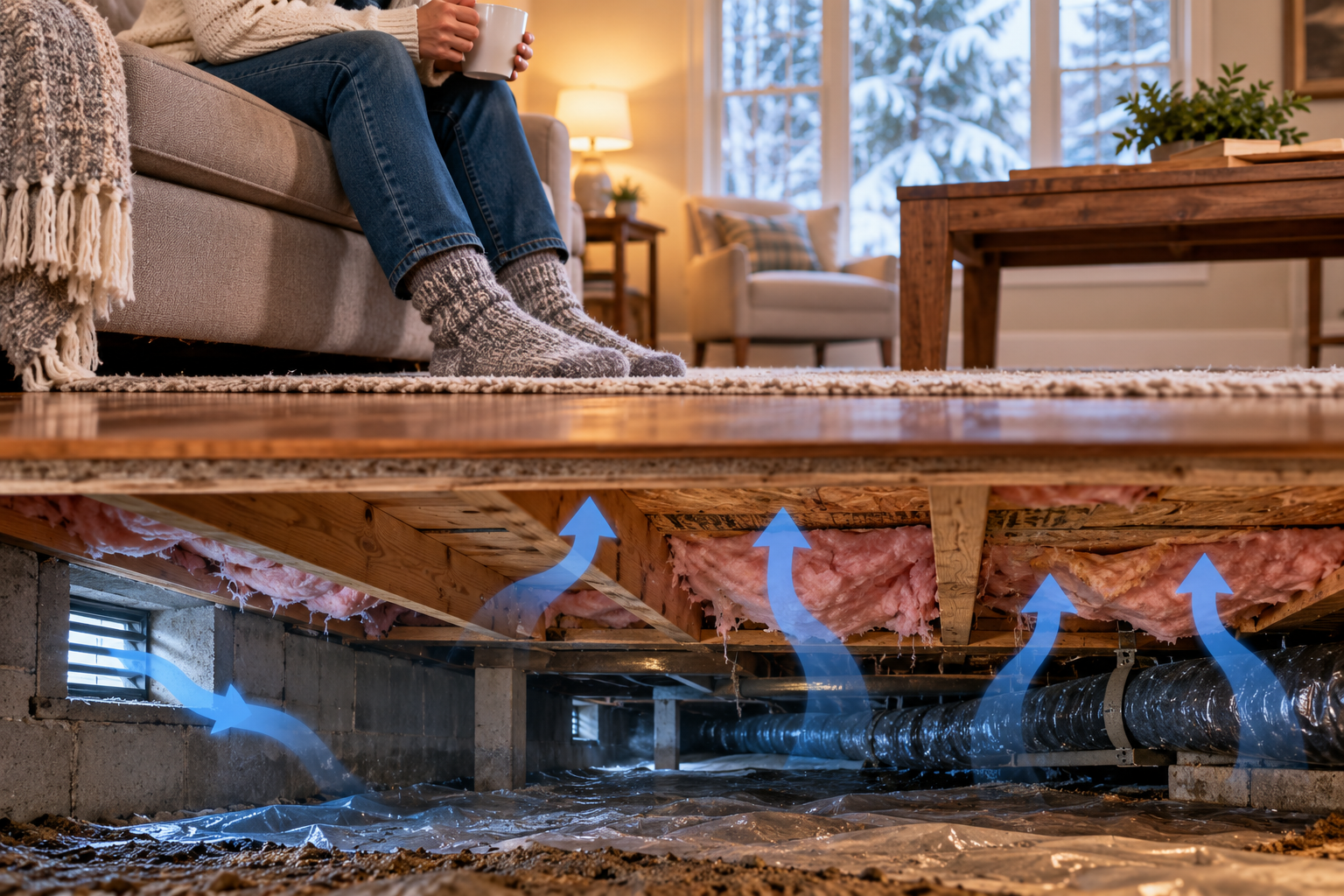
Yes. Condensation can occur when warm, humid air meets a colder surface.
Basement foundation walls can stay cool even when the finished room feels comfortable.
If warm air reaches a cold surface behind the wall, moisture may form without groundwater entering through the foundation.
The U.S. Environmental Protection Agency emphasizes moisture and condensation control as part of protecting buildings from damp conditions.
How Is Condensation Different From Water Intrusion?
Water intrusion means liquid water is entering from another source.
That source may be groundwater, runoff, a crack, or plumbing.
Condensation forms from moisture already in the air.
Both can create damp materials, but the solution is not necessarily the same.
That is why diagnosis matters before walls are rebuilt.
Can High Basement Humidity Cause Problems Without Visible Water?
Yes. A basement can feel dry and still have high moisture levels in the air.
That moisture may affect cooler surfaces and enclosed wall cavities.
Humid summer weather can make this especially relevant.
A finished basement should therefore be evaluated for both liquid water and moisture in the air.
Can Cold Foundation Walls Create Hidden Moisture?
They can contribute to condensation when humid air reaches the cold surface.
This is different from water leaking through the wall.
A professional should determine whether moisture originates from the exterior, groundwater, indoor humidity, or another source.
Treating one problem as another can lead to ineffective repairs.
Why Can Basement Insulation Hide Moisture?
Insulation may cover areas that were previously visible.
Once it is installed between framing and the foundation, signs of dampness can become harder to detect.
Wet or damp insulation should not simply be covered with additional materials.
Its condition and the moisture source need to be evaluated first.
Can Drywall Hide an Existing Basement Problem?
Yes. Drywall creates a finished surface, but it does not correct moisture.
If seepage, condensation, or humidity is already present, the problem can continue behind the finished wall.
Drywall should never be treated as a way to conceal water stains or damp foundation surfaces.
Why Should the Foundation Be Inspected Before Framing?
Before framing is installed, the foundation is fully visible.
That makes it easier to inspect cracks, stains, efflorescence, wall-floor joints, previous water marks, and signs of seepage.
After framing and insulation are added, those clues may disappear from view.
The best time to identify a moisture concern is often before the remodel hides it.
What Is Efflorescence?
Efflorescence is a light-colored mineral deposit that can appear on masonry when moisture moves through the material and evaporates.
It does not automatically mean there is active flooding.
However, it can indicate that moisture has moved through the wall.
That makes it a useful clue during a pre-finishing inspection.
Can a Plumbing Leak Look Like Foundation Seepage?
Yes. Plumbing lines can leak inside walls or ceilings and create moisture patterns that resemble foundation problems.
Timing helps with diagnosis.
If moisture appears regardless of rain or groundwater conditions, plumbing should be considered among the possible sources.
The goal is to avoid repairing the foundation when the actual problem is somewhere else.
Can Window Wells Leak Into Finished Basements?
Yes. Water can enter around basement windows or window wells if drainage, grading, sealing, or the well itself is not functioning correctly.
Once a wall is finished, the water may travel behind trim or drywall before becoming visible.
The entry point may therefore be different from the location where damage first appears.
Why Does Moisture Sometimes Appear Near the Bottom of the Wall?
Water near the bottom of a finished wall can have several causes.
It may come from wall seepage, the wall-floor joint, the slab, condensation, or plumbing.
The location alone does not prove which source is responsible.
A professional should consider weather, drainage, humidity, foundation conditions, and plumbing before opening large wall areas.
Can the Basement Floor Release Moisture?
Yes. Moisture can move through concrete slabs under certain conditions.
That may affect flooring systems or materials placed directly over the slab.
The U.S. Department of Energy notes that basement assemblies should account for moisture as part of insulation and finishing strategies.
For basement finishing in Southborough, the floor should be considered along with the walls.
What Role Does the Sump Pump Play?
A sump pump removes water collected by a drainage system.
It can be an important part of groundwater management.
However, a sump pump does not correct every moisture source.
It cannot stop condensation, repair a plumbing leak, or automatically fix poor exterior grading.
The sump system should be evaluated as one part of the larger water-management plan.
Can Increased Sump Pump Activity Be a Warning Sign?
It can be a useful clue.
If the pump begins cycling much more often after storms, groundwater or drainage inflow may have increased.
That does not automatically mean the pump is failing.
However, sump activity can help explain how wet conditions around the foundation are changing.
How Can Exterior Drainage Affect a Finished Basement?
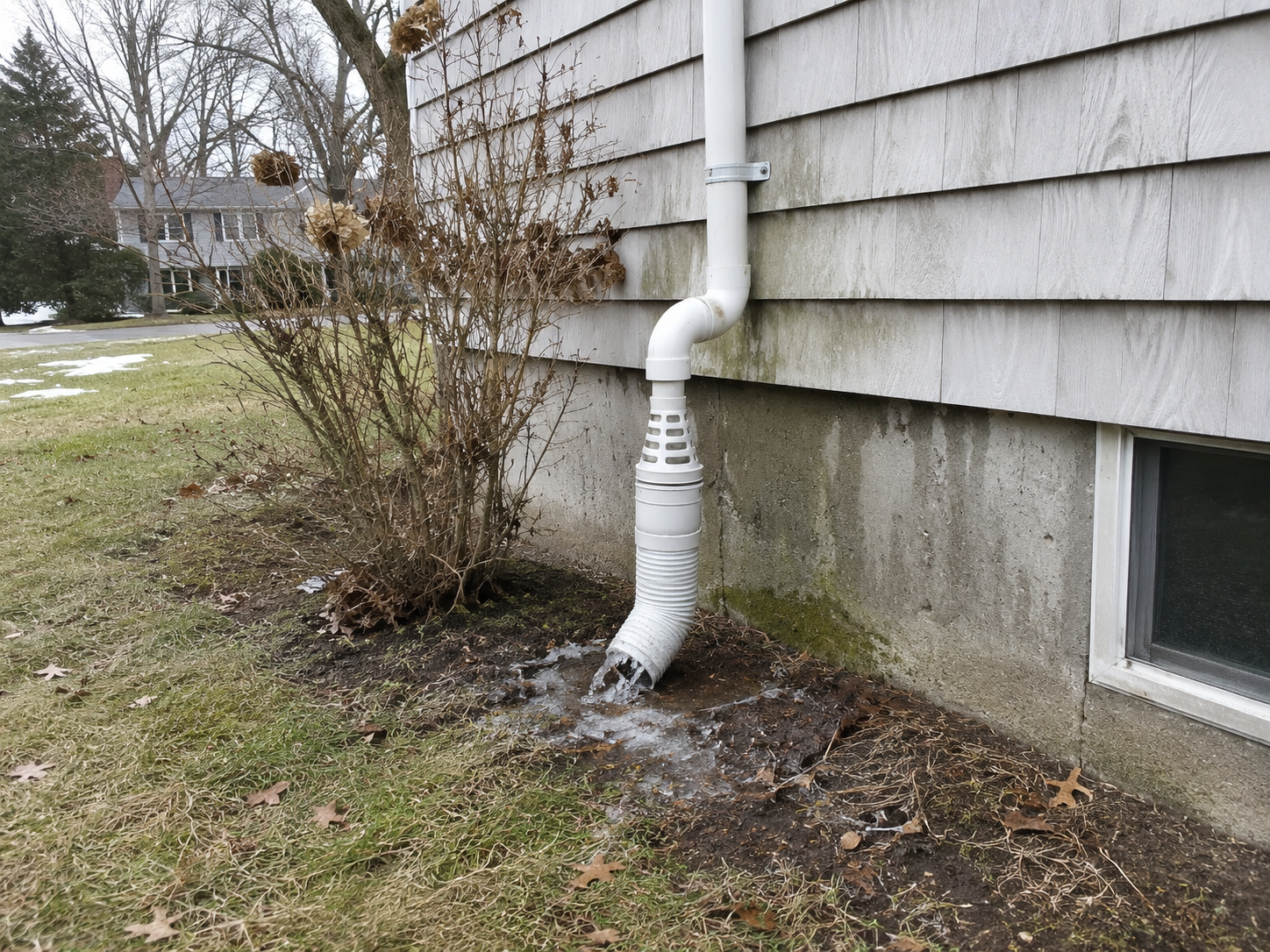
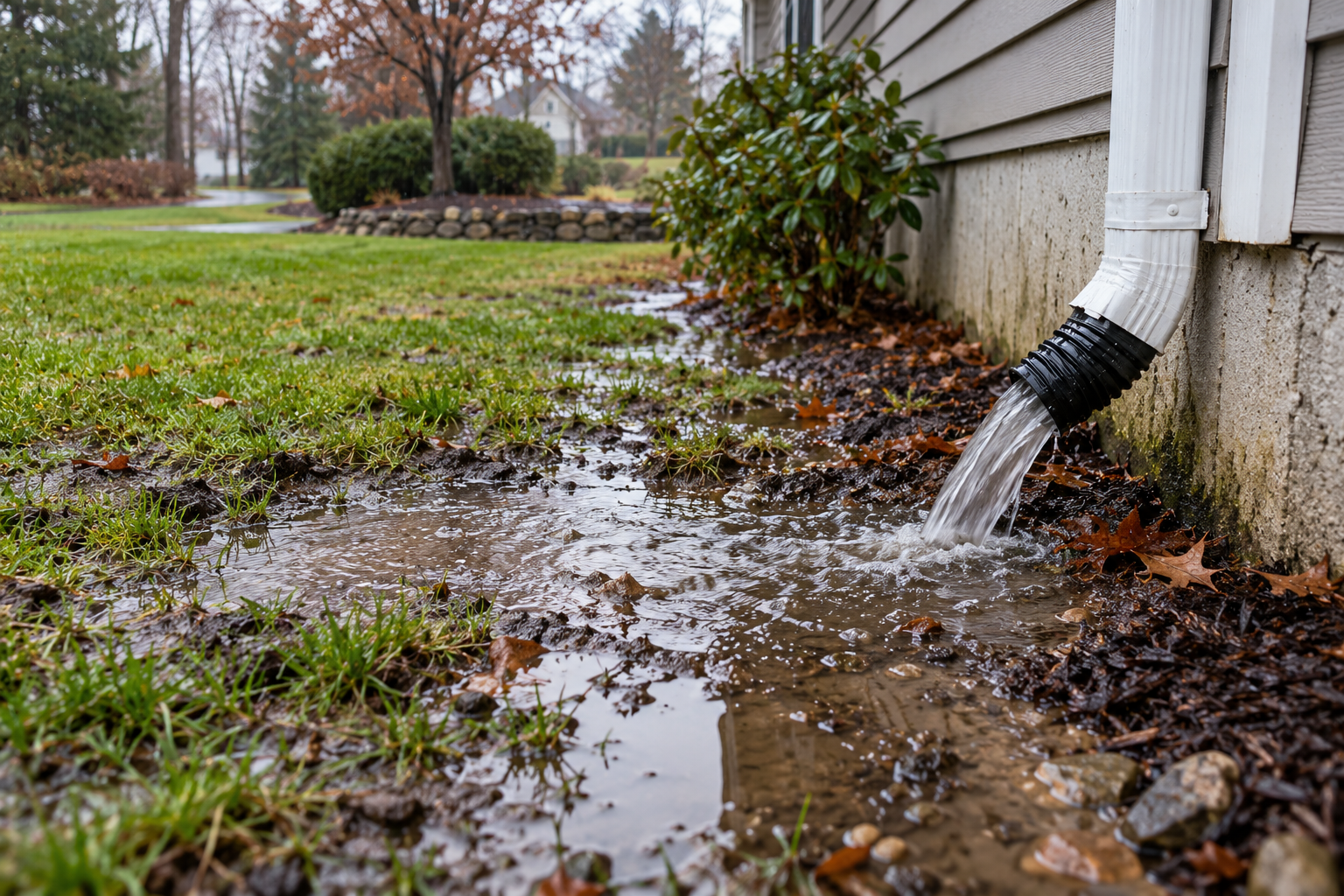
Poor grading, short downspout discharge, or concentrated surface runoff can increase the amount of water reaching soil around the foundation.
That can contribute to seepage during wet weather.
Building Science Corporation emphasizes managing roof and surface water as part of keeping foundations and basements dry.
Interior finishing should not ignore what is happening outside the house.
Why Does Southborough’s Climate Matter?
Southborough homes experience changing moisture conditions throughout the year.
Heavy rain, thunderstorms, nor’easters, snowmelt, humid summers, and freeze-thaw cycles can all affect how water interacts with a basement.
A space that looks dry during one season may behave differently in another.
That seasonal variation is important when planning basement finishing in Southborough.
Can Spring Snowmelt Reveal a Hidden Moisture Path?
Yes. Snowmelt can increase moisture in the soil around a foundation.
If the ground is already saturated, water may remain near the basement longer.
A foundation crack or perimeter joint that stayed dry during winter may become active as conditions change.
This is one reason a single dry inspection does not tell the entire story.
Can Humid Summers Create Problems in a Finished Basement?
Yes. Summer humidity can affect cool basement surfaces even when rainwater is not entering.
Condensation may form on walls, pipes, ducts, or other cool materials.
Humidity control may therefore be part of protecting a finished basement.
It is a different problem from active groundwater seepage.
Do Homes in Hopkinton, Westborough, and Framingham Face Similar Risks?
Nearby communities share many of the same New England weather patterns.
Homes in Hopkinton, Westborough, and Framingham may also experience heavy rain, snowmelt, saturated soil, and humid summers.
However, every property behaves differently.
Foundation type, grading, soil, drainage, and groundwater conditions can vary even between neighboring homes.
Should a Basement Be Waterproofed Before Finishing?
If a water-management problem is present, it should be addressed before finished materials hide the foundation.
However, not every basement needs the same waterproofing system.
A professional should first identify the source and severity of moisture.
Basement finishing in Southborough should be based on diagnosis, not assumptions.
What Should Be Checked Before Basement Finishing?
A pre-remodel assessment may include:
- Foundation walls
- Foundation cracks
- Wall-floor joints
- Basement floor
- Humidity
- Condensation
- Window wells
- Plumbing
- Sump pump
- Drainage
- Exterior grading
- Downspouts
Previous water marks and musty odors can also provide useful clues.
The purpose is not to find unnecessary work.
It is to identify conditions that could become expensive to access after framing, insulation, drywall, flooring, and trim are installed.
Why Is Moisture Assessment Part of Good Basement Remodeling?
A beautiful basement should be built on a stable foundation and a well-managed moisture environment.
Cosmetic finishes cannot compensate for unresolved water problems.
For homeowners considering basement finishing in Southborough, moisture assessment helps determine whether waterproofing, drainage, crack repair, humidity control, or no major correction is needed.
All Pro Basement approaches basement remodeling with both finishing and water management in mind.
The family-owned company has more than 25 years of hands-on experience with basement finishing, waterproofing, drainage, sump systems, and foundation conditions.
Owner Diego Tameirao personally oversees projects, while Project Manager Keila Tameirao helps coordinate homeowners through the remodeling process.
The key is to understand what sits behind the future finished wall before that wall is built.
Once framing, insulation, drywall, flooring, and trim are installed, even a small untreated moisture pathway can become much harder to see and access.
That is why the next step is not simply rebuilding the wall. It is understanding which moisture source must be controlled before the finished materials go back in place.
What Happens If Moisture Is Found Behind Finished Walls?
The affected area should be evaluated before repairs begin.
The goal is to identify whether the moisture came from groundwater, a foundation crack, condensation, plumbing, exterior runoff, or another source.
Replacing drywall without correcting the cause can allow the same damage to return.
Does the Entire Finished Wall Need to Be Removed?
Not always.
Selective opening may be appropriate when there is strong evidence that moisture is concentrated in a specific area.
The extent depends on what is found behind the wall and how far affected materials extend.
Unnecessary demolition should be avoided when the source can be investigated more precisely.
Does Damaged Drywall Always Need Replacement?
Drywall that is softened, deteriorated, or significantly moisture-damaged should be evaluated carefully.
However, there is no universal rule for every basement wall.
The condition of the material, moisture source, and extent of exposure should guide the decision.
What About Wet Basement Insulation?
Insulation should be inspected before the wall is closed again.
Damp, compressed, damaged, or poorly positioned insulation may not perform as intended.
The moisture source should also be corrected.
Installing new insulation against a wall that is still getting wet does not solve the underlying problem.
Should You Waterproof a Basement Before Finishing It?
If the basement has an active water-management problem, that issue should be addressed before finishing.
However, basement waterproofing is not one universal system.
The correct approach depends on how and where water enters.
For basement finishing in Southborough, diagnosis should come before framing, insulation, drywall, and flooring.
When Is Interior Drainage Appropriate?
Interior drainage may be considered when groundwater or perimeter seepage needs to be collected along the foundation and directed toward a sump system.
It is different from simply sealing a visible stain.
A drainage system manages water after it reaches the foundation area.
Its role should be matched to the actual moisture pattern.
Can a Sump Pump Protect a Finished Basement?
Yes. A sump pump can be an important part of a groundwater-management strategy when collected water needs to be mechanically discharged.
However, it does not solve every moisture problem.
A sump pump cannot stop condensation, repair a plumbing leak, or correct roof runoff.
Its job is specific: remove collected water.
Should a Finished Basement Have a Battery Backup?
A battery backup can provide additional protection when a sump system depends on electricity.
It may continue pumping during certain power failures or provide secondary pumping, depending on the system design.
This can be especially relevant during storms that combine heavy rain with power outages.
However, backup equipment should be selected and maintained as part of the full sump system.
Should Foundation Cracks Be Repaired Before Remodeling?
Active cracks that are allowing water through should be evaluated before the wall is concealed.
The appropriate repair depends on the crack type, location, movement, and moisture pattern.
Not every foundation crack requires the same treatment.
For basement finishing in Southborough, cracks should be inspected before new framing makes them difficult to access.
Can Exterior Drainage Protect a Basement Remodel?
Yes, when surface water is contributing to foundation saturation.
Poor grading, short downspouts, or concentrated runoff can send unnecessary water toward the house.
Correcting those conditions may reduce the amount of water reaching the foundation.
However, exterior drainage does not eliminate every groundwater problem.
It should be considered alongside foundation and interior drainage conditions.
Why Does Water Management Come Before Cosmetic Work?
Because cosmetic materials do not stop water.
Paint, trim, flooring, framing, and drywall can make a basement look finished while moisture remains active behind them.
A quality remodel begins with understanding how the basement handles water.
That includes walls, floors, drainage, humidity, sump systems, and exterior runoff.
What Should Be Checked Before Installing Basement Drywall?
The foundation should be evaluated before it disappears behind finished construction.
A pre-drywall review may consider:
- Wall staining
- Cracks
- Wall-floor joints
- Previous water marks
- Humidity
- Condensation
- Sump operation
- Drainage
- Window areas
- Plumbing
The purpose is not to predict every possible future problem.
It is to identify visible or recurring moisture risks while they are still accessible.
Can Basement Insulation Hide Moisture?
Yes. Insulation can make foundation surfaces harder to inspect once the wall assembly is complete.
That is why moisture conditions should be understood before insulation is installed.
The insulation strategy should also fit the basement design and moisture conditions.
Simply placing insulation over a damp wall is not a moisture-management solution.
Can Air Sealing Be Part of a Basement Remodel?
Yes, when air leakage contributes to condensation, drafts, or comfort problems.
However, air sealing should be planned with insulation, moisture control, and building conditions in mind.
The goal is not simply to close every opening without understanding how the basement functions.
What Is the Difference Between Water Intrusion and Humidity?
Water intrusion involves liquid water entering or collecting in the basement.
Humidity refers to moisture carried in the air.
A basement can have high humidity without visible standing water.
Likewise, a basement can experience a localized leak even when overall humidity is normal.
These problems may require different solutions.
Can a Dehumidifier Solve Hidden Wall Moisture?
A dehumidifier may help manage excess moisture in the air.
It does not repair active foundation seepage, plumbing leaks, or drainage problems.
If hidden moisture is caused by liquid water entering behind a wall, humidity control alone is unlikely to address the source.
Why Are Finished Basements Vulnerable to Seasonal Changes?
Finished walls hide the original foundation from daily view.
That means changes caused by spring snowmelt, summer humidity, prolonged rain, or seasonal groundwater may develop out of sight.
A basement that seems dry for months may behave differently during another season.
This is why basement finishing in Southborough should consider year-round moisture behavior.
Can Power Outages Affect Finished Basement Protection?
Yes. If a finished basement relies on a sump pump, a power outage can interrupt pumping during wet conditions.
A properly designed backup system may provide additional protection.
However, backup protection should not replace drainage maintenance or inspection of the primary pump.
Can a Finished Basement Be Repaired Without Remodeling Everything?
Sometimes.
If the moisture source is localized and the affected area can be accessed selectively, only part of the finished space may require repair.
The decision depends on how far moisture and material damage extend.
A professional evaluation can help avoid unnecessary demolition.
When Should Southborough Homeowners Call a Basement Professional?
Professional evaluation is useful when moisture signs recur, the source is unclear, or finishing work would hide an area of concern.
Musty odors, repeated staining, active seepage, damp insulation, soft drywall, or unusual sump activity deserve investigation.
Homeowners planning basement finishing in Southborough may also benefit from an assessment before construction begins.
That allows water-management decisions to be made while the foundation is still accessible.
Do Nearby Marlborough, Northborough, and Ashland Homes Face Similar Conditions?
Yes. These communities experience many of the same New England weather patterns, including heavy rain, snowmelt, humid summers, freeze-thaw cycles, and seasonal groundwater.
However, every property behaves differently.
Foundation type, site drainage, elevation, soil, sump systems, and previous construction all affect moisture conditions.
Southborough remains the primary focus because each basement must be evaluated according to its own water pathways.
Frequently Asked Questions About Basement Finishing in Southborough
Can Moisture Develop Behind Basement Drywall?
Yes. Moisture may come from seepage, condensation, plumbing, or humid air.
Because drywall hides the foundation, early signs may appear as odors, staining, softened trim, or changes near the floor.
The moisture source should be identified before repairs are completed.
Why Does My Finished Basement Smell Musty?
A musty odor may indicate excess moisture in the air or damp materials.
The source could be behind drywall, beneath flooring, near insulation, or around the foundation.
Odor alone cannot identify the cause, so inspection is important.
How Can I Tell if There Is Moisture Behind a Basement Wall?
Possible clues include discoloration, bubbling paint, soft baseboards, warped flooring, damp spots, musty odors, or recurring condensation.
However, these signs do not reveal the exact source.
A focused inspection may be needed to determine what is happening behind the wall.
Should I Waterproof Before Finishing My Basement?
If active seepage or another water-management problem exists, it should be addressed before finished materials cover the foundation.
The required solution depends on the source.
Not every basement needs the same waterproofing system.
Can Foundation Cracks Leak Behind Finished Walls?
Yes. A crack can become an active water pathway during wet conditions.
Some cracks remain dry for long periods and leak only during heavy rain or snowmelt.
The crack should be evaluated before the wall is concealed.
Can a Sump Pump Protect a Finished Basement?
A sump pump can help manage collected groundwater.
It is especially important when interior drainage directs water to a sump pit.
However, the pump is only one part of the water-management system.
It cannot correct every moisture source.
Does Basement Humidity Damage Drywall?
Persistent high humidity can contribute to damp conditions and condensation on cooler surfaces.
Whether drywall is affected depends on the severity and duration of exposure.
Humidity should be evaluated alongside seepage and other possible moisture sources.
Should Wet Insulation Be Replaced?
Wet or damaged insulation should be inspected before the wall is closed.
The decision depends on the insulation type, condition, and moisture exposure.
More importantly, the moisture source must be corrected before replacement materials are installed.
How Can Southborough Homeowners Reduce Future Moisture Risk?
The strongest approach is to treat basement finishing as both a remodeling project and a water-management project.
That means evaluating the space before finished materials hide the foundation.
For basement finishing in Southborough, a complete assessment may consider:
- Foundation walls
- Foundation cracks
- Wall-floor joints
- Basement floors
- Humidity
- Condensation
- Sump systems
- Exterior drainage
- Insulation
- Framing
Previous moisture signs should also be reviewed.
A stain that is dry today may still provide useful information about what happened during an earlier storm.
Why Is Complete Project Management Helpful?
Waterproofing and remodeling are closely connected when moisture issues exist.
If one contractor solves the water problem and another finishes the basement, coordination becomes important.
All Pro Basement can manage both basement waterproofing and basement finishing when both are needed.
That helps keep water-management decisions connected to framing, insulation, drywall, flooring, and final finishes.
The company is family-owned and operated and has more than 25 years of hands-on experience with Massachusetts basements.
Owner Diego Tameirao personally oversees projects, while Project Manager Keila Tameirao helps coordinate the remodeling process.
The goal is to recommend only the work the basement actually needs rather than treating every moisture concern with the same solution.
What Should Come First: A Beautiful Basement or a Dry Basement?
The dry, stable foundation should come first.
A finished basement is most successful when the hidden systems behind the walls are planned as carefully as the visible surfaces.
Framing, flooring, paint, and lighting can transform the room.
However, water management protects the investment behind those finishes.
Hidden moisture does not mean every basement remodel is at risk.
It means moisture conditions should be understood before the walls are closed.
For basement finishing in Southborough, that preparation can help reduce the chance of reopening newly finished areas to correct a preventable water problem.
The best plan considers how the basement responds to heavy rain, spring snowmelt, seasonal groundwater, humidity, exterior runoff, and power outages.
It also considers the foundation, floor, sump system, insulation, framing, and previous moisture evidence.
A finished basement should not only look complete.
It should be built over a space where the major water and moisture risks have been identified and properly managed.
Contact All Pro Basement Today to find out whether hidden moisture could affect your Southborough remodel and how to prepare your basement for finishing with the right waterproofing, drainage, and moisture-control strategy.