Introduction
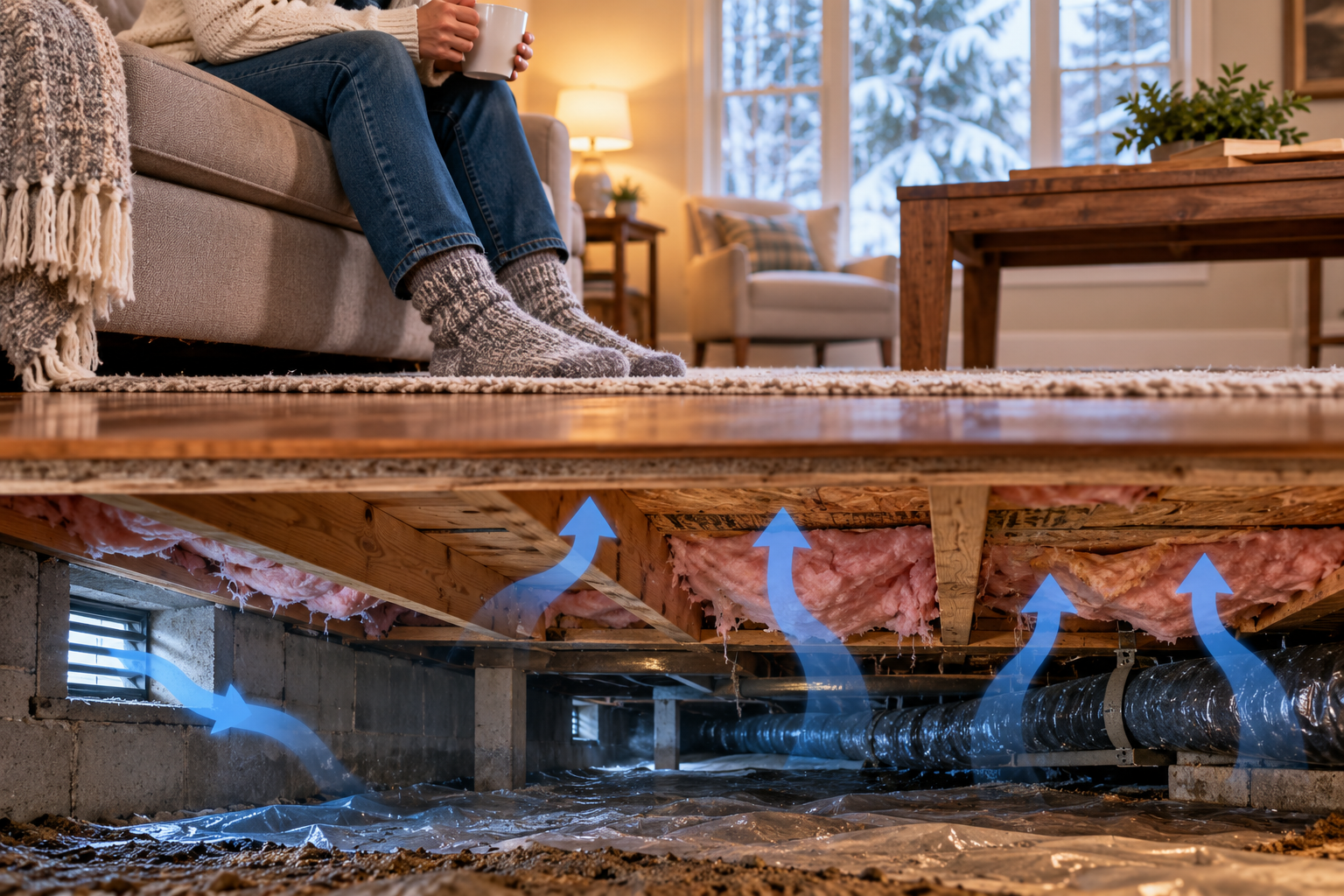
Yes. A crawlspace can make the first floor feel cold even when the heating system is running. Outdoor air, missing insulation, rim joist leaks, damp materials, and exposed soil can cool the floor assembly, leaving rooms uncomfortable even when the thermostat shows a normal temperature.
Author: All Pro Basement
Updated: October 29, 2026
For some Medway homeowners, the problem is not the furnace at all.
The heating system may be producing warm air while the structure beneath the first floor continues losing heat.
That is why crawlspace encapsulation in Medway often begins with understanding what is happening directly below the living space.
Can a Crawlspace Make My First Floor Feel Cold?
Yes. A cold crawlspace can cool the underside of the first-floor structure.
If outdoor air enters freely, insulation is incomplete, or gaps allow air movement, the floor above may remain noticeably colder than the rest of the room.
This can happen even when the indoor air temperature feels comfortable.
Why Are My Floors Cold Even When the House Is Warm?
The thermostat measures air temperature, not the temperature of every surface in the home.
A room can therefore reach the thermostat setting while hardwood, tile, or other flooring stays cold.
If the floor assembly is losing heat toward the crawlspace, your feet may notice the problem before the thermostat does.
Can Crawlspace Vents Make Floors Colder in Winter?
They can, depending on the crawlspace design and overall building strategy.
Open vents may allow very cold winter air to enter beneath the first floor.
That cold air can lower temperatures around framing, insulation, ductwork, and foundation surfaces.
However, vents should not simply be sealed without evaluating moisture and building conditions first.
Why Does Medway’s Winter Weather Matter?
Massachusetts winters can expose weaknesses that are barely noticeable during warmer months.
Freezing temperatures and winter winds can increase the difference between indoor conditions and the air beneath the house.
As a result, small air leaks may become much easier to feel.
A crawlspace that seemed harmless in July can behave very differently in January.
Does Missing Crawlspace Insulation Cause Cold Floors?
It can.
Insulation helps reduce heat transfer through the floor or crawlspace enclosure, depending on the design.
If insulation is missing in sections, poorly fitted, or pulled away from the subfloor, those areas may lose heat more easily.
However, insulation alone does not stop every draft.
What Is the Difference Between Insulation and Air Sealing?
Insulation slows heat transfer.
Air sealing reduces unwanted air movement through cracks, gaps, joints, and penetrations.
Both can matter.
A well-insulated area can still feel uncomfortable if cold outdoor air is moving through unsealed openings around framing or utilities.
ENERGY STAR explains that air sealing and insulation work together as part of improving the building enclosure.
What Is Air Leakage Around the Rim Joist?
The rim joist is located around the outer edge of the floor framing.
Gaps around this area can create pathways for outdoor air.
In a crawlspace, those leaks may allow cold air to reach the underside of the first floor.
They can also connect the crawlspace with other hidden air pathways inside the house.
Can Cold Crawlspace Air Enter the Living Space?
Air can move through gaps around plumbing, wiring, framing, utility penetrations, and floor assemblies.
This does not mean every cold room is receiving air directly from the crawlspace.
However, an unsealed crawlspace can become part of the home’s broader air-leakage pattern.
That is one reason crawlspace encapsulation in Medway should consider more than the floor covering alone.
What Is the Stack Effect?
The stack effect describes how temperature differences can help drive air movement through a building.
During winter, warmer indoor air tends to rise.
As air leaves through upper parts of the house, replacement air can enter through lower leaks.
A leaky crawlspace may become one of those lower entry areas.
Why Can Winter Drafts Be Hard to Locate?
Air does not always enter where the homeowner feels the discomfort.
A leak in the crawlspace may cool framing or flooring rather than create an obvious breeze.
Likewise, air may travel through hidden wall or floor cavities before reaching the living space.
Professional inspection therefore looks for pathways, not only noticeable drafts.
Can Sagging Fiberglass Insulation Cause Problems?
Yes. Fiberglass that has pulled away from the subfloor may leave gaps where heat moves more easily.
Sagging material can also indicate installation problems or moisture exposure.
However, not every piece of existing fiberglass needs to be removed.
Its condition, placement, dryness, and effectiveness should be evaluated first.
Can Compressed Insulation Become Less Effective?
Yes. Many insulation products are designed to work at a specific installed thickness and configuration.
When material is compressed or poorly fitted, its performance can change.
Gaps around edges can also create uneven thermal protection.
The U.S. Department of Energy provides guidance on insulation and the importance of proper installation.
Can Moisture Make Crawlspace Insulation Less Effective?
Moisture can create several problems in a crawlspace.
Wet or damp materials may perform differently and can also indicate a larger water-management issue.
Visible moisture should therefore be investigated before simply adding more insulation.
The source could involve ground moisture, seepage, drainage, condensation, or plumbing.
Why Does Moisture Matter in an Article About Cold Floors?
Because thermal comfort and moisture control often overlap in crawlspaces.
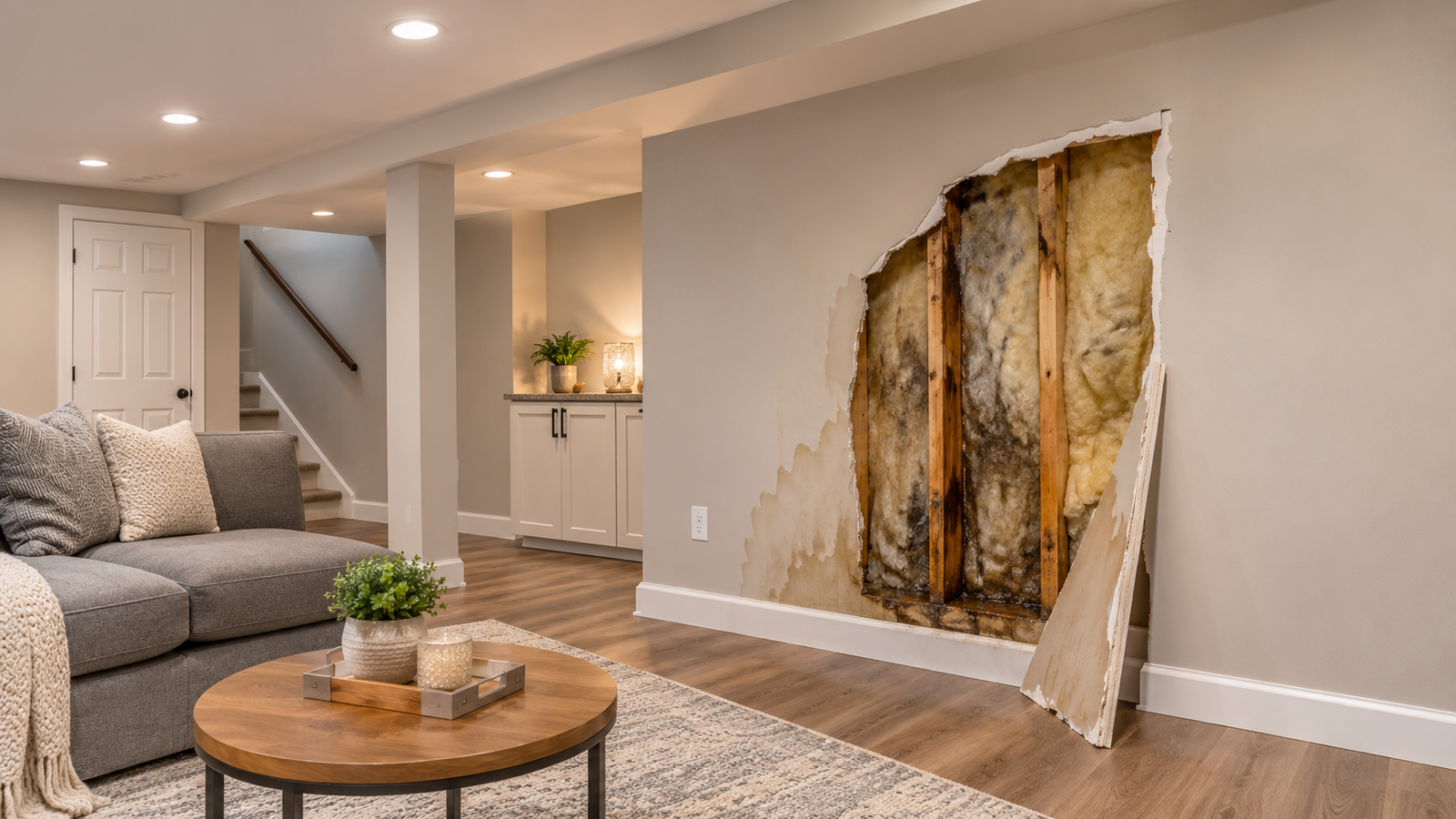
A damp crawlspace may contain wet materials, high humidity, condensation, or damaged insulation.
Those conditions can affect the building assembly beneath the first floor.
More importantly, moisture problems should be corrected before an enclosure strategy is completed.
Can Exposed Soil Release Moisture Into a Crawlspace?
Yes. Bare soil can be a source of moisture vapor.
That does not mean every crawlspace with exposed soil has visible standing water.
Moisture can enter the crawlspace as vapor even when the ground surface does not appear flooded.
The EPA emphasizes controlling moisture sources as a key part of managing indoor moisture.
What Does a Crawlspace Vapor Barrier Do?
A ground vapor barrier helps limit moisture vapor moving from the soil into the crawlspace.
It is primarily a moisture-control component.
It should not be presented as a complete solution for cold floors by itself.
Air leakage, insulation, drainage, foundation conditions, and ductwork may still need attention.
Can a Vapor Barrier Stop Winter Drafts?
Not by itself.
A vapor barrier over the soil addresses ground moisture.
Draft control usually requires identifying openings where air is moving through the crawlspace enclosure or floor system.
This distinction is important when evaluating crawlspace encapsulation in Medway.
Encapsulation is more than placing plastic over the ground.
Can Cold Foundation Walls Affect the Crawlspace?
Yes. Foundation walls can become very cold during winter.
If the crawlspace enclosure is poorly insulated, those surfaces can influence temperatures inside the space.
However, the proper insulation strategy depends on how the crawlspace is designed.
The floor above, foundation walls, and air barrier should be considered as parts of one building system.
Can Ductwork in the Crawlspace Affect Comfort?
Yes.
Heating ducts that run through a cold crawlspace can influence comfort if they are poorly insulated, damaged, or leaking.
Air meant for the living space may lose heat before reaching the room.
Leaky return or supply ducts can also affect system performance.
HVAC concerns should be evaluated by an appropriate professional when necessary.
Does Cold Flooring Mean My Furnace Is Too Small?
Not necessarily.
Cold floors alone do not prove there is a heating-system problem.
The furnace may be maintaining room temperature correctly while the floor stays cold because of conditions below it.
A complete diagnosis should consider both the heating system and the building enclosure.
What Else Can Cause a Cold First Floor?
A crawlspace is only one possible contributor.
Other conditions can include:
- Drafty windows
- Exterior wall leakage
- Poor attic air sealing
- HVAC imbalance
- Duct leakage
- Inadequate insulation
- Room layout
- Building-envelope gaps
The goal is to identify the dominant cause rather than assuming every comfort complaint starts beneath the house.
Why Does Turning Up the Thermostat Sometimes Fail?
Raising the thermostat increases heating demand.
It does not automatically seal air leaks or repair insulation gaps.
The room air may become warmer while the floor remains uncomfortable.
As a result, the homeowner may use more heat without correcting the source of the cold surface.
What Are Signs the Crawlspace May Be Involved?
The strongest clues usually appear where comfort patterns match the crawlspace below.
Possible signs include:
- Cold floors above the crawlspace
- Visible insulation gaps
- Sagging fiberglass
- Open vents
- Musty odors
- Damp soil
- Condensation
- Drafts near floor edges
- Cold ducts
These clues justify inspection, but none proves that encapsulation is automatically required.
Why Should Medway Homeowners Inspect the Crawlspace?
Because winter discomfort can reveal conditions that remain hidden during warmer weather.
A Medway homeowner may notice that one section of the first floor is consistently colder than rooms over a basement or slab.
That difference can help narrow the search.
For crawlspace encapsulation in Medway, inspection should begin with the building conditions rather than with a predetermined solution.
What Should a Professional Crawlspace Inspection Include?
A useful inspection should look at both moisture and thermal conditions.
That may include:
- Crawlspace vents
- Floor insulation
- Rim joists
- Foundation walls
- Air leaks
- Utility penetrations
- Ductwork
- Soil
- Vapor barriers
- Visible moisture
- Drainage
The relationship between these components matters more than any single item.
How Do Professionals Look for Air Leakage?
They examine common gaps around framing, rim joists, plumbing, electrical penetrations, access doors, vents, and utility openings.
The goal is to understand how outside air may enter and how crawlspace air may connect with the rest of the building.
Visible gaps can provide clues, but some air pathways are hidden.
What Should Be Checked With Crawlspace Insulation?
The inspection should consider whether insulation is present, correctly positioned, dry, intact, and compatible with the crawlspace design.
Material hanging loosely beneath the floor may leave sections exposed.
Likewise, insulation should not hide an unresolved moisture problem.
Can Musty Odors Point to Crawlspace Moisture?
They can.
A musty smell may justify checking for damp materials, soil moisture, condensation, standing water, or microbial growth.
However, odor alone does not identify the moisture source.
A complete inspection should determine where the moisture is coming from before recommending a correction.
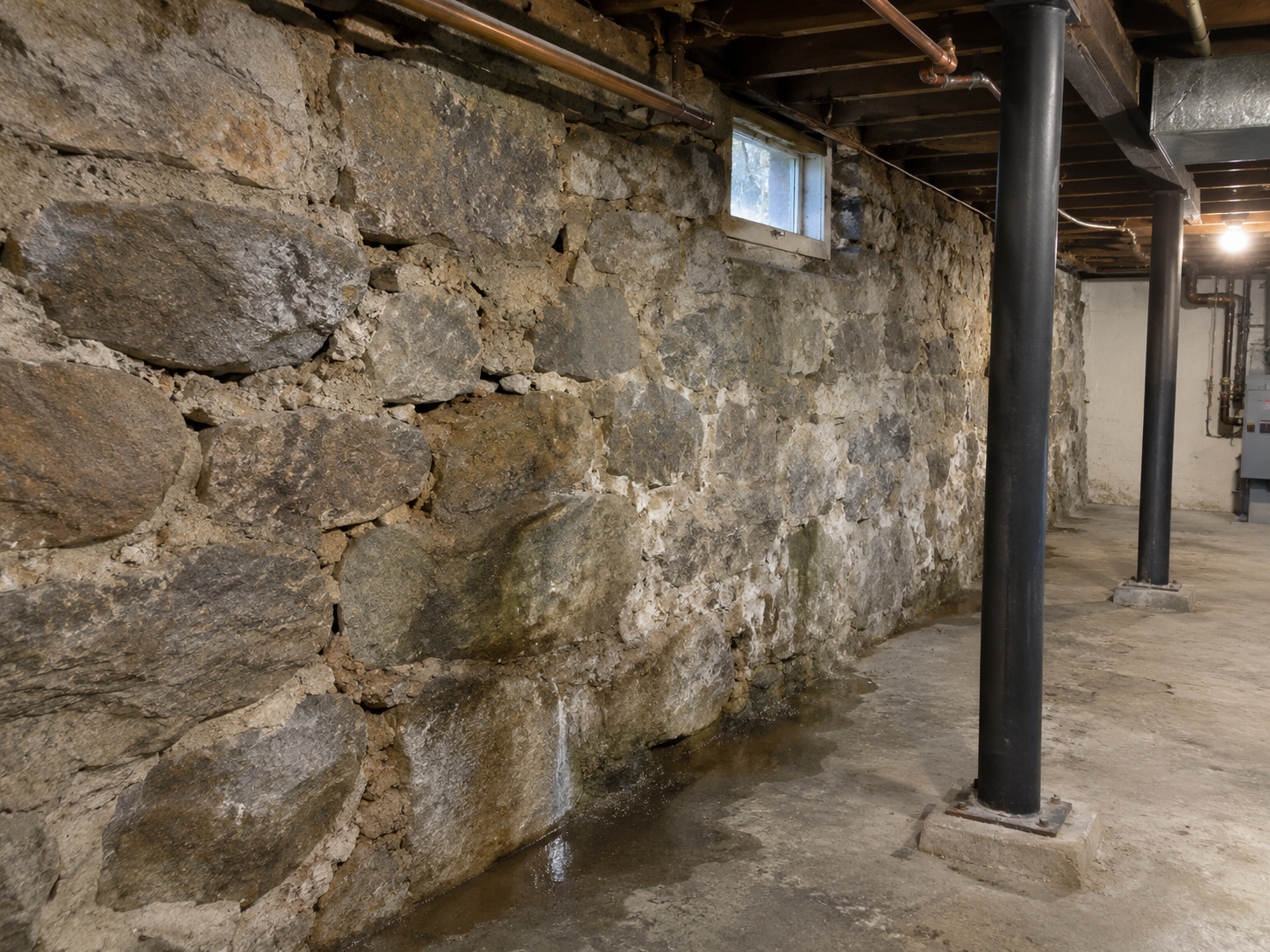
What If There Is Standing Water in the Crawlspace?
Standing water should be treated as a water-management problem, not simply covered with a vapor barrier.
Possible sources include surface drainage, groundwater, foundation seepage, or plumbing.
The appropriate response depends on the source.
Drainage or a sump system may be needed in some situations, but not every crawlspace requires the same equipment.
Can Summer Humidity Matter During a Winter Comfort Evaluation?
Yes.
A crawlspace strategy should work across seasons.
Massachusetts homes may face cold winter air and humid summer conditions.
A design that focuses only on winter temperature while ignoring moisture can create incomplete results.
That is why crawlspace encapsulation in Medway should consider year-round air and moisture behavior.
Are Homes in Millis, Holliston, and Franklin Similar?
Homes in nearby Millis, Holliston, and Franklin can experience similar regional winters, humid summers, snow, and freeze-thaw conditions.
However, individual crawlspaces vary greatly.
Foundation type, floor framing, vents, drainage, insulation, and additions can make two nearby homes behave very differently.
Can Older Homes Have More Crawlspace Air Leaks?
Some older homes may contain more joints, penetrations, additions, repairs, or irregular framing that create potential air pathways.
However, age alone does not determine performance.
A newer home can also have insulation or air-sealing defects.
The crawlspace itself must be inspected.
Why Is Crawlspace Encapsulation More Than Plastic on the Ground?
Because an effective crawlspace strategy may involve several separate issues.
Ground moisture is one.
Air leakage is another.
Insulation, water entry, drainage, humidity, foundation conditions, and ductwork may also matter.
Building Science Corporation discusses crawlspaces as part of the larger building enclosure and moisture-management system.
Can Crawlspace Encapsulation in Medway Help Cold Floors?
It may help when crawlspace air leakage, moisture, or enclosure problems are contributing to the cold floor.
However, the expected benefit depends on the actual cause.
Encapsulation should not be presented as a universal cure for every comfort problem.
A professional first needs to determine whether the crawlspace is part of the problem.
Why Does the Diagnosis Come Before the Solution?
Because two homes with the same cold-floor complaint may need completely different corrections.
One may have major rim joist leakage.
Another may have damaged insulation.
A third may have water entering the crawlspace.
The same symptom does not guarantee the same cause.
All Pro Basement evaluates crawlspaces within the larger relationship between moisture, drainage, insulation, air movement, and foundation conditions.
The family-owned company has more than 25 years of hands-on experience working with Massachusetts basements and crawlspaces.
Owner Diego Tameirao personally oversees projects, while Project Manager Keila Tameirao helps coordinate the homeowner experience.
For Medway homeowners, the important question is not simply whether the first floor feels cold.
It is whether the crawlspace below is allowing cold air, moisture, insulation problems, or other building-envelope conditions to keep that floor uncomfortable even while the heating system continues running.
That distinction matters because improving comfort starts with identifying which part of the crawlspace enclosure is allowing heat, air, or moisture to move where it should not.
How Does Crawlspace Encapsulation Help With Cold Floors?
Crawlspace encapsulation can help when cold floors are linked to air leakage, exposed soil, moisture, or an poorly controlled crawlspace environment.
The goal is to create a more controlled space beneath the home.
However, crawlspace encapsulation in Medway should be designed around actual site conditions rather than installed as the same package in every house.
Is Crawlspace Encapsulation Just Plastic on the Ground?
No. A ground vapor barrier is only one possible component.
A complete strategy may also involve air sealing, rim joist treatment, insulation, drainage, humidity management, and water control.
The crawlspace should be treated as part of the building enclosure.
What Does a Ground Vapor Barrier Do?
A ground vapor barrier helps limit moisture vapor rising from exposed soil into the crawlspace.
This can support moisture control and help protect surrounding materials.
However, a vapor barrier does not automatically stop cold drafts or correct missing insulation.
Those issues must be addressed separately.
Does a Vapor Barrier Make Floors Warmer?
Not necessarily by itself.
Its primary role is moisture control.
If exposed ground moisture is contributing to damp insulation or poor crawlspace conditions, controlling that moisture may support a better overall solution.
But cold floors may still require air sealing or insulation improvements.
Why Is Air Sealing Important?
Air sealing reduces pathways where outdoor air can enter through cracks, gaps, access openings, and utility penetrations.
During a Massachusetts winter, those openings can allow cold air to affect the floor assembly above.
Reducing uncontrolled air movement may improve comfort when air leakage is part of the problem.
Why Is Rim Joist Sealing Important?
The rim joist area sits along the outer edge of the floor system.
Small gaps in this area can create significant air pathways.
If cold outdoor air enters there, the perimeter of the first floor may feel noticeably colder.
Rim joist sealing is often evaluated during crawlspace encapsulation in Medway because this area connects the crawlspace to the broader building enclosure.
Should Crawlspace Vents Be Sealed?
Sometimes, but not without evaluating the crawlspace design.
Closing vents changes how air and moisture move through the space.
Before sealing them, a professional should evaluate moisture sources, insulation, ventilation strategy, foundation conditions, and combustion safety where relevant.
Simply blocking vents without understanding the building can create new problems.
Can Crawlspace Encapsulation Protect Insulation?
It can help when moisture and uncontrolled air movement are contributing to insulation problems.
However, existing insulation should still be inspected.
Material that is wet, compressed, damaged, or poorly positioned may need correction.
Encapsulation should not hide insulation problems behind new materials.
Should Crawlspace Walls or the Floor Above Be Insulated?
The correct location depends on the crawlspace design and building strategy.
Some crawlspaces are insulated at the floor above.
Others are treated as part of the conditioned building enclosure.
A professional should determine which approach fits the home.
More insulation is not automatically better if air leakage or moisture remains unresolved.
What If Fiberglass Insulation Is Hanging Down?
Sagging insulation may indicate poor installation, loss of support, moisture exposure, or repeated disturbance.
It should be inspected rather than simply pushed back into place.
The underlying cause matters.
If moisture is present, that moisture source should be corrected before new insulation is installed.
Can Crawlspace Moisture Affect Comfort?
Yes. Moisture and thermal performance often influence one another.
Damp insulation, condensation, and high humidity can affect crawlspace materials and may create musty conditions.
Moisture management is therefore part of evaluating crawlspace encapsulation in Medway.
What If Water Is Entering the Crawlspace?
The source should be identified before encapsulation is completed.
Possible sources include:
- Groundwater
- Surface drainage
- Foundation seepage
- Plumbing leaks
- Condensation
- High humidity
Covering an active water problem does not eliminate it.
The drainage strategy should address where the water originates and how it should be removed.
Can Exterior Drainage Be Part of the Solution?
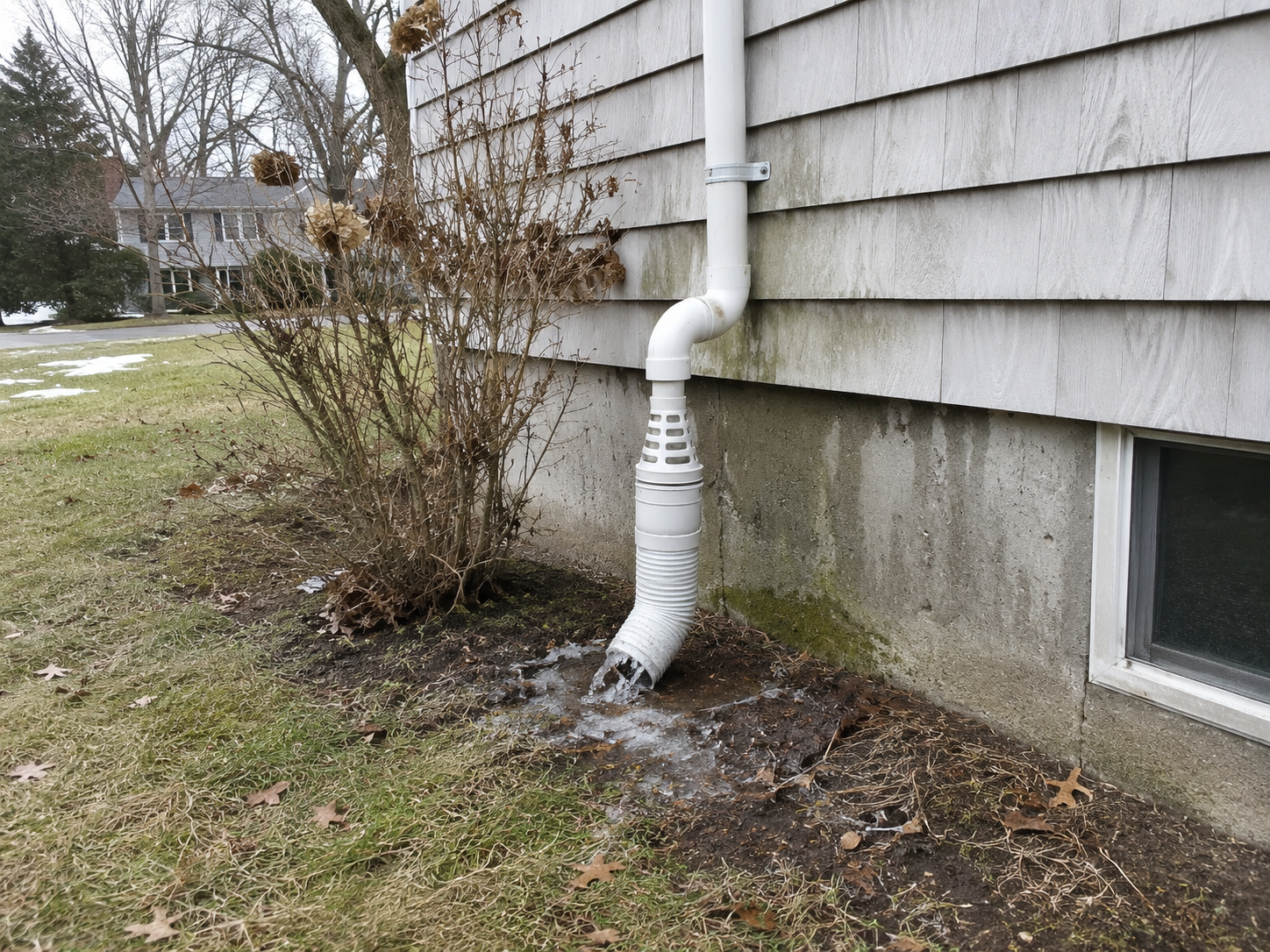
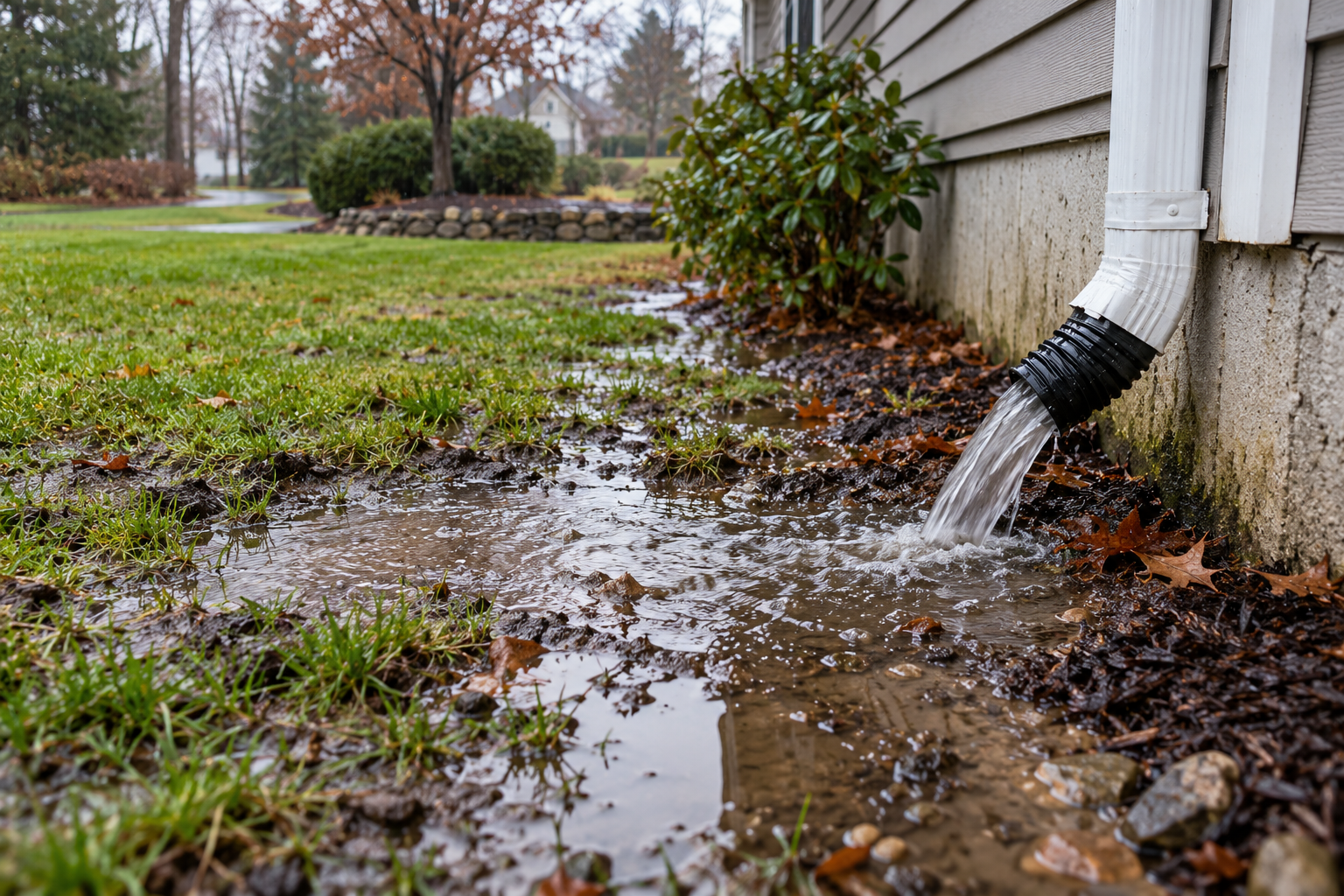
Yes. If rainwater or grading sends water toward the crawlspace foundation, exterior drainage may need attention.
Gutters, downspouts, yard slope, and underground drainage can all influence moisture around the foundation.
The EPA recommends directing surface water away from foundations as part of moisture control.
When Is Interior Drainage Needed?
Interior drainage may be considered when groundwater or foundation seepage must be collected from inside the crawlspace perimeter.
It performs a different job from exterior grading or downspout corrections.
The appropriate approach depends on how water enters.
When Is a Sump Pump Needed in a Crawlspace?
A sump pump may be needed when collected water must be mechanically discharged from the crawlspace.
However, not every encapsulation requires one.
A dry crawlspace with vapor and air-control problems may have very different needs from one experiencing active groundwater.
The system should match the water problem.
Can Encapsulation Help Without Replacing the Heating System?
Yes, when the heating system is functioning correctly and the crawlspace is contributing to the comfort problem.
Reducing uncontrolled air leakage or improving insulation conditions may address part of the issue beneath the floor.
However, HVAC problems should still be evaluated when symptoms point to the heating system.
What About Ductwork Running Through the Crawlspace?
Ductwork should be inspected if it passes through a cold or damp crawlspace.
Leaks, damaged insulation, loose connections, or exposed sections can affect comfort and system performance.
HVAC repairs should be handled by an appropriate professional when necessary.
ENERGY STAR emphasizes sealing air leaks and improving insulation as complementary steps for home comfort.
Can Crawlspace Encapsulation Improve Energy Efficiency?
It may support better building performance when crawlspace air leakage or insulation problems are significant.
However, energy savings vary from home to home.
No specific savings should be promised without evaluating the building, HVAC system, insulation, and existing air leakage.
Why Does Massachusetts Moisture Control Matter in Every Season?
Massachusetts crawlspaces face very different conditions throughout the year.
Winter can bring freezing weather and cold winds.
Spring may bring snowmelt and seasonal groundwater.
Summer can bring high humidity.
A crawlspace strategy should therefore manage both temperature-related comfort and moisture throughout the year.
Can Spring Snowmelt Affect an Encapsulated Crawlspace?
Yes. Encapsulation does not replace water management.
If spring snowmelt increases groundwater or sends runoff toward the foundation, drainage must still be able to handle it.
A vapor barrier is not designed to stop standing water from entering beneath it.
Can Humid Summers Create a Different Crawlspace Problem?
Yes. Warm, humid outdoor air can introduce moisture into some crawlspaces.
If that moisture reaches cooler surfaces, condensation may occur.
That is one reason a crawlspace strategy should not be designed only around winter drafts.
Year-round humidity conditions matter too.
How Is Crawlspace Encapsulation in Medway Planned?
It begins with inspection.
The professional should identify how air, moisture, and heat are moving through the space.
Important areas include:
- Ground conditions
- Foundation walls
- Rim joists
- Vents
- Insulation
- Ducts
- Water entry
- Drainage
- Humidity
- Sump systems
The final design should address the conditions that are actually present.
Can Nearby Milford, Upton, and Sherborn Homes Have Similar Issues?
Yes. Homes in Milford, Upton, and Sherborn experience similar New England winters, humid summers, snowmelt, and freeze-thaw conditions.
However, crawlspaces can differ considerably even within the same neighborhood.
One home may have exposed soil and open vents.
Another may have groundwater, insulation gaps, or ductwork below the floor.
That is why inspection remains more important than location alone.
When Should Medway Homeowners Call a Crawlspace Professional?
Professional evaluation is useful when cold floors repeatedly occur above a crawlspace or when moisture, odors, insulation damage, drafts, or standing water are visible.
These symptoms suggest that the area beneath the home deserves closer inspection.
The goal is not to assume encapsulation is necessary.
It is to determine whether crawlspace conditions are influencing comfort and, if so, which conditions should be corrected.
Frequently Asked Questions About Crawlspace Encapsulation in Medway
Why Are My Floors So Cold in Winter?
Cold floors can result from crawlspace air leakage, insulation gaps, cold foundation surfaces, duct problems, or broader building-envelope issues.
The heating system may still be maintaining normal room temperature.
The floor assembly itself must be evaluated.
Can a Crawlspace Make the Whole House Feel Colder?
It can contribute, especially if uncontrolled air leakage connects the crawlspace with the rest of the home.
However, windows, attic leaks, exterior walls, HVAC balance, and insulation elsewhere may also influence comfort.
A whole-home perspective helps avoid misdiagnosis.
Does Crawlspace Encapsulation Warm Floors?
It may improve floor comfort when the crawlspace is a major source of air leakage, moisture, or thermal loss.
However, results depend on the cause.
Encapsulation should not be promised as a guaranteed solution for every cold-floor complaint.
Should I Remove Old Crawlspace Insulation?
Not automatically.
Existing insulation should be inspected for moisture, damage, compression, gaps, and proper placement.
Some material may remain usable.
Other sections may require correction.
The decision should be based on condition rather than age alone.
Can Crawlspace Moisture Make Insulation Less Effective?
Moisture can damage some insulation materials or cause them to sag, compress, or lose proper contact with the building surface.
The moisture source should be identified before insulation is replaced.
Otherwise, the same problem may return.
Do Crawlspace Vents Cause Cold Floors?
They can contribute when winter air enters beneath the first floor.
However, crawlspace design varies.
Vents should not be sealed blindly because moisture control and other building conditions must be considered first.
Will a Vapor Barrier Stop Drafts?
No. A ground vapor barrier mainly limits moisture vapor from soil.
Drafts usually require air sealing at openings, penetrations, vents, framing joints, or other leakage points.
Both may be part of an encapsulation strategy, but they perform different jobs.
Can Encapsulation Help With Musty Odors?
It may help when odors are associated with ground moisture or humid crawlspace conditions.
However, active water intrusion, plumbing leaks, contaminated materials, or other moisture sources must also be addressed.
Odor should not be treated without finding its source.
Do I Need a Dehumidifier After Crawlspace Encapsulation?
Not every crawlspace needs one.
Humidity control depends on the enclosure design, local conditions, moisture sources, HVAC interaction, and seasonal behavior.
A professional should determine whether mechanical dehumidification is appropriate.
When Should a Crawlspace Be Professionally Inspected?
Inspection is especially useful when homeowners notice cold floors, musty odors, visible moisture, damaged insulation, standing water, recurring condensation, or unexplained drafts.
These signs may indicate that air or moisture management below the house needs attention.
What Should a Complete Crawlspace Evaluation Consider?
The evaluation should connect the visible symptoms with the building system.
It should examine the vents, ground, vapor barrier, foundation walls, rim joists, insulation, ductwork, moisture, drainage, sump equipment, and humidity.
A cold first floor may be the symptom that leads a homeowner into the crawlspace.
However, the real issue may involve several conditions working together.
For that reason, crawlspace encapsulation in Medway should begin with diagnosis instead of a predetermined package.
All Pro Basement evaluates crawlspaces as part of the home’s broader moisture, drainage, foundation, and air-management system.
The family-owned company has more than 25 years of hands-on experience working with Massachusetts homes.
Owner Diego Tameirao personally oversees projects, while Project Manager Keila Tameirao helps coordinate work from evaluation through completion.
The company’s approach focuses on identifying what the home actually needs rather than using high-pressure sales or assuming every crawlspace requires the same solution.
When cold floors are linked to crawlspace air leakage, damaged insulation, moisture, or exposed soil, correcting those conditions may improve how the home feels.
When the cause is elsewhere, the solution should focus there instead.
Contact All Pro Basement Today to find out whether the crawlspace beneath your Medway home is contributing to cold floors and whether crawlspace encapsulation, moisture control, air sealing, or another targeted solution fits your property.