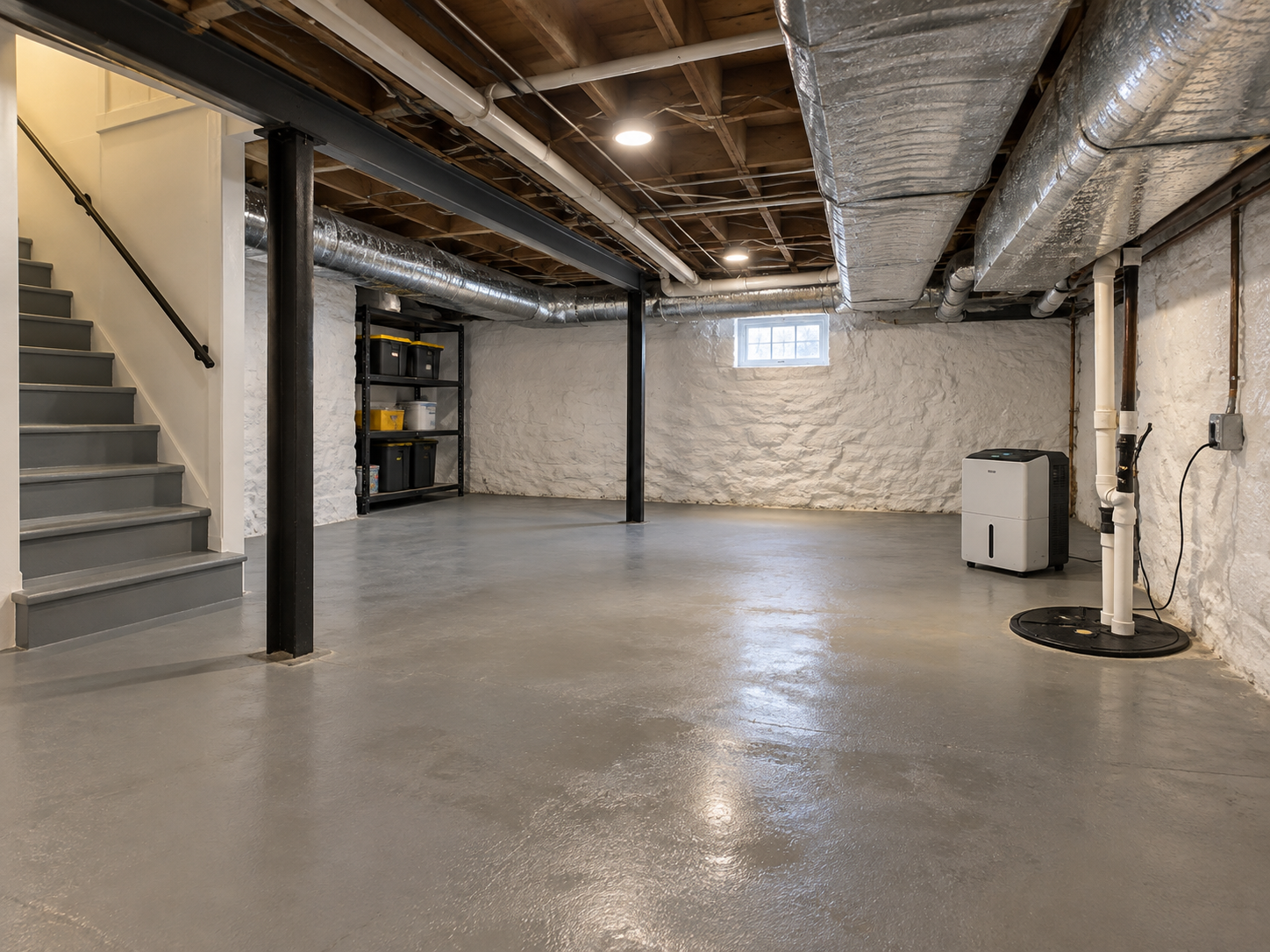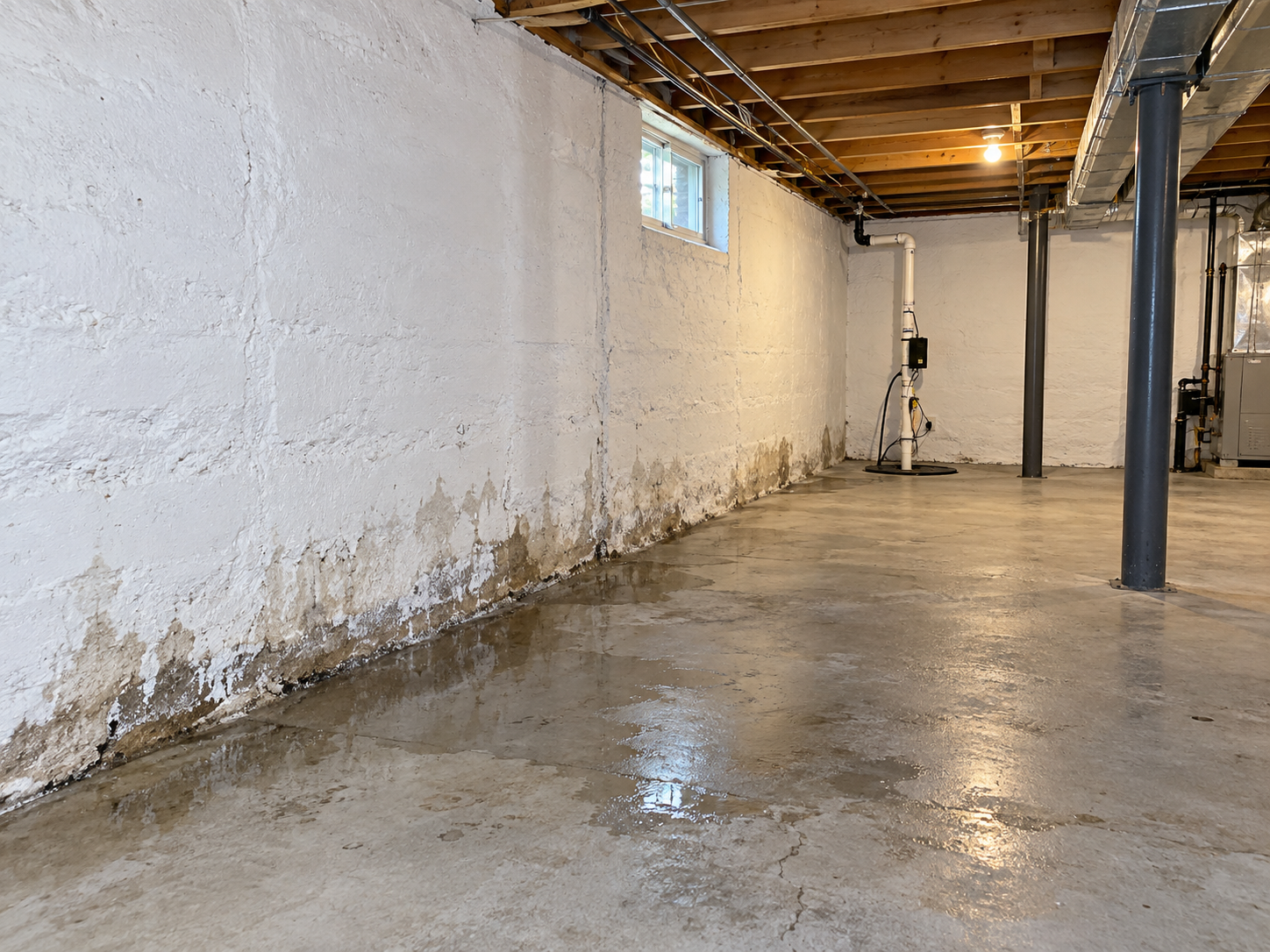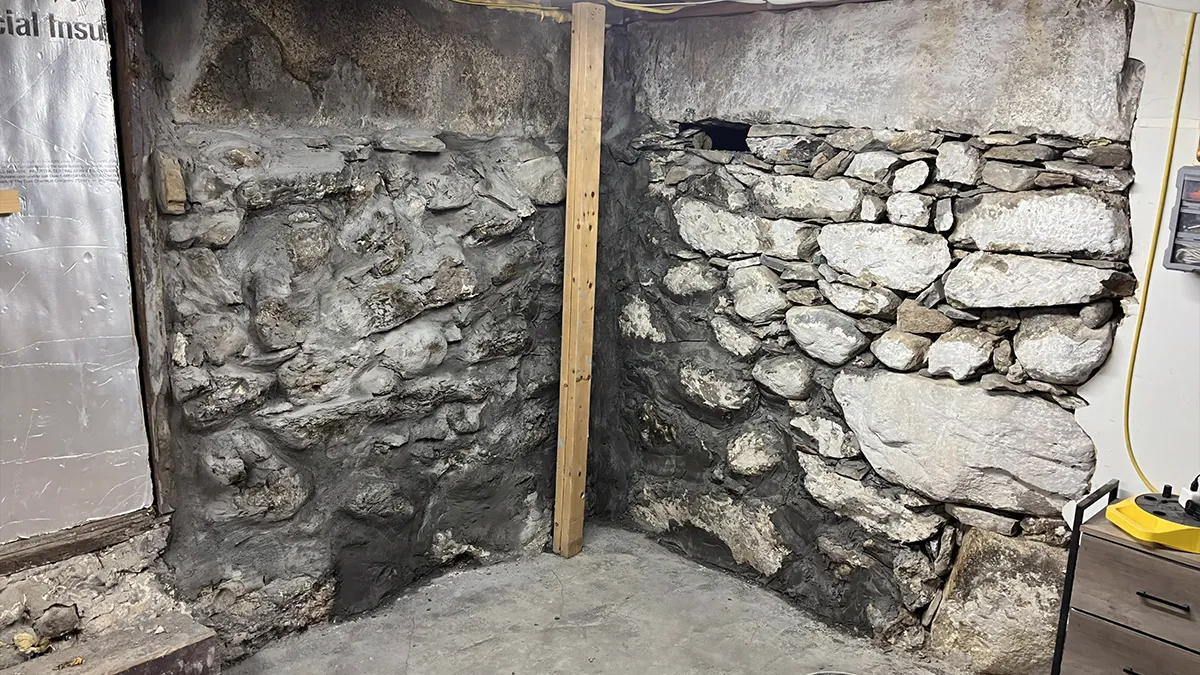
A fieldstone foundation can hold up a house for generations as long as the mortar between the stones is kept up. The stones themselves rarely fail. The joints do, slowly washing out until water, drafts and sometimes loose stones come through. Repointing those joints fixes the wear. Just go in with realistic expectations: a fieldstone basement is rarely as dry as a poured concrete one without some help managing water.
What a Fieldstone Foundation Is
If your basement walls are made of irregular stones stacked with mortar in between, you have a fieldstone foundation. Builders used what the land gave them, and in New England the land gives a lot of stone. Farmers spent generations pulling it out of their fields, which is where all those old stone walls in the woods came from.
Fieldstone was a common way to build foundations in Massachusetts through the 1800s and into the early 1900s, before poured concrete took over. You’ll find them all over the older neighborhoods of places like Newton, Brookline, Wellesley and Worcester, under farmhouses, Victorians and old colonials alike.
There’s nothing wrong with having one. Plenty of these foundations have outlasted the people who built them by well over a century. They just need a different kind of care than a modern basement.
Why the Mortar Is the Weak Point
In a fieldstone wall, the stones carry the load and the mortar holds them in place and fills the gaps. The original mortar in most of these homes is softer than anything used today, and over time it gives up.
Water is what wears it down. Groundwater pressing against the outside of the wall slowly washes the fine material out of the joints. In winter, moisture inside the mortar freezes and expands, loosening it a little more each year. The mortar turns sandy, then crumbly, and eventually falls out.
The classic sign is sand on the basement floor. If you keep sweeping up little piles of sand along the base of the wall, that’s your mortar leaving, one joint at a time.
Signs Your Fieldstone Foundation Needs Attention
Walk along the walls with a flashlight and look closely at the joints, not just the stones. Things to watch for:
- Mortar that crumbles or turns to sand when you rub it with a finger
- Small piles of sand or grit at the base of the wall
- Gaps or open pockets between stones where the mortar is gone
- Stones that feel loose or have shifted out of line
- Water coming in at the same few spots after every heavy rain
- White, powdery residue (efflorescence) on the stones and joints
- Cold drafts, daylight, or mice finding their way in through the wall
Most of those are a maintenance issue, and the sooner you deal with them, the smaller the job. One is different. If a section of the wall is bulging inward or stones are falling out, have it looked at in person before anything else. That’s not something to judge from a photo or a blog post.
What Repointing Is
Repointing is the standard repair for worn mortar joints. The loose, deteriorated mortar gets raked out and replaced with fresh mortar, packed in tight so it bonds with the stone around it. It’s slow, hands-on work, and it’s what keeps a fieldstone wall doing its job for decades to come.
It isn’t always the whole basement. Sometimes only a few sections have worn out, usually where water hits the wall hardest or up near the top where frost reaches. Other times the whole foundation is due. That’s the point of an inspection: figuring out which, so you’re not paying to repoint joints that are still sound.
If you’re seeing sand, gaps or loose stones, our fieldstone foundation repointing service is where to start.
Can a Fieldstone Basement Be Dry?
Drier, yes. Bone dry, usually not without some help, and anyone who promises otherwise isn’t being straight with you.
Repointing closes up the joints, so a lot less water gets through the wall itself. But a fieldstone wall is still hundreds of stones and joints, and many of these basements started out with dirt floors or had a thin slab poured decades later. When the water table rises in spring, water can come up from below or along the base of the wall no matter how good the mortar is.
That’s where interior basement waterproofing comes in. It collects the water that does get in and sends it to a sump pump before it spreads across the floor. If your basement doesn’t have a pump yet, or has one that’s seen better days, look at sump pump installation and replacement at the same time. In most old homes, repointing and water management work best together.
Buying an Older Home With a Fieldstone Foundation
A fieldstone foundation shouldn’t scare you off a house you love. It should just be part of what you look at. When you walk the basement during a showing:
- Rub a few joints in different spots. Firm mortar is a good sign. Sand in your hand is not.
- Look at the floor along the walls for sand piles or water stains.
- Notice whether the walls have fresh paint or a new coat of cement. It can be perfectly innocent, but it can also cover up exactly what you’d want to see.
- Ask whether there’s a sump pump and how often it runs.
- Pay attention to the smell. A strong musty smell usually means moisture, even if the walls look dry that day.
If something looks off, get a basement inspection before you close. It’s a lot easier to plan for repointing when you know about it up front than to discover it during your first spring in the house.
Worried About Your Fieldstone Foundation?
If your basement is shedding sand or taking on water, call us at 508-498-1090 or request an inspection online. For what to check before the cold sets in, read our guide on how to winterize your basement in Massachusetts. And if your house also has a poured concrete addition, our guide to foundation cracks explains which cracks in those walls are worth worrying about.