Introduction
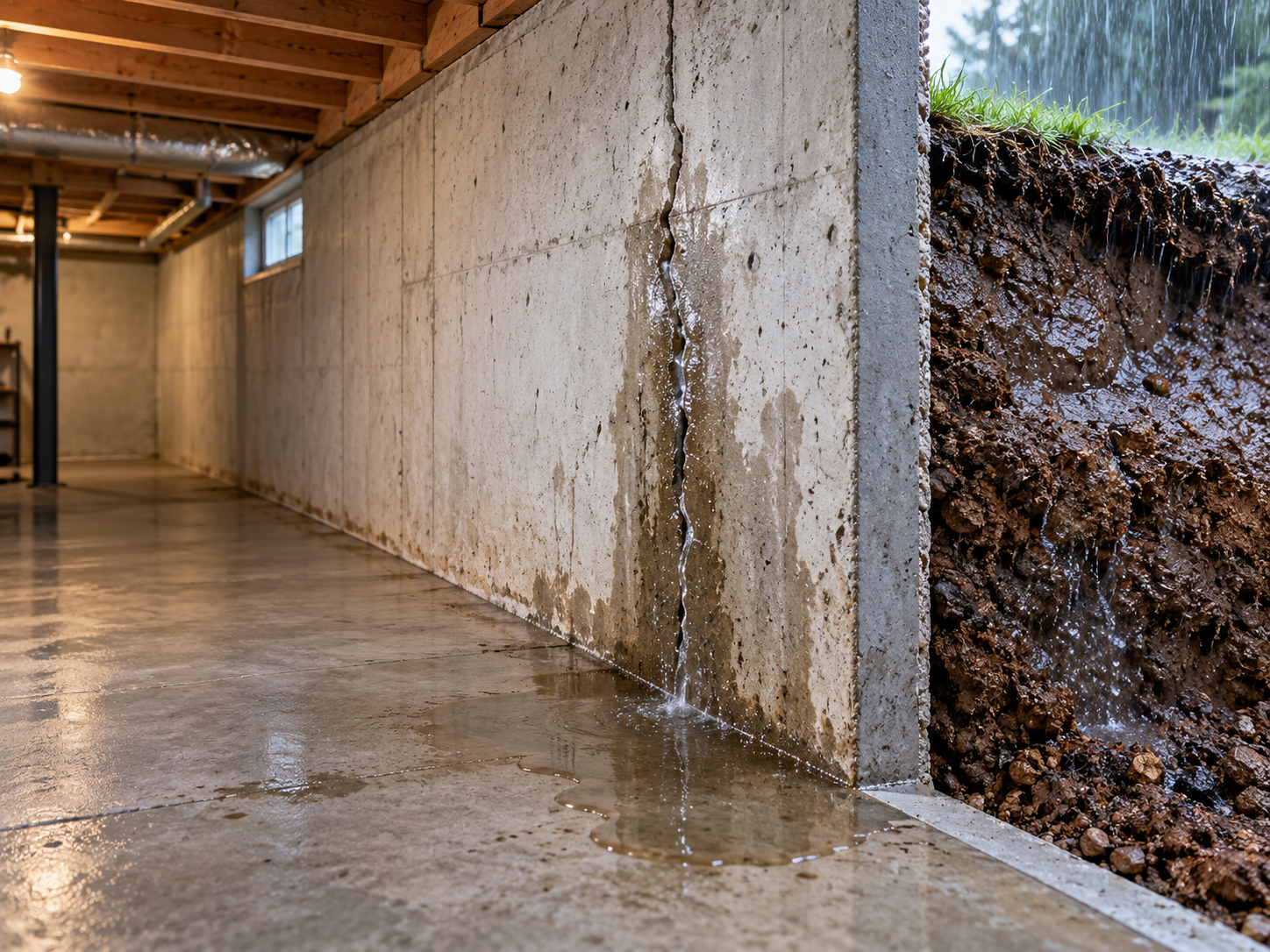
Water can keep returning through the same foundation crack because heavy rain saturates the soil and increases water pressure around the foundation. If the crack remains an open pathway, water may follow it repeatedly. Surface patches may also fail when drainage, groundwater, or movement behind the crack remains unresolved.
Author: All Pro Basement
Updated: October 26, 2026
A basement wall can look completely dry for weeks and then begin leaking through the same crack during the next major storm.
That pattern is an important diagnostic clue.
The problem may involve more than the visible opening in the concrete.
Why Does the Same Foundation Crack Leak After Every Heavy Rain?
The crack may be the easiest path for water to enter when soil outside the foundation becomes saturated.
During dry weather, there may not be enough water around the wall to create visible seepage.
After heavy rain, conditions can change quickly.
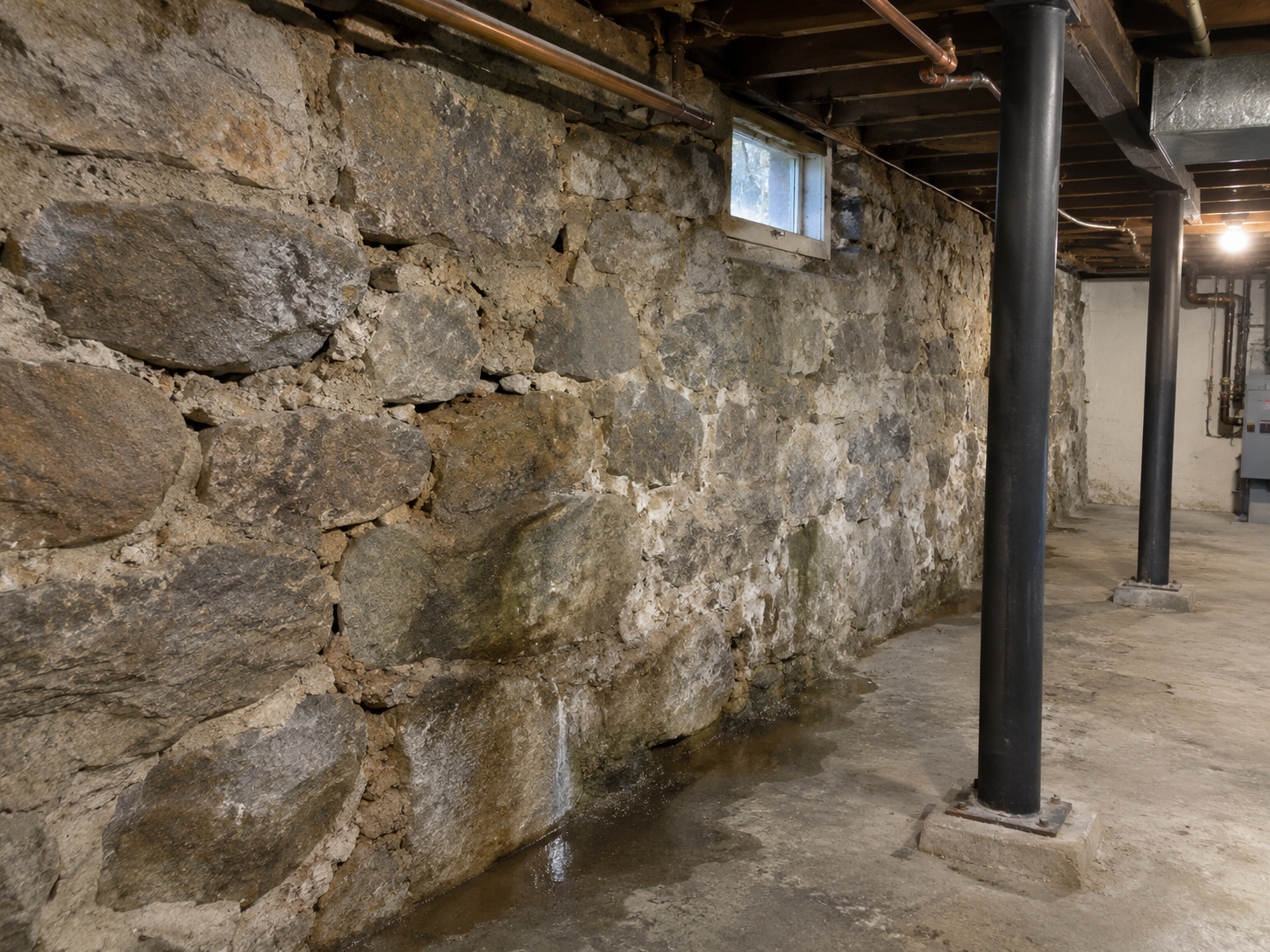
Water that cannot drain efficiently may remain against or near the foundation and eventually find openings in concrete walls, joints, or previous repairs.
The U.S. EPA recommends managing rainwater around foundations through proper grading, drainage, and downspout control.
What Is Hydrostatic Pressure?
Hydrostatic pressure is pressure created by water.
Around a foundation, saturated soil and rising groundwater can increase the amount of water pressing against below-grade walls and floors.
Water naturally seeks a path through available openings.
Therefore, an existing crack can become a repeated entry point when surrounding soil remains wet.
Can Hydrostatic Pressure Force Water Through a Small Crack?
Yes. Even a narrow crack can provide a path for seepage when water is present outside the wall.
The amount of leakage depends on several factors, including crack depth, groundwater conditions, drainage, soil saturation, and whether the crack extends through the wall.
A small opening on the interior surface does not always reveal the full shape of the crack inside the concrete.
Why Does Saturated Soil Make the Leak Worse?
Saturated soil contains less space to absorb additional rainwater.
As more rain falls, water must drain, move laterally, or collect around the foundation.
Poor drainage can make this condition more severe.
The EPA identifies rain-soaked soil and high water tables as common moisture threats to foundations.
When the soil stays wet, water leaking through foundation crack openings may continue long after rainfall slows.
Can Water Keep Entering After the Rain Stops?
Yes. The soil around a foundation does not become dry immediately when rain ends.
Groundwater and saturated soil can continue releasing water toward lower areas.
That means a basement crack may remain wet for hours or longer after the storm has passed.
The timing of the leak can help reveal whether groundwater or soil saturation is involved.
Why Is the Crack Dry During Normal Weather?
A dry crack does not necessarily mean the problem has disappeared.
It may simply mean there is not enough water outside the foundation to produce visible seepage.
This is why homeowners often notice water leaking through foundation crack openings only during prolonged or intense rain.
The crack may remain physically present between storms.
Can Poor Exterior Drainage Cause a Foundation Crack to Leak?
Yes. Poor exterior drainage can increase the amount of water reaching soil beside the foundation.
Improper grading may direct runoff toward the house.
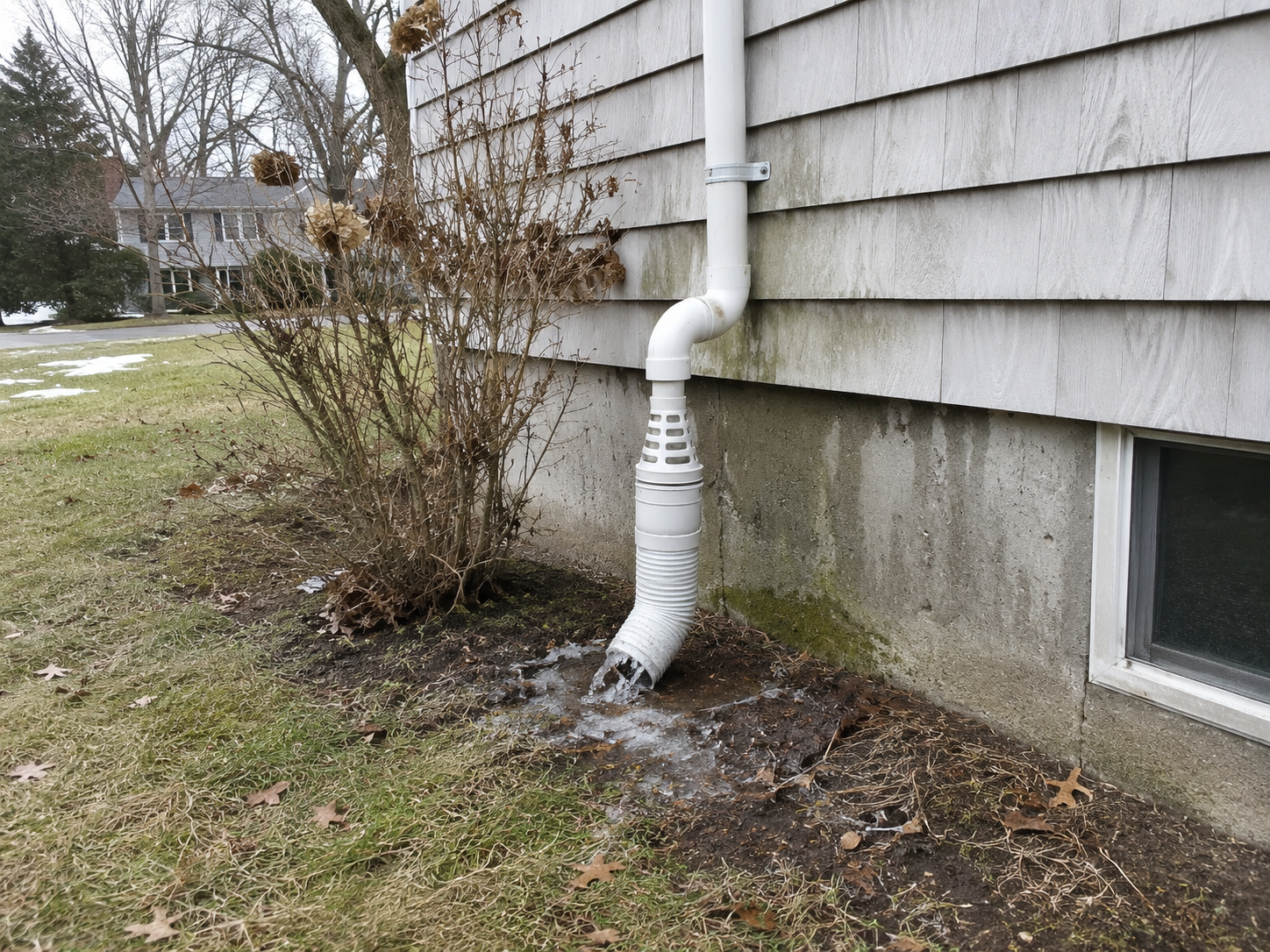
Downspouts that discharge too close to the wall can also concentrate roof water near the foundation.
The EPA advises directing runoff away from foundations and correcting grades that send water toward the building.
Can Downspouts Really Make That Much Difference?
They can.
Roof drainage collects rain from a large surface and releases it through a relatively small number of downspouts.
If that water is discharged next to the foundation, nearby soil may become heavily saturated.
DOE Building Science guidance stresses moving roof runoff away from foundations to reduce soil saturation and water intrusion risk.
Can Underground Drainage Become Clogged?
Yes. Underground drainage systems can lose effectiveness if they become blocked, damaged, poorly pitched, or disconnected.
A drain may appear functional at the surface while failing to carry enough water away during heavy rain.
This can contribute to repeated foundation seepage.
Professionals may examine where downspouts discharge and whether underground lines are actually moving water.
Why Might an Old Crack Repair Start Leaking Again?
A previous repair can fail if it addressed only the visible surface rather than the full water path.
Some materials may also separate when the crack moves.
In other cases, water simply finds a small gap beside the old repair.
That is why the previous repair material is an important part of the inspection.
Why Can Surface Patching Fail?
Surface patches cover the exposed face of a crack.
They may not reach the full depth of the opening.
If water pressure remains behind the wall, moisture may move around the repair or appear at another point along the crack.
Water leaking through foundation crack repairs often signals that the surrounding conditions also need evaluation.
Does Hydraulic Cement Permanently Stop Every Leak?
No. Hydraulic cement can be useful in certain applications, but it is not a universal repair for every leaking foundation crack.
The result depends on the crack, wall condition, movement, water pressure, and preparation.
A rigid surface repair may not solve an opening that continues to move.
It also cannot correct groundwater or exterior drainage problems by itself.
Can Caulk Be Used on a Foundation Crack?
Some sealants are designed for specific concrete applications, but ordinary caulk should not be treated as a complete foundation diagnosis.
The crack type matters.
So does the presence of active water, movement, and previous repair material.
A repair should be selected for the actual foundation condition rather than simply for convenience.
Is Every Leaking Foundation Crack Structural?
No. A crack can leak without being evidence of serious structural failure.
Concrete can develop cracks for several reasons.
Some may result from shrinkage, while others may relate to settlement or movement.
The key is to evaluate the crack rather than classify it based only on the fact that water enters.
How Can I Tell If a Crack May Be Structural?
Certain patterns deserve closer professional evaluation.
Warning signs may include:
- Cracks that continue widening
- Significant wall displacement
- Stair-step cracking in masonry
- Multiple related cracks
- Bowing or leaning walls
- Doors or windows changing alignment
- Signs of foundation settlement
A single symptom does not establish a diagnosis.
The entire foundation should be considered.
Does Crack Direction Matter?
Yes. Crack direction can help provide context.
Vertical cracks, horizontal cracks, diagonal cracks, and cracks associated with wall joints can have different causes.
However, direction alone is not enough to determine severity.
Professionals also consider width, displacement, location, foundation type, age, and whether the crack is changing.
Does Crack Width Matter?
Yes, but width is only one factor.
A narrow crack can still leak water.
Meanwhile, a wider crack may require closer evaluation for movement or settlement.
The key question is not simply, “How wide is it?”
It is also whether the crack is stable, changing, leaking, displaced, or connected to other foundation symptoms.
Can Foundation Settlement Cause Cracks?
Yes. Changes in soil support can contribute to foundation movement and cracking.
However, not every crack is caused by settlement.
Concrete shrinkage, construction joints, thermal movement, and other conditions can also produce cracks.
A professional inspection looks for related evidence before assigning a structural cause.
Can Freeze-Thaw Cycles Affect Foundation Conditions?
They can influence soil and masonry conditions in cold climates.
Massachusetts homes experience repeated seasonal freezing and thawing.
Moisture in soil can freeze, thaw, and change how water moves around a foundation.
However, a leaking crack should not automatically be blamed on winter weather.
Drainage, groundwater, foundation condition, and crack characteristics still need evaluation.
Why Are Massachusetts Basements Vulnerable After Heavy Rain?
Massachusetts weather can combine heavy rainfall, spring snowmelt, saturated soil, seasonal groundwater changes, and freeze-thaw cycles.
Older homes may also have foundation and drainage systems built under very different standards.
As a result, water conditions around the same foundation can change significantly throughout the year.
Can Spring Snowmelt Make an Existing Crack Leak?
Yes. Melting snow can add moisture to already wet soil.
If the ground is saturated or partially frozen, drainage may be slower.
Groundwater can also rise seasonally.
A foundation crack that stayed dry through much of winter may begin leaking during spring thaw.
Can High Groundwater Cause Water to Enter Through the Wall?
Yes. High groundwater can increase moisture around below-grade foundations.
The EPA identifies high water tables as a potential source of foundation moisture.
However, groundwater should be distinguished from roof runoff or surface drainage because the solutions may differ.
How Can I Tell Whether the Problem Is Groundwater or Surface Water?
Timing provides useful clues.
A leak that begins quickly during heavy rain may point toward surface runoff or rapid soil saturation.
A leak that appears later and remains active can suggest groundwater involvement.
However, both conditions can exist together.
A professional may inspect grading, downspouts, soil conditions, drainage, sump activity, and the leak pattern before drawing conclusions.
Can Condensation Be Mistaken for a Foundation Leak?
Yes. Moisture on a cool basement wall is not always water coming through a crack.
Humid air can condense on cold surfaces.
The EPA explains that temperature differences can cause moisture to condense on cooler building surfaces.
An active crack leak usually creates a more defined water path or staining pattern.
Can Plumbing Moisture Look Like Foundation Seepage?
It can.
A nearby supply pipe, drain, exterior faucet, or other plumbing component may leak and send water toward the foundation wall.
Professionals therefore inspect surrounding conditions rather than assuming every wet crack is groundwater-related.
The timing of moisture can again be revealing.
Water that appears regardless of rainfall may require investigation of another source.
What Do Water Stains Around a Crack Reveal?
Staining can help show where water has traveled.
Dark areas, mineral deposits, peeling coatings, or repeated damp marks may indicate a history of seepage.
However, stains do not prove that the crack is currently active.
A professional may compare old markings with fresh moisture during or after rain.
Why Are Mineral Deposits Important?
Mineral deposits can appear when water moves through masonry or concrete and evaporates at the surface.
They can provide evidence of repeated moisture movement.
However, deposits alone do not reveal the exact source of the water.
Drainage and groundwater conditions still need to be evaluated.
How Does a Professional Inspect Water Leaking Through a Foundation Crack?
The inspection should include more than the crack itself.
A professional may evaluate:
- Crack width and direction
- Crack location
- Wall displacement
- Water staining
- Previous repairs
- Foundation material
- Exterior grading
- Downspouts
- Soil saturation
- Groundwater clues
- Interior drainage
- Sump pump operation
This broader approach helps determine whether the crack is primarily a water-entry path, a structural concern, or both.
Why Should the Sump Pump Be Checked?
The sump pump can reveal how much groundwater the drainage system is managing.
Frequent operation during or after storms may indicate significant groundwater inflow.
A failed or undersized system can also allow water levels around the basement to rise.
However, replacing a sump pump does not automatically repair a leaking wall crack.
The crack and the water-management system must be evaluated together.
Can Interior Drainage Affect Foundation Leak Conditions?
Yes. Interior drainage systems can collect water entering along foundation walls or beneath the slab and direct it toward a sump.
DOE guidance notes that interior perimeter drainage may be used in existing basements when exterior excavation is impractical.
However, the right solution depends on the water source and foundation design.
Why Is Diagnosing the Water Source So Important?
Because foundation crack repair and water management are related but separate decisions.
Sealing an opening addresses the pathway.
Improving drainage addresses why so much water is reaching the foundation.
In some homes, only one problem needs correction.
In others, both contribute to water leaking through foundation crack openings after storms.
Can a Crack Be Repaired Without Fixing Exterior Drainage?
Sometimes, depending on the crack and the water conditions.
However, ignoring obvious drainage problems can leave unnecessary water pressure around the foundation.
Building science guidance consistently emphasizes managing rainwater before it saturates soil beside below-grade walls.
Why Does the Previous Repair Method Matter?
The existing material can reveal what was attempted and why it may have failed.
A thin surface patch behaves differently from a repair designed to fill the crack more deeply.
Professionals may need to remove loose or failed material before determining the next repair approach.
The crack should also be checked for movement before another material is installed.
What Should Be Checked Before Repairing the Crack Again?
Before another repair, the contractor should understand both the opening and the water conditions around it.
That includes the crack pattern, wall movement, groundwater, exterior drainage, previous repairs, and interior water-management system.
All Pro Basement uses this whole-system approach when evaluating foundation leaks in Massachusetts homes.
The family-owned company has more than 25 years of hands-on experience with structural foundation crack repair, basement waterproofing, drainage, sump systems, and foundation conditions.
Owner Diego Tameirao personally oversees projects, while Project Manager Keila Tameirao helps coordinate the homeowner experience.
The objective is to determine why water leaking through foundation crack openings keeps returning before selecting a repair.
Once the crack type, water source, drainage conditions, and signs of movement are understood, the repair can be matched to the actual cause instead of simply covering the visible symptom again.
That distinction determines whether the next step should focus on the crack, the surrounding water conditions, or both.
A lasting solution begins by matching the repair to the actual failure mechanism.
How Can I Tell Why the Foundation Crack Keeps Leaking?
The leak pattern, crack condition, and surrounding drainage provide important clues.
A professional looks at when water appears, how long it lasts, whether the crack changes, and what happens outside during heavy rain.
Water leaking through foundation crack openings only during storms may point toward soil saturation, runoff, or rising groundwater.
A leak that appears during dry weather may require investigation of plumbing, condensation, or another moisture source.
Why Does the Exact Crack Location Matter?
Location helps explain how water may be reaching the wall.
A crack near a window, utility penetration, wall joint, or floor connection may behave differently from a crack in the middle of a poured concrete wall.
Exterior grading and drainage conditions near that location should also be inspected.
Can Crack Injection Stop Water From Entering?
Yes, crack injection can be effective for certain nonmoving cracks in poured concrete foundations.
The repair material is introduced into the crack rather than applied only to the visible surface.
However, the crack must first be evaluated for movement, width, previous repairs, and water conditions.
Injection is not the correct repair for every structural or drainage problem.
Why Is Crack Injection Different From Surface Patching?
Surface patching primarily covers the exposed face of the wall.
Injection is designed to penetrate more deeply into the crack.
That difference can matter when water is traveling through the wall rather than simply wetting the surface.
However, neither approach corrects poor grading or excessive groundwater by itself.
Should Failed Repair Material Be Removed First?
Often, loose or failed material must be evaluated before another repair is installed.
Old caulk, deteriorated cement, coatings, or previous patching may prevent proper preparation.
The contractor should determine what remains bonded and what must be removed.
Good surface preparation can be as important as the repair material itself.
Can Water Pressure Cause a Previous Repair to Fail?
Yes. Continued water pressure can expose weak points around an old repair.
If the surrounding soil repeatedly becomes saturated, water may search for another opening beside or through the repair.
This is why water leaking through foundation crack repairs can return after years of appearing dry.
When Does a Foundation Crack Need Structural Repair?
Structural repair may be necessary when the crack is associated with significant movement, displacement, settlement, or wall deformation.
Water alone does not prove that a crack is structural.
Warning signs that deserve closer evaluation include:
- Increasing crack width
- Wall displacement
- Bowing
- Significant diagonal cracking
- Multiple related cracks
- Evidence of settlement
The repair should address the structural condition when movement is part of the problem.
Can a Leaking Crack Be Nonstructural?
Yes. A stable shrinkage crack may leak without indicating major structural failure.
That distinction matters because the repair approach may focus on sealing the water pathway rather than reinforcing the entire foundation.
A professional should still verify that the crack is stable before selecting the repair.
Should Exterior Drainage Be Corrected Too?
Yes, when exterior drainage is contributing excessive water around the foundation.
Correcting runoff can reduce the amount of water that reaches the wall.
That may include grading improvements, downspout corrections, or underground drainage work.
The EPA recommends directing water away from foundations as a basic moisture-control strategy.
Can Better Grading Reduce Foundation Leaks?
Yes. Soil should generally encourage runoff to move away from the building rather than collect beside the wall.
Poor grading can create repeated saturation after storms.
Correcting grading does not repair an existing crack.
However, it can reduce one source of water pressure acting on that crack.
Should Downspouts Be Checked Before Repairing the Wall?
Absolutely. Downspouts can discharge a large amount of roof runoff near the foundation.
If water exits beside the house, soil around the wall may become saturated quickly.
Before assuming the foundation itself is the only problem, the roof drainage path should be inspected.
Can Underground Exterior Drainage Help?
It can when the property has runoff or drainage conditions that repeatedly direct water toward the foundation.
The design depends on soil, grade, discharge location, and existing systems.
Exterior drainage should be selected for a specific water path rather than installed automatically.
Can Interior Drainage Help With Repeated Foundation Leaks?
Yes, in certain situations.
Interior drainage systems can collect water entering at the perimeter and direct it toward a sump system.
This can help manage groundwater and foundation seepage.
Building Science Corporation explains that below-grade water control depends on drainage, capillary control, and moisture management working together.
Does Interior Drainage Repair the Crack Itself?
No. Interior drainage manages water.
Foundation crack repair addresses the opening or structural condition.
The two systems solve related but different problems.
Some homes need only crack repair.
Others may require both crack repair and water-management improvements.
Can a Sump Pump Reduce Water Problems Around the Basement?
A sump pump can remove water collected by an interior drainage system and discharge it away from the home.
That can help manage groundwater entering the drainage system.
However, a sump pump does not physically seal a foundation crack.
A larger pump also will not solve poor grading, a failed crack repair, or water directed against the exterior wall.
Why Is Installing a Bigger Sump Pump Not Always the Answer?
Pump capacity matters only when the sump system is receiving more water than the existing pump can handle.
If water leaking through foundation crack openings is caused by a wall defect or exterior runoff, increasing pump size may leave that pathway unchanged.
The whole water-management system must be considered.
Can Sump Pump Maintenance Affect Foundation Water Control?
Yes. A drainage system depends on the sump pump being able to remove collected water.
A failed float, blocked discharge, worn pump, or power problem can reduce system performance.
Routine inspection can reveal weaknesses before heavy rain or spring snowmelt increases groundwater.
Should a Battery Backup Be Considered?
A battery backup may provide additional protection when a sump system is important to groundwater management.
Power outages can occur during severe storms.
However, backup power does not replace foundation crack repair or drainage corrections.
It protects the pumping function when electrical service is interrupted.
Can Foundation Waterproofing Help With a Leaking Crack?
Waterproofing may be part of the solution when broader moisture conditions exist around the foundation.
However, waterproofing should not be treated as one universal product.
The appropriate approach depends on the wall, crack, drainage, soil, groundwater, and accessibility.
Foundation repair and waterproofing should be coordinated when both problems are present.
Should an Old Foundation Crack Repair Be Redone?
Yes, if the repair has failed and the crack remains active or continues leaking.
Before redoing it, the reason for failure should be identified.
A new patch over the same unresolved problem may fail again.
The inspection should evaluate:
- Existing repair material
- Crack movement
- Water pressure
- Soil saturation
- Drainage
- Groundwater
- Wall condition
Repairing the symptom without understanding the cause can lead to repeated work.
Can Water Find a New Path After One Crack Is Sealed?
Yes. Water may move toward another opening if the larger moisture problem remains.
That does not mean sealing the crack was pointless.
It means the foundation and drainage system should be considered together when water pressure is widespread.
Persistent groundwater may require broader water-management measures.
When Should I Call a Foundation Repair Professional?
Call a professional when the same crack repeatedly leaks, the repair has failed, the wall is moving, or water volume is increasing.
Professional evaluation is also appropriate when the cause is unclear.
A contractor should inspect both the foundation and the surrounding drainage before recommending repair.
What Should a Professional Evaluation Include?
A useful evaluation should look beyond the wet spot.
It may include:
- Crack width
- Crack direction
- Wall displacement
- Previous repairs
- Water staining
- Foundation material
- Exterior grading
- Downspouts
- Groundwater clues
- Interior drainage
- Sump pump performance
The objective is to connect the visible leak with the condition producing it.
Why Does Massachusetts Weather Make Diagnosis Important?
New England foundations experience changing water conditions throughout the year.
Heavy rain may saturate soil in summer and fall.
Meanwhile, spring snowmelt can raise groundwater.
Freeze-thaw cycles may also influence soil and older foundation materials.
Therefore, the same crack may behave differently from one season to another.
Frequently Asked Questions About Leaking Foundation Cracks
Why Does My Foundation Crack Leak Only When It Rains?
Rain can saturate soil and increase the amount of water around the foundation.
The crack may stay dry when surrounding soil contains little water.
Once the soil becomes saturated, the crack can become a path of lower resistance.
Can a Foundation Crack Be Permanently Repaired?
Many foundation cracks can be repaired successfully, but the correct method depends on the crack and its cause.
Stable cracks require a different approach than cracks associated with continuing movement.
Drainage problems may also need correction to reduce repeated water exposure.
Is Water Leaking Through a Foundation Crack Serious?
It should be investigated, but it does not automatically mean the foundation is failing.
Water leaking through foundation crack openings can occur through stable concrete cracks.
The concern becomes greater when leakage is combined with movement, widening, displacement, or recurring flooding.
Does Hydraulic Cement Permanently Stop Foundation Leaks?
Not in every case.
Hydraulic cement may be useful for certain repairs, but a surface application cannot correct every crack or source of water pressure.
Movement, groundwater, drainage, and surface preparation can all affect long-term performance.
Can Hydrostatic Pressure Reopen a Foundation Crack?
Water pressure can contribute to renewed leakage through weak points in a previous repair.
However, structural movement and repair quality may also matter.
The crack and surrounding drainage should be inspected before assuming water pressure is the only cause.
Should I Seal a Foundation Crack From the Inside or Outside?
The best approach depends on foundation type, crack condition, accessibility, water source, and drainage conditions.
Some poured concrete cracks can be repaired from the interior.
Other conditions may require exterior work or additional water-management measures.
Can a Sump Pump Stop a Foundation Wall Leak?
A sump pump can help manage groundwater collected by a drainage system, but it does not seal the crack.
If water leaking through foundation crack openings continues, the wall and water pathway still need evaluation.
When Is a Foundation Crack Considered Structural?
A crack may require structural attention when it reflects meaningful movement, settlement, displacement, or wall deformation.
Crack width alone is not enough to decide.
The surrounding foundation and related symptoms must also be evaluated.
What Is the Best Long-Term Solution for a Repeated Foundation Crack Leak?
The best solution addresses both the opening and the reason water keeps reaching it.
For one home, that may be a targeted crack repair.
Another may need exterior drainage corrections.
A third may benefit from interior drainage and sump improvements.
The right solution depends on evidence rather than a standard package.
All Pro Basement evaluates water leaking through foundation crack openings as part of the complete foundation and groundwater system.
The family-owned company has more than 25 years of hands-on experience with structural crack repair, waterproofing, drainage, sump systems, and Massachusetts foundation conditions.
Owner Diego Tameirao personally oversees projects, while Project Manager Keila Tameirao helps coordinate the process with homeowners.
The company focuses on honest evaluations and solutions matched to the actual cause rather than high-pressure recommendations.
When water leaking through foundation crack openings returns after every heavy rain, repeated patching should not replace a proper diagnosis.
The crack type, drainage, groundwater, soil saturation, previous repair, and foundation movement all help determine what should be corrected.
Contact All Pro Basement Today to find out why water keeps returning through the same foundation crack and which crack repair, drainage, or waterproofing solution best fits your home.