Introduction
A foundation crack may be more than cosmetic when it widens, changes direction, reopens after repair, leaks water, or appears with wall movement, bulging, or settlement. Crack pattern, location, moisture, and change over time matter more than appearance alone when deciding whether foundation crack repair is needed.
Author: All Pro Basement
Updated: October 13, 2026
Seeing a crack in a basement wall can be unsettling.
However, not every crack means the foundation is failing.
Concrete and masonry can crack for different reasons, including curing, shrinkage, soil movement, water pressure, settlement, and seasonal conditions.
That is why foundation crack repair should begin with diagnosis rather than simply filling every visible opening.
What Makes a Foundation Crack Cosmetic?
A cosmetic crack is generally one that affects the surface without clear evidence of ongoing structural movement or significant water intrusion.
For example, some narrow concrete cracks can form as materials shrink or cure.
However, appearance alone is not enough to classify a crack.
A professional also considers:
- Direction
- Width
- Depth
- Location
- Wall alignment
- Moisture
- Change over time
- Nearby cracks
A stable crack may need a very different response from one that continues widening.
Which Foundation Cracks Are More Concerning?
Cracks deserve closer attention when they are associated with movement, water, deformation, or noticeable changes over time.
Warning signs can include:
- Wall bulging
- Displaced sections
- Reopening repairs
- Water staining
- Efflorescence
- Increasing crack width
- Multiple connected cracks
- Doors or windows changing nearby
These signs do not automatically prove structural failure.
However, they provide more information than the crack alone.
Does Crack Direction Matter?
Yes. Crack direction can provide clues about how the wall or foundation may be responding to stress.
Vertical, horizontal, diagonal, and stair-step cracks can result from different conditions.
However, no crack should be diagnosed only by direction.
Foundation type, wall movement, moisture, soil pressure, and location must also be considered before recommending foundation crack repair.
Are Vertical Foundation Cracks Always Serious?
No. Vertical cracks can occur in poured concrete foundations for several reasons, including shrinkage and minor movement.
Some remain stable for years.
However, a vertical crack that leaks, widens, shifts, or repeatedly reopens should be evaluated.
Water can also travel through an otherwise stable crack.
In that case, the issue may involve water intrusion rather than major structural movement.
Can a Vertical Crack Let Groundwater Into the Basement?
Yes. Even a crack that is not structurally severe can create a pathway for water.
Building Science Corporation explains that accumulated groundwater can create hydrostatic pressure and push water through cracks, joints, and imperfections.
Therefore, foundation crack repair may sometimes be needed mainly to control leakage.
The water source should still be evaluated so pressure does not simply find another pathway.
Are Horizontal Foundation Cracks More Concerning?
Horizontal cracks can be more concerning because they may be associated with lateral pressure on the wall.
That pressure can come from soil, groundwater, or other exterior loads.
FEMA explains that saturated soil and groundwater can place significant lateral hydrostatic pressure on basement walls.
If a horizontal crack appears with inward bowing or wall displacement, professional evaluation becomes more important.
Why Can Saturated Soil Push Against a Foundation Wall?
Water increases the forces acting around a below-grade foundation.
As soil becomes saturated, groundwater pressure can act against walls and beneath slabs.
FEMA notes that pressure adjacent to a foundation can contribute to cracking and can force water through existing cracks.
This is one reason heavy rain and poor drainage can affect both leakage and foundation behavior.
What Is Hydrostatic Pressure?
Hydrostatic pressure is pressure created by accumulated water against or beneath a structure.
In a basement, it can act laterally against foundation walls and upward beneath the slab.
FEMA describes hydrostatic forces as a significant concern for below-grade structures when surrounding soil becomes saturated.
That pressure can contribute to water intrusion and, under more severe conditions, wall distress.
Can Poor Drainage Make a Crack Worse?
Poor drainage can increase the amount of water collecting around the foundation.
This can raise soil saturation and hydrostatic pressure.
Building Science Education recommends directing roof runoff away from foundations to reduce soil saturation and basement moisture.
Drainage problems do not cause every foundation crack.
However, they can make water-related conditions more severe.
Why Do Downspouts Matter to Foundation Cracks?
A downspout that releases roof water beside the foundation can repeatedly saturate the same area of soil.
That adds unnecessary water near the wall.
Building Science Education notes that roof runoff should be directed away from foundations to reduce saturation.
For that reason, foundation crack repair should sometimes include an exterior drainage review.
What Does a Stair-Step Crack Mean?
A stair-step crack follows mortar joints in block or masonry walls rather than traveling in a straight line.
It can be associated with movement, settlement, or localized stress.
The severity depends on the crack pattern and whether the masonry has shifted.
If blocks or stones are displaced, the issue may involve more than surface mortar deterioration.
Movement should be evaluated before the crack is simply repointed or covered.
Can Settlement Cause Foundation Cracks?
Yes. Changes in soil support can allow parts of a foundation to move differently from others.
This can create tension or displacement within walls.
Settlement can be related to soil conditions, drainage, erosion, construction, or other site-specific factors.
A professional looks for patterns rather than assuming every crack is settlement.
The presence of wall movement is especially important.
How Can You Tell If a Wall Has Moved?
Wall movement may be visible as bowing, leaning, displacement, or a difference in alignment across the crack.
In some cases, the two sides of a crack no longer sit on the same plane.
Other clues may include:
- Bulging sections
- Offset crack edges
- Shifted blocks
- Uneven wall surfaces
- Reopened patches
Foundation crack repair should not be treated as cosmetic when wall geometry is changing.
Why Does a Crack That Reopens Matter?
A crack that reopens after repair can suggest that movement or stress is continuing.
It may also indicate that the original repair addressed only the surface.
A repair material can seal a visible gap while the cause remains active.
Therefore, recurring cracks deserve renewed evaluation.
The question is not only why the patch failed, but why the crack continues to move.
How Can You Tell If a Crack Is Getting Worse?
Monitoring changes over time can reveal whether a crack is stable or active.
Homeowners can document the location and appearance with dated photographs.
Look for:
- Increasing width
- New branches
- Water stains
- Reopened repairs
- Wall displacement
- New nearby cracks
Avoid relying on memory alone.
Small changes are easier to recognize when previous conditions are documented.
Does Crack Width Tell the Whole Story?
No. Width is one useful clue, but it does not determine seriousness by itself.
A narrow crack can leak groundwater.
A wider crack may be stable.
A small horizontal crack with wall movement may deserve more attention than a stable vertical shrinkage crack.
This is why foundation crack repair decisions should consider multiple factors together.
Can Foundation Cracks Cause Basement Water Problems?
Yes. Cracks can become pathways for groundwater when water accumulates outside the wall.
Building Science Corporation notes that hydrostatic pressure can drive water through foundation cracks and imperfections.
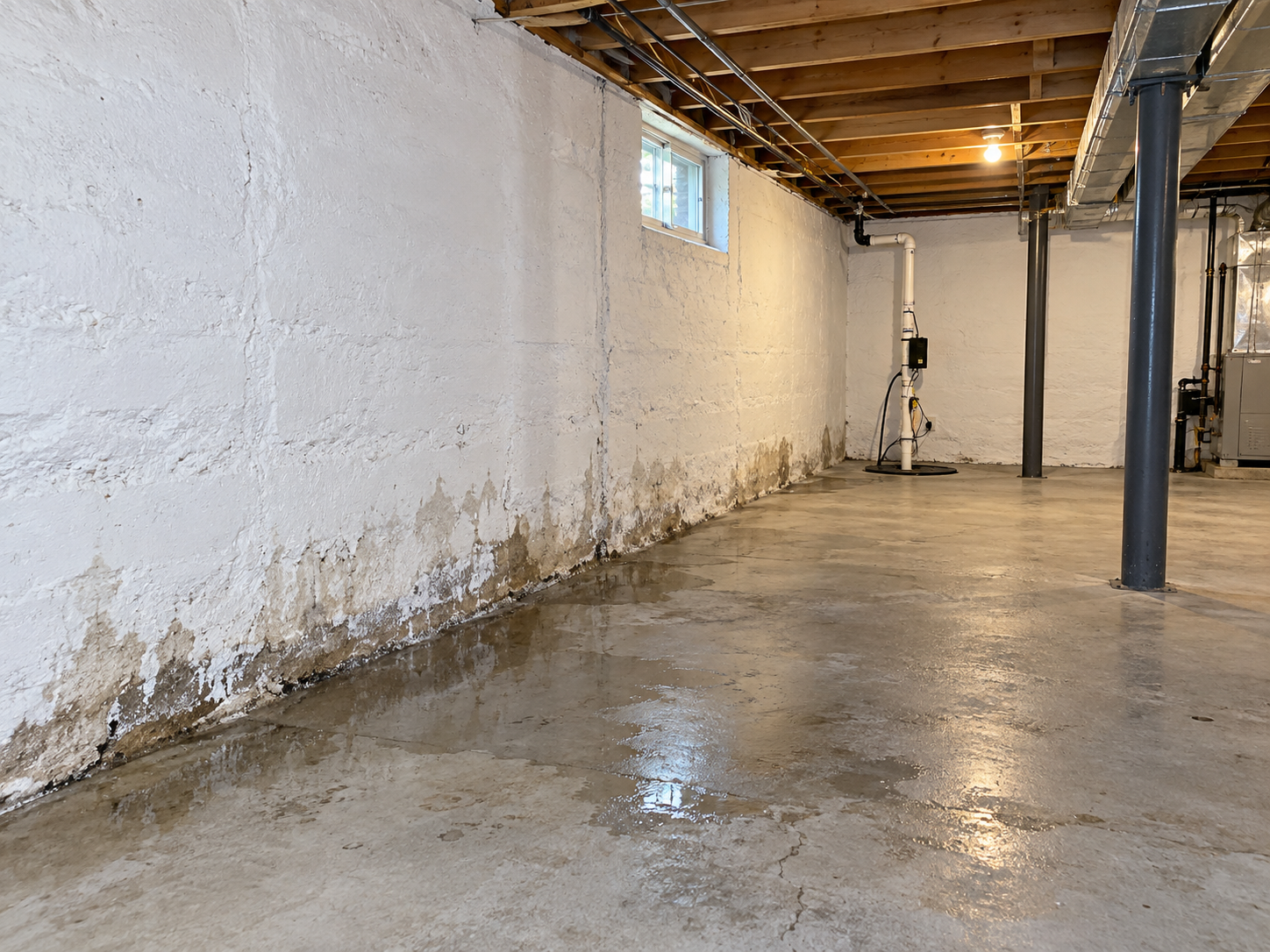
Common water-related clues include:
- Damp crack edges
- Mineral deposits
- Staining
- Active dripping
- Wet flooring nearby
Even if the crack itself is stable, recurring water intrusion may justify repair.
What Does Efflorescence Around a Crack Mean?
Efflorescence is a white mineral residue left when moisture moves through masonry or concrete and evaporates.
It is a moisture clue rather than proof of structural failure.
Building Science Corporation lists efflorescence, staining, visible water, and mold growth as common signs of foundation moisture problems.
If efflorescence repeatedly appears around a crack, water movement should be investigated.
Can Freeze-Thaw Cycles Affect Foundation Cracks?
Yes. Repeated freezing and thawing can worsen vulnerable exterior materials and existing openings when moisture is present.
Massachusetts foundations experience seasonal temperature swings that can expose small defects to repeated stress.
However, freeze-thaw cycles are rarely the only factor.
Drainage, soil conditions, foundation age, and moisture exposure also matter.
Why Does Spring Snowmelt Matter?
Spring snowmelt can saturate soil even when no heavy rain is falling.
This can raise groundwater and increase pressure around a foundation.
A crack that remains dry during summer may leak during spring.
That seasonal pattern can help distinguish a water-related foundation problem from a purely cosmetic surface crack.
For Massachusetts homeowners, timing is an important diagnostic clue.
Can Older Foundations Crack Differently?
Yes. Different foundation materials respond differently to age, moisture, and movement.
Poured concrete may show defined cracks.
Concrete block may crack through joints or blocks.
Fieldstone foundations may show loose mortar, displaced stones, or broader joint deterioration.
Therefore, foundation crack repair should account for the type of foundation rather than applying one method to every home.
What About Fieldstone Foundations?
Fieldstone foundations often show distress differently from modern poured concrete.
A problem may appear as crumbling mortar, open joints, loose stones, or changing wall alignment rather than a single clean crack.
Fieldstone foundation repointing can restore deteriorated mortar when the masonry remains stable.
However, significant stone movement or wall bulging requires a different level of evaluation.
Can Drainage Reduce Pressure Around a Foundation?
Yes. Proper drainage can reduce water accumulation around walls and beneath slabs.
Building Science Corporation explains that drainage helps prevent the hydrostatic pressure that pushes water through foundation openings.
Drainage measures can include footing drains, interior systems, exterior water management, and sump systems depending on the property.
This is why foundation crack repair and basement waterproofing sometimes need to be planned together.
Can You Just Fill Every Foundation Crack?
No. Filling a crack without understanding why it formed can hide useful evidence and may fail if movement continues.
A cosmetic crack, leaking crack, and structurally active crack require different approaches.
The correct question is not simply, “What product should fill this?”
The better question is, “What caused the crack, and is that condition still active?”
What Should a Professional Evaluate?
A professional inspection should examine the crack and the conditions surrounding it.
Important factors include:
- Direction
- Width
- Depth
- Wall alignment
- Water staining
- Efflorescence
- Previous repairs
- Foundation type
- Exterior grading
- Drainage
- Soil conditions
- Seasonal patterns
The relationship between these clues helps determine whether foundation crack repair is mainly waterproofing, structural work, or both.
Why Is Diagnosis More Important Than the Crack’s Appearance?
Two cracks that look similar can have completely different causes.
One may be a stable shrinkage crack.
Another may be leaking because of groundwater.
A third may appear with wall movement.
Therefore, the visible line is only part of the diagnosis.
All Pro Basement uses more than 25 years of hands-on experience when evaluating foundation and basement conditions in Massachusetts homes.
Owner Diego Tameirao personally oversees projects, while Project Manager Keila Tameirao helps coordinate homeowners through the process.
A proper foundation crack repair plan begins by determining whether the crack is stable, water-related, or connected to ongoing movement before any repair method is selected.
How Can You Monitor a Foundation Crack?
Monitor a crack by documenting its width, direction, location, and appearance over time.
Dated photos can help reveal changes that are difficult to remember accurately.
Watch for:
- Increasing width
- New branches
- Water stains
- Wall displacement
- Reopened repairs
- New nearby cracks
- Changes after storms
If the crack changes noticeably, foundation crack repair should be based on a new evaluation rather than the original condition.
When Is a Horizontal Crack a Warning Sign?
A horizontal crack deserves closer attention when it appears with inward wall movement, bowing, or signs of soil pressure.
Below-grade walls resist pressure from surrounding soil.
When soil becomes saturated, groundwater can increase that load.
FEMA explains that hydrostatic pressure can act laterally against below-grade walls when surrounding soils become saturated.
https://www.fema.gov/sites/default/files/2020-08/fema259_complete_rev.pdf
A horizontal crack does not automatically prove major structural failure.
However, horizontal cracking combined with wall deformation should not be treated as a simple cosmetic repair.
Are Horizontal Cracks Always Structural?
No.
A horizontal crack must be evaluated in context.
Its location, length, wall material, displacement, water exposure, and surrounding drainage all matter.
For example, a stable surface crack and a crack running through a bowed basement wall may look similar at first glance.
Their causes and repair needs can be very different.
What Does a Reopening Foundation Crack Mean?
A crack that reopens after being repaired can indicate continuing movement, moisture pressure, poor preparation, or an inappropriate repair method.
The repair may have sealed the visible surface while leaving the cause untouched.
If the wall continues moving, a rigid patch may separate.
If groundwater continues pushing against the wall, water may also return through or around the repaired area.
Repeated failure is a reason to reassess the foundation crack repair strategy.
Why Can Surface Crack Repairs Fail?
Surface repairs can fail when they do not account for movement or water pressure behind the foundation.
Filling the visible opening is only one part of the problem.
If the crack remains active, the repair material must respond appropriately.
If water is driving through the wall, drainage may also require attention.
Foundation crack repair should solve the mechanism, not only hide the line.
Can Hydrostatic Pressure Cause Foundation Cracks?
Hydrostatic pressure can contribute to stress on foundation walls when groundwater builds up around the structure.
It can also force water through cracks that already exist.
Building Science Corporation explains that groundwater accumulation can create pressure against foundation walls and push water through joints and openings.
Managing water around the foundation can therefore be an important part of some crack repairs.
Can Poor Drainage Make Foundation Cracks Worse?
Poor drainage can increase soil saturation and water pressure near basement walls.
It may also contribute to erosion or changing soil conditions.
Downspouts that release water beside the home and grading that slopes toward the foundation deserve attention.
Building Science Education recommends directing roof runoff away from foundation areas to reduce soil saturation.
Foundation crack repair may therefore include drainage corrections when water is part of the cause.
Can Spring Snowmelt Affect Foundation Cracks?
Yes. Snowmelt can saturate soil and raise groundwater around Massachusetts foundations.
The effect may occur even without heavy rainfall.
A crack that remains dry during summer can begin leaking when spring groundwater rises.
That seasonal behavior can reveal a connection between the crack and exterior moisture conditions.
How Do Freeze-Thaw Cycles Affect Existing Cracks?
Freeze-thaw cycles can worsen vulnerable materials when moisture repeatedly enters openings and temperatures change.
The effect depends on the foundation type and exposure.
In Massachusetts, exterior cracks and deteriorated masonry may experience repeated seasonal stress.
However, freeze-thaw damage should be evaluated alongside drainage, groundwater, and structural movement.
Should a Leaking Foundation Crack Be Repaired?
Yes, a leaking crack should be evaluated and repaired because it provides a pathway for water into the basement.
However, repairing the crack alone may not solve the entire water problem.
If hydrostatic pressure remains around the foundation, water may find another opening.
Therefore, foundation crack repair and basement waterproofing sometimes need to work together.
Is Every Leaking Crack Structural?
No.
A crack can be structurally stable and still leak.
Water intrusion and structural movement are separate questions.
A professional should determine whether the crack requires:
- Water sealing
- Structural repair
- Drainage improvements
- Waterproofing
- Monitoring
- A combination of measures
This prevents homeowners from treating every wet crack as a major structural failure.
When Does a Crack Need Structural Foundation Repair?
Structural repair may be needed when the crack is associated with significant movement, displacement, bowing, settlement, or loss of wall stability.
The repair depends on the foundation type and the cause of movement.
A structural concern should not be treated with cosmetic patching alone.
Foundation crack repair must first determine whether the wall is stable.
What Signs Suggest Structural Movement?
Structural movement may involve changes beyond the crack itself.
Possible warning signs include:
- Bowing walls
- Offset crack edges
- Shifted blocks
- Leaning sections
- Large stair-step cracks
- Repeated crack growth
- Multiple cracks in one area
- Movement around openings
These symptoms deserve professional evaluation.
They provide stronger evidence of movement than crack width alone.
Can Foundation Settlement Continue Over Time?
Yes. Settlement can continue if soil support keeps changing.
However, not every settlement crack remains active.
Some foundations move slightly and then stabilize.
Others continue changing because of drainage, erosion, soil conditions, or another cause.
Monitoring helps determine whether movement appears stable or ongoing.
That distinction influences foundation crack repair decisions.
Can Fieldstone Foundations Crack Differently?
Yes. Fieldstone foundations often show deterioration through mortar loss, loose stones, open joints, and wall displacement rather than one clean crack.
This makes diagnosis different from poured concrete.
A homeowner may notice crumbling mortar before seeing obvious movement.
In other cases, stones may shift because supporting joints have deteriorated.
Fieldstone foundation repair should evaluate both masonry condition and water exposure.
Is Repointing the Same as Foundation Crack Repair?
No.
Repointing replaces deteriorated mortar between masonry units.
Foundation crack repair addresses a specific fracture or movement pathway.
In a fieldstone wall, both types of work may sometimes be necessary.
However, neither should be chosen before the actual condition is inspected.
Can Water Make Fieldstone Problems Worse?
Yes. Repeated moisture can weaken old mortar and increase water movement through fieldstone joints.
Spring snowmelt and high groundwater can make this especially noticeable in Massachusetts.
Drainage may therefore be as important as masonry repair.
Fieldstone repointing can restore joints, while waterproofing or drainage may manage the water reaching those joints.
Can Foundation Crack Repair Be Permanent?
A well-designed repair can provide long-term performance when it addresses the correct cause.
However, no repair should be described as permanent without considering movement, drainage, soil, and foundation conditions.
A stable leaking crack may respond well to one repair method.
An actively moving wall requires a different solution.
The durability of foundation crack repair depends on matching the method to the problem.
Why Does the Foundation Type Change the Repair Method?
Poured concrete, concrete block, and fieldstone foundations behave differently.
Poured concrete often develops defined cracks.
Block walls can crack through mortar joints or masonry units.
Fieldstone walls may deteriorate through mortar loss and stone movement.
Therefore, repair materials and techniques should match the foundation rather than follow a one-size-fits-all approach.
Can Basement Waterproofing Help After Crack Repair?
Yes, when groundwater or drainage conditions continue placing water around the foundation.
Basement waterproofing may help manage water before it reaches vulnerable areas.
Possible measures include interior drainage, sump systems, or exterior water-management improvements.
However, waterproofing does not replace structural repair when the wall itself is moving.
Each solution serves a different purpose.
When Is an Interior Drainage System Useful?
Interior drainage may be useful when groundwater repeatedly reaches the basement perimeter.
The system collects water and directs it toward a sump basin.
Building Science Corporation describes interior drainage as one strategy for managing groundwater in existing basements.
This can reduce water pressure near interior entry points.
However, drainage should not be used to ignore structural movement.
Can a Sump Pump Help With Foundation Water Problems?
A sump pump can remove groundwater collected by an interior drainage system.
It helps manage water rather than repair the crack itself.
If a crack leaks because groundwater repeatedly reaches the wall, sump and drainage systems may reduce the moisture load.
The pump should be sized and maintained for the actual conditions affecting the basement.
When Should You Call a Foundation Repair Professional?
Professional evaluation is appropriate when a crack widens, leaks, reopens, appears horizontal, forms a stair-step pattern, or occurs with bowing or displacement.
It is also wise to seek help when the cause is unclear.
A professional should inspect both the crack and the surrounding conditions.
That includes drainage, soil, foundation type, groundwater, and previous repairs.
All Pro Basement is family-owned and operated and has more than 25 years of hands-on experience with Massachusetts foundation and basement conditions.
Owner Diego Tameirao personally oversees projects.
Project Manager Keila Tameirao helps coordinate homeowners through planning and completion.
The goal is an honest evaluation without high-pressure sales.
A homeowner should understand whether foundation crack repair, drainage, waterproofing, masonry repair, or monitoring is actually needed.
Frequently Asked Questions About Foundation Cracks
How Do I Know If a Foundation Crack Is Serious?
A crack deserves more concern when it changes, leaks, appears with wall movement, or is connected to bowing, displacement, or settlement.
Crack direction and width are useful clues, but they do not tell the entire story.
Professional evaluation is appropriate when several warning signs appear together.
Are Vertical Foundation Cracks Dangerous?
Not always.
Some vertical cracks in poured concrete can result from shrinkage or limited movement.
However, a crack that widens, leaks, reopens, or has displaced edges deserves further inspection.
Its behavior over time is more important than direction alone.
Are Horizontal Foundation Cracks Always Structural?
No.
However, horizontal cracks can be associated with lateral soil or groundwater pressure.
If the wall also bows inward or shows displacement, the concern increases.
The crack should be evaluated in the context of the entire wall.
What Does a Stair-Step Foundation Crack Mean?
A stair-step crack follows masonry joints and can be associated with settlement, movement, or localized stress.
The severity depends on whether blocks or stones have shifted.
A stable mortar crack is different from a stair-step crack accompanied by displacement.
Can Foundation Cracks Let Water In?
Yes.
Foundation cracks can create pathways for groundwater when water accumulates against the wall.
Hydrostatic pressure may push moisture through the opening.
Even a structurally stable crack may therefore require foundation crack repair if it repeatedly leaks.
Should I Repair a Crack That Is Not Leaking?
Sometimes.
A nonleaking crack may only need monitoring if it is stable and cosmetic.
However, movement, widening, displacement, or structural concerns may justify repair even without water.
The correct decision depends on why the crack formed.
Can a Foundation Crack Get Worse Over Time?
Yes, some cracks can widen or change if movement, settlement, water pressure, or soil conditions continue.
Others remain stable for decades.
Monitoring helps distinguish active changes from old, stable cracking.
Dated photos can make those changes easier to identify.
Is Foundation Crack Repair Worth It?
Foundation crack repair can be worthwhile when it stops water intrusion, stabilizes a vulnerable area, or prevents a known crack from creating larger problems.
The value depends on choosing the correct repair for the cause.
Simply covering the crack without diagnosis may provide little long-term benefit.
What Should Homeowners Avoid Doing?
Avoid assuming every crack is either harmless or catastrophic.
Both reactions can lead to poor decisions.
Homeowners should also avoid:
- Ignoring changing cracks
- Covering cracks before inspection
- Filling active cracks cosmetically
- Ignoring water stains
- Overlooking exterior drainage
- Assuming every crack needs structural work
The most useful response is careful observation followed by diagnosis when warning signs appear.
What Is the Best Long-Term Approach?
The best approach is to understand why the crack formed, whether it is moving, and whether water or soil conditions are affecting it.
From there, the repair can match the actual problem.
A stable leaking crack may need sealing and drainage.
A moving wall may require structural foundation repair.
A fieldstone wall may require repointing.
Some homes may also need basement waterproofing.
Foundation crack repair works best when the crack, wall, water, soil, and drainage are treated as connected parts of the same foundation system.
Contact All Pro Basement Today to find out whether your foundation crack is cosmetic, water-related, or a sign that your Massachusetts home needs professional foundation crack repair.