Introduction
Yes. Poor yard drainage can direct stormwater toward a home’s foundation instead of safely away from it. Improper grading, low spots, short downspouts, clogged drains, and hard surfaces can saturate nearby soil, increasing the chance of foundation seepage, wet basement walls, sump pump activity, and standing water.
Author: All Pro Basement
Updated: October 29, 2026
A yard can look perfectly normal on a dry afternoon and behave very differently during a heavy New England storm.
That is why yard drainage in Holliston should be evaluated by following where water actually travels when rain reaches the property.
Can Poor Yard Drainage Send Water Toward the Foundation?
Yes. When the yard directs runoff toward the house, water can collect in soil beside the foundation.
As the ground becomes saturated, moisture has more opportunities to reach cracks, joints, basement windows, masonry, and other vulnerable areas.
The EPA recommends managing surface water so it moves away from foundations rather than concentrating beside them.
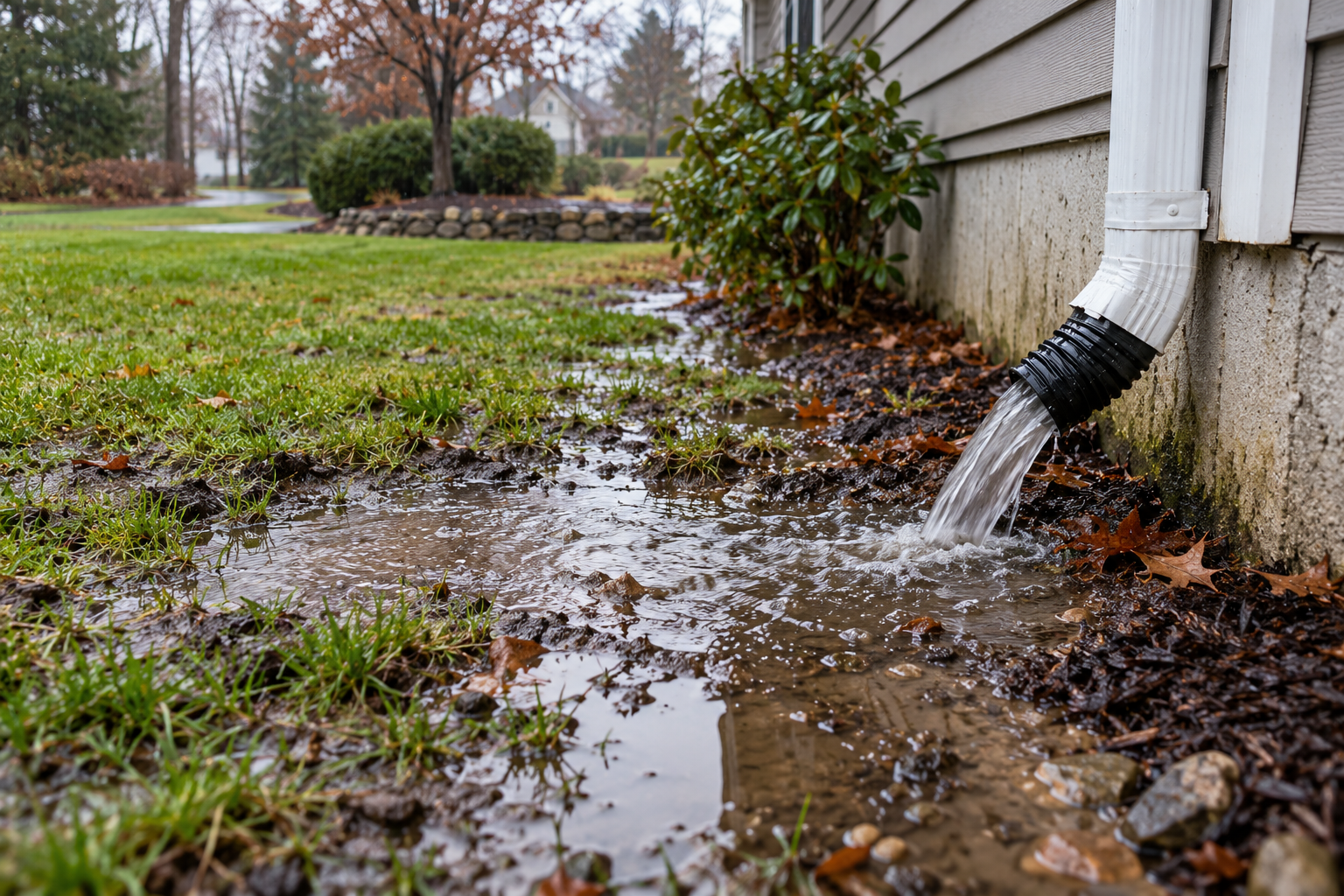
Why Does Water Pool Near My House After Rain?
Water usually pools because it reaches a low area faster than the soil or drainage system can move it away.
Poor grading is one possible cause.
However, compacted soil, blocked drainage, roof runoff, patios, driveways, and landscape beds can also affect where stormwater collects.
Persistent pooling near the house deserves attention because it repeatedly wets the same foundation area.
What Is Negative Grading?
Negative grading means the ground slopes toward the house instead of away from it.
That slope can guide rainfall and snowmelt toward the foundation.
Water follows gravity, so even a subtle grade can influence runoff during prolonged rain.
The EPA recommends grading around foundations to promote drainage away from the building.
Can Flat Grading Cause Similar Problems?
Yes. A yard does not need to visibly slope toward the foundation to drain poorly.
Nearly flat ground can allow water to linger instead of moving away efficiently.
When rainfall continues, that water can soak deeper into the soil beside the house.
Therefore, the direction and speed of drainage both matter.
Why Are Low Spots Near the Foundation a Concern?
Low spots act like collection areas.
Water moving across the yard can settle there after rain.
If the low area is beside a basement wall, repeated saturation may increase foundation seepage or sump system demand.
A low spot several feet away can also matter if the surrounding grade sends water back toward the home.
Can Compacted Soil Make Yard Drainage Worse?
Yes. Compacted soil may accept water more slowly than loose, well-draining soil.
As a result, more stormwater may remain on the surface or move laterally across the property.
The effect varies by soil type and site conditions.
That is why a drainage inspection should consider both slope and how the ground handles water.
How Do Downspouts Affect Foundation Drainage?
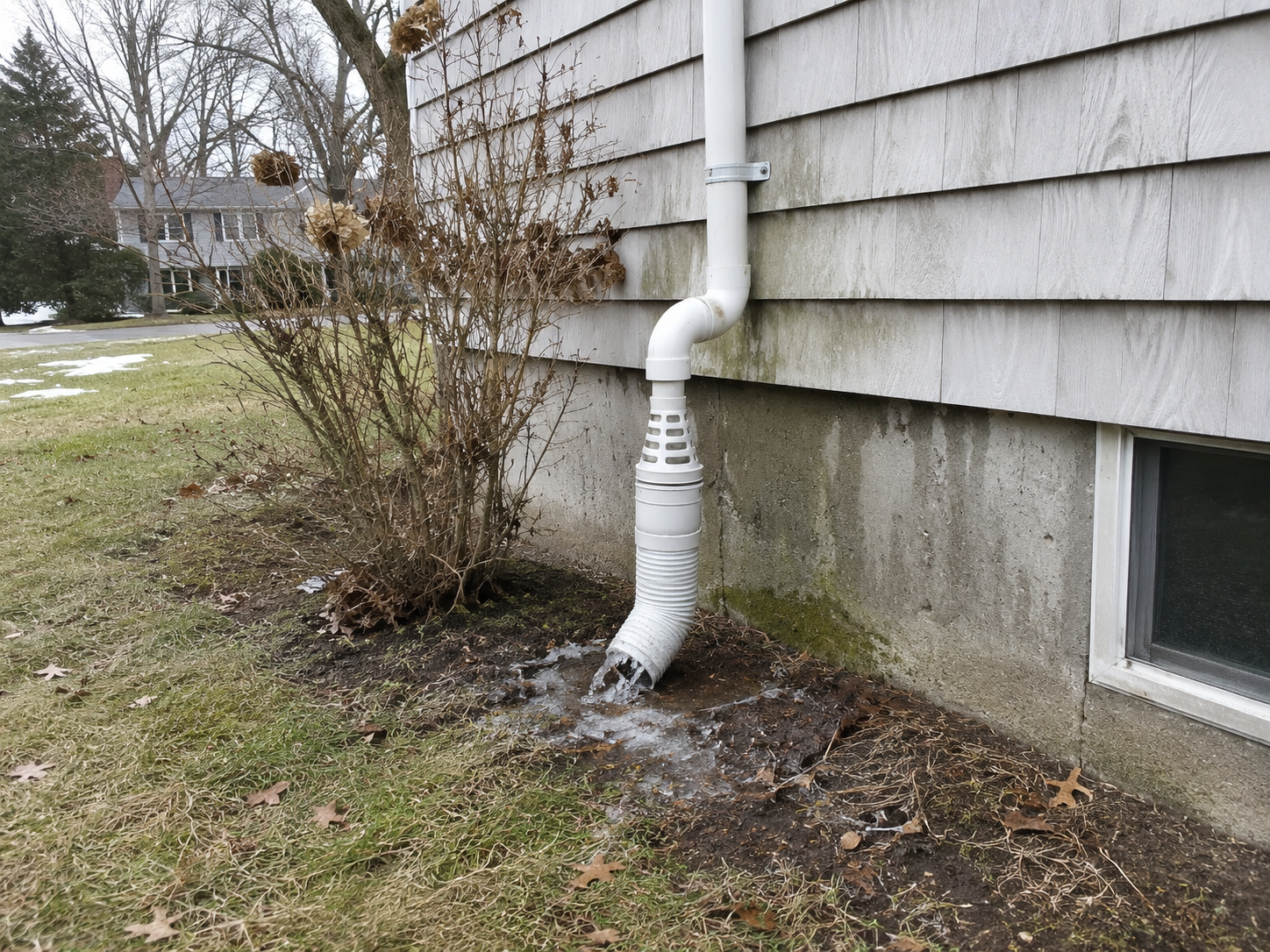
Downspouts concentrate roof runoff into specific locations.
If they discharge beside the foundation, a large amount of water can repeatedly enter the same area of soil.
Extending or rerouting roof drainage may help when downspouts are contributing to the problem.
Building Science Corporation emphasizes directing roof water down and away from the building.
Can a Short Downspout Extension Cause Trouble?
It can if the extension ends where the ground slopes back toward the house.
Water may appear to leave the wall but then travel through a low area and return toward the foundation.
The discharge point matters as much as the length of the extension.
A professional follows the entire path rather than assuming any extension is enough.
Can Roof Runoff Affect One Side of the Basement More Than Another?
Yes. Roof shape, gutter layout, downspout locations, and yard slope can concentrate water around one section of the house.
That may explain why one basement wall repeatedly becomes damp while another remains dry.
The location of interior moisture should therefore be compared with exterior drainage conditions.
Can Driveways and Patios Send Water Toward the House?
Yes. Asphalt, concrete, and other hard surfaces do not absorb rainfall like vegetated soil.
They can move runoff quickly.
Massachusetts stormwater guidance notes that impervious surfaces can increase the volume and speed of stormwater runoff.
If a driveway, patio, or walkway slopes toward the foundation, water may collect where the hard surface meets the house.
Can Landscape Beds Hold Too Much Water?
Yes. Landscape beds can affect drainage depending on their shape, soil, edging, and slope.
Raised edging may trap runoff.
Dense soil can drain slowly.
Meanwhile, added mulch or soil can unintentionally create a low area beside the wall.
Landscaping should not create a basin that keeps water against the foundation.
Why Can a Yard Look Dry While Soil Near the Foundation Is Still Wet?
Surface water can disappear before deeper soil dries.
Water may infiltrate and remain below the surface around the foundation.
Therefore, a dry lawn does not prove that subsurface conditions are dry.
This is especially important after prolonged rain or spring snowmelt.
Can Saturated Soil Increase Foundation Seepage?
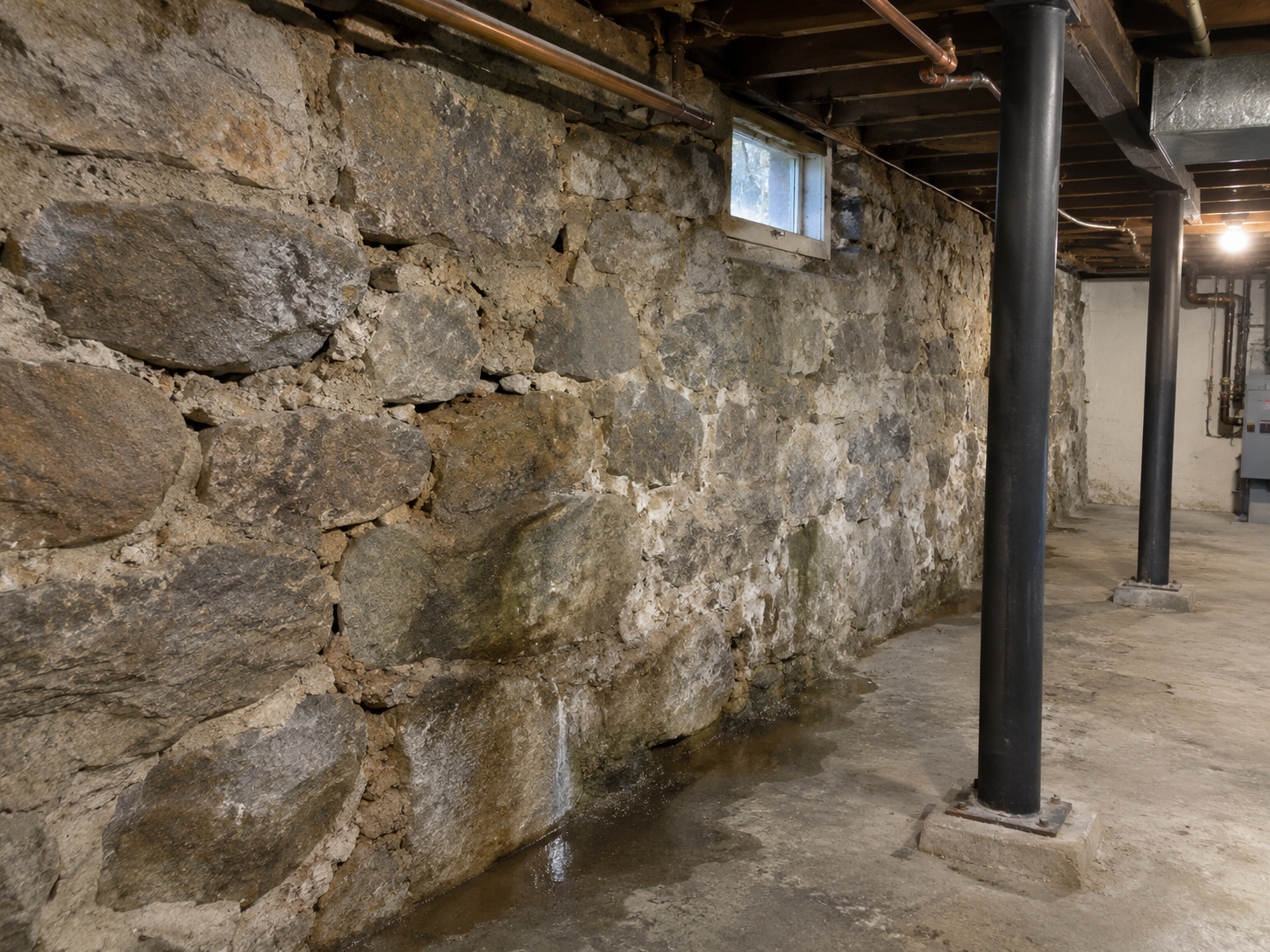
Yes. When soil near the foundation contains significant moisture, water has more opportunity to reach cracks, joints, and porous materials.
That does not automatically mean the foundation is structurally damaged.
Sometimes the main issue is excessive water being concentrated around an otherwise stable wall.
Can a Small Foundation Crack Leak Only During Heavy Rain?
Yes. An existing crack may stay dry during normal conditions and become active when surrounding soil becomes saturated.
The crack acts as a pathway.
However, the repair should consider both the crack and why so much water is reaching that part of the foundation.
Can Water Enter Where the Wall Meets the Floor?
Yes. Moisture can appear near the wall-floor joint when groundwater or surrounding soil conditions increase water pressure around the basement.
That pattern should be distinguished from water traveling down the face of the wall.
The location and timing of moisture help identify the likely path.
Why Does Timing Matter When Diagnosing Drainage Problems?
When water appears can reveal important clues.
Moisture that develops quickly during rainfall may suggest surface runoff, roof drainage, or rapid soil saturation.
Water appearing later may involve deeper saturation or groundwater.
These are useful clues, not absolute rules.
A professional also considers weather history, grading, sump activity, and foundation conditions.
Can Underground Drainage Become Clogged?
Yes. Underground drainage lines can become restricted by sediment, debris, roots, pipe damage, or poor installation.
A buried line may look fine from above while moving little water below ground.
If water backs up, it may collect near the foundation or surface somewhere else in the yard.
How Can I Tell If a Buried Downspout Drain Is Working?
One clue is what happens during rain.
If gutters fill normally but water begins pooling near the buried connection, the underground line may need evaluation.
Professionals may inspect the route, outlet, slope, and flow instead of assuming the pipe is clear because it is hidden.
Can a Damaged Underground Pipe Create a Wet Area?
Yes. A cracked, separated, crushed, or poorly connected pipe can release water underground.
That may create a persistently wet patch or contribute to soil saturation near the foundation.
The location of the wet area can help narrow the likely drainage path.
However, groundwater and plumbing leaks may create similar symptoms.
Why Does the Drainage Outlet Matter?
An underground pipe needs a suitable place to release water.
Moving stormwater through a pipe does not solve the problem if the outlet sends it into another low area where it returns toward the house.
The entire drainage path must work from collection point to final discharge.
Massachusetts guidance warns that stormwater practices should not simply transfer runoff problems to neighboring properties or other vulnerable areas.
Can Stormwater From a Yard Cause Erosion?
Yes. Concentrated runoff can remove soil and create channels across a property.
Erosion can reveal where water repeatedly travels during storms.
Massachusetts homeowner guidance notes that managing and redirecting runoff can reduce erosion and concentrated stormwater flow.
Bare soil, washed mulch, exposed roots, and small channels can all provide drainage clues.
Why Should Holliston Homeowners Watch What Happens During Rain?
Because the best evidence of a yard drainage problem often appears while water is actively moving.
Homeowners can safely observe where runoff comes from, where it slows down, and where it collects.
For yard drainage in Holliston, those observations can reveal problems that disappear after the storm ends.
Can Heavy Rain Affect Holliston Properties Differently?
Absolutely. Two nearby properties can handle the same storm very differently.
Lot slope, soil, roof design, driveway position, vegetation, drainage systems, and foundation depth all affect how water moves.
That is why a drainage solution should match the individual property.
How Does Spring Snowmelt Change the Drainage Picture?
Snowmelt can add water gradually over a large area.
If the soil is saturated or partially frozen, infiltration may be limited.
Water may then travel across the surface or collect in low areas that remain unnoticed during summer storms.
Massachusetts defines stormwater as runoff from both rainwater and snowmelt.
Why Can Frozen Soil Make Drainage More Complicated?
Frozen or partially frozen ground may accept water differently from warm soil.
As snow melts or winter rain falls, runoff can move across areas that normally absorb more moisture.
The drainage pattern can therefore change with the season.
This is especially relevant when evaluating yard drainage in Holliston throughout the year.
Can a Nor’easter Expose Hidden Drainage Weaknesses?
Yes. Prolonged rainfall can reveal issues that short showers do not.
A low area may handle light rain but fill during a long storm.
Likewise, an underground drain may carry normal flow yet back up when demand increases.
High-demand weather can expose limitations in the entire drainage path.
Can a Sump Pump Solve Poor Yard Drainage?
Not by itself.
A sump pump manages water collected by a basement drainage system.
It does not correct a yard that repeatedly directs surface runoff toward the foundation.
If obvious exterior drainage problems exist, they should be evaluated separately.
A sump pump and exterior drainage can work together, but they perform different jobs.
Can Poor Yard Drainage Increase Sump Pump Activity?
Yes. More water reaching soil around the foundation can increase the amount that eventually reaches foundation drainage.
The sump may then cycle more often during wet weather.
Frequent activity does not prove that yard drainage is the only cause.
Groundwater conditions also influence pump demand.
Can Correcting the Grade Solve Every Wet Basement?
No. Better grading can help when surface runoff is part of the problem.
However, it cannot eliminate every groundwater condition, foundation crack, plumbing leak, or drainage-system issue.
A useful diagnosis separates surface water from deeper groundwater and other moisture sources.
What About Homes in Medway, Millis, and Ashland?
Nearby communities such as Medway, Millis, and Ashland experience many of the same regional rain, snowmelt, freeze-thaw, and seasonal groundwater conditions.
However, local geography varies from property to property.
Those regional similarities support using the same diagnostic principle: follow the water rather than assuming the cause.
Holliston remains the focus because every yard has its own drainage routes, slopes, low spots, and discharge points.
How Can a Professional Trace Stormwater Around a Holliston Property?
A professional begins by looking at where water originates and where gravity sends it.
The inspection may include:
- Roof and gutters
- Downspouts
- Yard slope
- Low areas
- Driveways
- Patios
- Walkways
- Soil saturation
- Buried drainage
- Drain outlets
The foundation and basement are then compared with those exterior conditions.
Wet spots, water stains, sump activity, cracks, and wall-floor seepage can help connect outside drainage with what happens indoors.
Why Is Yard Drainage in Holliston a Whole-Property Issue?
Because water does not recognize the boundary between the roof, lawn, driveway, foundation, and basement.
Each surface can affect the next.
Roof runoff may cross a walkway.
The walkway may send it into a landscape bed.
That bed may hold water beside the foundation.
A successful diagnosis follows that entire chain.
Why Can Adding More Soil Near the House Fail?
Adding soil can help only if it creates an appropriate and stable drainage path.
If the new material settles, traps water, blocks drainage, or sends runoff toward another low area, the original problem may remain.
The grade also has to work with downspouts, hard surfaces, and underground drainage.
Simply covering a wet area does not explain why water collected there.
What Should Be Understood Before Yard Drainage Is Changed?
The source, direction, volume pattern, and destination of the water should be understood first.
Professionals also consider how a proposed change could affect other parts of the property.
Massachusetts guidance stresses that stormwater controls should collect, convey, or infiltrate runoff without creating new problems elsewhere.
All Pro Basement evaluates drainage as part of the larger relationship between the yard, foundation, basement, and groundwater.
The family-owned company has more than 25 years of hands-on experience with underground exterior drainage, waterproofing, sump systems, and foundation conditions.
Owner Diego Tameirao personally oversees projects, while Project Manager Keila Tameirao helps coordinate the homeowner experience.
For yard drainage in Holliston, the key question is not simply where water is visible after a storm.
It is where that water began, which surfaces and slopes guided it, what happened underground, and whether the final drainage path actually carried it safely away from the foundation.
Once that path is understood, the correction can be matched to the place where water is actually being collected, redirected, or trapped.
How Can Poor Yard Drainage Be Corrected?
Poor drainage is corrected by changing how stormwater moves across or beneath the property.
The right solution depends on whether the problem involves grading, roof runoff, low spots, buried piping, or groundwater.
For yard drainage in Holliston, the first goal is usually to stop avoidable surface water from concentrating beside the foundation.
Should My Yard Slope Away From the Foundation?
Yes. The grade around a home should encourage surface runoff to move away rather than toward below-grade walls.
However, simply adding soil does not guarantee proper drainage.
The new grade must create a stable route for water without blocking siding, vents, windows, or other building components.
The EPA recommends managing grading so surface water drains away from foundations.
What If the Yard Has a Low Spot Near the House?
A low spot may need to be regraded or connected to an appropriate drainage system.
The solution depends on where the water comes from and where it can safely go.
Filling a low area without creating a discharge path may simply move the pooling to another part of the yard.
Can a Catch Basin Help With Standing Water?
Yes, in suitable locations.
A catch basin can collect surface runoff from a low area and direct it into drainage piping.
However, the basin is only useful if the connected pipe has an appropriate outlet.
A catch basin without effective discharge may simply become another place for water to collect.
Can Downspouts Be Connected to Underground Drainage?
Yes. Buried downspout drainage can carry roof runoff away from the foundation when properly designed.
The pipe route, slope, connections, and final discharge location all matter.
A buried system should not simply send roof water into another saturated area close to the house.
Where Should Downspout Water Go?
Downspout water should be directed to a location where it can leave the foundation area without creating erosion, pooling, or another drainage problem.
The best destination depends on the property.
Slope, soil, neighboring lots, drainage rules, and existing stormwater systems may influence the design.
What Happens If an Underground Drain Is Clogged?
Water may back up at the inlet, around the downspout, or beneath the yard.
In some cases, the homeowner sees pooling near the foundation even though a buried pipe is present.
That is why yard drainage in Holliston should include inspection of existing underground lines rather than assuming they are functioning.
Can a Damaged Drain Pipe Be Repaired?
Yes, depending on the damage and accessibility.
A crushed, separated, or badly pitched section may need repair or replacement.
However, the entire route should be evaluated.
Fixing one damaged section will not help if the final outlet is blocked or improperly located.
Why Is the Drainage Outlet So Important?
Every drainage line needs somewhere appropriate to release water.
Without a working outlet, stormwater can back up inside the pipe.
It may then emerge near the house or saturate surrounding soil.
A drainage system is only as effective as its final discharge point.
Can Water Be Discharged Too Close to the House?
Yes. Water that is moved only a short distance may still return toward the foundation if the surrounding grade slopes back toward the home.
The discharge point should be evaluated with the property slope.
Otherwise, the same water may be collected, piped away, and then sent back toward the foundation.
Can Exterior Drainage Reduce Sump Pump Activity?
Sometimes.
If poor surface drainage is sending unnecessary runoff toward the foundation, correcting that pathway may reduce the amount of water reaching foundation drainage.
However, groundwater can remain active even after exterior runoff is improved.
A sump pump may still be necessary where groundwater must be collected and mechanically discharged.
What Is the Difference Between Exterior Drainage and Interior Drainage?
Exterior drainage focuses on controlling water before or as it reaches the foundation area.
Interior drainage manages water that reaches the basement perimeter or beneath the slab.
They solve related but different problems.
Some homes need one approach.
Others may benefit from both.
When Is Interior Drainage Still Needed?
Interior drainage may be appropriate when groundwater or foundation seepage must be collected inside the basement and directed to a sump system.
This is different from correcting roof runoff or poor grading outside.
Building Science Corporation explains that foundation water control depends on drainage and groundwater management working together.
Can Yard Drainage Fix Every Wet Basement?
No. Yard drainage can be very important when surface runoff is contributing to the problem.
However, it cannot repair every foundation crack, plumbing leak, groundwater condition, or interior drainage failure.
The visible water source must be diagnosed before the solution is selected.
Can Foundation Cracks Still Need Repair?
Yes. If an active crack is allowing water through the foundation, targeted crack repair may be appropriate.
However, repairing the crack does not automatically correct excessive water collecting outside the wall.
Foundation crack repair and yard drainage in Holliston may need to be evaluated together when both conditions exist.
Can Basement Waterproofing Work With Exterior Drainage?
Yes. Exterior drainage and basement waterproofing can complement each other.
Exterior drainage reduces avoidable stormwater around the foundation.
Waterproofing or interior drainage manages moisture that still reaches the building.
The correct combination depends on how water actually enters.
Can a Sump Pump Replace Exterior Drainage?
No. A sump pump removes water that reaches a collection system.
It does not correct a driveway, downspout, or yard slope that repeatedly directs stormwater toward the house.
Likewise, grading improvements cannot replace a sump pump where groundwater must be mechanically removed.
How Does a Professional Choose Between Grading and Underground Drainage?
Grading is often considered when surface runoff is moving toward the foundation.
Underground drainage may be useful when water must be transported from one area to another safe discharge point.
The decision depends on site elevation, low spots, soil, structures, and available outlets.
Neither solution should be selected before the water path is understood.
When Is a Catch Basin More Appropriate?
A catch basin may help when runoff repeatedly collects in a defined low area.
It provides a point where surface water can enter a drainage system.
However, it does not solve widespread groundwater or every poorly graded yard.
The basin must also be positioned where water naturally reaches it.
Can Erosion Reveal Where Drainage Work Is Needed?
Yes. Washed mulch, exposed soil, channels, or sediment deposits often show where water travels during storms.
These signs can help identify concentrated runoff.
Massachusetts stormwater guidance encourages practices that reduce erosion and manage runoff at the property level.
Why Does Yard Drainage in Holliston Need Seasonal Evaluation?
A drainage system may behave differently in July than in March.
Summer thunderstorms can create fast surface runoff.
Spring snowmelt may saturate soil gradually.
Meanwhile, frozen or partially frozen ground can change how water infiltrates and moves.
A complete evaluation considers more than one weather pattern.
Can Heavy Rain Reveal a Problem That Dry Weather Hides?
Absolutely.
A low spot may be invisible when the lawn is dry.
A buried pipe may appear normal until storm flow increases.
Likewise, a downspout outlet may work during a light shower but overflow during prolonged rain.
That is why homeowners should note what changes during major storms.
How Can Holliston Homeowners Prepare Before a Major Storm?
Check where gutters and downspouts release water and whether existing outlets are clear.
Look for low spots, erosion, or areas that stay wet after earlier rain.
Also note whether the sump pump begins cycling more often.
These observations can provide useful clues if professional drainage evaluation becomes necessary.
Can Nearby Hopkinton, Upton, and Sherborn Homes Have Similar Problems?
Yes. Homes in Hopkinton, Upton, and Sherborn can experience the same regional rain, snowmelt, freeze-thaw cycles, and seasonal groundwater changes.
However, drainage remains highly property-specific.
A sloped lot, wooded property, compacted yard, or home with large roof areas may handle stormwater very differently from a nearby house.
Frequently Asked Questions About Yard Drainage in Holliston
Why Does Water Collect Next to My Foundation?
Water may collect because of poor grading, roof runoff, low spots, hard surfaces, compacted soil, or blocked drainage.
The exact source should be identified before work begins.
The location of pooling and the timing during rainfall provide important clues.
How Do I Know if My Yard Slopes Toward My House?
Visible runoff during rain is one clue.
Water channels, washed mulch, and repeated pooling near the wall can also indicate an unfavorable drainage path.
A professional can evaluate elevation changes and determine whether grading contributes to the problem.
Can Poor Grading Cause Basement Flooding?
Poor grading can contribute by directing surface water toward the foundation and saturating nearby soil.
However, basement flooding can have several causes.
Groundwater, foundation cracks, drainage failures, and sump problems may also be involved.
Where Should Downspouts Discharge?
They should release water where it can continue moving away from the foundation without creating erosion or another low spot.
The correct location depends on the property.
Simply extending a downspout is not enough if the final discharge point sends water back toward the house.
Can Underground Drainage Pipes Clog?
Yes. Sediment, roots, debris, pipe damage, or poor installation can restrict underground drainage.
A blocked line may cause water to back up near the inlet or foundation.
The route and outlet should be checked when a buried system stops performing normally.
Will a French Drain Fix Every Yard Drainage Problem?
No. A French drain is one drainage method, not a universal answer.
Surface runoff, roof drainage, grading, groundwater, and low spots may require different strategies.
The solution should match the specific water path.
Can Exterior Drainage Stop Basement Water?
It can reduce basement moisture when surface water or roof runoff is contributing to foundation saturation.
However, exterior drainage cannot eliminate every groundwater or structural problem.
Some homes still require interior drainage, sump pumping, or crack repair.
Why Is My Sump Pump Running After Heavy Rain?
Heavy rain can increase groundwater and foundation drainage inflow.
Poor exterior drainage may also contribute if stormwater is concentrated near the house.
Frequent sump activity is a useful clue, but it does not prove that yard drainage is the only cause.
When Should Yard Drainage Be Professionally Evaluated?
Professional evaluation is useful when water repeatedly pools beside the house, drainage lines back up, erosion develops, or basement moisture appears after storms.
Recurring problems usually indicate that the full stormwater path should be inspected.
What Is the Best Long-Term Approach to Yard Drainage?
The best approach is to manage water from the moment it reaches the property until it reaches a safe final discharge point.
That means looking at the entire path rather than treating one puddle.
For yard drainage in Holliston, that path may include:
- Roof runoff
- Gutters
- Downspouts
- Yard slope
- Low spots
- Soil
- Catch basins
- Underground pipes
- Drainage outlets
- Foundation conditions
The basement should also be considered when exterior water appears connected to seepage, sump activity, or foundation cracks.
A drainage correction should solve the original problem without simply moving stormwater to another vulnerable area.
That is why a proper outlet, correct slope, and property-specific design matter as much as the pipe or catch basin itself.
All Pro Basement evaluates exterior drainage together with foundation conditions, basement waterproofing, sump systems, and groundwater management.
The family-owned company has more than 25 years of hands-on experience with Massachusetts homes.
Owner Diego Tameirao personally oversees projects, while Project Manager Keila Tameirao helps coordinate work with homeowners.
The goal is to identify whether the real issue is grading, roof runoff, underground drainage, groundwater, foundation seepage, or a combination of conditions.
Poor yard drainage often gives warning signs outside before water appears inside.
Pooling, erosion, wet soil, overwhelmed downspouts, and runoff moving toward the foundation can all reveal where the problem begins.
Effective yard drainage in Holliston should follow the entire water path from the roof and lawn to the drainage outlet, foundation, and basement system.
Contact All Pro Basement Today to find out whether poor yard drainage is sending stormwater toward your Holliston foundation and which drainage solution can help protect your property.