Introduction
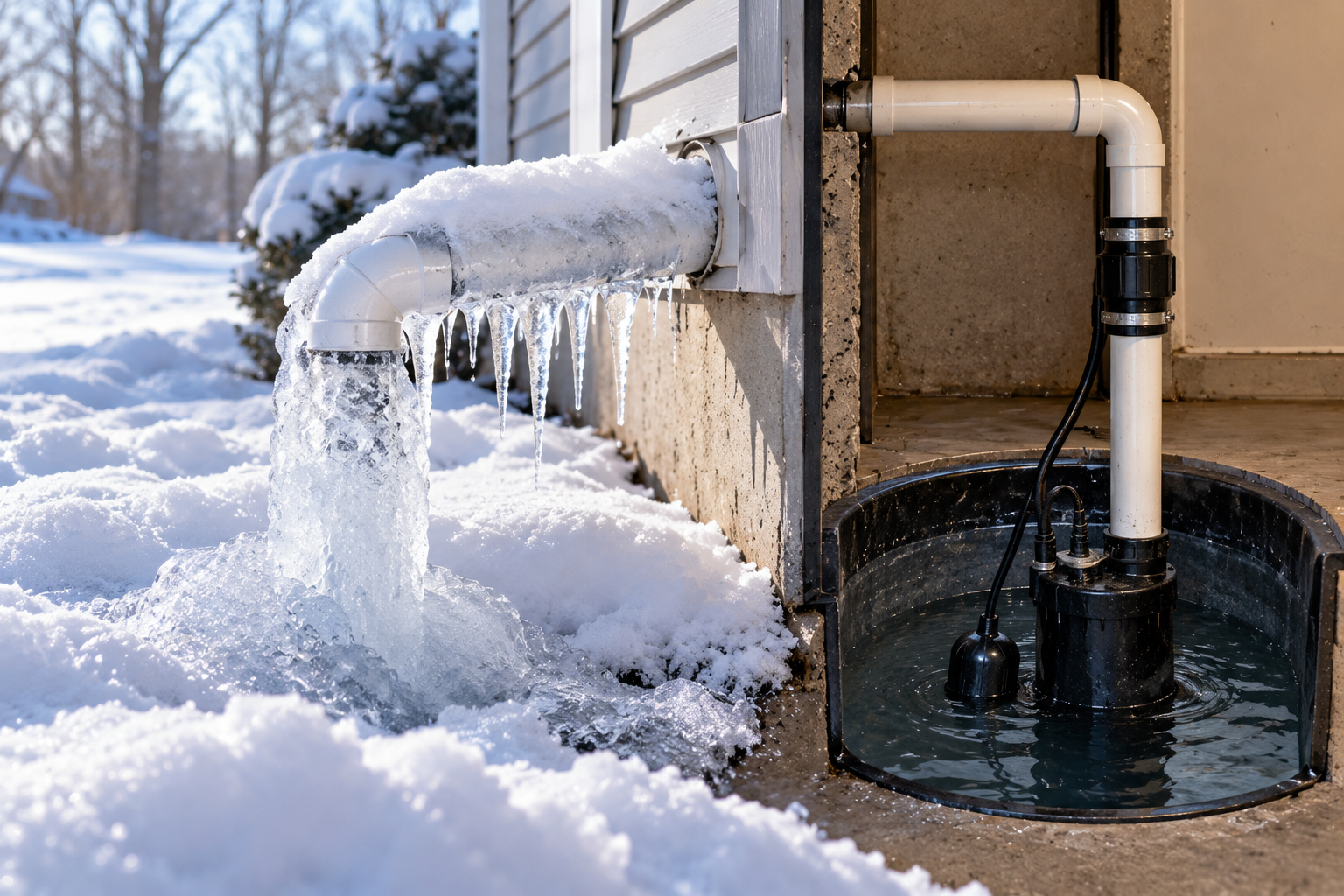
Yes. A frozen sump pump discharge line can cause basement flooding by blocking the path water needs to leave the home. If the pump cannot discharge water, the sump pit may rise, overflow, or force the pump to run longer. Ice, poor slope, trapped water, and blocked outlets are common causes.
Author: All Pro Basement
Updated: October 22, 2026
A sump pump can be working correctly and still fail to protect the basement if the discharge line is frozen.
That is because the pump depends on a clear path to move water away from the sump pit.
When ice blocks that path, the system can become ineffective even though the motor is still running.
Can a Frozen Sump Pump Discharge Line Cause a Basement Flood?
Yes. A frozen sump pump discharge line can prevent water from leaving the sump pit.
As groundwater continues entering, the basin can rise toward overflow.
This can create winter basement flooding even when the pump itself has not failed.
The real problem may be outside the basement, inside the discharge piping.
Why Do Sump Pump Discharge Lines Freeze?
Discharge lines freeze when water remains inside exposed or poorly drained sections of pipe during cold weather.
That trapped water can turn to ice and restrict flow.
Common causes include:
- Poor pipe slope
- Low spots
- Standing water
- Long exterior runs
- Blocked outlets
- Snow buildup
- Ice at the termination point
Can Standing Water Inside the Pipe Freeze?
Yes. Standing water is one of the main freeze risks.
A discharge line should allow water to move away without leaving large trapped pockets.
If part of the line sags or slopes incorrectly, water can remain after the pump shuts off.
When temperatures drop, that trapped water can freeze and gradually block the pipe.
How Does Poor Pipe Slope Increase Freeze Risk?
Poor slope creates places where water cannot drain freely.
Instead of leaving the pipe, water collects in low sections.
That standing water is more vulnerable to freezing.
A frozen sump pump discharge line may therefore begin with a routing problem rather than an unusually cold winter.
Can a Long Exterior Discharge Line Freeze More Easily?
It can, especially if the line is exposed, poorly sloped, or contains low spots.
The longer the exterior run, the more opportunities there are for trapped water or cold exposure.
Length alone does not guarantee freezing.
However, long runs require careful routing and drainage.
Can an Undersized Discharge Pipe Make Winter Problems Worse?
Yes. A discharge pipe that is too restrictive can reduce flow and make it harder for water to leave the system efficiently.
That does not mean every freeze is caused by pipe size.
However, restricted flow can become more serious when ice or debris is already reducing the available opening.
What Happens When the Pump Cannot Discharge Water?
The pump may continue running while the water level changes very little.
In some cases, the basin may continue filling.
This can cause:
- Long pump runtimes
- Repeated cycling
- Sump pit overflow
- Pump overheating
- Water returning toward the basement
- Increased mechanical wear
A frozen sump pump discharge line can therefore create both flooding and equipment stress.
Can a Pump Burn Out While Trying to Push Against Ice?
It can experience additional stress when it runs for long periods against a blocked discharge path.
The exact result depends on the pump, system design, and how complete the blockage is.
However, extended runtime is a warning sign that should not be ignored.
Replacing the pump alone will not fix a frozen line.
Can Water Flow Back Into the Sump Pit?
Yes. Water can return if the check valve is not working correctly or if discharge water falls back after the pump stops.
A blocked line can make the behavior harder to diagnose.
The system may appear to short cycle when the real issue is a combination of backflow and restricted discharge.
Can a Failed Check Valve Be Mistaken for a Frozen Line?
Yes. Both conditions can make the sump pit refill quickly.
A failed check valve often allows water from the discharge pipe to fall back into the basin.
A frozen line restricts water leaving the system.
A professional looks at flow, backflow, pipe temperature, outlet condition, and pump behavior together.
Can Snow Block a Sump Pump Discharge Outlet?
Yes. Heavy snow can cover or restrict the discharge outlet.
Ice can also form around the termination point.
If the outlet cannot release water, pressure can build in the line.
This may create symptoms similar to a frozen pipe farther upstream.
The outlet should remain clear throughout winter.
Can Ice Form Only at the End of the Pipe?
Yes. Sometimes the discharge line is open until the final section.
Water reaching the cold outlet can freeze and build ice over time.
This can gradually reduce the opening.
The pump may still move some water at first, then struggle more as the blockage grows.
Why Can the Problem Appear Without a Major Storm?
Because groundwater can remain active during winter even when no heavy rain is falling.
High groundwater, winter rain, thawing snow, and saturated soil can continue feeding the sump system.
If the frozen sump pump discharge line is already restricted, even normal groundwater inflow can become a problem.
Can Winter Rain Create Sump Pump Problems?
Yes. Rain during cold weather can increase groundwater while exterior piping remains near freezing temperatures.
That combination can be difficult for a discharge system.
The sump pump may need to run more often at the same time the exterior line is most vulnerable to freezing.
How Does Snowmelt Affect the Sump Pump?
Snowmelt adds water to the soil over time.
Even when the surface looks dry, meltwater can move toward the foundation.
In Massachusetts, late-winter and early-spring thaw can raise groundwater while discharge lines are still exposed to freezing nights.
That overlap can increase risk.
Why Do Freeze-Thaw Cycles Matter?
Freeze-thaw cycles repeatedly change the condition of soil, snow, and exterior piping.
A discharge line may thaw during the day and freeze again overnight.
This can create intermittent blockage.
The pump may appear normal one day and struggle the next.
That makes seasonal monitoring especially important.
Can Frozen Soil Affect Basement Drainage?
Yes. Frozen ground can limit how quickly surface water soaks into the soil.
Runoff may move differently across the property.
At the same time, deeper groundwater may remain active.
These conditions can increase sump demand while exterior drainage routes are less flexible.
How Can I Tell If My Sump Pump Discharge Is Frozen?
Several clues can point toward a frozen discharge problem.
Watch for:
- Pump running longer than normal
- Little water leaving the outlet
- High water in the sump pit
- Ice around the discharge point
- Repeated cycling
- Unusual pump noise
- Water returning after shutdown
The pattern matters more than one symptom alone.
What If the Pump Is Running but the Pit Is Not Emptying?
That is an important warning sign.
If the motor is operating but the sump water level barely drops, the discharge path may be restricted.
Possible causes include:
- Frozen pipe
- Clogged pipe
- Blocked outlet
- Damaged pipe
- Weak pump
- Check valve problem
The discharge route should be inspected before assuming the pump itself has failed.
Can a Clogged Pipe Look Like a Frozen Pipe?
Yes. Debris, sediment, damaged fittings, or a collapsed pipe can also restrict flow.
The difference often depends on timing and weather.
A problem that appears only during extreme cold may point toward freezing.
A year-round restriction may suggest a different obstruction.
Can a Frozen Sump Pump Discharge Line Cause Short Cycling?
Yes. Short cycling can happen if water returns to the pit or if the pump cannot remove enough water during each cycle.
The pump starts, struggles to discharge, shuts off, then restarts soon after.
A frozen sump pump discharge line can therefore mimic other system problems.
Can a Weak Pump Cause the Same Symptoms?
Sometimes. A weak or failing pump may also struggle to move water.
However, a strong pump cannot overcome a completely blocked line.
This is why professionals check both the pump and the entire discharge path.
Replacing equipment without confirming the cause can leave the real problem unchanged.
Can High Groundwater Make the Situation More Dangerous?
Yes. High groundwater increases the amount of water entering the sump pit.
If the discharge line is frozen, the pump has less time before the basin fills.
The combination of high inflow and blocked discharge can create a rapid overflow risk.
This is especially important during snowmelt or prolonged winter rain.
Why Is the Sump Pit Water Level Important?
The water level helps show whether the pump is keeping up.
If the pit remains high while the pump runs, the system may be restricted or undersized for the current inflow.
A rising level is more urgent than frequent cycling with normal water control.
Professionals often compare runtime with actual water movement.
Can a Battery Backup Solve a Frozen Discharge Line?
No. A battery backup sump pump cannot fix a blocked discharge path.
It can provide pumping during a power outage or primary pump failure.
However, if both pumps share a frozen discharge line, the blockage still remains.
Backup protection and freeze protection solve different problems.
Why Should the Backup System Still Be Inspected?
Because winter storms can create both freezing conditions and power outages.
A functioning backup system adds another layer of protection when the discharge path is available.
The battery, charger, float, pump, alarm, and piping should all be checked before severe weather.
Can Freeze Flow Protection Help?
Yes, in appropriate systems.
Freeze flow protection can provide a safer way for water to escape when the main exterior discharge path becomes restricted by ice.
However, the design should match the property and drainage conditions.
Freeze protection should not be used to ignore poor pipe slope or bad routing.
Does Freeze Flow Protection Prevent Every Freeze-Up?
No. No single component eliminates every winter risk.
The system still depends on proper pipe slope, clear outlets, correct routing, and maintenance.
Advanced freeze flow protection is one part of a broader winter drainage strategy.
A frozen sump pump discharge line should be evaluated as a complete system problem.
What Should a Professional Winter Sump Inspection Include?
A winter inspection should evaluate:
- Pump operation
- Sump pit level
- Float switch
- Check valve
- Discharge slope
- Low spots
- Exterior pipe routing
- Outlet condition
- Snow blockage
- Ice buildup
- Backup system
- Groundwater inflow
Each part affects how reliably water leaves the basement.
Why Should Discharge Routing Be Checked Before Winter?
Because routing problems are easier to correct before the ground freezes and snow accumulates.
A line that holds water in fall may become a frozen sump pump discharge line in winter.
Identifying low spots, bad slopes, and vulnerable outlets early can reduce the chance of a midwinter blockage.
Why Are Massachusetts Homes Especially Vulnerable?
Massachusetts winters combine freezing temperatures, snow, winter rain, thawing periods, and high groundwater.
These conditions can occur within the same season.
A discharge line may freeze while the sump system still needs to move groundwater.
That makes winter sump reliability especially important in New England.
Why Is Diagnosis More Important Than Replacing the Pump?
Because the pump may be working correctly.
If the discharge line is frozen, a new pump will face the same blocked path.
A larger pump may also fail to move water through solid ice.
The real solution begins by identifying whether the problem is the pump, discharge pipe, outlet, check valve, or groundwater demand.
All Pro Basement evaluates sump pump systems, discharge routing, freeze protection, drainage, and groundwater conditions together.
The company brings more than 25 years of hands-on experience with Massachusetts basements.
Owner Diego Tameirao personally oversees projects, while Project Manager Keila Tameirao helps coordinate homeowners throughout the process.
When a frozen sump pump discharge line is diagnosed correctly, the next step depends on pipe slope, standing water, outlet conditions, groundwater inflow, freeze protection, and the overall performance of the sump system.
How Can I Confirm the Discharge Line Is Frozen?
A frozen discharge line is more likely when the pump runs but little or no water exits outside during freezing weather.
Other clues include rising sump water, ice at the outlet, unusually long pump cycles, and discharge flow that returns only after temperatures rise.
What Should I Do If the Sump Pump Discharge Is Frozen?
The safest first step is to reduce the risk of overflow and identify where the blockage is located.
Do not assume the pump is defective.
A frozen sump pump discharge line should be treated as a discharge-path problem until inspection proves otherwise.
If water is rising quickly, professional service may be needed before the sump pit overflows.
Should I Keep the Pump Running Against a Frozen Line?
Continuous operation against a blocked line can place unnecessary stress on the pump.
The motor may run without moving enough water.
If the discharge path is blocked, restoring a clear route for water matters more than forcing the pump to keep running.
A professional can determine whether temporary shutdown or another measure is appropriate.
Can the Discharge Line Be Cleared Without Replacement?
Sometimes. If the pipe is structurally sound and the problem is isolated ice, clearing the blockage may restore flow.
However, repeated freezing usually suggests a design issue.
That could involve poor slope, low spots, trapped water, outlet placement, or exposure to severe cold.
Should the Discharge Line Be Re-Routed?
Sometimes. Re-routing may be appropriate when the existing path creates low spots or keeps water trapped outdoors.
The best route should allow water to move away from the house while reducing freeze-prone sections.
A frozen sump pump discharge line that returns every winter often deserves a routing review.
Can Better Pipe Slope Reduce Freezing?
Yes. Proper slope helps water leave the discharge line after the pump shuts off.
Less standing water means less material available to freeze.
Poor slope can create pockets where water remains trapped.
Correcting those low spots can reduce one major cause of winter blockage.
Why Do Low Spots Matter So Much?
Low spots act like small reservoirs inside the pipe.
After each pump cycle, water can remain there.
When temperatures fall, that water freezes.
Repeated cycles can gradually build a larger ice restriction.
That is why pipe geometry matters as much as winter temperature.
Can the Outlet Location Increase Freeze Risk?
Yes. An outlet exposed to drifting snow, roof runoff, or persistent shade may freeze more easily.
A discharge point that ends in a low area can also stay wet longer.
The outlet should release water where it can continue moving away without collecting around the termination point.
Can Snow Around the Outlet Cause a Backup?
Yes. Packed snow can obstruct the discharge opening.
Even if the pipe itself is not frozen, the outlet may still be blocked.
This can create similar symptoms, including long pump cycles and rising water in the pit.
Winter inspection should include the entire outlet area.
Can Freeze Flow Protection Prevent Basement Flooding?
It can reduce risk in appropriate systems by giving water another route when the main discharge becomes restricted.
However, freeze flow protection is not a substitute for proper pipe slope, routing, or maintenance.
A frozen sump pump discharge line still requires diagnosis.
The protection works best as part of a properly designed system.
Does Freeze Flow Protection Prevent Every Freeze-Up?
No. It cannot guarantee that every exterior component will remain ice-free.
Its purpose is to improve system resilience when freezing conditions create a blockage.
Poor routing, severe ice buildup, blocked outlets, or heavy snow can still affect performance.
Can a Check Valve Affect Winter Performance?
Yes. A malfunctioning check valve can allow water to fall back toward the sump pit after each cycle.
That increases cycling and can leave more water inside the discharge system.
Check valve behavior should be evaluated together with pipe slope and freeze risk.
Can a Failed Check Valve Make the Line Freeze Faster?
It can contribute indirectly.
If more water remains or moves backward after each cycle, some sections of pipe may stay wetter.
That does not mean the check valve is always the cause.
However, it can be one factor in a system that already has low spots or poor drainage.
Should a Bigger Pump Be Installed?
Not automatically.
A larger pump cannot move water through a fully blocked discharge line.
It may also increase pressure without solving the underlying restriction.
Pump capacity should match groundwater inflow, sump pit size, discharge height, and pipe design.
The discharge path must remain open first.
Can a Backup Pump Help During Winter?
Yes, but only if it has a usable discharge route.
A backup pump can help when the primary pump fails or power is lost.
However, if both pumps depend on the same frozen line, the backup cannot solve the blockage.
Backup capacity and discharge design should be evaluated together.
Should a Battery Backup Be Installed?
It may be useful when groundwater remains active during winter storms or power outages.
A battery backup sump pump adds redundancy.
However, it does not replace freeze protection.
The system still needs a clear route for water to leave the home.
Can Interior Drainage Still Work During Winter?
Yes. Interior drainage can continue collecting groundwater even when the ground outside is frozen.
That water still needs to reach the sump pit and be discharged.
This is why a frozen sump pump discharge line can become serious even during very cold weather.
The drainage system may continue doing its job while the outlet path fails.
Can Exterior Drainage Improvements Help?
Sometimes. Better exterior drainage can reduce the amount of water reaching the foundation.
Grading, downspouts, and runoff management can lower groundwater demand in some conditions.
However, exterior drainage does not replace the need for a reliable sump discharge route.
Different systems solve different parts of the problem.
When Should a Frozen Discharge Line Be Repaired?
Repair is appropriate when freezing repeats, the pipe holds standing water, the outlet is poorly located, or the line has damaged sections.
A one-time freeze during unusual weather may require a different response than a recurring winter pattern.
Repeated freezing usually means the system design should be reviewed.
What Should Sump Pump Maintenance Include Before Winter?
Before cold weather, inspection should include:
- Pump operation
- Float switch
- Check valve
- Sump pit
- Discharge pipe
- Pipe slope
- Exterior outlet
- Backup system
- Freeze protection
- Alarm operation
This helps identify weaknesses before temperatures drop.
How Often Should the Discharge Outlet Be Checked in Winter?
It should be checked periodically during freezing weather and after major snow or ice events.
Homeowners should look for blocked openings, ice buildup, snow cover, or pooling near the outlet.
Any change in pump sound or runtime can also signal a developing problem.
Can a Frozen Sump Pump Discharge Line Damage the Pump?
It can increase wear by forcing the pump to run longer or more often.
The exact effect depends on the pump and severity of the blockage.
However, the safest assumption is that extended operation against a blocked line is undesirable.
The discharge problem should be corrected promptly.
When Should I Call a Sump Pump Professional?
Call a professional when the pump runs without lowering the pit, the outlet appears frozen, water is rising, or the same freeze-up happens repeatedly.
Professional evaluation is also appropriate when:
- Pipe slope is unclear
- The outlet is buried in snow
- Water returns to the pit
- The pump cycles constantly
- Backup systems share the same blocked line
The entire system should be reviewed, not just the motor.
How Does All Pro Basement Diagnose Winter Sump Problems?
All Pro Basement evaluates the pump, sump basin, check valve, discharge routing, outlet, freeze protection, groundwater inflow, and backup system together.
The company is family-owned and operated with more than 25 years of hands-on experience.
Diego Tameirao personally oversees projects, while Project Manager Keila Tameirao helps coordinate homeowners throughout the process.
The goal is an honest evaluation without high-pressure sales.
A solution may involve clearing the line, correcting slope, rerouting piping, relocating the outlet, servicing the check valve, adding freeze flow protection, or improving the sump system.
Not every home needs every service.
Frequently Asked Questions About Frozen Sump Pump Discharge Lines
Why Does My Sump Pump Discharge Line Freeze?
The line usually freezes because water remains inside exposed piping during cold weather.
Poor slope, low spots, standing water, long exterior runs, or blocked outlets can increase the risk.
The freeze often starts where water cannot drain completely.
Can a Frozen Sump Pump Line Cause Flooding?
Yes. A frozen sump pump discharge line can block water from leaving the sump pit.
If groundwater continues entering, the basin can overflow.
The risk increases when the pump is still running but cannot move enough water outside.
How Do I Know If My Sump Pump Discharge Is Frozen?
Common signs include a running pump with little outside discharge, rising pit water, ice at the outlet, long cycles, or repeated short cycling.
A sudden change during freezing weather is another clue.
Professional inspection can confirm whether the blockage is ice or something else.
Can a Sump Pump Burn Out If the Discharge Line Is Frozen?
Extended operation against a blocked line can increase mechanical stress.
Whether permanent damage occurs depends on the pump and how long it runs.
The discharge problem should be corrected before unnecessary wear becomes worse.
Can Snow Block a Sump Pump Outlet?
Yes. Heavy or packed snow can obstruct the discharge point.
That can prevent water from leaving even if the pipe itself is not frozen.
The outlet should remain clear during winter.
Does Freeze Flow Protection Prevent Every Freeze-Up?
No. Freeze flow protection can reduce risk, but it does not replace proper slope, routing, or outlet maintenance.
The system still needs to be designed so water drains efficiently.
Should I Replace My Sump Pump If the Discharge Line Froze?
Not automatically.
The pump may still be working correctly.
Replacing it without fixing the frozen discharge path may leave the same problem.
The system should be inspected before deciding whether pump replacement is necessary.
Can a Frozen Discharge Line Happen Without Heavy Rain?
Yes. High groundwater, winter rain, snowmelt, and saturated soil can keep the sump active even during calm weather.
If the exterior line is frozen, normal groundwater inflow can still create an overflow risk.
What Is the Best Long-Term Winter Protection Strategy?
The best strategy is to keep the entire discharge path reliable.
That means reducing trapped water, maintaining proper slope, protecting the outlet, checking the valve, and ensuring the pump and backup system are ready.
A frozen sump pump discharge line should be treated as a system issue rather than a single ice blockage.
Long-term protection depends on how water moves from the sump pit to the final discharge point during real winter conditions.
For Massachusetts homes, that means planning for freezing temperatures, snow, winter rain, spring thaw, and active groundwater.
Contact All Pro Basement Today to find out whether a frozen sump pump discharge line is putting your basement at risk and what freeze flow, drainage, or sump system improvements may help protect your home this winter.