Introduction
Water can keep seeping through a basement wall after heavy rain because saturated soil stores water around the foundation. Groundwater pressure can remain elevated long after rainfall ends, forcing moisture through cracks, joints, porous masonry, or drainage weaknesses until the surrounding soil gradually drains.
Author: All Pro Basement
Updated: October 14, 2026
A storm can end while the water problem beneath your yard is still developing.
That is one reason basement wall seepage may appear hours after the sky clears.
Rain falling at the surface does not immediately disappear.
Some runs away. Some evaporates. However, a significant portion can soak into soil and move downward toward the foundation.
Why Does Basement Wall Seepage Happen After Heavy Rain?
Basement wall seepage usually happens when more water reaches the foundation than the surrounding drainage system can efficiently manage.
As soil becomes saturated, water can collect beside basement walls and beneath the floor.
The EPA notes that foundations are exposed to rain-soaked soil and potentially high water tables, making them vulnerable to groundwater intrusion.
That stored water can seek openings through the foundation.
Why Can Water Keep Entering After the Rain Stops?
Because soil does not drain instantly.
Water absorbed during a storm can continue traveling through soil toward lower areas after rainfall ends.
A basement is below grade, so its walls are directly exposed to these changing groundwater conditions.
Consequently, basement wall seepage may intensify after the storm rather than during the heaviest rain.
What Does Saturated Soil Do Around a Basement?
Saturated soil contains so much water that additional moisture cannot easily drain into empty pore spaces.
As a result, water can accumulate around the foundation.
The amount and direction of movement depend on soil type, grading, drainage, groundwater, and the home’s foundation design.
This is why two neighboring homes can react very differently to the same storm.
What Is Hydrostatic Pressure?
Hydrostatic pressure is the pressure water creates when it accumulates against or beneath a foundation.
The greater the water buildup, the more opportunity it has to move through vulnerable areas.
Building Science Education recommends foundation drainage systems that relieve groundwater and help control hydrostatic pressure.
Hydrostatic pressure does not mean water will push through solid concrete like a broken pipe.
Instead, water tends to exploit available pathways.
Where Does Water Usually Enter?
Common entry points include:
- Foundation cracks
- Wall-floor joints
- Masonry joints
- Pipe penetrations
- Porous wall areas
- Deteriorated mortar
- Gaps around repairs
- Vulnerable footing connections
The exact location matters because different entry points may indicate different moisture mechanisms.
Can Foundation Cracks Cause Basement Wall Seepage?
Yes. Foundation cracks can provide a direct pathway when groundwater accumulates outside the wall.
A crack may remain completely dry during ordinary weather.
However, once saturated soil raises groundwater around the foundation, the same crack may begin leaking.
That is why recurring basement wall seepage after storms should be evaluated together with crack location and exterior drainage.
Does a Leaking Crack Always Mean Structural Damage?
No.
A foundation crack can leak without indicating major structural movement.
Likewise, some structurally important cracks may remain dry.
Water intrusion and structural stability are related but separate questions.
A professional evaluates crack direction, displacement, width, surrounding wall condition, and moisture patterns before recommending repair.
Can Water Enter at the Wall-Floor Joint?
Yes. The joint where the basement wall meets the floor slab is a common place for groundwater to appear.
Water beneath or beside the foundation can move toward this connection when groundwater rises.
FEMA describes interior drainage systems that collect water around below-grade walls and floors and direct it toward a sump.
Water appearing at the floor edge may therefore originate outside the foundation rather than from the visible wall surface.
Can Concrete Basement Walls Absorb Water?
Concrete is durable, but it is not completely impermeable.
Its pore structure can allow moisture movement when exposed to wet soil.
Building Science Education explains that water management must address groundwater, stormwater, vapor, and other moisture sources around foundations.
Therefore, a wall may feel damp even when there is no obvious crack carrying liquid water.
What Is Capillary Moisture?
Capillary moisture occurs when water moves through small pores in materials such as concrete or masonry.
The process is sometimes compared to water moving through a sponge.
Building Science Education notes that moisture can wick through concrete when effective capillary-control layers are absent.
This can create damp surfaces, mineral deposits, and moisture problems without a dramatic stream of water.
What Does Efflorescence Mean on a Basement Wall?
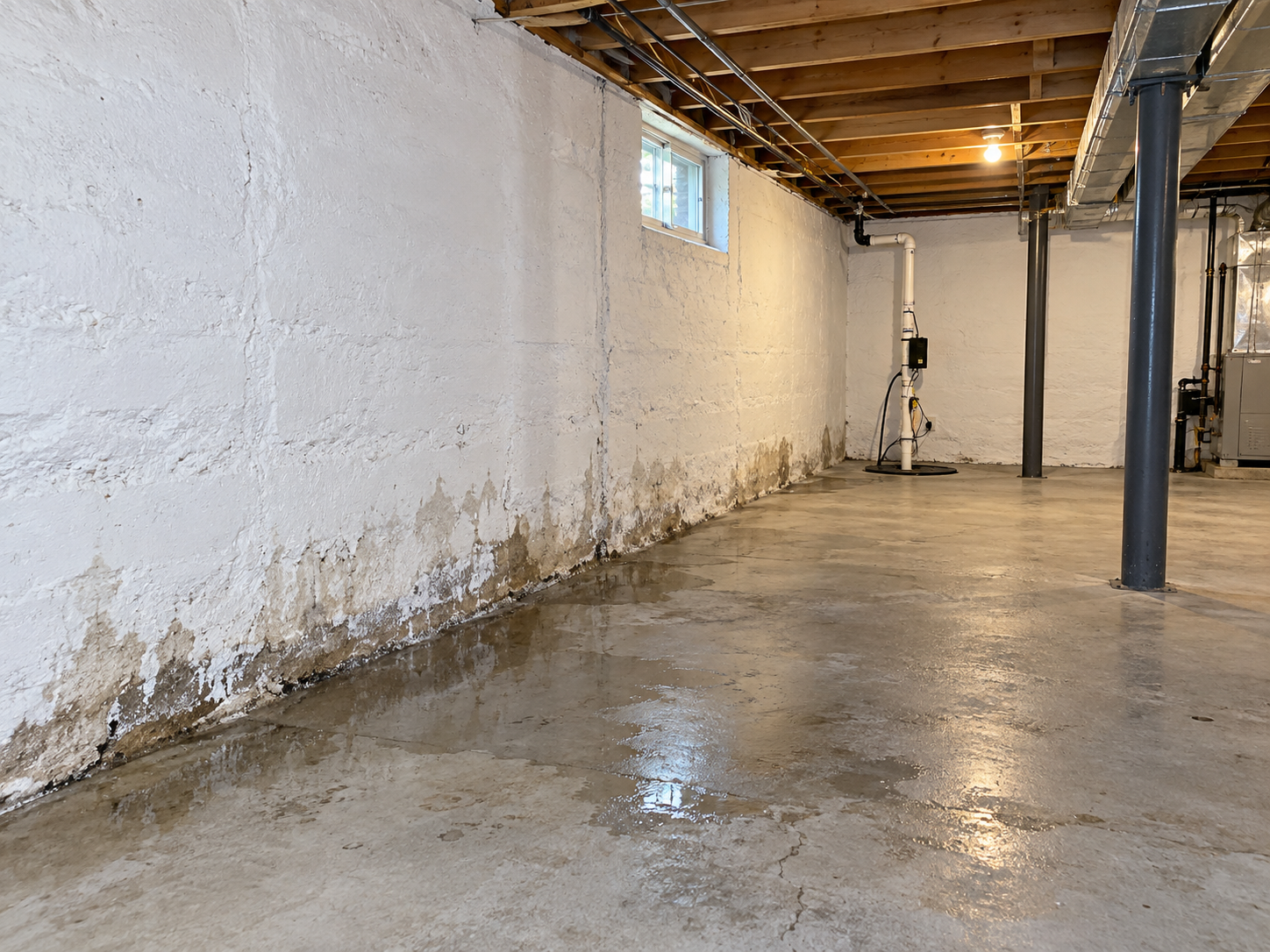
Efflorescence is the white or powdery mineral residue left when moisture passes through masonry and evaporates.
It is not the same as mold.
However, it can be valuable evidence of repeated moisture movement.
A dry wall with old efflorescence may still have a history of foundation seepage during wet weather.
Why Does Heavy Rain Cause Problems That Light Rain Does Not?
A foundation may tolerate ordinary rainfall because the soil and drainage system can manage the incoming water.
Heavy rain changes that balance.
When rainfall arrives faster than soil and drainage can move it away, water begins accumulating around the foundation.
Therefore, a basement that stays dry during light rain can still develop basement wall seepage during major storms.
Can Poor Grading Cause Basement Wall Seepage?
Yes. Ground that slopes toward the house directs surface runoff toward the foundation.
That increases the amount of water the surrounding soil must absorb.
The EPA recommends grading soil so surface water moves away from the building.
Improving grading may reduce water exposure, although it will not repair every groundwater problem.
Why Do Downspouts Matter So Much?
Roof runoff can deliver a large volume of water to a concentrated area beside the foundation.
Short or poorly positioned downspouts may repeatedly saturate the same soil.
Building Science Education explains that roof water should be directed away from foundations to reduce soil saturation and seepage risk.
This makes gutter and downspout inspection an important part of diagnosing basement wall seepage.
Can Gutters Be Working and Still Cause Problems?
Yes.
A gutter can look functional while the downspout empties too close to the house.
Underground extensions can also become clogged, damaged, or disconnected.
During an inspection, the question is not simply whether gutters exist.
The important question is where the collected water goes after it leaves the roof.
Can High Groundwater Cause Wall Seepage?
Yes. A rising water table can expose the foundation to moisture from below and from the sides.
The groundwater level may rise during prolonged storms or wet seasons.
The EPA identifies high water tables as one of the conditions that can expose foundations to moisture.
When groundwater rises, cracks and joints that are normally dry may become active water-entry points.
Why Is Spring Snowmelt Important in Massachusetts?
Spring snowmelt can release water into already wet soil over an extended period.
This can increase groundwater around foundations even without a dramatic rainstorm.
In Massachusetts, snowmelt combined with spring rain may keep soil saturated for longer periods.
Consequently, the same basement wall seepage seen after a summer storm may also appear during early spring.
Can Freeze-Thaw Cycles Affect Basement Walls?
Yes. Freeze-thaw cycles can affect vulnerable masonry, mortar joints, and existing exterior defects when moisture is present.
Repeated seasonal exposure may gradually worsen weak areas.
However, freeze-thaw conditions should not automatically be blamed for every leak.
Drainage, groundwater, foundation age, and existing cracks must also be evaluated.
Why Are Older Foundations Different?
Older foundations were built with materials and drainage practices that may differ from modern construction.
Some lack modern exterior drainage or moisture-control layers.
Others have undergone decades of soil movement, repair, or water exposure.
For this reason, diagnosing an older basement often requires understanding both the foundation material and its repair history.
Why Are Fieldstone Foundations Vulnerable to Seepage?
Fieldstone walls contain many stones joined by mortar.
That creates far more joints than a poured concrete wall.
As mortar ages, some joints may become loose, porous, or deteriorated.
Water can then follow these pathways through the wall when surrounding soil becomes saturated.
Fieldstone basement wall seepage may appear as damp mortar, staining, mineral residue, or localized trickles between stones.
Does Repointing Stop Every Fieldstone Leak?
No.
Fieldstone foundation repointing can restore deteriorated mortar joints, but it does not automatically solve groundwater pressure or poor exterior drainage.
If water continues accumulating outside the wall, moisture may search for another pathway.
That is why masonry condition and water management should be evaluated together.
Can a Failed Drainage System Cause Repeated Seepage?
Yes. A foundation drainage system that is clogged, damaged, undersized, or poorly connected may no longer manage groundwater effectively.
Water can then accumulate near the foundation.
Building Science Corporation emphasizes draining water down and away from basement walls and directing groundwater to perimeter drainage.
Recurring seepage after major storms may indicate that the drainage pathway deserves inspection.
Can an Interior Drainage System Help Manage Groundwater?
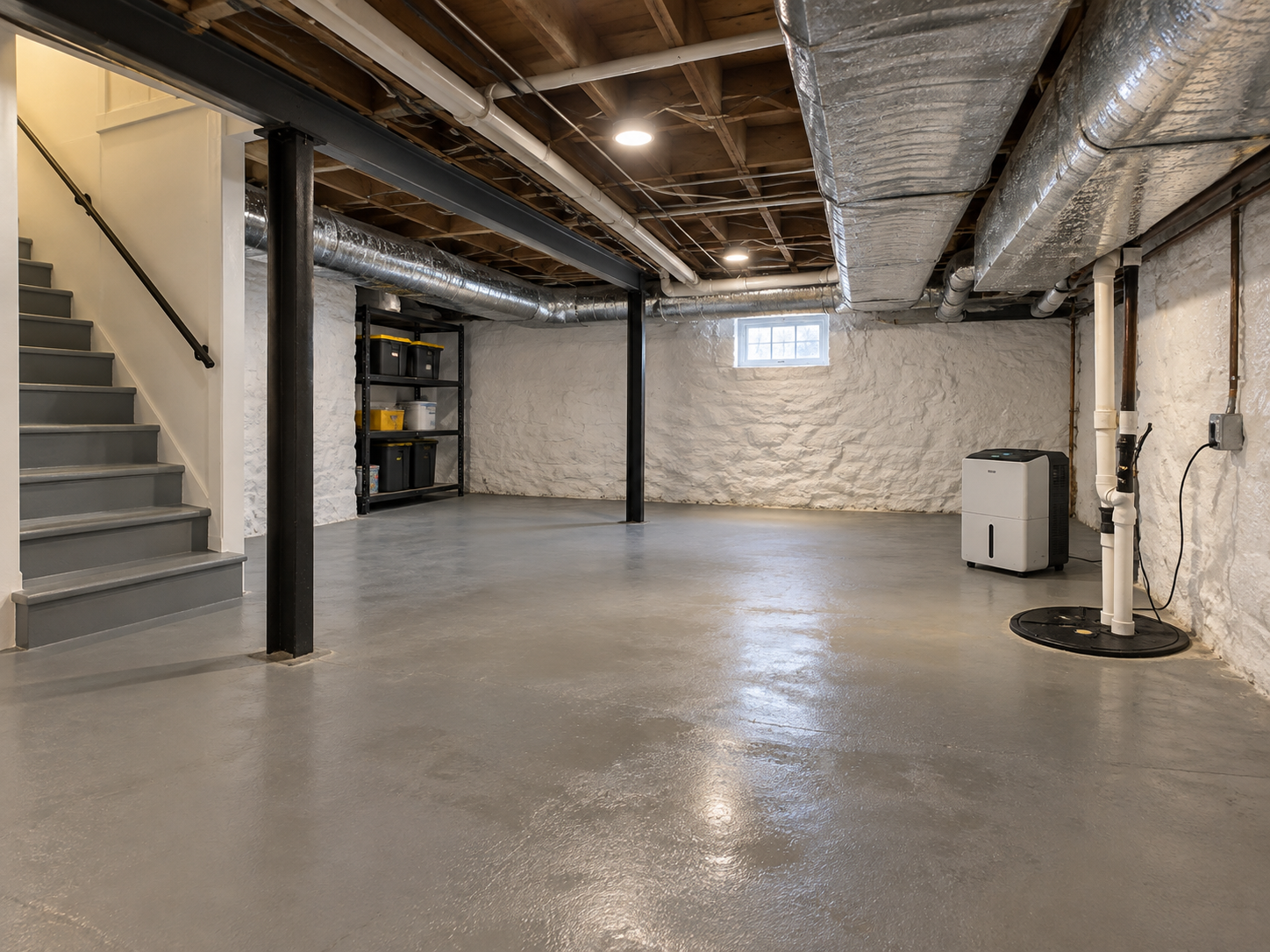
Yes. Interior drainage systems can collect groundwater that reaches the basement perimeter and direct it toward a sump basin.
FEMA describes this approach for managing water around below-grade walls and floors.
The system does not stop rain from entering the soil.
Instead, it provides a controlled route for water once it reaches the foundation area.
What Role Does a Sump Pump Play?
A sump pump removes water collected by the drainage system and sends it to an appropriate discharge point.
Without reliable removal, the sump basin can fill as groundwater continues entering.
The pump is therefore one component of a larger water-management system.
Drainage channels, sump capacity, check valves, discharge lines, and power reliability all matter.
Can a Sump Pump Be Working While the Wall Still Leaks?
Yes.
A sump pump can operate normally while water continues entering through a crack or another wall location.
That may mean the drainage system is not intercepting all of the water.
It may also mean the wall has a specific defect requiring separate attention.
This is why seeing the sump pump operate does not automatically prove the basement waterproofing system is performing as intended.
How Can You Tell Where the Water Is Coming From?
Start by documenting exactly where water first becomes visible.
The first wet point often provides better diagnostic information than the final puddle.
Useful inspection clues include:
- Wet cracks
- Damp mortar joints
- Efflorescence
- Floor-edge water
- Wall staining
- Sump activity
- Pooling outside
- Downspout discharge
Timing matters too.
Note whether the water appears during the storm, immediately afterward, or many hours later.
Why Does Timing Help Identify the Cause?
Fast water entry near a visible crack may suggest a direct pathway.
Delayed seepage may indicate slower groundwater movement through saturated soil.
Water appearing only after several days of rain may point toward rising groundwater rather than one isolated surface runoff event.
These patterns do not provide a diagnosis by themselves, but they narrow the possibilities.
Can Seepage Appear in a Different Place Each Time?
Yes.
Groundwater follows available pathways, and those pathways can change with water level, soil saturation, and drainage conditions.
One storm may activate a foundation crack.
Another may produce moisture along the wall-floor joint.
This is why sealing the most recent wet spot without understanding the overall water pressure can lead to recurring problems elsewhere.
What Does a Professional Look for Outside the Basement?
Exterior conditions are essential to a complete diagnosis.
A professional may examine:
- Ground slope
- Low areas
- Downspouts
- Gutters
- Soil settlement
- Drainage outlets
- Foundation cracks
- Surface runoff paths
The EPA recommends checking whether surrounding landscaping diverts water away and whether roof drainage is functioning properly.
Exterior clues can explain why the inside wall becomes wet.
What Does a Professional Look for Inside?
Inside the basement, the inspection focuses on water patterns and foundation conditions.
That includes wall cracks, mortar joints, staining, efflorescence, floor edges, sump activity, and previous repairs.
The foundation type also matters.
Poured concrete, concrete block, and fieldstone walls can reveal water pathways differently.
A good diagnosis connects these interior signs with the drainage conditions outside.
Why Should the Source Be Identified Before Repair?
Because different water pathways require different solutions.
A leaking foundation crack may need one approach.
High groundwater reaching the wall-floor joint may need another.
Poor grading, damaged mortar, or inadequate drainage can require completely different corrections.
All Pro Basement evaluates basement wall seepage by looking at the foundation, groundwater, drainage, cracks, sump system, and exterior conditions together.
With more than 25 years of hands-on experience, the company works with basement and foundation conditions common throughout Massachusetts.
Owner Diego Tameirao personally oversees projects, while Project Manager Keila Tameirao helps coordinate homeowners through planning and completion.
The goal is to determine why the water is reaching the basement before deciding whether waterproofing, drainage, crack repair, sump improvements, or foundation work is appropriate.
How Can You Find the Source of Basement Wall Seepage?
Finding the source starts with identifying where water first appears and when it becomes visible.
A wet wall several hours after a storm suggests a different pathway than water entering immediately through a visible crack.
Check for:
- Damp cracks
- Wet wall-floor joints
- Efflorescence
- Darkened masonry
- Peeling coatings
- Sump activity
- Wet mortar joints
- Exterior pooling
The pattern helps separate groundwater pressure from surface runoff, plumbing leaks, or isolated foundation defects.
Why Should You Inspect the Basement During Rain?
Inspecting during active rain can reveal water pathways that disappear once conditions dry.
Watch where moisture begins rather than where it eventually spreads.
For example, water may enter through one crack and travel along the floor before creating a puddle several feet away.
That is why the final wet spot is not always the true source of basement wall seepage.
Can Waterproof Paint Stop Basement Wall Seepage?
Waterproof paint may reduce minor surface dampness, but it usually cannot solve active water pressure behind a foundation wall.
If groundwater continues pressing against masonry, the moisture source remains.
Paint can also hide visual clues temporarily.
If staining or efflorescence returns, the wall is still being exposed to moisture.
A coating should not replace diagnosis.
Why Can Surface Sealers Fail?
Surface sealers address the visible side of the problem.
Hydrostatic pressure develops outside or beneath the foundation.
If the water remains there, it may move through another crack, joint, penetration, or weak masonry area.
Therefore, sealing one wet spot may simply redirect basement wall seepage elsewhere.
When Is Interior Basement Waterproofing Necessary?
Interior basement waterproofing may be appropriate when groundwater repeatedly reaches the foundation and creates recurring water intrusion.
The system is designed to manage water in a controlled way.
A professional may consider interior waterproofing when:
- Wall-floor joints repeatedly leak
- Groundwater rises seasonally
- Heavy storms cause recurring seepage
- Exterior access is limited
- Drainage needs improvement
The correct system depends on the actual entry pathway.
How Does an Interior Drainage System Work?
An interior drainage system collects water near the basement perimeter and directs it toward a sump basin.
It provides groundwater with a controlled path rather than allowing it to spread across the floor.
FEMA describes interior drainage as one method for managing water entering below-grade spaces.
The system must be designed around the foundation and groundwater conditions.
Can Interior Drainage Stop Water From Reaching the Floor?
It can help intercept groundwater before it spreads across the basement floor.
However, results depend on where the water originates.
If water is entering through an isolated wall crack above the drainage system, separate crack repair may still be needed.
That is why basement wall seepage should be diagnosed before choosing one solution.
Can a Sump Pump Help With Basement Wall Seepage?
Yes, when the seepage is connected to groundwater collected by an interior drainage system.
The sump pump removes that collected water from the basement.
However, a sump pump does not seal cracks or repair deteriorated masonry.
It is one component of a broader groundwater-management system.
Why Does Pump Capacity Matter?
A sump pump must remove water at a rate that matches the amount entering the system.
During prolonged rain, groundwater volume may increase significantly.
If the pump cannot keep up, the basin may rise toward overflow.
The basin, pump, check valve, discharge line, and drainage system should all be evaluated together.
Why Is Battery Backup Important?
A battery backup sump pump can help protect the basement when utility power fails.
This matters because severe storms may bring both heavy rain and power outages.
If groundwater continues flowing while the primary pump stops, water can quickly accumulate.
Backup protection reduces reliance on one electrical pump.
Should Foundation Cracks Be Repaired?
Cracks that allow repeated water intrusion should be evaluated and repaired appropriately.
However, crack sealing should not be treated as a substitute for drainage when groundwater pressure remains high.
A professional should determine whether the crack is stable, moving, or part of a broader water problem.
Structural foundation crack repair and waterproofing solve different issues.
Sometimes both may be relevant.
Can Crack Injection Stop Water Intrusion?
Certain stable cracks in poured concrete can sometimes be sealed using specialized repair materials.
However, not every crack is suitable for the same method.
The repair depends on crack condition, movement, depth, water pressure, and foundation type.
A leaking fieldstone wall, for example, requires a different approach from a poured concrete crack.
How Can Exterior Drainage Reduce Water Pressure?
Exterior drainage reduces the amount of water accumulating around the foundation.
That can lower the moisture load acting against basement walls.
Important measures may include:
- Proper grading
- Extended downspouts
- Clear gutters
- Controlled roof runoff
- Underground drainage
- Functional perimeter drainage
The EPA recommends directing surface water away from foundations to help reduce moisture problems.
Can Grading Alone Solve Basement Wall Seepage?
Sometimes grading improvements significantly reduce seepage.
However, grading cannot solve every problem.
High groundwater, foundation cracks, failed drains, and wall-floor joint leakage can continue even when surface water is directed away.
Exterior grading should therefore be considered one part of the overall diagnosis.
Can Underground Exterior Drainage Help?
Yes, when exterior water is concentrating near the foundation.
Underground drainage can redirect roof runoff or surface water to an appropriate discharge location.
The design must avoid sending water toward neighboring areas or back toward the foundation.
Poorly designed drainage can simply move the problem rather than solve it.
Can Fieldstone Repointing Help With Water Intrusion?
Yes, when deteriorated mortar joints are contributing to water entry.
Repointing restores failed mortar between stones and helps improve the wall’s condition.
However, fieldstone foundation repointing does not eliminate groundwater pressure.
If saturated soil remains against the wall, drainage and waterproofing may still be necessary.
Why Are Fieldstone Basements Different?
Fieldstone foundations contain numerous joints and irregular pathways where moisture can travel.
Older mortar may also become porous or deteriorated.
That means water can appear over a broad section of wall instead of through one defined crack.
Diagnosis should consider both masonry condition and exterior water management.
Can Efflorescence Come Back After Cleaning?
Yes.
Cleaning removes the visible mineral residue but does not stop the moisture that created it.
If water continues moving through masonry, new minerals may appear as the wall dries.
Recurring efflorescence is therefore a useful sign that the moisture pathway remains active.
Can Finished Basement Walls Hide Seepage?
Yes. Finished walls can conceal damp masonry, foundation cracks, wet insulation, or water entering at the perimeter.
The visible room may look dry while moisture develops behind drywall.
Warning signs can include:
- Musty odors
- Swollen baseboards
- Peeling paint
- Soft drywall
- Warped flooring
- Discoloration
Hidden basement wall seepage should be investigated before damaged finishes are replaced.
Why Should Waterproofing Come Before Remodeling?
A basement should be dry and stable before new flooring, drywall, insulation, or trim are installed.
Otherwise, hidden water can damage finished materials.
The EPA recommends correcting moisture problems before enclosing or remodeling damp areas.
Water management should therefore come before cosmetic upgrades.
How Can You Prevent Seepage After Future Storms?
Prevention starts by reducing water around the foundation and creating a reliable path for groundwater that does reach the basement.
A long-term plan may include:
- Exterior drainage corrections
- Crack repair
- Interior drainage
- Sump pump improvements
- Battery backup
- Fieldstone repointing
- Foundation waterproofing
Not every home needs every measure.
The correct combination depends on the source of basement wall seepage.
Why Should You Check Gutters Before Every Wet Season?
Clogged gutters can overflow and dump roof water directly beside the foundation.
That can rapidly saturate surrounding soil.
Downspouts should also discharge far enough from the house to prevent water from returning toward the basement.
Small exterior corrections can sometimes reduce significant groundwater stress.
How Does Massachusetts Weather Affect Long-Term Waterproofing?
Massachusetts homes face multiple moisture cycles throughout the year.
Heavy summer storms, spring snowmelt, saturated soil, freeze-thaw cycles, and seasonal high groundwater can all affect basement conditions.
A system that performs well in dry weather must also handle these peak moisture periods.
That is why waterproofing should be designed for the home’s worst recurring conditions, not only average days.
When Should You Call a Basement Waterproofing Professional?
Professional evaluation is useful when water repeatedly appears after storms, cracks leak, efflorescence returns, the sump runs frequently, or finished materials show moisture damage.
You should also seek help when the source is unclear.
A professional should inspect both interior symptoms and exterior drainage before recommending a repair.
The goal is to identify the water pathway first.
All Pro Basement is family-owned and operated and has more than 25 years of hands-on experience with waterproofing, drainage, and foundation repair in Massachusetts homes.
Owner Diego Tameirao personally oversees projects, while Project Manager Keila Tameirao helps coordinate homeowners through planning and completion.
The company focuses on honest evaluations without high-pressure sales.
That means determining whether basement wall seepage calls for drainage, crack repair, sump improvements, repointing, waterproofing, or another targeted solution.
Frequently Asked Questions About Basement Wall Seepage
Why Does Water Come Through My Basement Wall After Heavy Rain?
Heavy rain can saturate soil and raise groundwater around the foundation.
That water can create hydrostatic pressure and move through cracks, joints, masonry, or other weak areas.
The seepage may continue after the rain stops because the soil remains wet.
Can Hydrostatic Pressure Cause Basement Wall Seepage?
Yes.
When groundwater accumulates around a below-grade foundation, it can create pressure against walls and beneath the floor.
Water then seeks available pathways through cracks, joints, porous masonry, or foundation connections.
Why Does My Basement Leak Only During Very Heavy Rain?
Light rain may not saturate the soil enough to raise groundwater around the foundation.
Heavy or prolonged rain can overwhelm drainage and increase soil saturation.
That is why basement wall seepage may appear only during the strongest storms.
Will Waterproof Paint Stop Water From Coming Through Basement Walls?
Not reliably when active groundwater pressure is present.
Paint may reduce minor dampness, but it does not remove water from the soil outside.
If pressure remains, water may eventually pass through another vulnerable location.
Can a Sump Pump Stop Wall Seepage?
A sump pump can help when an interior drainage system collects groundwater and directs it to the sump basin.
However, it does not repair wall cracks or deteriorated mortar.
The system must match the water source.
Can Foundation Cracks Cause Water Intrusion?
Yes.
Foundation cracks can provide pathways for groundwater during wet conditions.
Some remain dry most of the year and leak only when groundwater rises.
Repeated leakage should be evaluated before the crack is simply covered.
How Do I Stop Water From Seeping Through a Basement Wall?
The first step is identifying why the water is reaching the wall.
Possible solutions include exterior drainage, crack repair, interior drainage, sump systems, fieldstone repointing, or basement waterproofing.
The correct solution depends on the cause.
Is Basement Wall Seepage a Serious Problem?
Recurring seepage should not be ignored.
Even when the amount of water seems small, repeated moisture can damage finishes, insulation, stored items, and masonry.
It can also signal drainage or groundwater conditions that may worsen during future storms.
What Is the Best Long-Term Solution?
The best solution addresses both the water pathway and the conditions creating it.
Sealing a visible wet spot may provide temporary relief.
However, lasting control usually requires understanding groundwater, drainage, foundation type, and the exact point of entry.
Basement wall seepage is best treated as part of a complete water-management system rather than as an isolated stain on the wall.
When the source is correctly identified, repairs can be targeted instead of relying on repeated surface fixes.
Contact All Pro Basement Today to find out what is causing your basement wall seepage and whether drainage, waterproofing, sump improvements, repointing, or foundation repair is the right solution for your Massachusetts home.