Introduction
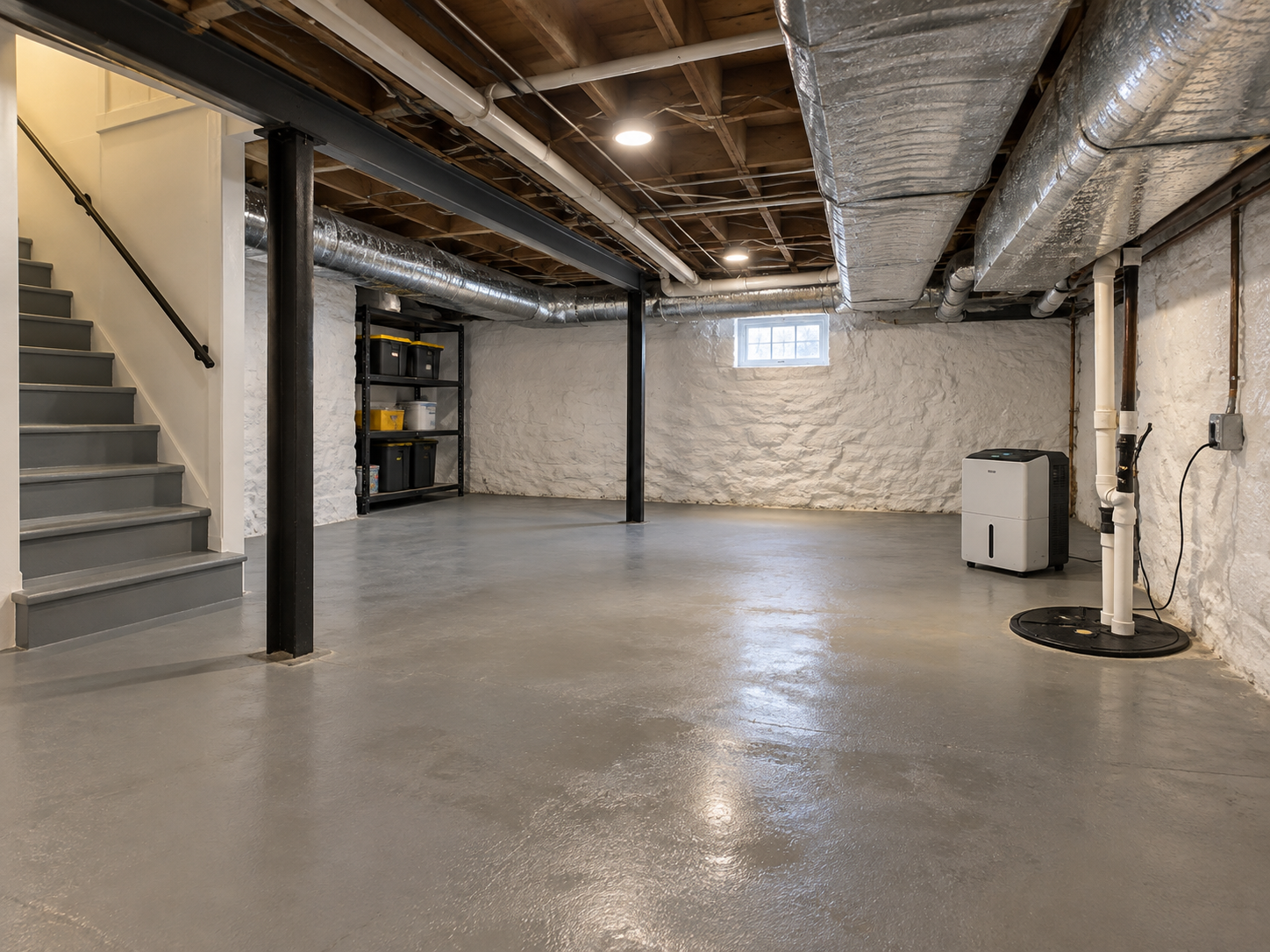
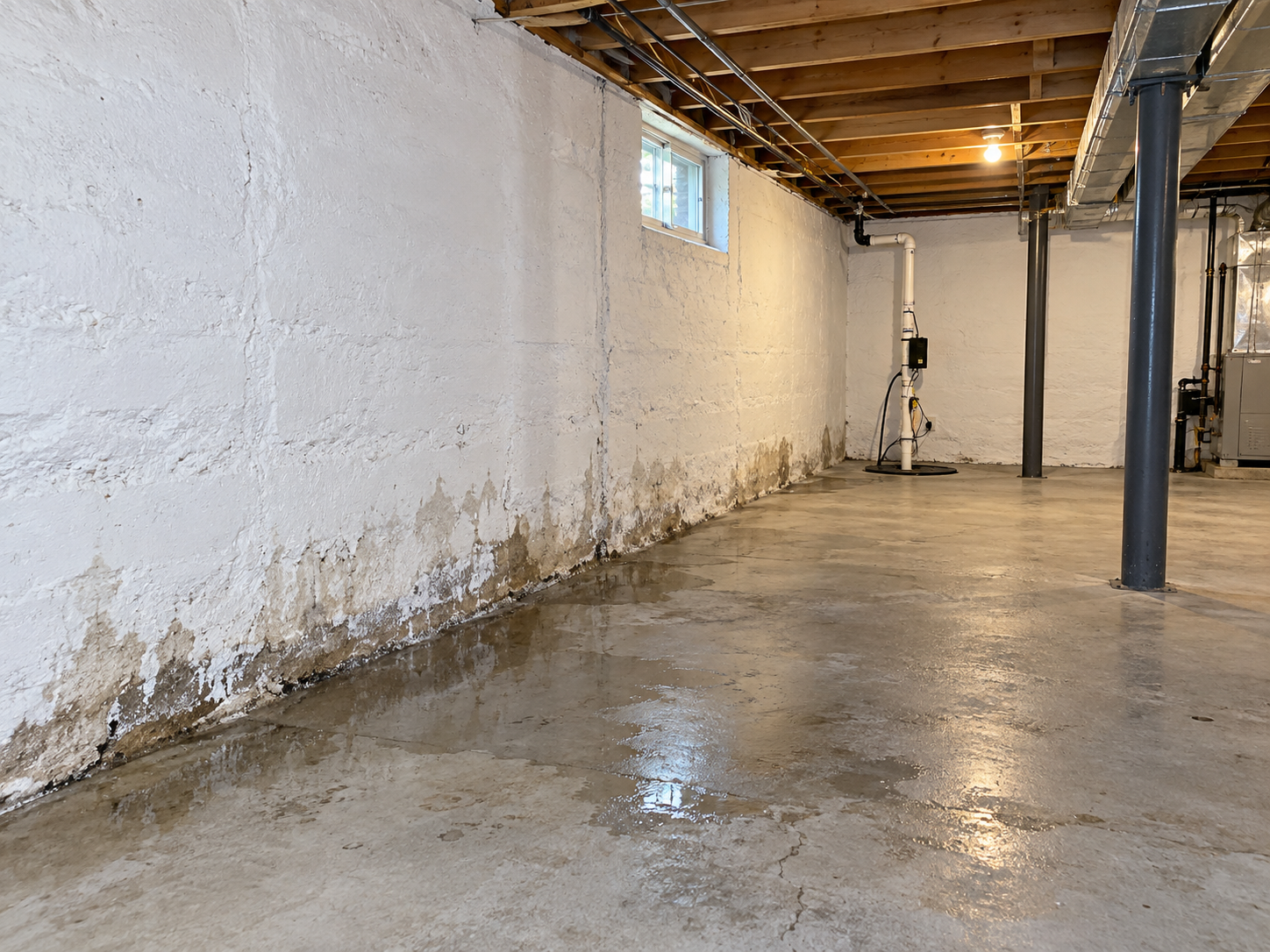
A basement can smell musty without visible water because moisture may be hiding in the air, foundation walls, floor slab, insulation, drywall, or soil below the home. High humidity, condensation, groundwater vapor, small leaks, and poor drainage can all create basement moisture without leaving a puddle.
Author: All Pro Basement
Updated: October 13, 2026
A dry-looking basement is not always a dry basement.
Moisture can move as vapor, collect behind finished materials, or evaporate before it becomes visible.
As a result, the smell may appear long before a homeowner finds standing water.
That is why basement moisture should be investigated at its source instead of judged only by whether the floor looks wet.
Why Does a Basement Smell Musty Without Visible Water?
A musty basement smell often comes from persistent dampness rather than active flooding.
Materials can remain humid enough to support odors even when surfaces appear dry.
The EPA explains that moisture can enter a home through leaks, basement seepage, indoor humidity, and condensation on cold surfaces.
Therefore, visible water is only one form of a moisture problem.
Can High Humidity Cause a Musty Basement Smell?
Yes. High humidity can keep basement materials damp enough to create odors and support unwanted biological growth.
Basements are especially vulnerable because they are cooler than many above-grade rooms.
When humid air enters a cooler basement, the air may reach its dew point.
Moisture can then condense on walls, pipes, floors, or other cold surfaces.
The EPA recommends controlling indoor humidity because excess moisture can contribute to condensation and biological growth.
Why Are Basements Naturally More Moisture-Prone?
Basements are surrounded by soil and contain large areas of concrete or masonry that stay relatively cool.
They can receive moisture from both the ground and indoor air.
Common sources include:
- Groundwater
- Water vapor
- Condensation
- Plumbing leaks
- Foundation seepage
- Poor drainage
- Wet materials
- Humid outdoor air
This is why basement moisture usually requires more than one observation to diagnose correctly.
Can Concrete Walls Hold Moisture?
Yes. Concrete and masonry can transmit moisture even when no liquid water is visibly running down the wall.
Moisture can move through porous materials by capillary action and vapor diffusion.
The U.S. Department of Energy’s Building Science Education program notes that foundation assemblies must manage rainwater, groundwater, moist air, vapor, and interior leaks.
Therefore, a concrete wall can contribute basement moisture without looking obviously wet.
Can a Basement Floor Release Moisture Vapor?
Yes. Moisture in the soil beneath a slab can move upward through concrete if the foundation assembly does not adequately control it.
This process may not create puddles.
Instead, it may increase humidity close to the floor or affect flooring and stored materials.
Building Science Education explains that moisture can move through concrete slabs without an effective capillary break and vapor-control layer beneath them.
Older homes may not have the same sub-slab moisture controls used in newer construction.
Can Groundwater Cause Odors Without Flooding?
Yes. Groundwater does not need to pour through a wall to influence basement conditions.
Moisture can seep slowly through cracks, joints, masonry, or the slab.
Groundwater may also keep foundation materials damp for extended periods.
That moisture can then evaporate into the basement air.
Consequently, a homeowner may notice odor and humidity without ever seeing a large leak.
Why Does Spring Snowmelt Matter in Massachusetts?
Spring snowmelt can saturate soil around a foundation even when there is no active rain.
Water can remain in the ground and move toward the basement over time.
In Massachusetts, snowmelt may combine with wet soil and changing freeze-thaw conditions.
As a result, basement moisture may increase during spring even when the basement never floods.
This seasonal pattern can be an important diagnostic clue.
Can Humid Summers Make the Problem Worse?
Yes. Warm summer air often carries more moisture than cool basement air can comfortably hold.
When that humid air reaches cold walls, pipes, or floors, condensation may form.
A basement can therefore smell musty in summer even when groundwater conditions are relatively stable.
In this case, the main issue may involve humidity and condensation rather than active foundation leakage.
How Can I Tell Condensation From a Leak?
Condensation usually appears across cold surfaces, while leaks tend to create more localized moisture patterns.
However, the two can occur together.
Condensation clues may include:
- Damp cold-water pipes
- Moist wall surfaces
- Sweating ductwork
- Seasonal summer dampness
- No obvious water-entry point
Leak clues may include staining, active drips, wet cracks, or recurring localized dampness.
A professional evaluates timing, location, weather, plumbing use, and material conditions together.
Can Moisture Hide Behind Basement Walls?
Yes. Finished walls can conceal damp foundation surfaces, wet insulation, plumbing leaks, or condensation.
The visible side of drywall may remain dry while moisture develops behind it.
Building Science Education warns that poorly designed below-grade wall assemblies can trap moisture and lead to damaged insulation, odors, mold, and framing deterioration.
That is why recurring odor in a finished basement deserves investigation.
Can Wet Insulation Cause a Musty Smell?
Yes. Insulation that becomes damp can hold moisture close to framing and foundation surfaces.
Fibrous insulation can be especially problematic if it is installed against a damp wall and cannot dry.
The U.S. Department of Energy warns that improperly placed vapor-retarding layers can trap moisture inside below-grade wall assemblies.
A musty smell near finished walls may therefore come from hidden materials rather than the room itself.
Does a Musty Smell Always Mean Mold?
No. A musty odor suggests that moisture deserves attention, but smell alone cannot confirm mold or identify a specific source.
Damp materials, soil, stored items, wet insulation, plumbing issues, or stagnant air can also contribute odors.
The EPA emphasizes that moisture control is central to preventing mold growth, but diagnosis should focus first on finding and correcting the moisture source.
Why Is Basement Moisture Important Even Without Visible Mold?
Moisture can damage materials before visible mold appears.
Wood, drywall, insulation, coatings, and flooring can all be affected by prolonged dampness.
The EPA recommends fixing leaks and seepage and avoiding the enclosure of wet materials.
Therefore, basement moisture should be addressed because of the water problem itself, not only because of visible biological growth.
Can Foundation Cracks Cause Hidden Moisture?
Yes. Foundation cracks can allow small amounts of water or vapor to enter without creating a dramatic leak.
Some cracks may stay dry most of the year and become damp only during seasonal groundwater changes.
Others may show faint staining or mineral deposits rather than active dripping.
A crack should be evaluated in context.
Its location, shape, moisture pattern, and surrounding drainage all help determine whether it contributes to basement moisture.
What Does Efflorescence Tell You?
Efflorescence is the white, powdery mineral residue that can appear on concrete or masonry after moisture moves through it.
It is not mold.
However, it can provide evidence that water has traveled through the foundation material.
If a wall looks dry today but contains repeated efflorescence, moisture may have been moving through it over time.
That makes it an important clue during an inspection.
Can Fieldstone Foundations Hold Hidden Moisture?
Yes. Fieldstone foundations contain many mortar joints that can transmit moisture differently from poured concrete.
Older mortar may also become more porous as it deteriorates.
Massachusetts has many older homes with fieldstone foundations.
In those homes, basement moisture may appear as damp joints, efflorescence, crumbling mortar, or musty air rather than a single obvious leak.
Fieldstone repointing and drainage should be evaluated separately when needed.
Can Plumbing Create a Musty Basement Without an Obvious Leak?
Yes. Small plumbing leaks can keep building materials damp without creating standing water.
A slow leak may wet insulation, framing, or drywall and then evaporate.
Possible clues include moisture near:
- Supply lines
- Drain pipes
- Water heaters
- Laundry equipment
- Bathrooms above
- Utility penetrations
Timing is useful.
If odor or moisture increases after plumbing use, a plumbing source should be considered.
Can Poor Exterior Drainage Cause Hidden Basement Moisture?
Yes. Water that collects near the foundation can increase soil moisture and place more moisture against basement walls.
Poor grading, short downspouts, and concentrated roof runoff can all contribute.
The EPA recommends correcting drainage conditions such as ground sloping toward the home or water flowing toward the foundation.
Even without flooding, these conditions can increase long-term basement moisture.
Can a Sump Pump Affect Basement Moisture?
Indirectly, yes. A sump pump helps remove groundwater collected by a drainage system.
If the system is not working correctly, groundwater may remain higher around the foundation.
That may increase seepage or dampness.
However, a sump pump does not control indoor humidity by itself.
A homeowner may therefore have a functioning sump pump and still experience condensation or vapor-related basement moisture.
Will a Dehumidifier Fix the Problem?
A dehumidifier can help lower indoor humidity, but it does not repair an active water source.
It may be effective when humidity is the main problem.
However, if groundwater, a plumbing leak, or foundation seepage continues adding moisture, the dehumidifier treats the symptom rather than the cause.
The EPA recommends properly sized dehumidification for damp basements while also emphasizing moisture-source control.
What Should a Professional Inspect?
A professional basement moisture inspection should look beyond the smell itself.
Important clues include:
- Relative humidity
- Condensation
- Wall moisture
- Slab moisture
- Efflorescence
- Foundation cracks
- Sump activity
- Drainage
- Insulation
- Drywall
- Plumbing clues
- Air movement
Exterior grading and downspout discharge should also be reviewed.
The goal is to determine how moisture is entering or developing inside the basement.
Why Is Diagnosis More Important Than Masking the Odor?
Because odor is a symptom, not a source.
Air fresheners may cover the smell.
A dehumidifier may lower humidity.
Cleaning may temporarily improve the room.
However, none of those actions repairs groundwater seepage, wet insulation, a leaking pipe, or poor exterior drainage.
All Pro Basement approaches basement moisture by first identifying the pathway before determining whether waterproofing, drainage, foundation repair, or another solution is appropriate.
With more than 25 years of hands-on experience, the company evaluates how Massachusetts climate and foundation conditions influence each basement.
Owner Diego Tameirao personally oversees projects, while Project Manager Keila Tameirao helps coordinate homeowners through planning and completion.
A lasting solution begins by determining whether the smell is coming from humid air, condensation, groundwater, hidden materials, plumbing, or another source of basement moisture.
How Can I Find Hidden Basement Moisture?
Start by looking for patterns rather than only visible water.
Hidden basement moisture often leaves indirect clues before it creates a puddle.
Look for:
- Efflorescence
- Peeling paint
- Damp trim
- Rust
- Warped flooring
- Musty odors
- Darkened drywall
- Soft insulation
- Frequent sump activity
The EPA notes that basement seepage, plumbing leaks, condensation, and indoor humidity can all contribute to moisture problems.
A professional inspection should compare those clues with weather, plumbing use, drainage, and seasonal groundwater conditions.
Can a Moisture Meter Help?
Yes. Moisture meters can help identify differences between materials and locate areas that deserve closer inspection.
However, readings must be interpreted correctly.
Concrete, wood, drywall, and masonry behave differently.
Therefore, one number should not be treated as proof of a specific water source.
The measurement is most useful when combined with visual inspection and moisture patterns.
Can a Dehumidifier Fix a Musty Basement Smell?
A dehumidifier can reduce basement humidity, but it cannot repair active water intrusion.
If humid air is the primary source, dehumidification may significantly improve conditions.
However, groundwater, foundation seepage, plumbing leaks, or wet insulation require separate repairs.
The EPA recommends controlling indoor humidity while also fixing water and moisture sources.
Therefore, a dehumidifier is a tool, not a universal solution.
What Humidity Level Should a Basement Have?
The EPA recommends keeping indoor relative humidity below 60 percent and ideally between 30 and 50 percent.
That range can help reduce condensation and moisture-related biological growth.
However, humidity readings should be considered alongside temperature.
A cold foundation surface may still collect condensation when humid air reaches it.
Why Can a Dehumidifier Hide a Bigger Problem?
A strong dehumidifier may remove water from the air faster than you can see the source entering the basement.
That can make the room feel dry while the foundation continues receiving moisture.
For example, groundwater may migrate through masonry and evaporate into the basement air.
Building Science Corporation notes that water migrating through concrete or masonry can evaporate indoors and raise humidity.
The odor may improve while the underlying moisture pathway remains.
When Is Basement Waterproofing Necessary?
Basement waterproofing may be necessary when groundwater, seepage, hydrostatic pressure, foundation joints, or recurring water intrusion are contributing to basement moisture.
The correct system depends on how the water enters.
Possible strategies may include:
- Interior drainage
- Exterior drainage
- Sump pump systems
- Crack repair
- Groundwater management
- Foundation-specific repairs
Not every musty basement needs all of these measures.
Diagnosis should determine which are relevant.
Can an Interior Drainage System Help?
Yes, when groundwater repeatedly reaches the basement perimeter or foundation.
An interior drainage system can collect water and direct it toward a sump pit.
Building Science Corporation describes interior perimeter drainage as a retrofit option when exterior drainage is impractical.
The system should send the water somewhere controlled rather than allowing it to migrate through walls or floor joints.
Can a Sump Pump Help With Basement Moisture?
A sump pump can help when basement moisture is connected to groundwater collected by a drainage system.
The pump removes that water before it accumulates beneath or around the basement.
However, it does not reduce indoor humidity by itself.
It also does not repair condensation or plumbing leaks.
The sump system should therefore be matched to the actual moisture source.
Why Does Battery Backup Matter?
A battery backup can keep a sump system operating during a power outage.
This matters because heavy rain and electrical outages can occur at the same time.
Building Science Corporation recommends battery backup for sump systems in below-grade water management.
If groundwater continues entering while the primary pump stops, the basement may quickly become wetter.
Should Foundation Cracks Be Repaired?
Cracks that contribute to water intrusion should be evaluated and repaired appropriately.
However, sealing one crack may not solve a larger groundwater problem.
Building Science Corporation explains that accumulated water can create hydrostatic pressure and push through joints, cracks, or imperfections.
Therefore, foundation crack repair may need to be combined with drainage or waterproofing when pressure remains around the foundation.
Can Wet Insulation Cause Musty Odors?
Yes. Wet insulation can hold moisture near framing and foundation surfaces.
It may also remain damp after nearby surfaces appear dry.
The EPA advises against enclosing or sealing wet materials and recommends drying or replacing materials that cannot be properly cleaned and dried.
Therefore, damaged insulation should be inspected rather than simply hidden behind new drywall.
Can Moisture Hide Behind Finished Basement Walls?
Yes. Finished walls can conceal foundation seepage, condensation, leaking pipes, and wet insulation.
A finished basement may look clean while basement moisture develops inside the wall cavity.
Possible warning signs include:
- Persistent odor
- Swollen trim
- Peeling paint
- Soft drywall
- Discoloration
- Warped flooring
The EPA recommends correcting basement moisture problems before remodeling because damp conditions can support unwanted biological growth.
Should Finished Materials Be Removed?
Sometimes.
If there is strong evidence of hidden moisture, limited removal may be necessary to inspect the wall cavity and foundation behind it.
The goal is not unnecessary demolition.
Instead, access should be created only where needed to identify the source and condition of concealed materials.
If wet materials cannot be adequately dried or cleaned, replacement may be necessary.
How Can Exterior Drainage Reduce Basement Moisture?
Exterior drainage can reduce the amount of water reaching the foundation.
Grading, gutters, downspouts, and drainage systems all influence soil saturation.
The EPA recommends directing ground and roof water away from foundations.
Building Science Corporation also emphasizes keeping rainwater from saturating soil beside basement walls.
Reducing water outside can reduce moisture pressure inside.
Why Does Downspout Location Matter?
A downspout that releases roof water beside the foundation can repeatedly saturate the same soil.
That moisture may later migrate toward basement walls or the slab.
Extending discharge away from the home can be one of the simpler drainage improvements.
However, groundwater can also originate beyond roof runoff.
That is why exterior drainage should be evaluated as one part of the moisture system.
Can Grading Really Make a Difference?
Yes. Soil that slopes toward the foundation directs surface water where you do not want it.
Proper grading helps move rain and snowmelt away.
The EPA specifically identifies grading away from the home as a moisture-control measure.
In Massachusetts, this can be especially important during spring snowmelt and prolonged wet periods.
How Does High Groundwater Affect Basement Odors?
High groundwater can keep the foundation damp even without visible flooding.
Water can migrate through masonry or enter drainage systems below the slab.
That moisture may then evaporate indoors.
Consequently, basement humidity and musty odors can rise before standing water appears.
Building Science Corporation notes that groundwater accumulation creates hydrostatic pressure against foundation assemblies.
Can Fieldstone Foundations Create Persistent Moisture?
Yes. Older fieldstone foundations contain many mortar joints that can transmit moisture.
Deteriorated mortar may make those pathways more noticeable.
In Massachusetts, fieldstone foundation repointing may be needed when mortar is crumbling or allowing repeated moisture movement.
However, repointing alone may not control groundwater.
Drainage should also be evaluated when water pressure is present.
Why Can the Smell Return After Cleaning?
The smell can return when the moisture source remains active.
Cleaning removes surface residue, but it does not change groundwater, humidity, leaking plumbing, wet insulation, or poor drainage.
Likewise, air fresheners only cover the odor temporarily.
If basement moisture continues feeding damp materials, the conditions that produced the smell can return.
How Can I Prevent the Musty Smell From Coming Back?
Preventing recurrence requires controlling both moisture sources and indoor humidity.
Useful steps may include:
- Repairing leaks
- Managing groundwater
- Improving drainage
- Testing the sump pump
- Controlling humidity
- Repairing foundation cracks
- Replacing damaged materials
The right combination depends on the diagnosis.
A basement that smells musty because of condensation needs a different plan from one affected by groundwater seepage.
Does Basement Waterproofing Always Remove the Odor?
Not automatically.
Basement waterproofing can solve water-entry problems when groundwater or foundation seepage is the cause.
However, existing wet materials, humidity, or contamination may still need separate attention.
The odor should improve only after the moisture source and affected materials are addressed.
This is why basement moisture should be treated as a system rather than one isolated symptom.
How Do Massachusetts Seasons Affect Basement Moisture?
Massachusetts homes can experience humid summers, saturated spring soil, snowmelt, high groundwater, and freezing winters.
Each season can create a different moisture pathway.
Summer may increase condensation.
Spring may increase groundwater.
Freeze-thaw cycles can also affect cracks and older masonry.
Therefore, diagnosis should consider how the basement behaves throughout the year.
When Should I Call a Basement Waterproofing Professional?
Professional evaluation is useful when the musty odor keeps returning, visible moisture appears, foundation cracks remain damp, the sump runs frequently, or finished materials show signs of hidden water.
It is also appropriate when you cannot identify the source.
A good inspection should determine whether the problem is humidity, groundwater, plumbing, drainage, condensation, or a combination.
All Pro Basement is family-owned and operated and has more than 25 years of hands-on experience with Massachusetts basement conditions.
Owner Diego Tameirao personally oversees projects, while Project Manager Keila Tameirao helps coordinate homeowners through the process.
The goal is to recommend only the repairs supported by the actual moisture conditions.
That may include basement waterproofing, drainage, sump improvements, crack repair, fieldstone repointing, or humidity control.
Frequently Asked Questions About Musty Basement Odors
Why Does My Basement Smell Musty but Look Dry?
Moisture may be present as vapor, condensation, damp masonry, wet insulation, or hidden water behind finished surfaces.
A dry floor does not prove the basement is moisture-free.
Basement moisture can evaporate before enough water accumulates to form a puddle.
Can High Humidity Cause a Musty Smell?
Yes. High humidity can keep materials damp and contribute to musty conditions.
The EPA recommends indoor relative humidity below 60 percent and ideally between 30 and 50 percent.
If humidity remains high, the cause should also be investigated.
Does a Musty Basement Always Mean Mold?
No.
A musty smell can come from damp building materials, wet insulation, soil moisture, plumbing leaks, poor air movement, or biological growth.
Odor alone cannot confirm what is causing it.
The moisture source should be identified first.
Can Groundwater Cause Basement Odor?
Yes. Groundwater can dampen foundation materials and increase indoor humidity without creating visible flooding.
The moisture may evaporate into basement air.
This can produce persistent basement moisture and musty conditions.
Will a Dehumidifier Remove Basement Odor?
It may reduce odor when high humidity is the primary cause.
However, it will not repair a leaking foundation, groundwater problem, plumbing leak, or wet insulation.
A dehumidifier works best after uncontrolled moisture sources are addressed.
Can Waterproofing Stop a Musty Smell?
It can when the odor is linked to groundwater or foundation water intrusion.
Waterproofing can reduce the moisture feeding the problem.
However, damaged materials and indoor humidity may still need separate treatment.
How Do I Find Hidden Moisture in My Basement?
Look for staining, efflorescence, warped materials, damp trim, peeling paint, sump activity, condensation, and seasonal odor changes.
A professional may also use moisture readings and inspect hidden areas when necessary.
The pattern matters more than one clue.
Should I Be Worried About a Musty Basement?
A persistent musty smell deserves investigation because it often signals excess moisture somewhere in the basement.
It does not automatically mean severe structural damage.
However, ignoring basement moisture can allow building materials to remain damp and deteriorate over time.
What Is the Best Long-Term Solution?
The best solution is the one that addresses the actual moisture pathway.
Humidity control may solve condensation.
Drainage may solve groundwater.
Foundation repair may close an active leak.
Sump improvements may help manage collected water.
Some homes need more than one measure.
However, no homeowner should assume every musty basement requires the same repair package.
The correct sequence is diagnosis first, moisture control second, and damaged-material repair when needed.
That approach prevents homeowners from repeatedly treating the smell while basement moisture continues behind the scenes.
Contact All Pro Basement Today to identify what is causing your musty basement smell and find the right moisture control, drainage, foundation repair, or waterproofing solution for your Massachusetts home.