Introduction
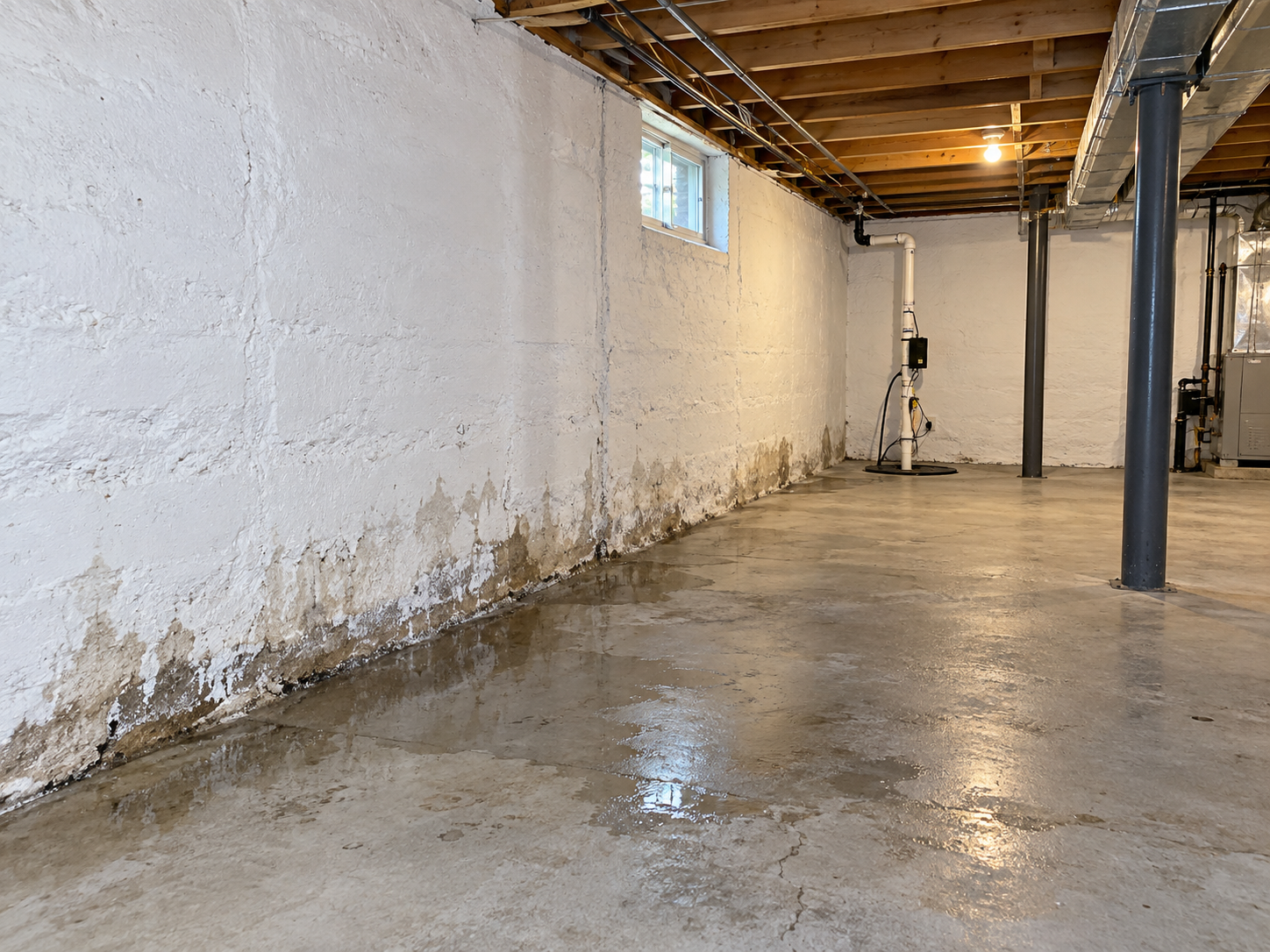
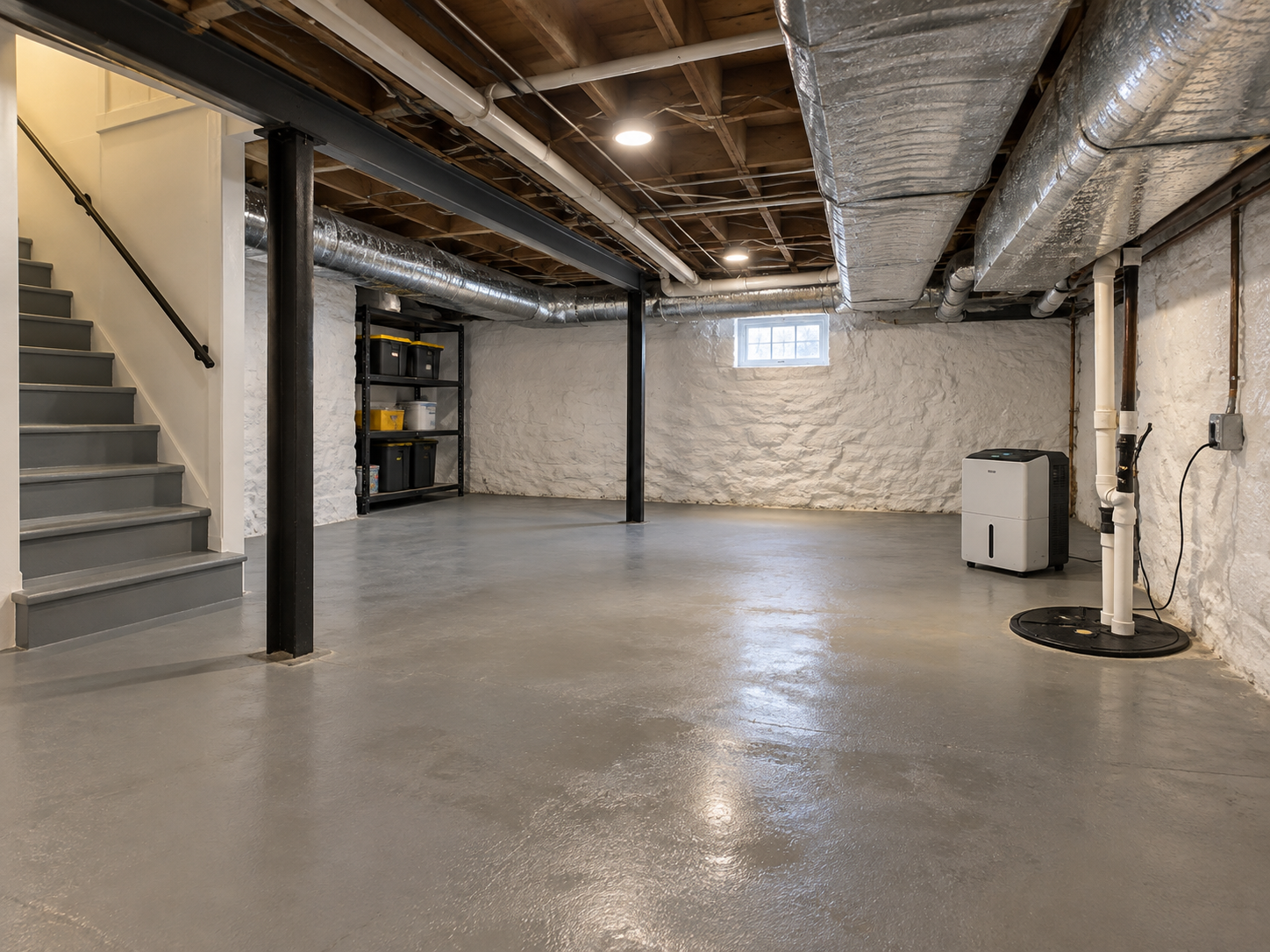
A basement can feel damp even when the walls look dry because moisture may be present in the air, floor slab, soil, insulation, or hidden wall cavities. High humidity, condensation, groundwater vapor, minor leaks, and poor ventilation can all create basement dampness without leaving obvious wet stains.
Author: All Pro Basement
Updated: October 15, 2026
A basement does not need puddles or visibly wet walls to have a moisture problem.
Water can exist as vapor, condensation, or hidden dampness inside building materials.
As a result, the room may feel clammy long before water becomes visible.
Why Can a Basement Feel Damp Without Visible Water?
A basement can feel damp because moisture does not always appear as liquid water.
Humidity, vapor movement, cool surfaces, and damp materials can increase the amount of moisture in the space without creating obvious stains.
This distinction is important when diagnosing basement dampness.
A dry-looking wall only tells you that liquid water is not visible on that surface at that moment.
It does not prove the foundation, floor, insulation, or air is dry.
Can High Humidity Make a Basement Feel Damp?
Yes. High relative humidity can make a basement feel clammy even when every wall looks dry.
Basements often stay cooler than upper floors.
When warm, humid air enters a cool basement, relative humidity can rise quickly.
The U.S. Environmental Protection Agency explains that controlling indoor humidity is an important part of moisture management.
U.S. Environmental Protection Agency
The EPA also recommends keeping indoor humidity below 60 percent and preferably between 30 and 50 percent when possible.
A humidity reading can therefore reveal moisture conditions that are invisible to the eye.
Why Do Cool Basement Surfaces Matter?
Cool concrete walls and floors can lower the temperature of the air directly around them.
As that air cools, its relative humidity rises.
If a surface becomes cold enough, moisture may condense on it.
However, condensation can be so light that homeowners notice a damp feeling before they see droplets.
This is common during humid New England summers.
Can Condensation Form on a Wall That Looks Dry?
Yes. Condensation does not always create obvious beads of water.
A surface can repeatedly collect a thin film of moisture and then dry.
That repeated cycle can increase basement dampness without leaving dramatic evidence.
Pipes, ductwork, floors, foundation walls, and metal surfaces may all provide clues.
A professional compares surface temperatures with humidity levels to determine whether condensation is likely.
Can Moisture Come Through a Basement Floor?
Yes. Moisture can move upward from the soil beneath a concrete slab.
Concrete is porous, so vapor can migrate through it when moisture conditions below and above the slab differ.
The U.S. Department of Energy’s Building Science Education program explains why capillary breaks and vapor control beneath slabs are important.
Older homes may not have the same under-slab moisture control used in modern construction.
Therefore, floor slab moisture can contribute to basement dampness even when the slab never looks visibly wet.
Can Concrete Release Water Vapor Into the Basement?
Yes. Concrete and masonry can allow water vapor to move through them.
Ground contact makes basement foundations especially important moisture pathways.
Building Science Corporation explains that foundations must manage groundwater, surface water, capillary movement, and water vapor.
This is why a basement can feel humid without a single obvious leak.
What Is Groundwater Vapor?
Groundwater vapor refers to moisture that originates in damp soil and moves toward the basement as vapor rather than visible liquid water.
Soil around and beneath a foundation can remain moist for long periods.
That moisture can influence the basement even when groundwater never rises high enough to create flooding.
The result may be elevated humidity, damp flooring, or a persistent clammy feeling.
Why Does Spring Snowmelt Matter in Massachusetts?
Spring snowmelt can saturate soil around Massachusetts homes.
Groundwater may remain elevated after snow disappears from the surface.
Consequently, basement dampness can increase during spring without an obvious rainstorm.
The foundation is still interacting with wet soil underground.
That seasonal timing can provide an important diagnostic clue.
Can Saturated Soil Affect a Dry-Looking Basement?
Yes. Saturated soil keeps moisture in contact with below-grade walls and slabs.
The basement may not leak visibly.
However, moisture can still move through concrete or masonry as vapor.
Poor exterior drainage can make this condition worse by keeping soil wetter for longer.
Downspouts, grading, and underground drainage therefore matter even when the walls appear dry.
Can Poor Ventilation Make a Basement Feel Damp?
Yes. Limited air movement can allow humid air to remain trapped in a basement.
This does not necessarily mean the solution is simply opening windows.
During humid weather, outdoor air may contain more moisture than basement air.
Opening windows can sometimes increase humidity instead of reducing it.
Ventilation should therefore be considered alongside outdoor temperature and moisture conditions.
Can a Dehumidifier Reveal a Hidden Moisture Problem?
Sometimes.
If a dehumidifier collects a large amount of water repeatedly, that tells you moisture is entering the basement air somehow.
However, it does not identify the source.
The moisture may come from humid outdoor air, groundwater vapor, a damp slab, minor seepage, plumbing, or wet materials.
A dehumidifier controls humidity but does not diagnose basement dampness.
Can Moisture Hide Behind Finished Basement Walls?
Yes. Finished walls can conceal damp concrete, wet insulation, condensation, minor leaks, or plumbing problems.
The visible drywall may look completely normal.
Meanwhile, moisture can exist in the cavity behind it.
This is one reason a finished basement can feel damp without showing obvious wall stains.
Hidden moisture should be considered when the sensation persists.
What Signs Suggest Moisture Behind Drywall?
Indirect clues can include:
- Musty odors
- Swollen baseboards
- Soft drywall
- Peeling paint
- Warped flooring
- Rusted fasteners
- Damp trim
- Recurring humidity
None of these signs proves the exact cause.
However, they can help identify areas that deserve closer inspection.
Can Wet Insulation Make a Basement Feel Damp?
Yes. Insulation can absorb or trap moisture inside wall cavities.
If it remains damp, it may increase local humidity and slow drying.
Some wall assemblies can also trap moisture between layers.
Building Science Corporation emphasizes that basement assemblies must allow moisture to be controlled rather than trapped.
That is especially important before basement finishing.
Can Minor Foundation Cracks Add Moisture Without Leaking?
Yes. Small foundation cracks may allow tiny amounts of water or vapor to enter without producing visible dripping.
A crack may also leak only during certain groundwater conditions.
For example, it might remain dry through summer and become damp during spring snowmelt.
This seasonal behavior helps distinguish hidden water intrusion from general humidity.
What Does Efflorescence Tell You?
Efflorescence is a white mineral deposit that can appear on masonry or concrete after moisture moves through the material and evaporates.
It is not the same as mold.
However, it can show that moisture has traveled through the wall.
A wall may look dry during inspection while still carrying evidence of earlier moisture movement.
Can Plumbing Leaks Create Basement Dampness?
Yes. A small plumbing leak can wet hidden materials without creating a puddle.
Slow leaks may occur near:
- Supply pipes
- Drain lines
- Laundry equipment
- Water heaters
- Bathrooms above
- Utility penetrations
Moisture may evaporate before it reaches the visible floor.
Therefore, plumbing should remain part of the diagnostic process.
How Can You Tell a Plumbing Leak From Groundwater?
Timing and location provide useful clues.
Plumbing-related moisture may increase when fixtures or appliances are used.
Groundwater problems are often more closely tied to rain, snowmelt, or seasonal water-table changes.
However, the two can overlap.
A professional compares moisture patterns with weather and household activity before choosing a solution.
Can a Sump Pump Be Working While the Basement Still Feels Damp?
Yes. A sump pump controls collected groundwater, but it does not directly remove humidity from the air.
A basement can have a functioning sump system and still experience condensation or vapor-related dampness.
Sump activity can still provide useful information.
Frequent cycling may indicate significant groundwater around the foundation.
That information helps explain broader moisture conditions.
Why Are Older Massachusetts Foundations Different?
Older Massachusetts homes may have fieldstone, brick, block, or early concrete foundations.
These materials behave differently from modern poured concrete.
Fieldstone walls contain many mortar joints that can transmit moisture.
As mortar ages, joints may become more porous or deteriorated.
This can create diffuse dampness rather than one clear leak.
Can Freeze-Thaw Cycles Contribute to Basement Dampness?
Indirectly, yes.
Freeze-thaw cycles can affect exterior masonry, cracks, drainage paths, and soil conditions.
If water enters vulnerable masonry and freezes, repeated cycles may worsen deterioration over time.
That does not mean every damp basement is caused by freezing.
However, New England climate should be considered when evaluating older foundations.
How Does a Professional Diagnose Basement Dampness?
A professional does not rely on one symptom.
The goal is to identify where moisture originates and how it moves.
An inspection may evaluate:
- Relative humidity
- Surface temperatures
- Wall moisture
- Floor moisture
- Condensation
- Efflorescence
- Foundation cracks
- Sump activity
- Drainage
- Insulation
- Drywall
- Plumbing
- Air movement
Exterior grading and downspout discharge should also be reviewed.
The basement and the surrounding property operate as one moisture system.
Why Is Smell or Sensation Alone Not Enough?
Because several different problems can create the same damp feeling.
High humidity can feel similar to hidden seepage.
A plumbing leak can create symptoms similar to groundwater.
Wet insulation can create conditions similar to poor ventilation.
Therefore, basement dampness should be diagnosed from physical evidence rather than sensation alone.
Can Two Damp Basements Need Completely Different Solutions?
Absolutely.
Imagine one basement where humidity rises only during hot summer weather.
The walls remain dry, groundwater is low, and condensation appears on cold pipes.
That basement may primarily need humidity control.
Now imagine another basement that feels damp after heavy rain and spring snowmelt.
Efflorescence appears near the floor, and the sump pump cycles frequently.
That pattern suggests a groundwater or drainage issue.
The rooms may feel similar, but the causes are different.
Why Should Moisture Be Diagnosed Before Basement Finishing?
Finishing over an unresolved moisture problem can hide it.
Drywall, insulation, flooring, and trim may cover the clues that previously made diagnosis easier.
Moisture can then become trapped inside the finished assembly.
The EPA recommends resolving water and moisture problems before remodeling damp spaces.
U.S. Environmental Protection Agency
For that reason, basement dampness should be understood before adding finished walls or floors.
Why Does All Pro Basement Start With the Moisture Source?
Because the correct solution depends on how water is reaching the basement.
All Pro Basement evaluates humidity, drainage, groundwater, foundation conditions, sump activity, and hidden moisture before recommending repairs.
The company brings more than 25 years of hands-on experience with Massachusetts basement conditions.
Owner Diego Tameirao personally oversees projects, while Project Manager Keila Tameirao helps coordinate homeowners throughout the process.
A dry-looking wall can still exist in a basement affected by groundwater vapor, condensation, floor slab moisture, wet materials, or hidden water intrusion.
The next step is determining which moisture pathway is actually responsible for the basement dampness.
How Can I Find Hidden Basement Dampness?
Hidden basement dampness is easier to find when you look for patterns instead of waiting for visible water.
A professional inspection may compare humidity, surface temperature, drainage, wall conditions, and floor moisture.
Useful clues include:
- Musty odors
- Efflorescence
- Damp trim
- Warped flooring
- Rust
- Condensation
- Sump activity
- Seasonal humidity changes
The source may be in the air, slab, foundation, plumbing, or finished wall cavity.
Can a Dehumidifier Fix a Damp Basement?
A dehumidifier can reduce basement humidity, but it cannot repair every source of basement dampness.
It works best when excess moisture is mainly in the air.
However, groundwater, hidden seepage, wet insulation, or plumbing leaks require separate corrections.
The EPA recommends controlling indoor humidity while also correcting moisture sources.
That distinction is important.
A room can feel better while the original moisture problem continues.
Why Can a Dehumidifier Mask the Real Cause?
A dehumidifier removes water from the air.
It does not explain where that water came from.
For example, groundwater vapor may continue entering through the slab while the dehumidifier keeps humidity under control.
As a result, homeowners may assume the basement is fixed when the source remains active.
Persistent basement dampness should therefore be diagnosed even when a dehumidifier helps.
When Is Basement Waterproofing Necessary?
Basement waterproofing may be necessary when groundwater, seepage, wall-floor joints, cracks, or recurring moisture are contributing to damp conditions.
The correct approach depends on how moisture enters the basement.
Possible solutions may include:
- Interior drainage
- Sump systems
- Crack repair
- Exterior drainage
- Groundwater control
- Foundation-specific repairs
Not every damp basement needs every system.
The diagnosis should determine what is actually necessary.
Can an Interior Drainage System Help?
Yes, when water reaches the basement perimeter or collects near the foundation.
An interior drainage system can capture groundwater and direct it toward a sump basin.
Building Science Corporation explains that below-grade water management must account for groundwater and drainage.
This can help control basement dampness linked to water entry rather than simple indoor humidity.
Can a Sump Pump Help With Basement Dampness?
A sump pump can help when groundwater is part of the moisture problem.
It removes water collected by a drainage system before that water reaches the basement floor.
However, a sump pump does not directly lower humidity.
A basement can still feel damp if condensation, slab vapor, or wet materials are present.
The pump is one part of the moisture-control system.
Does a Battery Backup System Matter?
Yes, when a home depends on a sump pump to manage groundwater.
A power outage can stop the primary pump while groundwater continues entering the sump basin.
A battery backup system can provide additional protection during outages.
However, the battery, charger, float, pump, and discharge line all need to function correctly.
Backup protection should be inspected as a complete system.
Can Floor Slab Moisture Be Controlled?
Yes, but the best method depends on how moisture is reaching the slab.
Moisture may come from the soil below or from condensation above.
If moisture is moving upward through the concrete, the problem involves the below-slab moisture environment.
The U.S. Department of Energy explains the role of vapor and capillary control beneath slabs.
Older homes may require retrofit strategies rather than modern under-slab assemblies.
Can Floor Coverings Trap Moisture?
Yes. Some flooring materials can slow drying and trap moisture against the concrete.
This may create odors, adhesive failure, staining, or dampness beneath the finished surface.
The visible flooring can appear dry.
Meanwhile, moisture may remain underneath.
That is why floor slab moisture should be checked before installing new basement flooring.
Should Foundation Cracks Be Repaired?
Cracks that allow water intrusion should be evaluated and repaired appropriately.
However, crack repair should not ignore groundwater or drainage conditions.
If water pressure remains around the foundation, moisture may find another pathway.
Foundation crack repair may therefore be one part of a larger basement waterproofing plan.
Can Small Cracks Cause Big Moisture Problems?
Sometimes.
A narrow crack may allow repeated seepage during heavy rain or spring snowmelt.
The amount of visible water may be small, but repeated moisture can keep surrounding materials damp.
This can contribute to basement dampness even when flooding never occurs.
The crack’s behavior over time is often more important than its appearance.
Can Wet Insulation Make a Basement Feel Damp?
Yes. Wet insulation can hold moisture inside wall cavities.
It may also slow drying near framing or foundation surfaces.
The room can feel humid while the visible wall looks completely dry.
If wet insulation cannot dry properly, it may need to be removed or replaced.
The moisture source should be corrected first.
Can Finished Walls Hide Moisture?
Yes. Finished basement walls can conceal groundwater seepage, condensation, wet insulation, or plumbing leaks.
A clean drywall surface does not prove the cavity behind it is dry.
Possible signs include:
- Persistent odor
- Soft drywall
- Swollen trim
- Peeling paint
- Warped flooring
- Recurring humidity
Limited access may be needed when evidence strongly suggests hidden moisture.
Should I Open a Finished Wall to Check?
Not automatically.
Unnecessary demolition should be avoided.
However, targeted inspection may be appropriate when multiple clues point to hidden moisture behind a wall.
The goal is to confirm the source with as little disruption as possible.
A professional can often narrow the suspected area before opening finished materials.
How Can Exterior Drainage Reduce Basement Dampness?
Exterior drainage helps keep rain and surface water away from the foundation.
Grading, gutters, downspouts, and underground drainage can influence how wet the surrounding soil becomes.
The EPA recommends directing water away from foundations as part of moisture control.
Reducing soil saturation can reduce groundwater pressure and foundation moisture.
Why Does Grading Matter?
Soil that slopes toward the home directs water toward the foundation.
That can keep below-grade walls and soil wetter for longer.
Proper grading helps move runoff away.
In Massachusetts, grading becomes especially important during heavy rain and spring snowmelt.
It is often one of the first exterior conditions worth checking.
Why Do Downspouts Matter?
Downspouts that discharge beside the foundation can repeatedly saturate the same area of soil.
That can increase moisture around the basement wall.
Extending discharge away from the home may reduce that burden.
However, downspouts are not the only source.
High groundwater and natural soil conditions can still contribute to basement dampness.
How Does High Groundwater Affect a Basement That Looks Dry?
High groundwater can keep the foundation surrounded by moisture without creating visible flooding.
Water may remain below the slab or against foundation walls.
From there, moisture can move as vapor.
The result may be a humid or clammy basement rather than standing water.
This is why basement dampness often requires more than a visual inspection.
Why Are Massachusetts Homes Especially Vulnerable?
Massachusetts homes experience humid summers, spring snowmelt, saturated soil, freezing winters, and seasonal groundwater changes.
Each condition can influence basement moisture differently.
Older homes may also have fieldstone or early masonry foundations.
Those materials can transmit moisture differently from modern poured concrete.
The repair strategy should match both the climate and foundation type.
Can Fieldstone Repointing Help?
Fieldstone repointing can help when deteriorated mortar joints are allowing moisture movement or masonry breakdown.
However, repointing does not replace drainage.
If groundwater pressure remains high, new mortar alone may not solve basement dampness.
Foundation condition and water management should be evaluated together.
How Can I Keep My Basement Dry Long-Term?
Long-term moisture control usually requires managing more than one condition.
Useful measures may include:
- Controlling humidity
- Improving drainage
- Repairing leaks
- Maintaining sump systems
- Fixing foundation cracks
- Managing groundwater
- Replacing wet materials
- Checking exterior runoff
The correct combination depends on the source.
A humidity problem and a groundwater problem should not be treated the same way.
What Should I Avoid Doing?
Avoid treating basement dampness only with fragrance, paint, or cosmetic repairs.
These measures may hide symptoms without changing moisture conditions.
Also avoid assuming that dry walls mean the problem is gone.
Moisture can remain in the air, slab, soil, insulation, or wall cavities.
The source should be identified before choosing the solution.
When Should I Call a Basement Waterproofing Professional?
Professional evaluation is useful when the basement stays damp despite dehumidification, moisture returns seasonally, or hidden water intrusion is suspected.
It is also appropriate when sump activity, cracks, drainage, or wet finished materials are involved.
An inspection should determine whether the problem is humidity, condensation, groundwater, plumbing, slab vapor, drainage, or a combination.
All Pro Basement evaluates those conditions before recommending work.
The company is family-owned and operated and has more than 25 years of hands-on experience with Massachusetts basement conditions.
Owner Diego Tameirao personally oversees projects.
Project Manager Keila Tameirao helps coordinate homeowners throughout the process.
The goal is an honest evaluation without high-pressure sales.
That means recommending only the moisture-control, drainage, waterproofing, or repair measures supported by the actual conditions.
Frequently Asked Questions About Basement Dampness
Why Does My Basement Feel Damp but Look Dry?
Moisture may be present in the air, slab, soil, insulation, or hidden wall cavities.
Visible water is only one form of moisture.
Basement dampness can exist as vapor or condensation without producing stains or puddles.
Can High Humidity Make a Basement Feel Wet?
Yes. High relative humidity can create a clammy or damp sensation even when surfaces look dry.
Cool basement walls and floors can make this effect stronger.
Humidity should be measured rather than judged by feel alone.
Can Moisture Come Through a Concrete Floor?
Yes. Water vapor can move upward through a concrete slab from moist soil below.
Older homes may have less effective under-slab vapor control.
This can contribute to floor slab moisture and basement dampness without visible water.
Will a Dehumidifier Fix Basement Dampness?
It can help if high humidity is the main cause.
However, it will not repair groundwater intrusion, foundation leaks, wet insulation, or plumbing problems.
A dehumidifier manages air moisture, not every source of moisture.
Can Groundwater Make a Basement Feel Humid?
Yes. Moisture from groundwater can move through foundation materials and evaporate into the basement.
This can raise humidity without causing flooding.
Seasonal groundwater changes are especially important in New England.
Does a Damp Basement Always Mean a Leak?
No.
A damp basement may result from humidity, condensation, slab vapor, groundwater, wet materials, or poor ventilation.
Visible leaks are only one possible cause.
The source must be diagnosed before choosing a repair.
Can Waterproofing Reduce Basement Humidity?
It can when groundwater or seepage is contributing moisture to the basement.
However, basement waterproofing does not replace humidity control when condensation is the main issue.
Some homes need both water management and dehumidification.
Should I Worry About Basement Dampness?
Persistent basement dampness deserves attention because it means moisture is present somewhere in the system.
It does not always indicate a severe problem.
However, long-term moisture can affect drywall, insulation, flooring, masonry, and indoor comfort.
What Is the Best Long-Term Solution?
The best solution is the one that addresses the actual moisture pathway.
Humidity may require dehumidification.
Groundwater may require drainage.
Leaks may require repair.
Wet materials may need replacement.
Some homes need more than one measure.
Basement dampness should therefore be treated as a moisture-system problem rather than one isolated symptom.
Contact All Pro Basement Today to find out why your basement still feels damp and whether humidity control, drainage, foundation repair, or basement waterproofing is the right solution for your Massachusetts home.