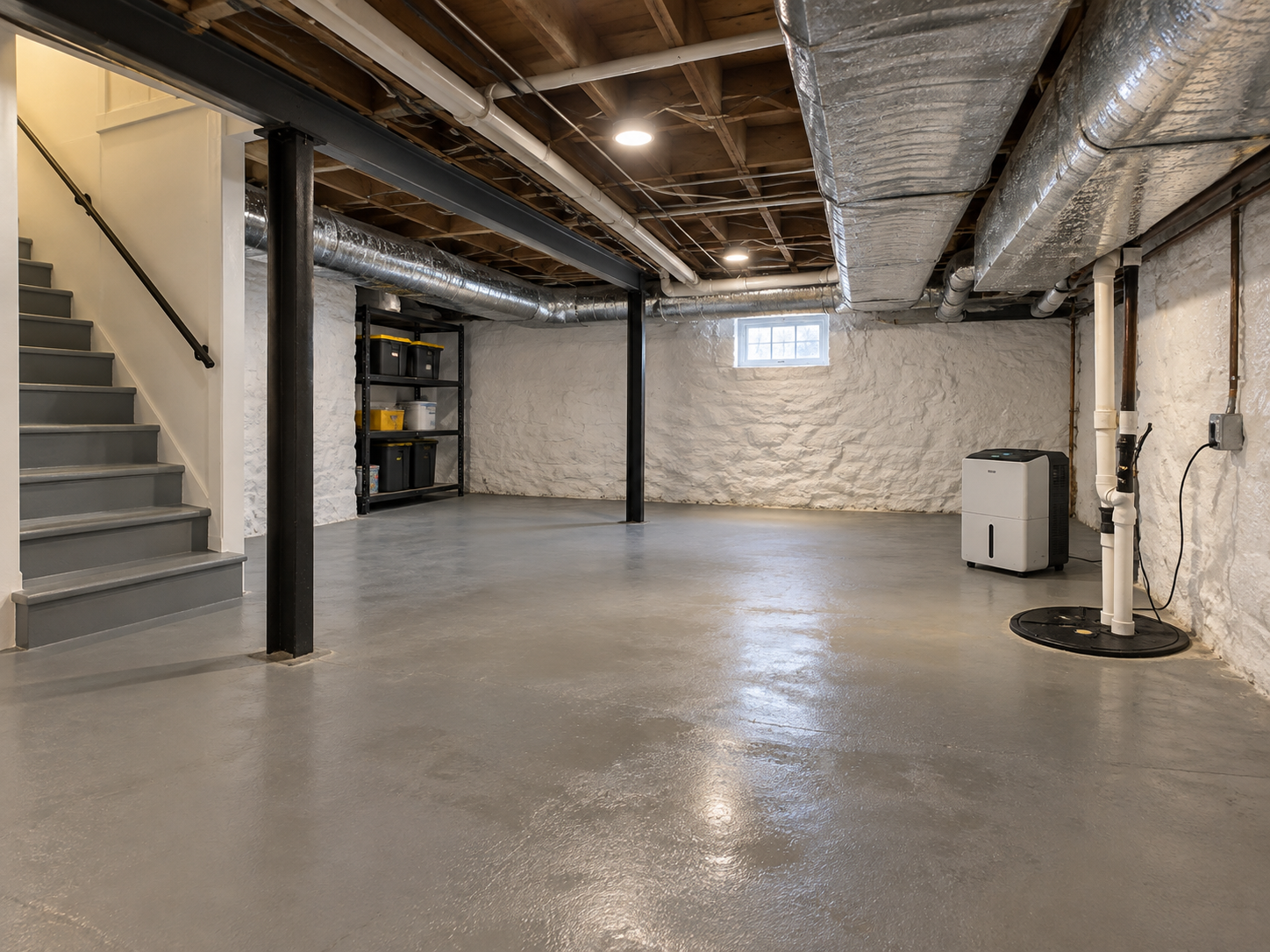
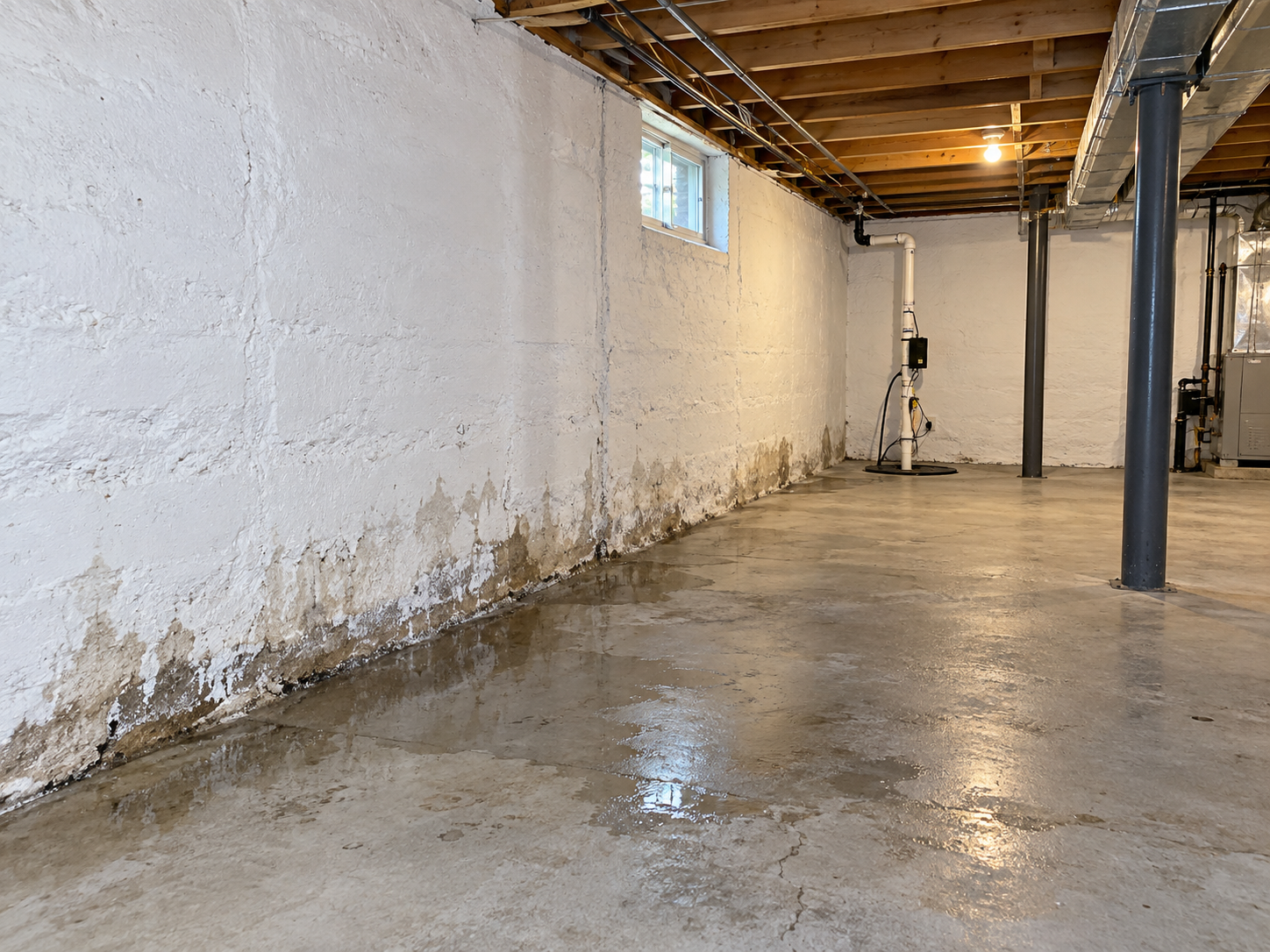
Introduction
Mortar in an old fieldstone foundation can crumble because age, moisture, freeze-thaw cycles, salt movement, poor drainage, or incompatible past repairs weaken the joints. The stones may remain stable, but deteriorated mortar can create gaps that allow more water in and accelerate future damage.
Seeing sand, dust, or chunks of mortar on a basement floor can make an old foundation look as if it is falling apart.
However, crumbling mortar does not automatically mean the foundation is about to fail.
In many older Massachusetts homes, fieldstone foundations were built with softer mortar designed to work differently from modern concrete masonry.
Understanding that difference is essential before choosing any fieldstone foundation repair.
Why Does Mortar Crumble in Old Fieldstone Foundations?
Mortar crumbles when the material loses strength through age, repeated moisture exposure, weathering, or incompatible repairs.
Mortar joints are not expected to remain unchanged forever.
The National Park Service explains that mortar in historic masonry often acts as a sacrificial material.
It is intended to manage moisture while protecting the masonry units around it.
As a result, mortar may deteriorate before the stone itself.
That can actually be preferable to having the stone crack or spall because the mortar is too hard.
Is Crumbling Mortar Normal in an Old Foundation?
Some mortar deterioration is common in old masonry, but widespread loss, deep voids, loose stones, bulging walls, or recurring water intrusion deserve closer evaluation.
The important question is not simply whether mortar is crumbling.
It is how much material has deteriorated and whether the stones are still properly supported.
A professional fieldstone foundation repair inspection looks beyond surface dust.
It considers joint depth, stone movement, wall shape, previous repairs, moisture patterns, and drainage conditions.
Why Was Old Mortar Often Softer Than Modern Mortar?
Historic mortar was often designed to be more flexible and permeable than many modern Portland cement-rich mixes.
That flexibility allowed masonry assemblies to manage movement and moisture.
The National Park Service notes that historic mortar serves as a sacrificial part of the wall.
It can help direct moisture through joints rather than forcing it through the stone.
That is why replacing old mortar with a much harder material can create unexpected problems.
The strongest-looking repair is not always the safest repair.
Can the Wrong Mortar Damage a Fieldstone Foundation?
Yes. Mortar that is significantly harder or less permeable than the surrounding historic masonry can change how moisture and movement affect the wall.
The National Park Service warns that hard Portland cement-rich mortar can contribute to faster deterioration of surrounding historic masonry.
Instead of allowing the joint to absorb small movements, rigid mortar can transfer stress into the stone.
Meanwhile, reduced permeability can change where moisture escapes.
For this reason, fieldstone foundation repair should consider mortar compatibility, not just appearance.
What Is Fieldstone Foundation Repointing?
Fieldstone foundation repointing is the process of removing deteriorated mortar from joints and replacing it with compatible new mortar.
The goal is to restore support and weather resistance without damaging the surrounding stone.
Repointing is different from simply smearing new material over an old wall.
A durable repair requires enough deteriorated material to be removed so the new mortar can properly fill the joint.
The condition of the deeper joint matters as much as the visible surface.
Why Can Surface Patching Fail?
Surface patching can fail when new mortar is applied only over loose or deteriorated material.
The repair may look better temporarily while weak mortar remains behind it.
As moisture moves through the foundation, the thin surface layer can loosen, crack, or detach.
That is why proper fieldstone foundation repair often begins with assessing joint depth before new mortar is installed.
A repair should address the failing joint rather than only cover it.
Can Moisture Cause Mortar to Deteriorate Faster?
Yes. Repeated wetting can accelerate deterioration, especially when the foundation already contains aging or weakened mortar.
Moisture may enter from surface runoff, groundwater, capillary movement, snowmelt, or poor exterior drainage.
Building Science Corporation recommends keeping rainwater away from foundation perimeters and draining groundwater before it reaches the wall.
If moisture repeatedly enters an old fieldstone wall, simply replacing mortar may not address the full problem.
Drainage conditions should also be evaluated.
How Does Groundwater Affect a Fieldstone Foundation?
Groundwater can keep the soil beside a foundation wet and create ongoing moisture exposure.
When groundwater rises, it may also increase pressure around below-grade walls.
Building Science Corporation explains that groundwater should be controlled through drainage around foundation perimeters.
Fieldstone walls contain many joints rather than one continuous concrete surface.
Therefore, water may find multiple pathways through deteriorated mortar.
A complete fieldstone foundation repair may need to consider both masonry condition and groundwater management.
What Is Hydrostatic Pressure?
Hydrostatic pressure is pressure created by accumulated groundwater against or beneath a foundation.
When surrounding soil becomes saturated, water seeks paths through cracks, joints, and other openings.
An old fieldstone wall with weakened mortar can offer many possible pathways.
Consequently, homeowners may see damp joints, trickling water, or wet areas at the bottom of the wall.
Sealing one visible spot may not eliminate the pressure behind the foundation.
That is why drainage can be as important as repointing.
Why Does White Powder Appear on Fieldstone Walls?
White powder on masonry is often efflorescence, which forms when moisture carries dissolved salts toward the surface and then evaporates.
The visible residue is evidence that moisture has moved through the masonry.
Efflorescence does not automatically mean structural failure.
However, it is an important moisture clue.
A professional should look at where the deposits occur and whether they are associated with crumbling mortar, damp joints, or active water intrusion.
Can Salt Movement Damage Mortar?
Salt movement can contribute to masonry deterioration when salts crystallize within porous materials.
Repeated wetting and drying can transport salts through mortar and stone.
As moisture evaporates, crystals may form near or beneath the surface.
Over time, this process can contribute to powdering or surface loss in vulnerable masonry.
Therefore, moisture control is an important part of preserving historic foundation materials.
How Do Freeze-Thaw Cycles Affect Fieldstone Foundations?
Freeze-thaw cycles can worsen damage when moisture is present inside mortar joints or porous masonry.
Water expands when it freezes, placing stress on already weakened materials.
Massachusetts foundations experience repeated seasonal temperature changes.
Therefore, a damp joint may face both moisture-related deterioration and winter freezing.
As a result, small defects can gradually become larger.
Freeze-thaw exposure is one reason fieldstone foundation repair should address moisture pathways instead of treating mortar deterioration as purely cosmetic.
Why Is Spring Snowmelt Important in Massachusetts?
Spring snowmelt can saturate soil even when heavy rain is not occurring.
That added moisture can raise groundwater and increase water exposure around basement walls.
Older New England homes may have fieldstone foundations that were built long before modern drainage systems became common.
Consequently, seasonal groundwater can expose weak mortar joints that remain relatively dry during other parts of the year.
Patterns that appear every spring can provide valuable diagnostic information.
Can Poor Drainage Make the Problem Worse?
Yes. Water discharged near the house or grading that directs runoff toward the foundation can increase soil saturation.
Building Science Corporation recommends moving roof and surface water away from foundation walls.
Poor drainage can keep old masonry exposed to moisture for longer periods.
Therefore, repointing without correcting an obvious drainage issue may allow deterioration to return.
Fieldstone foundation repair works best when the causes of repeated wetting are also understood.
How Can I Tell If the Damage Is Only in the Mortar?
If stones remain stable and properly aligned while mortar is shallow, powdery, or missing in isolated areas, the problem may primarily involve deteriorated joints.
However, homeowners should avoid making that determination from surface appearance alone.
A professional inspection checks whether individual stones move when they should be stable.
It also looks for wall deformation, deep joint loss, cracking, and changes in alignment.
Surface mortar can look poor while the wall remains stable.
Conversely, a relatively clean surface can hide deeper deterioration.
What Are Signs That the Problem May Be More Serious?
Certain conditions deserve more attention than ordinary surface mortar loss.
Warning signs can include:
- Loose or shifting stones
- Significant wall bulging
- Large or expanding cracks
- Deep empty joints
- Repeated water flow
- Sections moving out of alignment
- Sagging near structural supports
- Rapidly worsening deterioration
These signs do not automatically mean collapse is imminent.
However, they can indicate that the issue involves more than cosmetic repointing.
A fieldstone foundation repair professional should evaluate both masonry condition and structural behavior.
Can a Bulging Fieldstone Wall Be Repointed?
Repointing alone may not be enough if the wall has significant movement or deformation.
Mortar replacement restores joints, but it does not automatically correct structural displacement.
The cause of the bulging must be identified first.
Soil pressure, foundation movement, lost mortar support, water conditions, or previous modifications may all contribute.
Structural concerns should be stabilized before cosmetic repairs are prioritized.
The National Park Service similarly advises determining the source and nature of masonry cracking before completing minor repairs.
Can Previous Repairs Cause New Problems?
Yes. Earlier repairs can create problems if incompatible mortar or poor installation techniques were used.
One common clue is a patch that remains extremely hard while adjacent original mortar continues turning to powder.
Another clue may be cracking or deterioration immediately beside a newer cement-rich repair.
This does not prove the new mortar caused the damage.
However, differences in hardness and permeability should be evaluated.
Historic masonry repair should respect the physical behavior of the original materials.
Why Does Mortar Compatibility Matter So Much?
Compatible mortar should work with the stone rather than compete with it.
Its strength, permeability, and movement characteristics should suit the existing masonry.
The National Park Service recommends matching key properties of historic mortar and warns against overly hard replacements.
This means fieldstone foundation repair is not simply a matter of choosing the strongest bag of mortar available.
The repair material should support long-term masonry performance.
Can I Repoint a Fieldstone Foundation Myself?
Minor masonry work may appear straightforward, but historic fieldstone repointing can be difficult to evaluate and execute correctly.
Removing too much material or damaging the edges of the stones can create new problems.
Using the wrong mortar can also affect moisture movement.
In addition, a homeowner may repair visible joints while missing deeper deterioration or active groundwater problems.
That is why larger or recurring repairs benefit from professional evaluation.
What Does a Professional Look for Before Repointing?
A proper inspection should determine whether the wall needs repointing, drainage improvements, structural repair, waterproofing, or a combination of solutions.
Important clues include:
- Mortar hardness
- Joint depth
- Loose stones
- Moisture stains
- Efflorescence
- Wall alignment
- Foundation cracks
- Active seepage
- Previous patches
- Exterior drainage
All Pro Basement uses more than 25 years of hands-on experience when evaluating older Massachusetts foundation conditions.
Owner Diego Tameirao personally oversees projects, helping connect visible masonry deterioration with the underlying conditions affecting the wall.
Fieldstone foundation repair should begin with that distinction because crumbling mortar caused mainly by age may require a different strategy from deterioration driven by constant groundwater.
Why Should Drainage Be Evaluated Before Repairs?
Drainage should be evaluated because repairing mortar without reducing repeated water exposure may allow deterioration to continue.
A wall can be carefully repointed and still remain wet if groundwater or surface runoff is not controlled.
Building Science Corporation states that groundwater control depends heavily on moving water away from foundation perimeters.
When significant groundwater leakage exists, interior drainage can also be part of a robust water-management approach.
Therefore, effective fieldstone foundation repair may involve understanding both the masonry itself and the path water takes around the home.
How Can I Tell If My Fieldstone Foundation Needs Repointing?
A fieldstone foundation may need repointing when mortar joints become deeply recessed, powdery, loose, or hollow enough that stones begin losing support.
Surface dust alone does not always mean full repointing is necessary.
However, if mortar can be removed easily by hand or joints contain deep voids, the wall deserves a closer inspection.
Professional fieldstone foundation repair should determine how far deterioration extends into each joint.
What Does Proper Repointing Actually Involve?
Proper repointing removes deteriorated mortar to a sound depth and replaces it with a compatible mortar.
The goal is not simply to make the wall look new.
The new mortar must bond properly while allowing the historic masonry to manage moisture and minor movement.
The National Park Service recommends matching important properties such as strength, composition, permeability, color, and texture.
This makes fieldstone foundation repointing both a repair and a preservation process.
Why Is Applying New Mortar Over Old Mortar a Problem?
Applying a thin layer over deteriorated mortar can hide the defect without restoring the deeper joint.
The visible surface may look solid while loose material remains behind it.
As moisture and movement continue, the new layer may crack, loosen, or fall away.
Therefore, fieldstone foundation repair should address unsound material beneath the surface rather than creating a cosmetic cap.
Can New Mortar Damage an Old Stone Foundation?
Yes. Mortar that is significantly harder than the surrounding historic masonry can change how moisture and stress move through the wall.
The National Park Service warns that overly hard Portland cement-rich mortar can accelerate deterioration of adjacent historic masonry.
In a traditional assembly, the mortar joint should often remain the more sacrificial component.
If the mortar becomes harder than the stone, moisture and stress may be redirected into masonry that is more difficult to replace.
For that reason, fieldstone foundation repair requires compatible materials rather than simply the strongest available mix.
Why Does Mortar Keep Crumbling After It Was Repaired?
Repeated failure can occur when the original cause was never corrected.
Possible reasons include poor joint preparation, incompatible mortar, excessive moisture, shallow patching, or continuing groundwater exposure.
Curing conditions also matter.
The National Park Service notes that repointing mortar must be protected from drying too quickly because improper curing can contribute to failure.
Therefore, a repair that fails again should trigger a new diagnosis rather than another identical patch.
Can Water Make a Fieldstone Foundation Deteriorate Faster?
Yes. Repeated wetting can accelerate deterioration in already weakened mortar and can transport salts through porous masonry.
Moisture can come from several directions.
It may enter from:
- Roof runoff
- Poor grading
- Groundwater
- Snowmelt
- Plumbing
- Capillary moisture
- Foundation drainage problems
Building Science Corporation recommends keeping rainwater away from foundation perimeters and draining groundwater before it reaches basement walls.
That principle is especially important for older fieldstone foundations with many mortar joints.
Should I Waterproof a Fieldstone Foundation?
Sometimes, but waterproofing should follow diagnosis.
A wet fieldstone wall does not automatically require coating every interior surface.
The first question is how water reaches the wall.
If surface water is concentrating near the foundation, exterior drainage improvements may reduce the moisture load.
If groundwater repeatedly reaches the basement, interior drainage or other water-management measures may be appropriate.
Building Science Corporation notes that exterior groundwater interception is preferred when practical, while interior perimeter drainage can be used when exterior work is not practical.
Fieldstone foundation repair and basement waterproofing often solve different parts of the same problem.
Can Hydrostatic Pressure Affect a Stone Foundation?
Yes. Saturated soil can place water pressure against below-grade foundation walls.
Water can then seek pathways through deteriorated mortar joints, cracks, or openings near the footing.
Unlike poured concrete, fieldstone walls contain many individual stones and joints.
As a result, water may appear through several small areas rather than one obvious crack.
Building Science Corporation emphasizes draining groundwater away from foundations to reduce this pressure.
Can an Interior Drainage System Help a Fieldstone Basement?
Yes, when groundwater is repeatedly reaching the interior and exterior excavation is impractical.
An interior drainage system can collect incoming water and direct it toward a sump pit.
Building Science Corporation describes interior perimeter drainage as a valid retrofit strategy when it is properly connected to a sump system and drainage layer.
However, drainage does not replace failing mortar.
Likewise, repointing does not replace drainage when groundwater remains the primary source of water intrusion.
The systems may need to work together.
When Does a Sump Pump Become Part of the Solution?
A sump pump may be needed when an interior drainage system collects groundwater below the basement floor.
The pump then moves collected water away from the foundation.
This can reduce uncontrolled water entry into the basement.
However, sump pump installation should be matched to drainage volume, basin design, discharge conditions, and backup requirements.
It should not be added simply because the basement contains an old stone wall.
What Are the Signs of Structural Movement?
Structural movement may involve more than deteriorated mortar.
Warning signs can include changing wall alignment, large gaps, displaced stones, widening cracks, or significant bulging.
Look for conditions such as:
- Stones shifting outward
- Walls leaning or bowing
- Cracks that continue growing
- Large unsupported voids
- Movement near beams or columns
- Sudden changes in wall shape
These conditions deserve professional evaluation.
Repointing alone cannot correct major structural displacement.
When Should Loose Stones Be a Concern?
Loose stones deserve attention when they no longer appear securely supported within the wall.
One isolated stone may result from localized mortar loss.
However, several moving stones can indicate deeper joint deterioration.
The position of the stone also matters.
A loose stone near a critical support area deserves more urgency than superficial material near a nonstructural surface.
Professional fieldstone foundation repair should restore stability before cosmetic finishing begins.
Can a Fieldstone Foundation Collapse?
Serious masonry deterioration can eventually compromise stability, but crumbling surface mortar does not automatically mean collapse is imminent.
The level of risk depends on wall geometry, stone movement, load paths, joint condition, soil pressure, and structural changes.
Homeowners should avoid assuming either extreme.
Do not panic over ordinary mortar wear.
However, do not ignore significant bulging, shifting stones, or progressive movement.
An inspection can determine whether the issue is routine repointing or a larger structural concern.
Can Fieldstone Foundations Be Repaired Permanently?
Fieldstone foundations can often be preserved successfully when repairs address the true causes of deterioration.
That may require compatible repointing, moisture control, drainage improvements, structural repair, or several measures together.
“Permanent” does not mean the masonry will never require maintenance again.
Historic mortar is intentionally serviceable and may need future repointing over a long building life.
The National Park Service describes repointing mortar as a sacrificial material intended for replacement over time.
A good fieldstone foundation repair aims to restore durability without damaging the original masonry.
Why Is Moisture Control Part of Long-Term Repair?
Moisture control reduces one of the most common forces that accelerate masonry deterioration.
If a repaired wall remains continuously exposed to groundwater, the new mortar may continue facing unnecessary stress.
Drainage around the house should therefore be evaluated along with the masonry.
Building Science Corporation recommends directing roof runoff and groundwater down and away from foundations.
For some Massachusetts homes, spring snowmelt and saturated soil make this especially important.
How Do Massachusetts Conditions Affect Old Stone Foundations?
Massachusetts combines older housing stock with seasonal moisture and temperature changes.
Fieldstone foundations may experience groundwater, snowmelt, freeze-thaw cycles, and repeated wetting over many decades.
A foundation that performs well during summer may become much wetter in spring.
Likewise, mortar that appears stable when dry may shed material after repeated seasonal moisture exposure.
Therefore, fieldstone foundation repair in New England should consider the building’s long-term seasonal behavior.
Can Exterior Drainage Reduce Future Mortar Damage?
Yes. Keeping surface and groundwater away from the foundation can reduce repeated wetting.
Possible improvements may involve grading, downspout routing, underground drainage, or other site-specific measures.
Building Science Corporation notes that many retrofit water problems can be improved through grading and surface drainage.
However, exterior drainage is not identical for every property.
The correct solution depends on slope, soil conditions, groundwater, roof runoff, and foundation depth.
Why Should Structural Repairs Come Before Cosmetic Work?
Structural problems should be stabilized before appearance becomes the priority.
If stones are moving, covering joints with fresh mortar does not address the movement.
The National Park Service recommends identifying the nature and source of masonry cracking before completing minor repairs.
This same principle applies to old fieldstone walls.
Fieldstone foundation repair should follow the order of diagnosis, stabilization, moisture control, and appropriate masonry restoration.
When Should I Call a Fieldstone Foundation Professional?
A professional inspection is appropriate when mortar loss is widespread, stones are loose, the wall is bulging, water repeatedly enters, or previous repairs continue failing.
Professional evaluation is also useful when the correct mortar type is uncertain.
Historic masonry behaves differently from modern block or poured concrete foundations.
All Pro Basement is family-owned and operated and has more than 25 years of hands-on experience with Massachusetts basement and foundation conditions.
Owner Diego Tameirao personally oversees projects, while Project Manager Keila Tameirao helps coordinate work throughout the repair process.
The objective should be an honest evaluation of what the wall actually needs.
That may include fieldstone foundation repointing, drainage, basement waterproofing, sump pump installation, structural repair, or a more limited masonry repair.
Frequently Asked Questions About Fieldstone Foundations
Why Is the Mortar Falling Out of My Stone Foundation?
Mortar can fall out because of age, repeated moisture, freeze-thaw exposure, salt movement, poor previous repairs, or incompatible mortar.
The condition of the stones should be evaluated separately.
Crumbling mortar does not automatically mean the stones themselves are failing.
Is Crumbling Mortar in a Fieldstone Foundation Dangerous?
It can range from routine maintenance to a more serious structural issue.
Shallow surface deterioration may require repointing.
Deep voids, loose stones, wall bulging, or progressive movement deserve professional inspection.
The severity depends on how much support has been lost.
How Do You Repair an Old Fieldstone Foundation?
Repair usually begins with inspecting mortar, stone stability, drainage, and moisture conditions.
Deteriorated joints may then be cleaned and repointed with compatible mortar.
Additional drainage or structural work may be required when water intrusion or movement is also present.
What Type of Mortar Should Be Used on a Fieldstone Foundation?
The mortar should be compatible with the original masonry in strength, permeability, and physical behavior.
There is no single mortar formula that is correct for every historic foundation.
The National Park Service recommends matching key properties rather than using an unnecessarily hard mix.
Can You Waterproof a Fieldstone Foundation?
Yes, but waterproofing should be designed around how the wall manages moisture.
Simply coating an interior wall may not solve groundwater pressure or deteriorated joints.
Drainage, repointing, sump systems, exterior water control, or other measures may be more appropriate depending on the site.
How Often Does a Stone Foundation Need Repointing?
There is no fixed schedule that applies to every fieldstone foundation.
Mortar life depends on material composition, moisture exposure, weather, previous repairs, and maintenance.
Periodic inspection is more useful than relying on a universal number of years.
Is Fieldstone Foundation Repair Worth It?
Fieldstone foundation repair can be worthwhile when it preserves a stable historic foundation, reduces water intrusion, and prevents continued deterioration.
The key is choosing repairs that match the actual problem.
Unnecessary coatings or incompatible mortar can create new problems instead of solving old ones.
What Is the Best Long-Term Strategy?
The best strategy is to treat the foundation as a complete system.
Mortar condition, stone stability, drainage, groundwater, and basement moisture should all be considered together.
If the wall is stable but joints are deteriorated, compatible repointing may be the main repair.
If groundwater is also entering, drainage or basement waterproofing may need attention.
If stones have shifted, structural stabilization may come first.
This diagnostic approach prevents homeowners from relying on one repair method for every problem.
All Pro Basement uses this same principle when evaluating fieldstone foundation repair in Massachusetts homes.
The goal is to repair what is failing while preserving what is still working.
👉 Contact All Pro Basement Today to find out why your old fieldstone foundation is crumbling and whether repointing, drainage, waterproofing, or structural repair is the right solution for your Massachusetts home.