Introduction
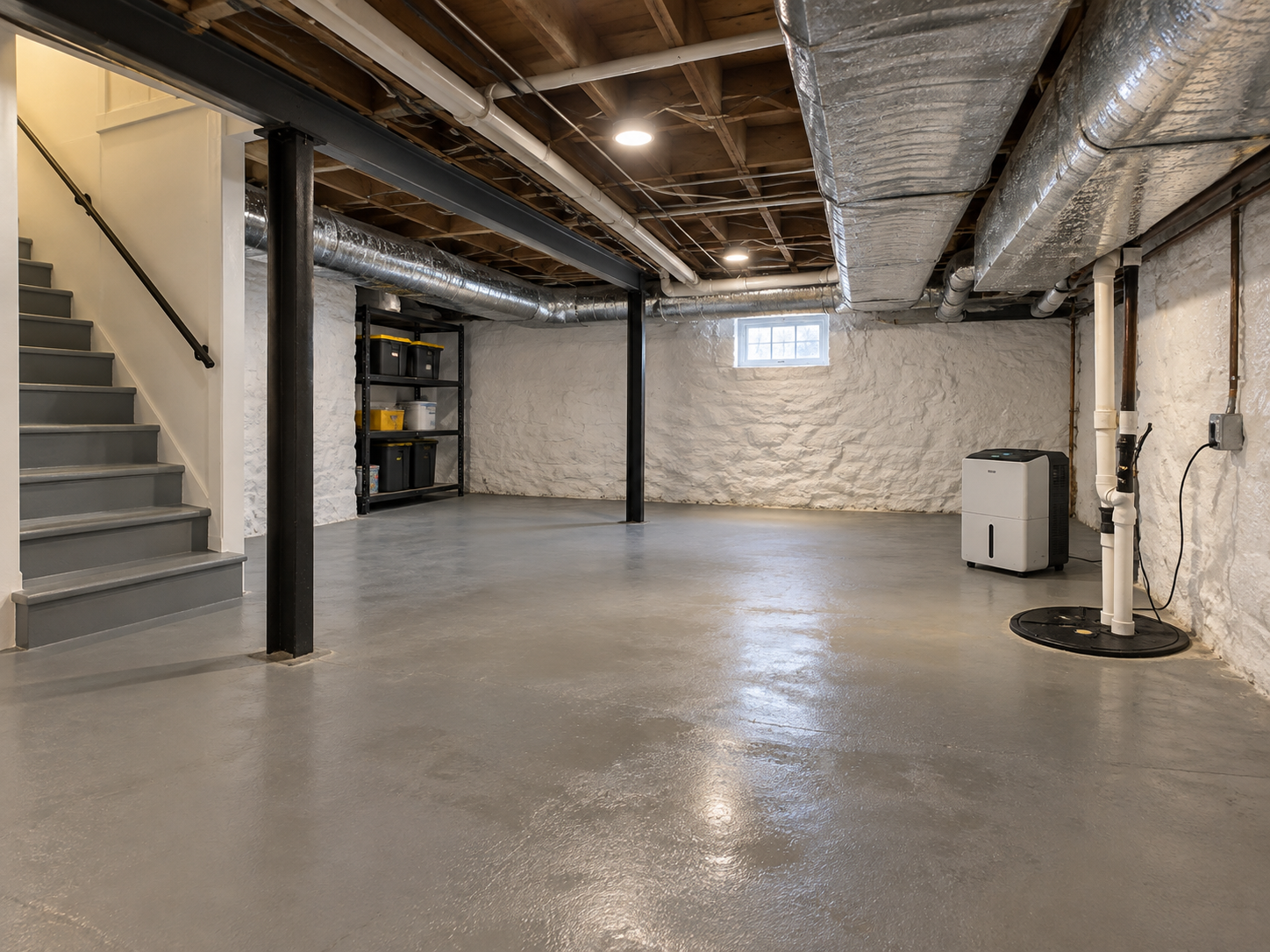
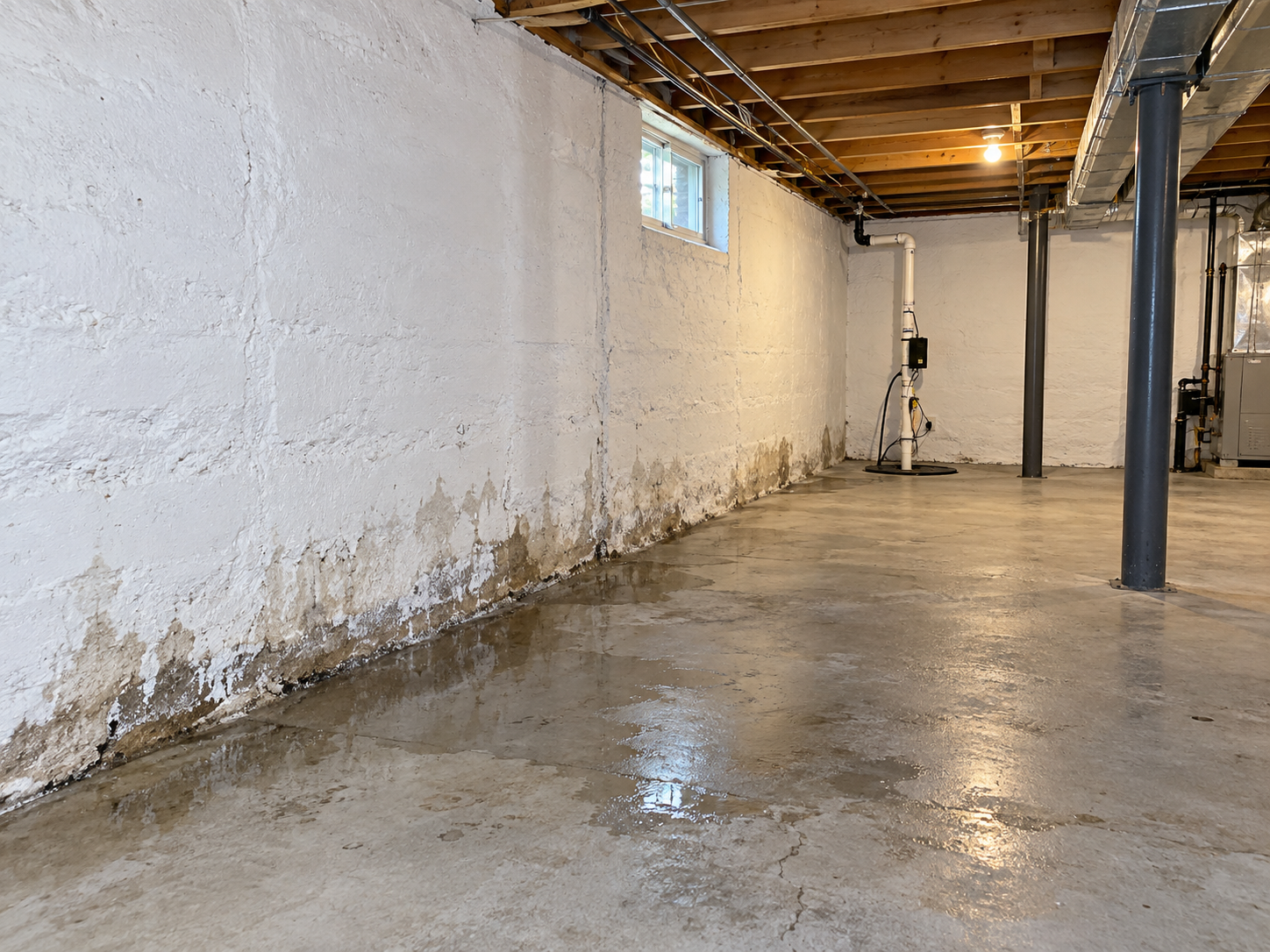
A sump pump is storm-ready when it can handle rising groundwater, activate reliably, discharge water away from the foundation, and keep operating if power fails. Testing the pump, float switch, sump pit, check valve, discharge line, and battery backup before heavy rain can reveal weaknesses before basement flooding begins.
A sump pump may appear reliable on a normal day but face very different conditions during a major storm.
Heavy rain can saturate soil, raise groundwater, and increase hydrostatic pressure around a foundation.
As a result, the pump may need to cycle far more often than usual.
That is why professional sump pump installation is not simply about placing a pump in a pit.
The pump must work as part of a complete drainage and basement waterproofing system.
How Do I Know If My Sump Pump Is Ready for a Storm?
A storm-ready sump pump should activate automatically, remove water quickly, shut off correctly, and discharge water far enough from the foundation that it does not return.
It should also have a reliable power source and a backup plan for outages.
Before a storm, homeowners should check:
- Pump activation
- Float switch movement
- Water flow from the basin
- Check valve condition
- Discharge line condition
- Backup battery status
- Unusual sounds or vibration
- Signs of previous overflow
If any part of the system does not operate correctly, the next storm may expose the weakness.
What Happens to a Sump Pump During Heavy Rain?
During heavy rain, groundwater can rise and enter foundation drainage systems faster than during ordinary weather.
The sump pit receives that water, and the pump must remove it before the water level becomes too high.
FEMA notes that sump pumps can help remove groundwater from around a home and reduce basement seepage and flooding.
However, severe rainfall can create much greater demand.
FEMA also warns that torrential rain can overload a pump beyond its capacity or create flooding if the primary pump stops working.
Therefore, a pump that rarely runs may not reveal whether it can handle storm conditions.
Why Does Groundwater Matter So Much?
Groundwater creates pressure around and beneath basement foundations.
When soil becomes saturated, water may move toward foundation drains, footing drains, slab edges, cracks, and other openings.
Building Science Corporation explains that groundwater should be directed away from foundations through proper drainage systems.
If an interior drainage system is present, that water is usually directed toward a sump pit.
The pump then becomes the final mechanical step that removes collected water.
That is why sump pump installation must be coordinated with drainage conditions rather than treated as an isolated appliance replacement.
Can Hydrostatic Pressure Overwhelm a Basement System?
Yes. Rising groundwater can increase hydrostatic pressure around basement walls and beneath the floor.
The greater the water load around the foundation, the more drainage capacity the system may need.
During prolonged storms, water can continue entering the drainage system even after the heaviest rain slows.
Consequently, the sump pump may continue cycling long after the storm appears to be ending.
A well-designed system should account for this sustained flow.
Building Science Corporation describes below-grade drainage as a way to manage groundwater and reduce pressure near foundations.
Can a Sump Pump Be Too Small for a Basement?
Yes. A pump may work correctly under light conditions but still lack enough capacity when groundwater rises quickly.
Pump capacity must match the amount of water entering the sump system.
However, simply installing the largest pump available is not always the correct solution.
The basin size, drainage system, vertical lift, discharge distance, check valve, and discharge pipe can all affect performance.
Therefore, sump pump installation should consider the entire water-management system.
A larger pump cannot compensate for a blocked discharge line or poorly designed drainage path.
What Are the Warning Signs of a Failing Sump Pump?
Several warning signs can indicate that a pump may not be ready for severe weather.
Common signs include:
- Grinding or rattling noises
- Frequent short cycling
- Delayed activation
- A stuck float switch
- Water rising unusually high
- Persistent vibration
- Visible corrosion
- Slow discharge
- Water returning to the pit
- Previous basement flooding
These symptoms do not always mean the pump must be replaced.
However, they do justify closer inspection before the next storm.
Why Is My Sump Pump Running Constantly?
A sump pump may run constantly because groundwater is entering quickly, the float switch is stuck, the pump is undersized, or discharged water is returning toward the foundation.
A failing check valve can also allow water to flow back into the pit after the pump shuts off.
Consequently, the pump may repeatedly remove the same water.
Constant operation can also indicate a high water table or saturated soil surrounding the home.
In Massachusetts, spring snowmelt and extended wet weather can keep groundwater elevated.
That means frequent cycling may reflect both equipment conditions and unusually high water demand.
What Does the Float Switch Do?
The float switch tells the pump when the water level has reached the point where pumping should begin.
If the switch cannot move freely, the motor may never activate even when the pit fills.
Objects, cords, debris, or an improperly positioned pump can sometimes restrict float movement.
Therefore, testing the switch should be part of routine sump pump maintenance.
A pump with a powerful motor is still ineffective if the switch never tells it to turn on.
Why Does the Sump Pit Matter?
The sump pit collects water from the surrounding drainage system before the pump removes it.
Its size, condition, cover, and connection to drainage lines affect how the system performs.
A pit that receives water rapidly during a storm gives the pump very little time to respond if capacity is limited.
Meanwhile, debris inside the basin can interfere with pump components.
Building Science Corporation recommends directing interior drainage toward a sump pit and using a pump with battery backup where gravity drainage is not available.
A properly designed sump pump installation should consider how quickly the basin fills under real groundwater conditions.
How Does an Interior Drainage System Work With the Pump?
An interior drainage system captures water reaching the foundation and directs it toward the sump basin.
The pump then moves that collected water away from the home.
The EPA notes that interior drain tile paired with a sump pump may be used when exterior drainage is impractical or unavailable.
This relationship matters because the pump cannot remove water that never reaches the basin.
Likewise, a drainage system cannot protect the basement if its sump pump cannot keep up.
Effective basement waterproofing requires both components to work together.
Can a Discharge Line Cause Sump Pump Failure?
Yes. A pump can operate correctly while the discharge system prevents water from leaving the property efficiently.
A blocked, crushed, poorly routed, or frozen discharge line can restrict water flow.
As a result, pressure can build inside the line or water can back up toward the sump basin.
The system may cycle repeatedly or fail to remove water fast enough.
This is especially important in New England winters.
Freezing temperatures can create discharge problems if water remains trapped in exposed piping.
Why Is Freeze Protection Important in Massachusetts?
A frozen discharge line can interfere with sump pump operation during periods when groundwater may still be active.
Massachusetts homes experience repeated freeze-thaw cycles that can complicate exterior drainage.
A properly designed discharge system should reduce the chance that water becomes trapped and freezes in vulnerable sections.
Advanced freeze flow protection can provide another layer of protection when conditions threaten the normal discharge path.
However, every property is different.
Slope, pipe routing, exterior grading, and outlet location all affect the correct solution.
Can Water Discharged Outside Come Back Into the Basement?
Yes. If the discharge point is too close to the foundation or water flows back toward the home, the pump may repeatedly recycle the same groundwater.
This creates unnecessary wear and may reduce the system’s ability to handle new incoming water.
The EPA recommends grading soil so surface water moves away from the foundation.
Building Science Corporation also emphasizes directing water down and away from basement foundations.
Therefore, sump pump installation should include careful planning of the discharge route.
Can a Sump Pump Fail During a Power Outage?
Yes. Most primary sump pumps depend on household electricity.
If power fails during a storm, the pump may stop while groundwater continues entering the sump basin.
This is one of the most important vulnerabilities in a basement drainage system.
FEMA specifically recommends battery-operated backup protection because electrical power can fail when flood protection is needed.
Building Science Corporation gives similar guidance for sump systems connected to interior drainage.
Without backup power, a perfectly functional primary pump may become useless during an outage.
What Does a Battery Backup Sump Pump Do?
A battery backup sump pump provides an alternate pumping system when the primary pump loses electricity or cannot keep up.
It is designed to activate when water reaches a designated level.
This can provide critical protection during storms accompanied by power failures.
However, a battery backup is not maintenance-free.
Its battery condition, charger, float, alarm, pump, and connections should be inspected periodically.
A neglected backup may create false confidence.
Therefore, sump pump installation should include a clear plan for both primary and backup operation.
Is One Sump Pump Always Enough?
Not necessarily. Whether one pump is sufficient depends on groundwater volume, drainage layout, basin configuration, pump capacity, and the consequences of failure.
Some homes may perform well with one properly sized primary system and a battery backup.
Others may require additional redundancy.
FEMA has recommended secondary sump pumps as a backup measure in basement flood mitigation guidance.
The correct design should be based on actual site conditions rather than assuming every basement has the same risk.
How Often Should a Sump Pump Be Tested?
A sump pump should be tested regularly and especially before seasons when heavy rain or snowmelt may increase groundwater.
Testing allows homeowners to discover problems while the basement is still dry.
A simple functional test can confirm whether the float activates and whether water leaves the basin.
However, testing only the motor is not enough.
A complete inspection should also consider:
- Water level response
- Float movement
- Check valve operation
- Basin cleanliness
- Discharge flow
- Power connection
- Backup battery condition
Professional sump pump maintenance can also identify issues that may not be obvious during a basic homeowner test.
Why Can an Old Sump Pump Become a Risk?
Mechanical components wear over time.
Motors, switches, bearings, check valves, electrical connections, and backup batteries can all degrade.
An older pump may still activate during a test yet perform poorly under hours of continuous storm demand.
That is why age should be considered alongside condition and operating history.
A pump that has experienced frequent cycling or previous flooding may deserve closer evaluation.
Replacing equipment before failure may be more practical than discovering its limits during severe weather.
When replacement becomes necessary, proper sump pump installation should correct any system weaknesses rather than simply installing an identical pump.
What Should a Professional Inspect Before Recommending a New Pump?
A professional should evaluate more than the pump itself.
The inspection should consider how groundwater reaches the basement, how the drainage system collects it, and how the water leaves the property.
Important factors include:
- Pump condition
- Pump capacity
- Float switch operation
- Sump basin configuration
- Check valve condition
- Electrical supply
- Battery backup system
- Discharge line routing
- Interior drainage connections
- Groundwater behavior
With more than 25 years of hands-on experience, All Pro Basement evaluates sump systems as part of the larger basement water-management system.
That approach helps determine whether the issue involves the pump, the drainage system, the discharge route, or multiple components working together.
A professional sump pump installation should solve the actual weakness found during the inspection rather than simply replacing equipment without understanding why the system struggled.
What Should I Check Before a Heavy Storm?
Before heavy rain arrives, check whether the sump system can collect, pump, and discharge water without obvious restrictions.
A storm test should include more than simply listening for the motor.
Check:
- Float switch movement
- Water level in the pit
- Check valve operation
- Discharge flow
- Battery backup status
- Power connection
- Basin cleanliness
- Visible pipe damage
Also inspect where the discharge line releases water.
If pumped water returns toward the foundation, the system may repeatedly recycle groundwater.
How Can I Test My Sump Pump?
A basic test can be performed by carefully adding water to the sump pit until the float switch activates the pump.
The pump should start automatically, lower the water level, and shut off normally.
However, one successful test does not prove the system can handle a major storm.
A short test shows that the pump can activate.
It does not prove that it has enough capacity for hours of heavy groundwater flow.
That distinction is important when evaluating an existing sump pump installation.
Why Is One Test Not Enough?
A storm can create sustained conditions that a brief homeowner test cannot reproduce.
Heavy rain may saturate soil and increase groundwater entering the drainage system for an extended period.
FEMA notes that torrential rain can overload sump pumps beyond their capacity.
Therefore, homeowners should consider pump condition, capacity, drainage flow, backup power, and discharge performance together.
What Happens If the Power Goes Out During a Storm?
A standard electric sump pump stops operating when household power is lost.
Meanwhile, groundwater may continue entering the sump basin.
That combination can cause the pit to overflow even when the primary pump itself has no mechanical defect.
FEMA recommends battery-operated backup protection because sump pumps cannot operate normally during an electrical outage without another power source.
Building Science Corporation also recommends battery backup for interior drainage systems that rely on sump pumps.
Do I Need a Battery Backup Sump Pump?
A battery backup is especially valuable when basement protection depends heavily on an electric sump pump.
It provides another way to remove water when household electricity is unavailable.
However, the backup system must also be maintained.
A weak battery, failed charger, blocked discharge, or stuck float can prevent it from operating when needed.
Battery backup should therefore be considered part of complete sump pump installation planning rather than an optional accessory added without inspection.
Can a Backup Pump Help If the Primary Pump Cannot Keep Up?
Yes, depending on how the system is designed.
A secondary pump may activate when the water level rises beyond the normal operating range of the primary pump.
This can provide additional protection during unusually high groundwater flow.
However, redundancy does not correct every problem.
If the discharge line is blocked or undersized, both pumps may struggle to move water away from the home.
The entire system must be evaluated.
Can One Sump Pump Handle Heavy Groundwater?
Sometimes, but not always.
The answer depends on groundwater volume, pump capacity, sump pit size, discharge conditions, and how the drainage system delivers water to the pit.
A pump that performs well during ordinary rain may struggle when the water table rises rapidly.
That does not automatically mean the solution is a larger pump.
The restriction may be somewhere else in the system.
Professional sump pump installation should account for expected water demand as well as the path water takes before and after reaching the pump.
Why Is a Bigger Pump Not Always Better?
A larger pump cannot solve a clogged drainage line, undersized sump basin, defective check valve, or restricted discharge pipe.
In some systems, an oversized pump may also cycle more aggressively if the basin cannot provide enough storage.
Therefore, pump selection should be based on system design rather than motor size alone.
Capacity, vertical lift, discharge distance, piping, groundwater conditions, and drainage layout all influence performance.
Why Is My Sump Pump Running Every Few Minutes?
Frequent cycling often means the pit is refilling quickly.
That can happen because of high groundwater, saturated soil, a small sump basin, or water flowing back through the discharge system.
A failing check valve can also allow pumped water to return to the basin.
Consequently, the pump must remove the same water again.
Frequent cycling increases mechanical demand.
It can also provide an important clue about groundwater conditions surrounding the foundation.
What Does a Check Valve Actually Do?
A check valve helps stop discharged water from flowing backward into the sump pit after the pump turns off.
Without proper one-way flow, water sitting in the discharge pipe can return to the basin.
This can trigger unnecessary cycling.
During an inspection, the valve should be checked for proper direction, operation, damage, and signs that water is returning after each cycle.
Check valve replacement may be a simple repair, but only when the valve is the true problem.
Can a Sump Pump Discharge Line Freeze?
Yes. Water remaining in an exposed or poorly configured discharge line can freeze during cold weather.
A frozen line can restrict or completely block water leaving the pump.
The pump may continue trying to operate while water has nowhere to go.
This creates a serious risk during New England freeze-thaw conditions.
For Massachusetts homes, discharge design should consider both winter temperatures and the need to move water safely away from the foundation.
What Is Freeze Flow Protection?
Freeze flow protection is designed to provide a safer path for sump discharge when normal exterior piping becomes restricted by freezing conditions.
The exact design depends on the drainage system and property.
It should not be treated as a substitute for proper discharge slope or routing.
Instead, freeze protection can serve as an additional safeguard where cold-weather blockage is a realistic concern.
How Far Should Sump Water Be Directed From the House?
The goal is to discharge water far enough away that it does not flow back toward the foundation.
The correct distance varies by site grading, soil, drainage, and property layout.
Building Science Corporation emphasizes moving water down and away from the building.
Surface grading also matters.
If the landscape slopes toward the home, discharged water may return underground even when the pipe outlet appears far from the wall.
How Does Exterior Drainage Affect Sump Pump Performance?
Exterior drainage can reduce the volume of water reaching the foundation.
Better grading, roof runoff management, and proper perimeter drainage may lower the burden on the sump system.
Building Science Corporation recommends keeping rainwater away from foundation perimeters and draining groundwater before it reaches basement walls.
Therefore, sump pump installation should not be viewed separately from the drainage conditions around the property.
How Does an Interior Drainage System Support the Pump?
An interior drainage system collects water reaching the basement perimeter and directs it toward the sump pit.
The sump pump then removes that collected water.
Building Science Corporation describes interior perimeter drainage connected to a sump pump as a practical retrofit when exterior drainage is unavailable or impractical.
The system works only when each component performs its role.
If drainage does not reach the pit, the pump cannot remove that water.
If the pump fails, the drainage system has nowhere effective to send it.
When Is New Sump Pump Installation Necessary?
New sump pump installation may be appropriate when the existing system is unreliable, improperly sized, frequently overwhelmed, badly configured, or no longer compatible with the drainage demands of the basement.
It may also make sense when a basement has no reliable sump system despite recurring groundwater issues.
However, installation should follow diagnosis.
The real question is not simply whether a new pump is needed.
It is whether the current water-management system can reliably collect and remove groundwater.
When Should a Sump Pump Be Replaced?
Replacement should be considered when the pump shows recurring mechanical problems, unreliable activation, poor discharge performance, or an inability to handle expected water flow.
Visible age alone should not be the only factor.
Operating history matters too.
A pump that cycles heavily every season may experience more wear than one used only occasionally.
A professional inspection can help distinguish between pump failure and a system problem elsewhere.
Can Sump Pump Maintenance Prevent Flooding?
Maintenance can reduce the risk of preventable failures, although no maintenance plan can eliminate every flooding risk.
Routine checks can identify blocked components, switch problems, battery issues, and discharge restrictions before severe weather arrives.
Good sump pump maintenance should include both the primary pump and every supporting component.
That includes the basin, float, check valve, backup, discharge line, power source, and drainage connections.
When Should I Call a Sump Pump Professional?
Professional evaluation is appropriate when the pump cycles constantly, fails to activate, makes unusual sounds, cannot keep up with incoming water, or has contributed to previous basement flooding.
It is also useful when homeowners are unsure whether the problem is the pump or the drainage system.
Professional sump pump installation should begin with understanding the source and volume of the water.
That prevents unnecessary equipment replacement.
All Pro Basement is family-owned and operated and has more than 25 years of hands-on experience with basement waterproofing and sump systems in Massachusetts.
Owner Diego Tameirao personally oversees projects, helping ensure that drainage and sump pump installation are evaluated as connected parts of the same system.
Keila Tameirao, Project Manager, works with homeowners throughout planning and project coordination.
The goal is to recommend what the basement actually requires without high-pressure sales or unnecessary work.
Frequently Asked Questions About Sump Pumps and Heavy Storms
How Do I Know If My Sump Pump Will Handle Heavy Rain?
You cannot know from a simple motor test alone.
The pump’s capacity, groundwater flow, pit size, discharge line, drainage system, and backup protection all influence how it will perform during heavy rain.
If the pump already struggles during moderate storms, a professional inspection is advisable.
Should I Test My Sump Pump Before a Storm?
Yes. Testing before severe weather can reveal basic activation or discharge problems while there is still time to address them.
However, testing should include more than the pump motor.
Inspect the float switch, basin, check valve, discharge, power source, and backup system too.
What Happens If My Sump Pump Loses Power?
A standard electric pump stops operating.
If groundwater continues entering the sump basin, the pit may eventually overflow.
FEMA recommends backup power solutions such as battery-operated backup systems for this reason.
Do I Need a Battery Backup for My Sump Pump?
A battery backup is strongly worth considering when a basement relies on an electric sump pump to control groundwater.
Storms and electrical outages can happen at the same time.
A backup system adds protection when the primary pump cannot operate because household electricity is unavailable.
Why Is My Sump Pump Running Constantly During Rain?
Constant operation usually means water is entering the sump basin rapidly.
Possible causes include saturated soil, a high water table, heavy groundwater flow, discharge recirculation, or a problem with the system.
If constant running continues after conditions improve, the system should be inspected.
Can a Frozen Discharge Line Damage My Sump System?
A frozen discharge line can prevent water from leaving the system.
The pump may continue operating against a restriction or the sump basin may fill faster than water can escape.
This is why cold-climate discharge design and freeze protection matter in Massachusetts.
How Long Does a Sump Pump Last?
There is no single lifespan that applies to every pump.
Usage, maintenance, water volume, installation quality, pump design, and cycling frequency all affect service life.
Condition and performance are more useful than relying only on age.
When Should I Replace My Sump Pump?
Consider replacement when the pump becomes unreliable, repeatedly fails, cannot handle normal groundwater flow, or shows mechanical problems that compromise protection.
However, the rest of the system should also be inspected before replacement.
A new pump cannot fix poor drainage or blocked discharge piping.
Is Professional Sump Pump Installation Worth It?
Professional sump pump installation can be valuable because the pump must be matched to the basin, drainage system, groundwater conditions, discharge route, and backup strategy.
Correct installation is about reliability, not simply connecting a pump to electricity.
How Can I Make My Basement More Storm-Ready?
Start by treating the sump pump as part of a larger basement waterproofing system.
Check how water reaches the pit, how quickly it enters, and where it goes after being pumped.
Keep the sump basin clear.
Test the float.
Confirm discharge flow.
Inspect the backup battery.
Watch for short cycling or unusual noises.
Also review exterior drainage and grading.
Reducing unnecessary water near the foundation can decrease the demand placed on the sump system.
Building Science Corporation notes that high groundwater loading during downpours can challenge basement drainage systems, especially if pumps stop during electrical outages.
For that reason, storm preparation should focus on redundancy and water management rather than trusting one mechanical component.
A properly planned sump pump installation works together with drainage, backup power, discharge protection, and regular maintenance.
That combination provides a much stronger defense against groundwater and basement flooding during severe Massachusetts weather.
👉 Contact All Pro Basement Today to make sure your sump pump installation, backup system, and basement drainage are ready before the next heavy Massachusetts storm puts them to the test.