Introduction
Yes. A sump pump can begin losing reliability before it fails completely. Warning signs may include longer cycles, unusual noises, slow water removal, short cycling, float problems, or water returning to the pit. Regular sump pump maintenance in Natick can reveal these issues before heavy rain increases system demand.
Author: All Pro Basement
Updated: October 28, 2026
A sump pump that sounds normal during dry weather is not automatically ready for the next major storm.
The real test begins when groundwater rises and the system must remove water repeatedly for hours.
Can a Sump Pump Fail Without Obvious Warning Signs?
Yes. Some sump pump problems develop gradually and remain difficult to notice during periods of low groundwater.
The motor may still start, yet the pump may remove water more slowly than it once did.
A float can also begin sticking intermittently.
Meanwhile, a check valve may allow some discharged water to return to the pit after each cycle.
None of these conditions requires the pump to be completely dead.
Why Can Dry Weather Hide a Sump Pump Problem?
Dry weather may place very little demand on the system.
If only a small amount of groundwater reaches the sump pit, even a weakened pump may appear capable of keeping up.
Heavy rain changes that equation.
As groundwater inflow increases, restrictions and performance problems that were previously hidden can become much easier to detect.
This is one reason sump pump maintenance in Natick is most useful before severe weather exposes a weakness.
What Are the Early Signs of a Failing Sump Pump?
Early warning signs often involve changes in how the system sounds, cycles, or moves water.
Watch for:
- Longer pump cycles
- Rapid on-and-off cycling
- New vibration
- Grinding or rattling sounds
- Slow pit drainage
- Water flowing back
- Delayed activation
- Visible corrosion
- Backup warning lights
One symptom does not automatically mean the pump needs replacement.
However, changes from the system’s normal behavior deserve investigation.
Why Is My Sump Pump Running Longer Than Usual?
Longer runtime means the pump needs more time to lower the water level.
Sometimes this is normal because groundwater inflow has increased.
However, a long cycle can also point to reduced pumping performance.
Possible causes include:
- High groundwater
- Restricted pump intake
- Debris in the pit
- Discharge restriction
- Weak pump performance
- Insufficient capacity
The key is comparing incoming water with outgoing water.
Can Heavy Rain Make a Healthy Pump Run Almost Constantly?
Yes. During intense groundwater conditions, a healthy pump may operate much more frequently than usual.
That does not automatically indicate failure.
The question is whether the pump is still lowering the pit efficiently.
If the water level stays unusually high while the pump runs, the system may be struggling.
Why Does My Sump Pump Keep Turning On and Off?
Repeated short cycles can occur when the water level reaches the float again shortly after the pump shuts off.
That can happen because groundwater is entering rapidly.
However, other causes are possible.
A failing check valve may allow water in the discharge pipe to fall back into the sump pit.
Improper float positioning or limited usable pit volume may also contribute.
Can Short Cycling Damage the Pump?
Frequent starts can place additional demand on pumping equipment.
However, the cause of short cycling should be identified before assuming the motor is defective.
Replacing a pump without correcting backflow or float configuration may allow the same behavior to continue.
What Does a Failing Check Valve Do?
A check valve helps prevent discharged water from flowing back toward the sump pit after the pump stops.
If it does not close properly, some water can return.
The pump may then restart sooner than expected.
Homeowners may hear repeated cycling and assume groundwater is entering extremely quickly.
In reality, part of the water may simply be moving through the same pipe twice.
Can a Sump Pump Run but Still Remove Water Too Slowly?
Yes. Hearing the motor does not prove that the system is moving enough water.
A restricted intake, aging pump, blocked discharge, or high pumping demand can reduce effective performance.
A professional inspection observes what happens to the pit water level while the pump operates.
If the level falls slowly despite normal activation, further diagnosis is needed.
Why Is Water Removal Speed Important?
A sump system must remove water faster than groundwater enters during demanding conditions.
If inflow exceeds pumping capacity, the pit level can continue rising even while the pump runs.
This is why sump pump maintenance in Natick should evaluate actual pumping performance rather than simply confirming that the motor turns on.
Can Debris Inside the Sump Pit Affect Performance?
Yes. Dirt, sediment, and debris can interfere with the pump intake or moving components.
They may also affect the float.
A sump pit should be inspected for material that could restrict operation.
The City of Boston’s flood-resilience guidance notes that sump systems should be maintained to remove sediment or debris that settles in the sump.
Although that guidance is regional, the maintenance principle applies to sump systems throughout Massachusetts.
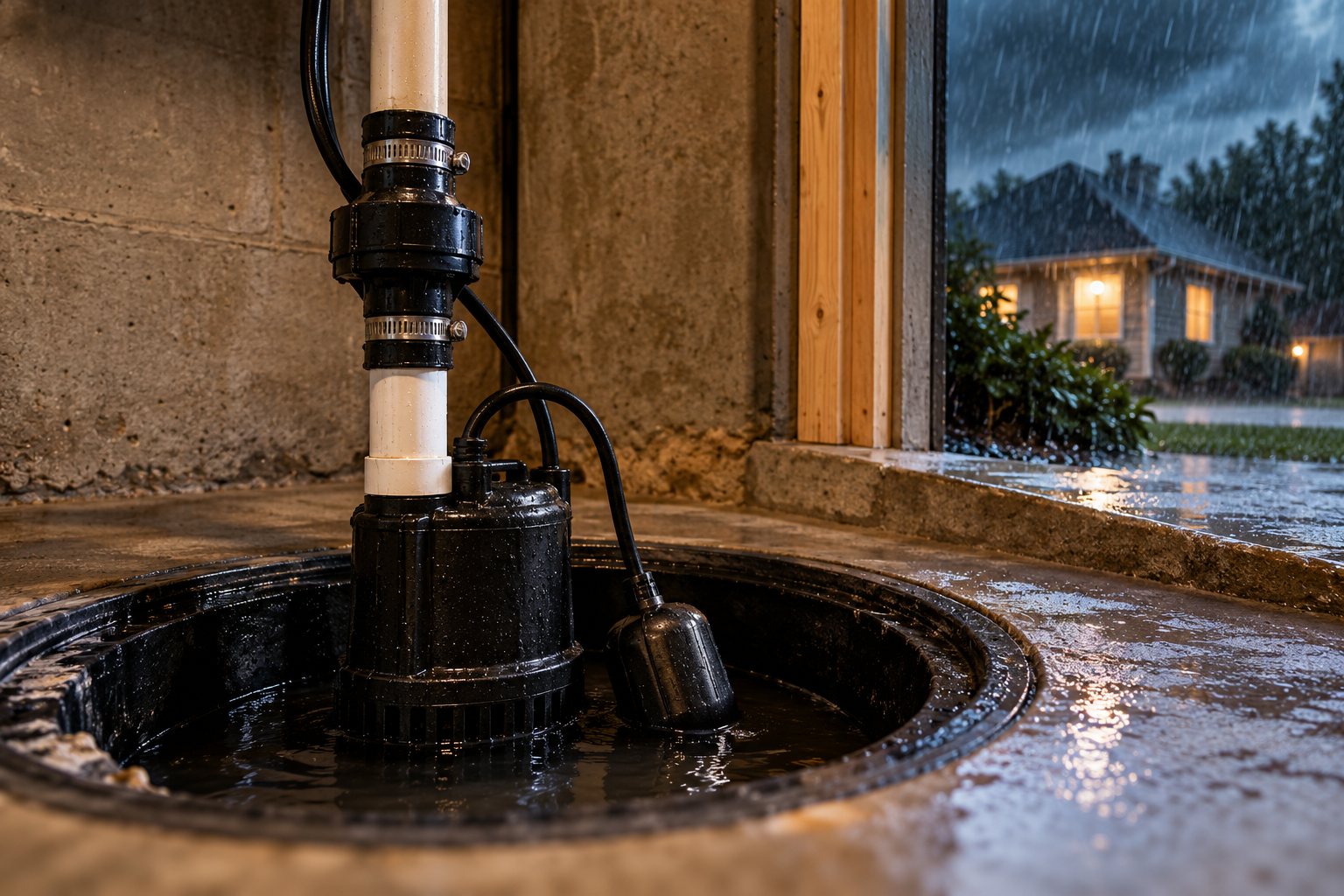
Can the Float Switch Fail Before the Pump Motor?
Yes. A working motor is useless if the float does not tell it when to start.
A float may stick, become obstructed, or operate at an incorrect water level.
This can create an especially deceptive problem.
The pump may work perfectly when manually tested but fail to activate automatically when groundwater rises.
What Should a Float Switch Inspection Look For?
The float should move freely without rubbing against pipes, wires, the pit wall, or other equipment.
Its activation level should also make sense for the sump configuration.
A professional may raise the water level under controlled conditions to confirm that the pump starts and stops correctly.
Visual inspection alone may miss an intermittent float problem.
Why Is Pump Vibration Worth Noticing?
New vibration can indicate that something has changed.
Debris may be interfering with the pump, a component may be loose, or the motor may be operating differently.
Not every vibration means failure is imminent.
However, a new sound or movement should not be ignored simply because water is still leaving the pit.
Can Rust or Corrosion Be a Warning Sign?
Visible corrosion can justify closer inspection of electrical connections, metal components, fasteners, and the pump assembly.
Surface discoloration alone does not prove failure.
The important question is whether corrosion is affecting safe operation or reliability.
Any electrical concern around water should be handled carefully by an appropriate professional.
Can a Blocked Intake Make the Pump Look Weak?
Yes. If debris limits water entering the pump, the motor may run while actual water movement decreases.
The homeowner may notice longer cycles or a pit that empties more slowly.
Cleaning should be based on the equipment design and manufacturer guidance.
The pump should not be dismantled casually while connected to electricity.
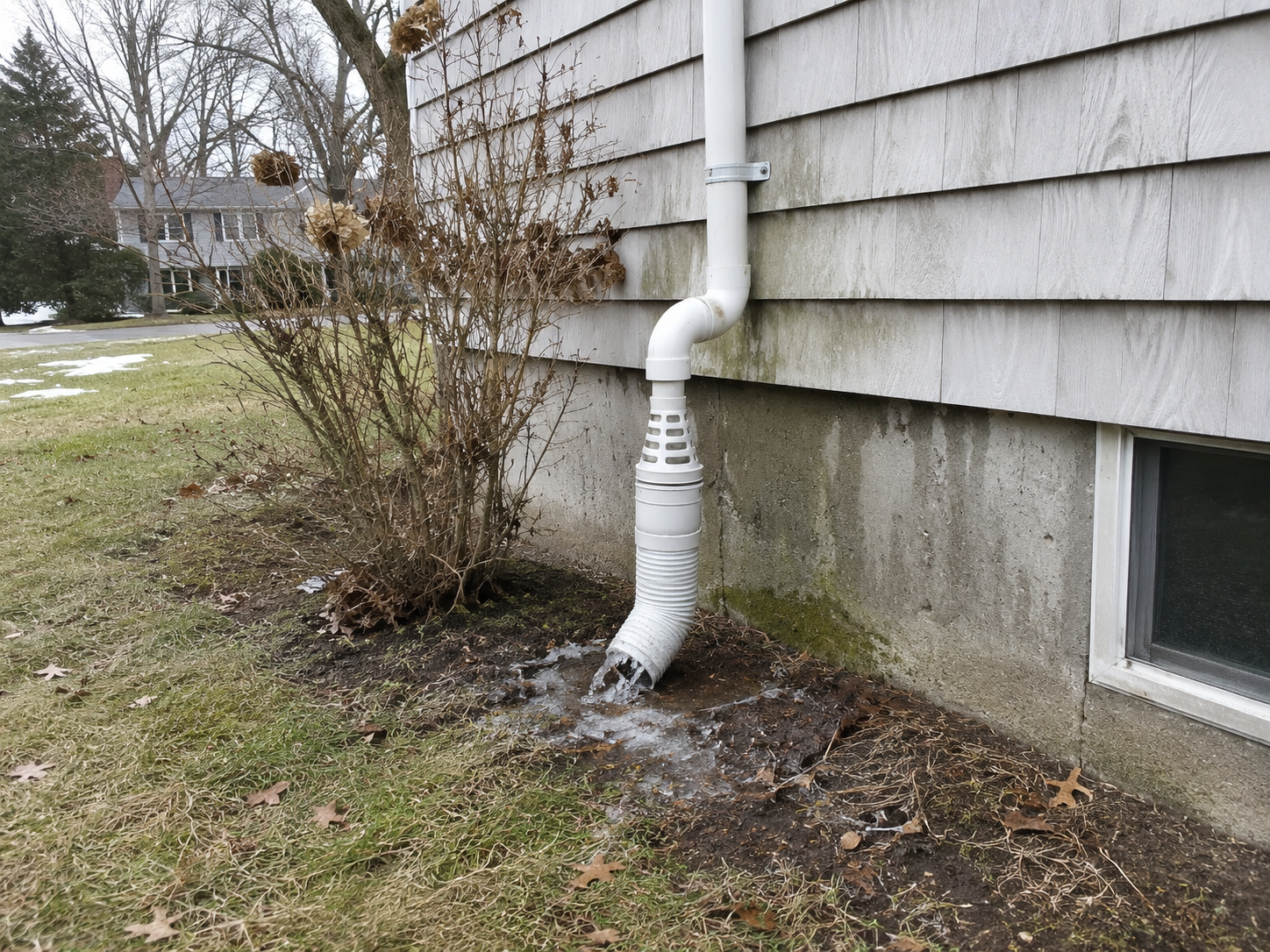
Can the Discharge Line Cause a Pump to Struggle?
Absolutely. The pump may be functioning correctly while the discharge path limits flow.
Possible restrictions include:
- Debris
- Damaged piping
- Poor routing
- A blocked outlet
- Ice
- A partially frozen pipe
The full system should be inspected from the sump pit to the final discharge point.
Why Does a Partially Blocked Line Matter?
A discharge pipe does not need to be completely blocked to create trouble.
A partial restriction can reduce flow and force the pump to run longer.
During mild groundwater conditions, the system may still keep up.
During a heavy storm, that reduced capacity may become much more important.
Can Winter Conditions Affect Sump Pump Performance in Natick?
Yes. Freezing temperatures can create additional risk if water remains in exposed discharge piping.
Ice can restrict the outlet while groundwater still enters the basement drainage system.
Freeze-thaw cycles also make seasonal inspection important for sump pump systems in Natick.
A discharge route that works during summer should still be evaluated for winter conditions.
Why Does Natick’s Seasonal Weather Matter?
Homeowners in Natick experience changing conditions throughout the year, including heavy rain, summer thunderstorms, winter storms, snowmelt, and freezing temperatures.
Those conditions can place very different demands on basement drainage systems.
A pump that barely operates during a dry period may cycle repeatedly during prolonged rain or spring thaw.
That variation is why performance should be evaluated before peak demand arrives.
Can Spring Snowmelt Increase Sump Pump Activity?
Yes. Melting snow adds moisture to the ground and can contribute to seasonal groundwater changes.
If soil is already wet, additional meltwater may increase the amount reaching foundation drainage.
The sump pump may suddenly operate much more often than it did during colder weeks.
That increased activity can expose a weak check valve, restricted discharge, or reduced pump performance.
What Can Natick Homeowners Learn From the Sump Pit Water Level?
The water level provides useful information about system performance.
A healthy system should generally lower the water once the pump activates.
If the level stays high while the pump runs, something may be limiting water removal.
If the level drops but immediately rises again, backflow or rapid groundwater inflow may be involved.
Those patterns help guide diagnosis.
Why Should Natick Homeowners Inspect Their Pump Before a Storm?
Because severe weather is the worst time to discover a hidden problem.
Massachusetts emergency guidance advises homeowners to check sump pump operation as storms approach.
The same guidance recommends backup power for sump pumps in basements or lower levels that are prone to flooding.
Preventive sump pump maintenance in Natick can identify problems while conditions are still manageable.
Can Power Outages Create Another Hidden Risk?
Yes. A primary electric sump pump may be mechanically healthy yet stop operating when household power fails.
Massachusetts emergency guidance notes that high winds, thunderstorms, freezing rain, wet snow, and winter storms can cause power outages.
If groundwater remains high during the outage, the sump pit can continue filling.
A battery backup sump pump may provide additional protection when properly installed and maintained.
Does a Battery Backup Mean the System Is Fully Protected?
No. Backup equipment also requires inspection.
The battery, charger, backup float, pump, alarm, check valve, and discharge path must work together.
A backup pump cannot solve a completely blocked discharge pipe.
Likewise, a charged battery provides little value if the backup float cannot activate the pump.
What Should a Natick Sump Pump Inspection Include?
A useful inspection evaluates the complete system under actual pumping conditions.
It may include:
- Pump activation
- Runtime
- Cycling behavior
- Water removal speed
- Float operation
- Check valve
- Pump intake
- Sump pit condition
- Electrical connection
- Discharge piping
- Exterior outlet
- Backup system
The goal is to understand how the system behaves, not simply whether equipment is present.
Can Homes Near Framingham Have Similar Sump Pump Concerns?
Yes. Homes in nearby Framingham can experience similar regional rain, snowmelt, saturated soil, and groundwater conditions.
However, two neighboring properties can still have very different sump activity.
Elevation, soil, grading, drainage, foundation depth, and local groundwater all influence how much water reaches the sump pit.
Do Sherborn and Ashland Homes Face the Same Type of Risk?
Homes in Sherborn and Ashland can also depend on sump systems during wet periods, but the actual risk varies by property.
A low-lying lot may experience different groundwater behavior than a nearby home on higher ground.
For this reason, local context helps, but the individual basement must still be inspected.
Why Is Sump Pump Maintenance in Natick More Than Cleaning?
Maintenance should evaluate how the entire system responds to water.
Cleaning debris can be useful, but it does not diagnose a weak motor, failing float, bad check valve, restricted discharge, or backup issue.
The most valuable maintenance asks whether the system can perform reliably when groundwater demand increases.
Can an Undersized Pump Look Normal Until a Storm?
Yes. A pump with limited capacity may appear adequate when only small amounts of groundwater enter the pit.
During heavy rainfall, inflow can increase significantly.
If the pump cannot lower the water level fast enough, the weakness becomes visible only under demanding conditions.
That is why pump capacity must be considered alongside drainage and actual groundwater inflow.
How Does a Professional Distinguish High Groundwater From Pump Failure?
The professional observes both inflow and pumping performance.
If water is entering rapidly but the pump lowers the pit efficiently, high groundwater may explain frequent cycling.
If the pump runs while the pit barely drops, a performance or discharge issue becomes more likely.
The diagnosis may involve the pump, float, check valve, intake, discharge line, sump configuration, or more than one component.
Why Should Maintenance Come Before Automatic Replacement?
Because not every warning sign means the pump itself has failed.
Short cycling may originate at the check valve.
Delayed activation may involve the float.
Slow discharge may come from piping.
Replacing the pump without identifying the cause can leave the original problem unchanged.
Sump pump maintenance in Natick should therefore begin with diagnosis rather than an automatic recommendation for new equipment.
All Pro Basement evaluates sump pump systems as part of the home’s broader drainage and groundwater-management strategy.
The family-owned company has more than 25 years of hands-on experience with sump pumps, battery backups, basement waterproofing, drainage, and foundation conditions.
Owner Diego Tameirao personally oversees projects, while Project Manager Keila Tameirao helps coordinate the homeowner experience.
For homeowners in Natick, the most useful question is not simply whether the sump pump turns on.
It is whether the pump, float, check valve, pit, discharge line, electrical supply, and backup system can continue working together when the next storm places the system under real demand.
That is why a useful inspection should test the system under controlled pumping conditions instead of relying only on appearance.
How Should a Sump Pump Be Tested?
A sump pump should be tested by confirming that rising water activates the float, starts the pump, lowers the pit, and exits through the discharge line correctly.
The test should also confirm that the pump shuts off at the proper water level.
Watching one complete cycle can reveal problems that a quick visual inspection may miss.
What Does a Professional Sump Pump Inspection Include?
A professional inspection evaluates the pump and the components that allow it to operate reliably.
That can include:
- Pump activation
- Float movement
- Check valve
- Pump intake
- Sump pit condition
- Discharge piping
- Exterior outlet
- Electrical supply
- Backup pump
- Alarm
The goal is to identify which component is creating risk before recommending repair or replacement.
Why Is Actual Pumping Performance Important?
A pump can sound normal while moving less water than expected.
For that reason, sump pump maintenance in Natick should evaluate how quickly the pit level falls during a controlled cycle.
If the pump runs but the water level changes very little, the issue may involve the pump, intake, discharge line, or groundwater demand.
Can a Check Valve Cause Short Cycling?
Yes. A failing check valve can allow water inside the discharge pipe to fall back into the sump pit after the pump stops.
That returning water may trigger another cycle.
Repeated short cycling can look like unusually high groundwater even when part of the water is simply being pumped again.
Should the Check Valve Be Replaced Automatically?
No. The valve should first be inspected to determine whether it is actually failing.
Frequent cycling can also result from high groundwater, float configuration, or a small effective pumping range.
A proper diagnosis prevents unnecessary replacement.
Can the Float Switch Fail Before the Pump Motor?
Yes. The float switch can become the weak point even when the pump motor still works.
If the float sticks or cannot move freely, the pump may start late or fail to start automatically.
That is why sump pump maintenance in Natick should include a controlled float test.
The float should move without interference from piping, wires, the basin wall, or other equipment.
Should the Sump Pit Be Cleaned?
It should be inspected for sediment, debris, and anything that could interfere with the pump or float.
Cleaning may be appropriate when buildup is present.
However, the sump pit should not be treated as an isolated component.
The cause of repeated debris or sediment should also be considered.
Can Debris Damage Sump Pump Performance?
Yes. Debris can restrict the pump intake or interfere with moving components.
It may also block float movement.
Even partial restriction can reduce the amount of water moved during each cycle.
That may not be obvious during dry weather but can become important during heavy rain.
Should the Discharge Line Be Inspected?
Absolutely. The pump cannot protect the basement if water cannot leave through the discharge piping.
Inspection should follow the line from the pump toward the exterior outlet.
Look for restrictions, poor routing, damage, ice risk, and signs that discharged water may be returning toward the foundation.
Can a Clogged Discharge Line Damage a Sump Pump?
A restriction can make the pump work longer or more frequently.
The exact effect depends on the pump and severity of the blockage.
However, a discharge problem should be corrected before unnecessary mechanical stress continues.
A larger pump is not a substitute for a clear discharge path.
Can a Frozen Discharge Line Cause a Winter Failure?
Yes. In freezing weather, water trapped in exposed piping can turn to ice and restrict flow.
The pump may still run while the pit drains slowly or not at all.
For homes in Natick, winter inspection should consider pipe slope, outlet condition, standing water, and freeze protection.
Can a Battery Backup Protect Against Pump Failure?
It can provide additional protection if the primary system loses power or if the backup is designed to activate under high-water conditions.
However, a battery backup sump pump also depends on a working float, battery, charger, pump, and discharge path.
A backup cannot overcome a completely blocked pipe.
Should the Backup System Be Tested With the Primary Pump?
Yes. The two systems perform different roles and should be tested separately.
The primary pump handles normal groundwater removal.
The backup provides redundancy when the primary system cannot operate or when power is unavailable, depending on the design.
A complete sump pump inspection in Natick should verify both systems where a backup is installed.
Can the Alarm Fail Too?
Yes. An alarm is another component that should be tested.
Depending on the system, it may warn of high water, backup activation, battery trouble, or another condition.
An alarm does not remove water, but it can alert the homeowner that the system needs attention.
When Is Sump Pump Repair the Better Choice?
Repair may be appropriate when the main pump is healthy but another component is causing the problem.
Examples include:
- Float adjustment
- Check valve service
- Intake cleaning
- Discharge correction
- Alarm repair
- Battery replacement
The correct choice depends on diagnosis.
A strange noise once does not automatically justify replacing the entire pump.
When Is Sump Pump Replacement More Appropriate?
Replacement may be appropriate when the pump shows repeated performance problems, unreliable activation, significant wear, or an inability to meet actual groundwater demand.
The decision should be based on performance rather than age alone.
A professional should also confirm that the discharge system and pit configuration are not causing the symptoms.
Why Can Replacing the Pump Alone Fail to Solve the Problem?
Because the pump is only one part of the system.
A new pump will not correct a failed check valve, frozen discharge pipe, blocked outlet, bad float position, or poor drainage.
This is why sump pump maintenance in Natick should diagnose the entire water path before replacement is recommended.
Can Interior Drainage Affect Sump Pump Performance?
Yes. Interior drainage determines how water reaches the sump pit.
If a drainage system brings significant groundwater into the basin during storms, pump demand can rise sharply.
The relationship between drainage inflow and pumping capacity should be understood.
Building Science Corporation explains that basement water control depends on drainage and groundwater management working together.
Can Exterior Drainage Reduce Sump Pump Demand?
Sometimes. Improving exterior runoff management can reduce unnecessary water around the foundation.
Proper grading and roof drainage may help keep rainwater from concentrating beside the home.
The EPA recommends directing water away from foundations as part of moisture control.
Exterior drainage does not eliminate every groundwater problem, but it can reduce one source of water reaching the foundation.
When Should Natick Homeowners Schedule a Sump Pump Inspection?
An inspection is especially useful before seasons or weather events that may increase groundwater.
That includes periods of prolonged rain, spring snowmelt, major storms, or winter conditions that can affect discharge piping.
Sump pump maintenance in Natick is also worth considering when the system begins behaving differently from normal.
Changes in sound, cycling, runtime, or pit level can provide early warning.
Why Is Storm Preparation Important in Natick?
A pump problem may remain hidden until groundwater rises quickly.
A storm can increase inflow, create power interruptions, and stress the discharge system at the same time.
Testing before severe weather gives homeowners a chance to correct weaknesses under controlled conditions.
Massachusetts emergency preparedness guidance encourages homeowners to check sump pumps and prepare for flooding risks before severe weather.
Do Nearby Southborough Homes Face Similar Conditions?
Yes. Homes in Southborough can experience the same regional heavy rain, seasonal groundwater, snowmelt, and freezing conditions that affect Natick.
However, individual properties may behave differently.
Lot elevation, grading, soil, drainage, and foundation depth all influence sump activity.
Can Holliston or Westborough Homes Have Different Pumping Needs?
Absolutely. A home in Holliston may have very different groundwater inflow from a property in Westborough or Natick.
That is why local proximity alone does not determine pump capacity.
The system should be evaluated based on what actually happens inside the sump pit during wet conditions.
Why Should Recurring Warning Signs Never Be Ignored?
A single unusual sound may not indicate a serious problem.
Recurring symptoms are different.
Repeated short cycling, delayed activation, weak discharge, high pit levels, or backup warnings suggest that the system deserves inspection.
These patterns can become more serious when groundwater demand increases.
Frequently Asked Questions About Sump Pump Maintenance in Natick
How Do I Know If My Sump Pump Is Failing?
Look for changes in cycling, noise, vibration, water-removal speed, activation, or pit level.
A pump that runs but cannot lower the water efficiently may have a performance or discharge problem.
Professional testing can help identify the cause.
How Often Should a Sump Pump Be Inspected?
There is no single inspection interval that fits every home.
Inspection needs depend on groundwater activity, equipment condition, backup systems, previous problems, and how heavily the pump operates.
Testing before high-demand weather is especially valuable.
Why Is My Sump Pump Running Constantly?
Constant operation may result from high groundwater, restricted discharge, weak pump performance, or insufficient capacity.
The pit water level provides an important clue.
If the level remains high despite continuous pumping, the system may not be keeping up.
Why Does My Sump Pump Make Strange Noises?
New noises can result from vibration, debris, wear, or changes in pump operation.
A single sound does not automatically mean replacement is required.
However, repeated grinding, rattling, or unusual vibration should be investigated.
Can a Sump Pump Fail During a Storm?
Yes. Storm conditions can expose problems that were hidden during dry weather.
High groundwater can increase cycling, while power outages, blocked outlets, discharge restrictions, or float problems may reduce system reliability.
Should I Replace My Sump Pump Before It Fails?
Not automatically.
Replacement should be based on condition, reliability, performance, and actual system demand.
A professional inspection can determine whether maintenance, component repair, or pump replacement makes the most sense.
Does a Battery Backup Help If the Primary Sump Pump Fails?
It can, depending on the system design and reason for failure.
A battery backup sump pump may provide secondary pumping when normal power is unavailable or water rises beyond the primary system’s control.
The backup itself must also be maintained.
How Do I Prepare My Sump Pump for Heavy Rain in Natick?
Confirm that the pump activates, lowers the pit, and discharges water properly.
Check the float, valve, outlet, backup system, alarm, and electrical supply.
Sump pump maintenance in Natick before severe weather can reveal problems before groundwater rises.
What Is the Best Way to Prevent a Surprise Sump Pump Failure?
The best approach is to inspect how the complete system performs rather than waiting for the pump to stop completely.
A sump pump often provides warning signs before total failure.
The challenge is recognizing those signs early.
That means paying attention to runtime, cycling, water-removal speed, float behavior, discharge flow, and backup alerts.
A professional inspection should also evaluate the sump pit, check valve, electrical supply, battery backup, alarm, and groundwater conditions.
For Natick homeowners, this whole-system approach is especially useful because New England weather can shift quickly from dry periods to heavy rain, snowmelt, saturated soil, and power outages.
Sump pump maintenance in Natick is not about replacing equipment unnecessarily.
It is about identifying the component creating risk while there is still time to correct it before the next high-demand storm.
All Pro Basement provides sump pump maintenance and inspection, installation, smart battery backup systems, freeze protection, basement waterproofing, and drainage solutions for Massachusetts homes.
As a family-owned company with more than 25 years of hands-on experience, All Pro Basement focuses on owner-supervised projects and straightforward evaluations.
Diego Tameirao personally oversees projects, while Project Manager Keila Tameirao helps coordinate work with homeowners.
The goal is to match the solution to the actual condition of the system without unnecessary high-pressure recommendations.
Contact All Pro Basement Today to find out whether your sump pump is truly ready for the next storm in Natick and whether maintenance, repair, replacement, or backup protection may be needed.