Introduction
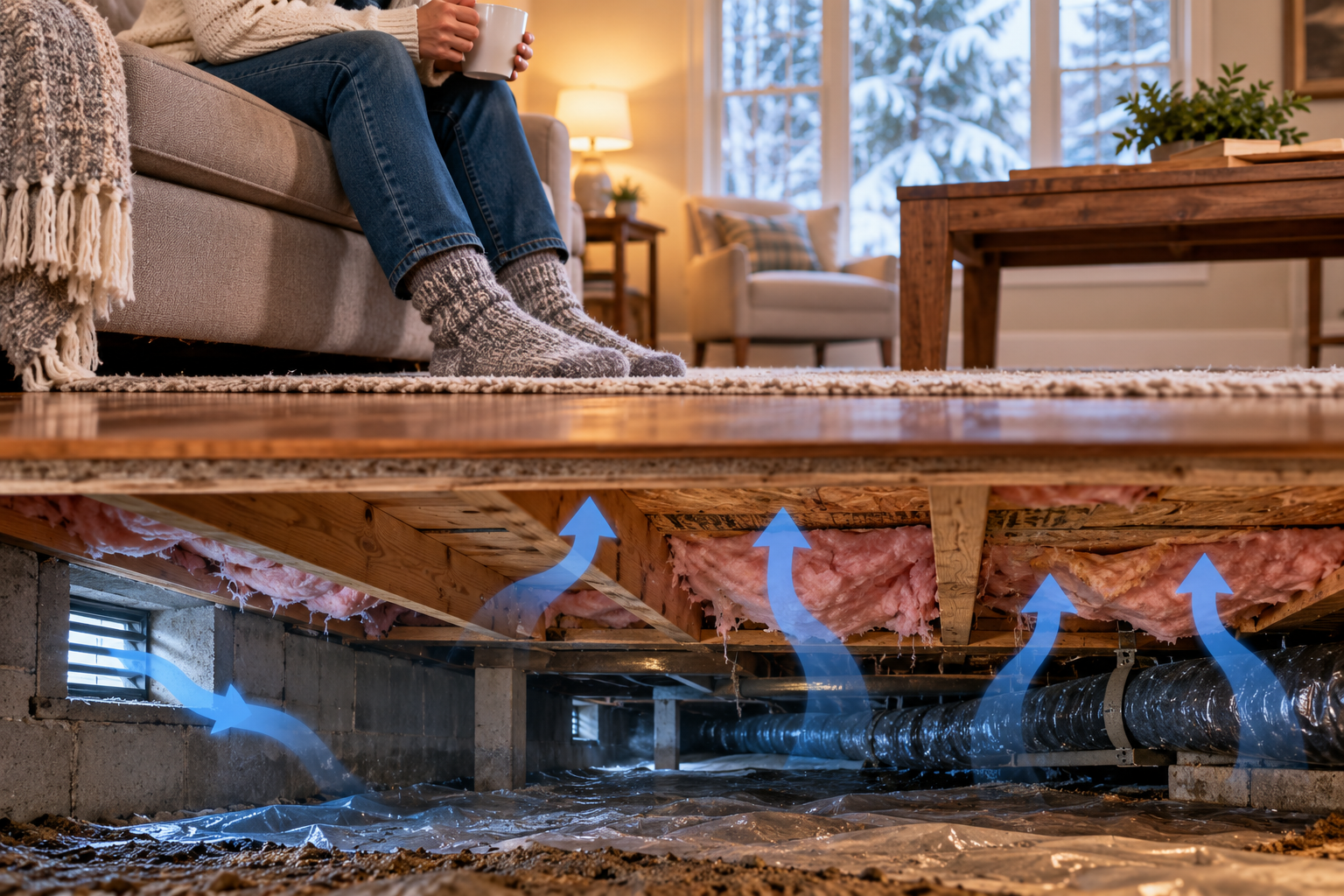
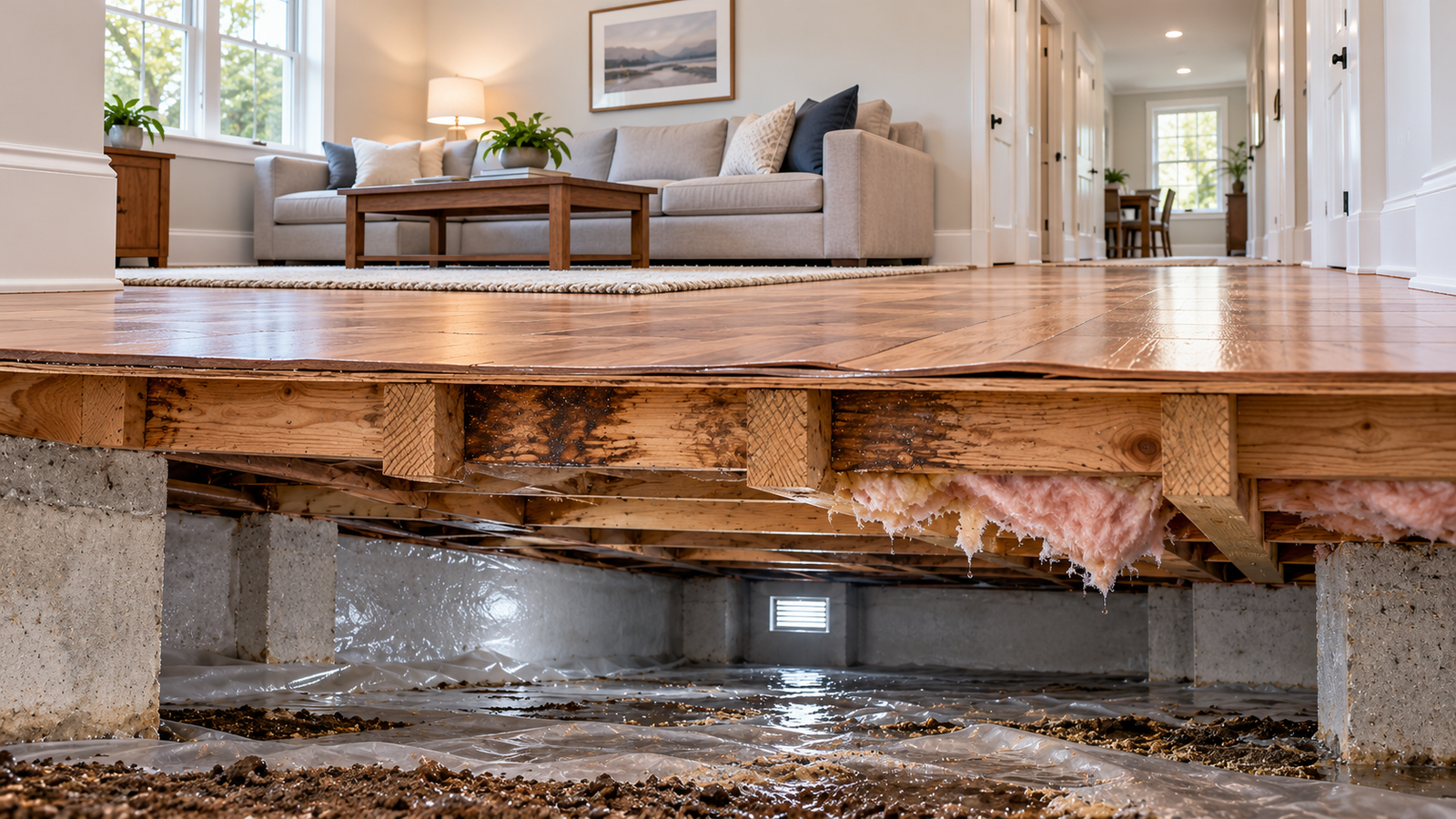
Yes. Crawlspace moisture can affect the rest of the house because moisture, odors, and humid air can move through gaps around floors, ducts, wiring, and framing. Over time, damp conditions below the home may affect insulation, floor joists, indoor comfort, and the way rooms above the crawlspace smell or feel.
Author: All Pro Basement
Updated: October 23, 2026
A crawlspace does not need visible standing water to have a moisture problem.
Damp soil, humid air, condensation, groundwater, or a damaged vapor barrier may create hidden conditions that homeowners rarely see.
The U.S. Environmental Protection Agency notes that crawlspace moisture can move into other parts of a building through openings in floors, walls, and ceilings.
U.S. EPA Mold and Moisture Guidance
Can Crawlspace Moisture Affect the Rooms Above?
Yes. Conditions in a crawlspace can influence the floor system and air pathways connected to rooms above.
Small gaps around plumbing, wiring, ductwork, framing, and floor penetrations allow air movement between different areas of a home.
Building Science Corporation notes that crawlspaces are often connected to indoor air through many small, unintended air leaks.
Therefore, persistent dampness below the home should not automatically be treated as an isolated problem.
Why Does a Crawlspace Become Damp?
A crawlspace becomes damp when moisture enters faster than the space can safely manage or dry it.
Possible sources include:
- Damp soil
- Groundwater
- Foundation seepage
- Plumbing leaks
- Humid outdoor air
- Condensation
- Poor exterior drainage
- Missing or damaged vapor barriers
More than one source may exist at the same time.
For example, damp soil may release water vapor while poor grading sends additional rainwater toward the foundation.
Can Moisture Rise From the Ground?
Yes. Moisture in soil can enter a crawlspace as water vapor, even when the ground does not appear flooded.
A bare-earth crawlspace is especially important to inspect.
The EPA explains that soil moisture can evaporate into crawlspace air and contribute to high humidity and hidden mold growth.
That means dry-looking soil at the surface does not always prove that moisture is under control.
Does a Crawlspace Need Standing Water to Have a Problem?
No. Crawlspace moisture can exist without puddles or obvious flooding.
High humidity and water vapor alone can keep materials damp enough to create concerns.
This is one reason crawlspace problems may remain hidden for months.
Homeowners may notice odors, uncomfortable floors, or damp insulation before they ever see liquid water.
Can Humid Summer Air Make a Crawlspace Wetter?
Yes. Warm, humid outdoor air can enter a cooler crawlspace and encounter colder surfaces.
As the air cools, its relative humidity rises.
If surfaces are cold enough, condensation can develop on ducts, pipes, masonry, insulation, or wood.
Therefore, simply opening vents does not guarantee that a crawlspace will become drier in humid weather.
Building Science Corporation warns that traditional vented crawlspaces are often damp and recommends treating crawlspaces as controlled parts of the building system.
Why Can Open Crawlspace Vents Be a Concern?
Open vents can introduce humid exterior air during certain weather conditions.
In a New England summer, that air may enter a cooler crawlspace and increase humidity.
However, crawlspace design varies.
A professional should consider ventilation, insulation, air sealing, drainage, and moisture control together rather than changing one component without understanding the system.
Can Condensation Look Like a Water Leak?
Yes. Condensation can create wet surfaces that resemble leakage.
The difference is important because the repairs are not the same.
A plumbing leak usually has a specific water source.
Condensation develops when humid air contacts a surface cold enough for moisture to collect.
A professional may examine where the moisture appears, weather conditions, pipe temperatures, insulation, and humidity patterns before identifying the cause.
Can Crawlspace Moisture Affect Floor Joists?
Yes. Persistent moisture can raise the moisture content of wooden framing.
Floor joists, rim joists, beams, and subfloor materials deserve careful inspection when a crawlspace remains damp.
The U.S. Department of Energy’s Building Science Education resources explain that crawlspace moisture can contribute to mold and rot along floor and rim joists.
DOE Building Science Education Crawlspace Guidance
Wood staining does not automatically prove structural damage.
However, discoloration, persistent dampness, softness, or visible deterioration may justify a closer professional evaluation.
Can the Floors Upstairs Show Clues?
Yes. The floor system may provide clues that moisture conditions exist below.
Possible signs include:
- Musty odors near the floor
- Damp-feeling rooms
- Sagging insulation below the floor
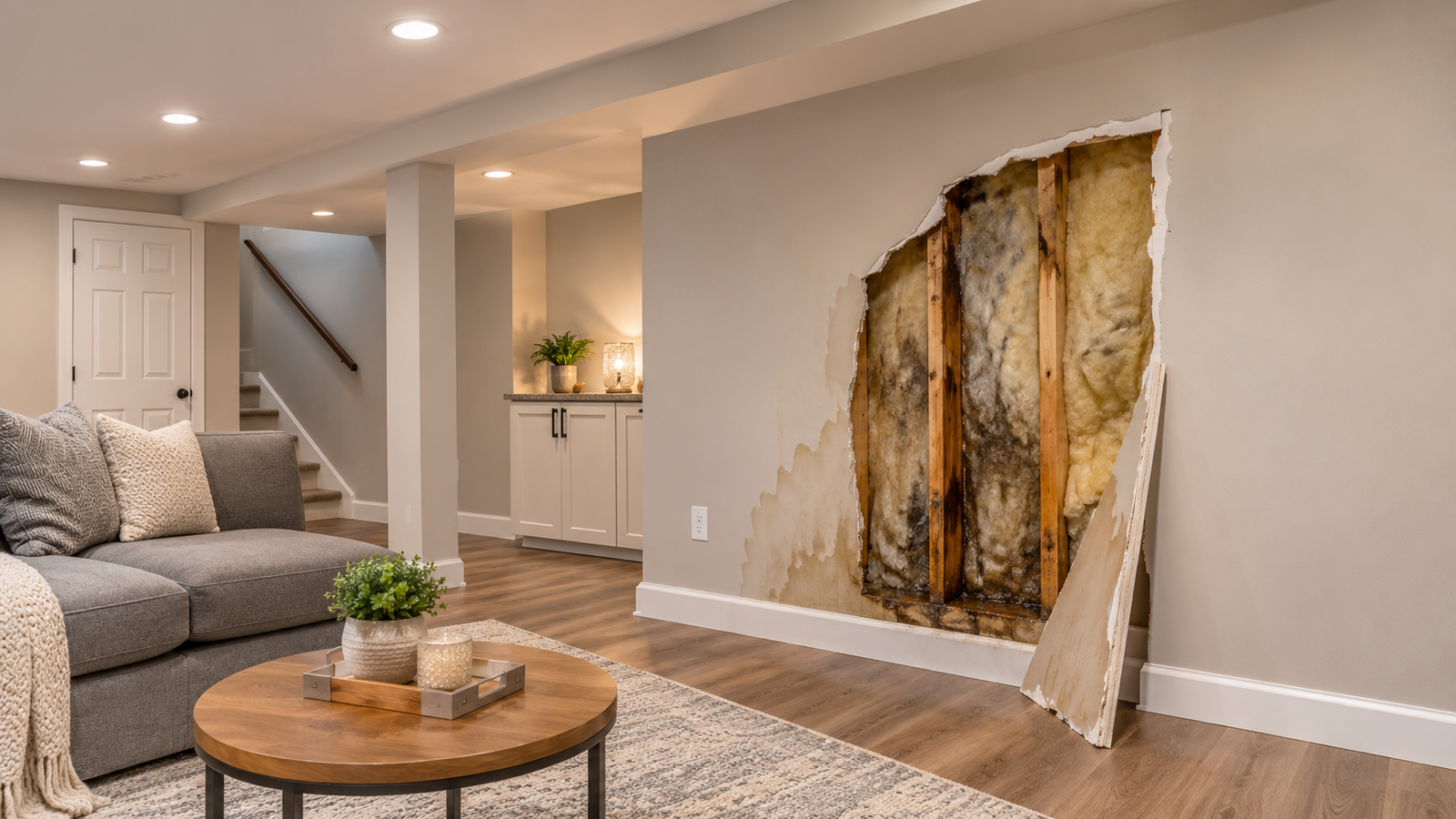
- Staining on framing
- Condensation on crawlspace surfaces
- Unusual floor movement
These symptoms do not prove that crawlspace moisture is the cause.
However, they can justify an inspection beneath the home.
Why Does My House Smell Musty Upstairs?
A musty odor upstairs may sometimes originate from damp materials in the crawlspace.
Air can move through gaps in the building assembly.
Therefore, odors from below may become noticeable near floor penetrations, stairways, utility chases, or other leakage paths.
The odor should be treated as a clue, not a diagnosis.
The actual source could involve crawlspace moisture, plumbing, HVAC components, wall cavities, or another damp area.
Can Wet Insulation Cause Additional Problems?
Yes. Insulation that remains damp may perform poorly and can hide moisture against framing.
Fiberglass batts may sag when their supports fail or when they become disturbed.
More importantly, replacing insulation without correcting the moisture source may allow the same problem to return.
A proper inspection asks why the insulation became wet before deciding what should be replaced.
Can Plumbing Leaks Be Mistaken for Groundwater?
Yes. A slow plumbing leak can wet soil, insulation, wood, or foundation surfaces and resemble groundwater intrusion.
Professionals look for moisture patterns and nearby supply, drain, or waste piping.
A leak concentrated under a bathroom or kitchen may suggest plumbing.
Widespread damp soil after rain may point toward a different source.
How Does Poor Exterior Drainage Affect a Crawlspace?
Poor drainage can direct rainwater toward the foundation instead of away from it.
That may increase soil saturation near crawlspace walls and footings.
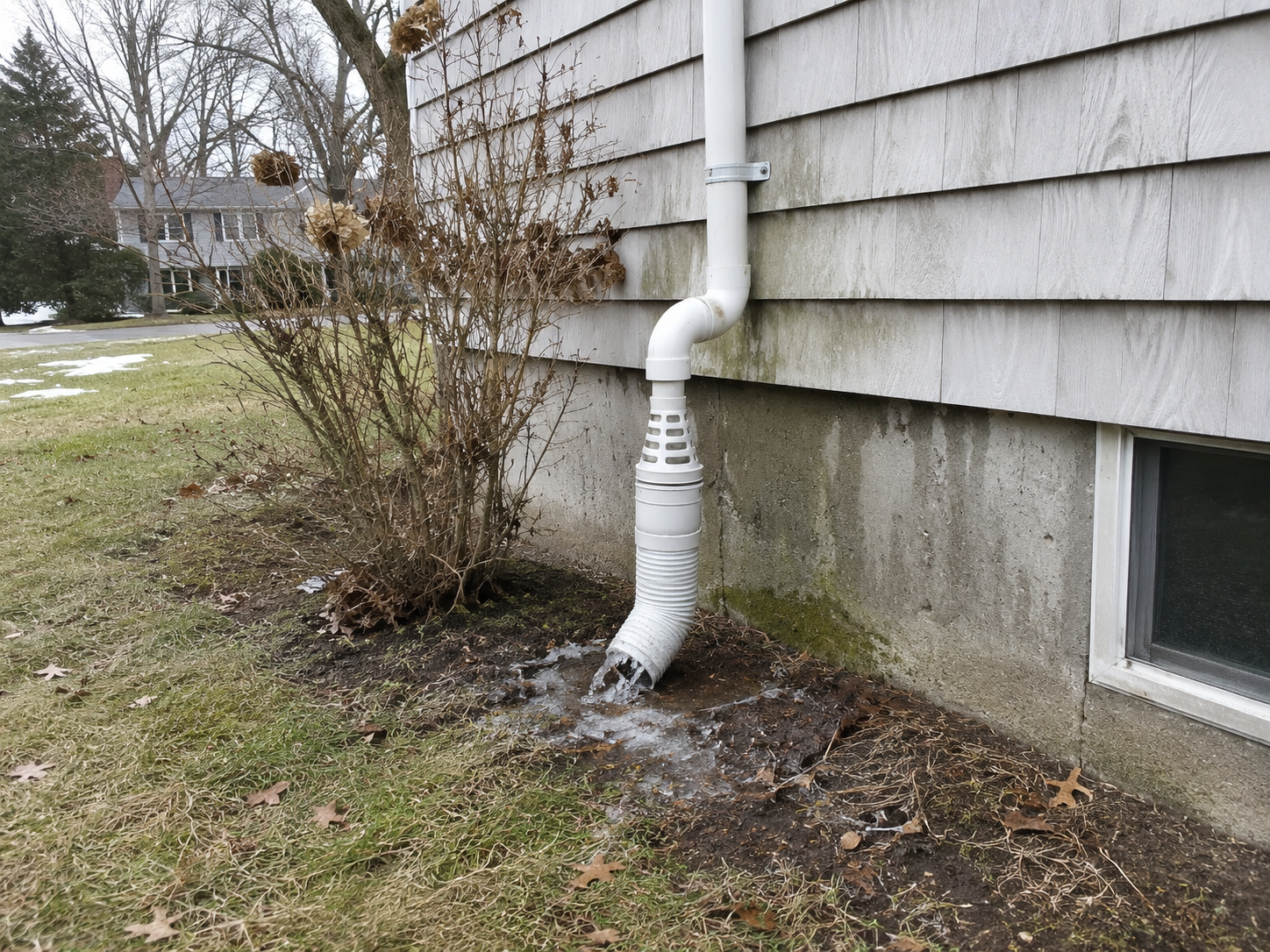
Downspouts that release water beside the foundation can also contribute to wetter soil.
Improper grading may allow surface water to collect near the home.
The EPA recommends addressing drainage and redirecting runoff when exterior water contributes to foundation moisture problems.
Can Foundation Seepage Create Hidden Crawlspace Moisture?
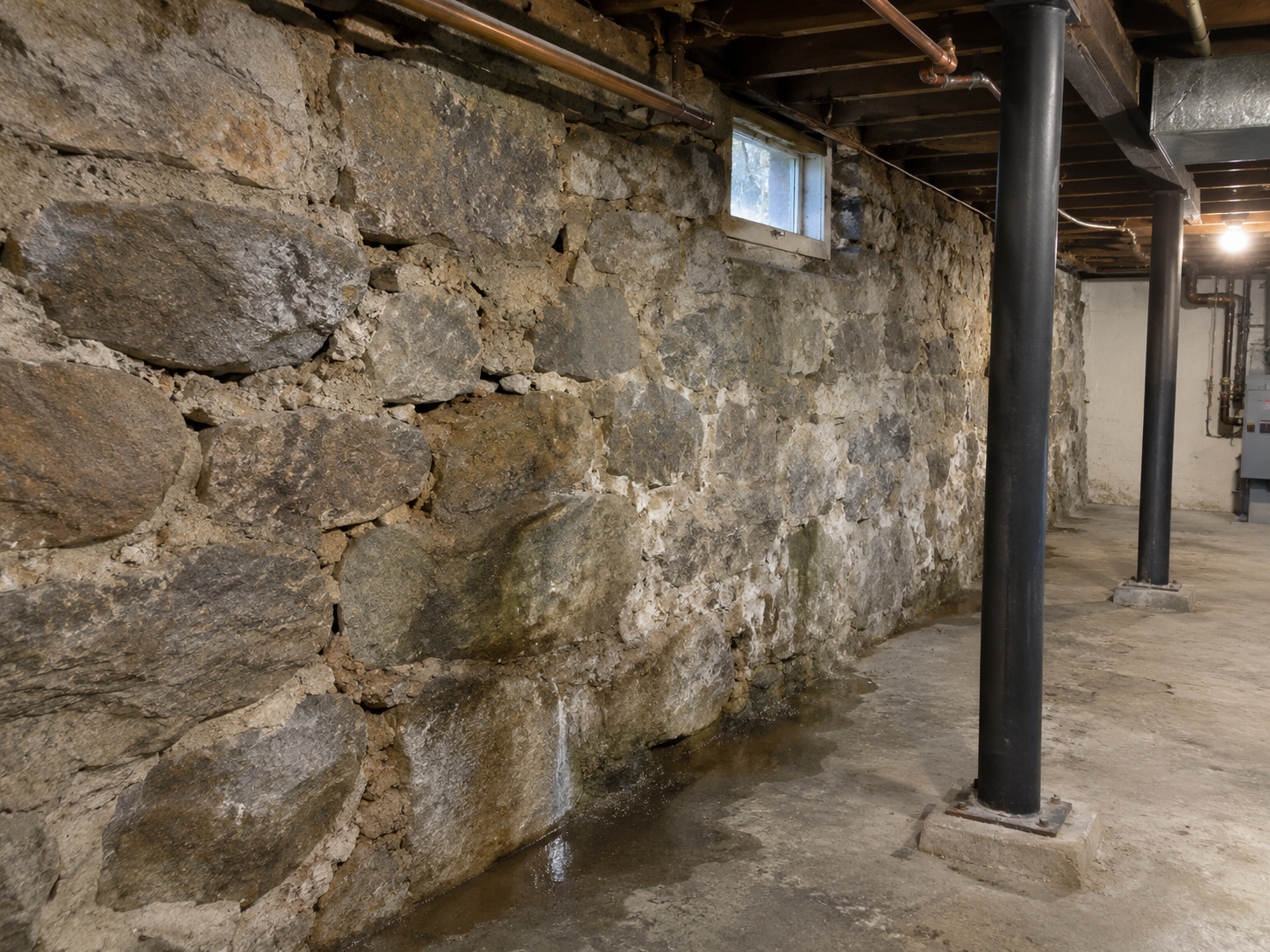
Yes. Moisture may enter through foundation walls, joints, cracks, or areas where masonry meets the footing.
Some seepage is easy to spot after rain.
Other moisture may leave only darker masonry, mineral deposits, or damp soil.
The location and timing of moisture help distinguish seepage from condensation or plumbing leaks.
Why Does Massachusetts Weather Matter?
Massachusetts homes experience large seasonal changes in temperature and moisture.
Humid summers may raise crawlspace humidity.
Meanwhile, heavy rain can saturate soil around the foundation.
Spring snowmelt may add another source of groundwater.
Freeze-thaw cycles can also change soil and drainage conditions around older foundations.
Consequently, a crawlspace that appears dry during one inspection may behave differently during another season.
Can High Groundwater Affect a Crawlspace?
Yes. High groundwater can place additional moisture around foundations and beneath crawlspaces.
The EPA specifically identifies high water tables as one condition that may allow groundwater to enter crawlspaces.
The source should be confirmed before choosing a solution.
A vapor barrier manages ground vapor, but it is not a substitute for drainage when significant liquid water is entering the space.
What Does a Vapor Barrier Actually Do?
A properly installed ground vapor barrier limits moisture vapor moving from soil into the crawlspace.
It is an important moisture-control component in many crawlspaces.
DOE building science guidance recommends covering crawlspace soil with a continuous ground barrier and sealing penetrations and seams appropriately.
However, placing plastic over severe standing water without addressing why the water is present may leave a larger drainage problem unresolved.
Can a Damaged Vapor Barrier Still Allow Moisture In?
Yes. Tears, open seams, uncovered soil, loose edges, and gaps around piers or pipes can reduce its effectiveness.
A professional does not simply check whether plastic exists.
The inspection should determine whether the barrier is continuous and whether water is collecting above or below it.
Will a Dehumidifier Fix Crawlspace Moisture?
A dehumidifier can reduce humidity, but it cannot stop every moisture source.
It does not repair plumbing leaks, redirect groundwater, correct foundation seepage, or remove standing water.
The EPA recognizes dehumidification as a way to reduce moisture in air, while also emphasizing the need to correct underlying water problems.
Therefore, humidity control works best after moisture sources have been identified.
Why Is Finding the Source More Important Than Treating the Symptom?
Because different sources require different solutions.
Ground vapor may call for a vapor barrier.
Standing groundwater may require drainage.
A plumbing leak needs plumbing repair.
Exterior runoff may require grading or drainage improvements.
Treating every damp crawlspace the same way can leave the actual cause untouched.
How Does a Professional Diagnose Hidden Crawlspace Moisture?
A professional evaluates the entire moisture path rather than looking at one damp spot.
The inspection may include:
- Soil condition
- Standing water
- Foundation walls
- Vapor barrier
- Floor joists
- Rim joists
- Insulation
- Plumbing
- Drainage
- Crawlspace vents
- Odors
- Visible staining
The timing of the problem is also important.
Moisture that appears after heavy rain suggests a different mechanism than condensation that develops mainly during humid summer weather.
Why Is Wood Moisture Important During an Inspection?
Wood can reveal whether damp conditions are temporary or persistent.
Professionals may examine joists, beams, subflooring, and rim areas for staining, softness, visible biological growth, or moisture patterns.
The EPA explains that prolonged moisture can contribute to mold growth and eventually affect building materials.
However, visible staining alone should not be used to diagnose structural damage.
Can Crawlspace Moisture Change With the Seasons?
Absolutely. Crawlspace moisture may rise or fall as outdoor humidity, rainfall, groundwater, and soil conditions change.
A space that looks dry in winter can become humid in summer.
Meanwhile, spring snowmelt can reveal groundwater problems that were not obvious during colder months.
That seasonal behavior provides valuable diagnostic information.
What Should Homeowners Notice Before an Inspection?
Look for patterns rather than one isolated symptom.
Ask when odors appear, whether they become stronger after rain, and whether floors feel different during humid weather.
Also note recent plumbing leaks, drainage changes, gutter problems, or standing water around the foundation.
These details can help narrow the source of crawlspace moisture.
Why Can Covering the Soil Too Soon Be a Mistake?
A ground vapor barrier is valuable when used correctly.
However, significant water entry should be understood first.
If standing water repeatedly enters from poor drainage or groundwater, simply covering the soil may hide the symptom without correcting how water reaches the crawlspace.
The better approach begins with identifying whether the moisture is vapor, condensation, seepage, groundwater, plumbing leakage, or a combination of several sources.
All Pro Basement uses this whole-system approach when evaluating crawlspaces in Massachusetts homes.
With more than 25 years of hands-on experience, the family-owned company works with crawlspace encapsulation, waterproofing, drainage, sump systems, and foundation conditions.
Owner Diego Tameirao personally oversees projects, while Project Manager Keila Tameirao helps coordinate the work and homeowner experience.
For a homeowner, the most useful question is not simply whether the crawlspace feels damp.
It is where the moisture is coming from, how it moves through the space, and whether it is affecting the materials and systems connected to the rest of the home.
Once that moisture path is understood, the right correction becomes much easier to choose.
The goal is not simply to make the crawlspace look cleaner. It is to control how water and vapor enter, where they collect, and how the space interacts with the home above.
How Can I Tell If Crawlspace Moisture Is Affecting My Home?
Look for patterns that connect conditions below the floor with changes inside the living space.
Musty odors, damp insulation, stained framing, elevated humidity, or recurring condensation can indicate that crawlspace moisture deserves closer investigation.
Possible clues include:
- Musty odors near floors
- Damp or sagging insulation
- Condensation on pipes
- Dark staining on wood
- Wet soil or masonry
- Visible water after rain
- Persistent high humidity
No single clue confirms the cause.
However, several symptoms occurring together can reveal an ongoing moisture problem rather than a temporary weather event.
What Is Crawlspace Encapsulation?
Crawlspace encapsulation is a moisture-control approach that isolates exposed soil and other moisture pathways from the crawlspace environment.
A complete system may include a sealed ground membrane, air sealing, moisture management, and other measures selected for the property.
The exact design depends on the foundation, water entry, drainage, ventilation, insulation, and groundwater conditions.
Can Encapsulation Reduce Crawlspace Humidity?
Yes. Proper encapsulation can reduce moisture vapor entering from exposed soil and help create more controlled crawlspace conditions.
However, encapsulation works best when bulk water problems are addressed first.
Covering persistent standing water does not eliminate the source of that water.
The U.S. Department of Energy recommends a continuous ground vapor barrier as part of crawlspace moisture control.
Does a Vapor Barrier Stop Ground Moisture?
A properly installed vapor barrier can greatly limit water vapor moving from soil into the crawlspace.
It does not make groundwater disappear.
If liquid water is entering because of drainage, seepage, or a high water table, additional measures may be required.
For that reason, ground vapor control and crawlspace drainage should be evaluated as separate parts of the same moisture system.
What Makes a Vapor Barrier Effective?
Coverage and sealing matter.
A barrier should not leave large areas of exposed soil or loose gaps around penetrations.
Seams, walls, piers, and utility penetrations may need careful detailing.
DOE guidance emphasizes continuous coverage and sealed seams for effective ground moisture control.
Should Standing Water Be Fixed Before Encapsulation?
Yes. The source of recurring standing water should be identified before it is hidden beneath an encapsulation system.
Possible causes include groundwater, foundation seepage, plumbing leaks, poor grading, or inadequate drainage.
The corrective approach depends on which source is actually supplying the water.
Can Crawlspace Drainage Be Needed With Encapsulation?
Yes. Drainage and encapsulation perform different jobs.
Drainage manages liquid water.
Encapsulation helps control water vapor and isolate the crawlspace from exposed ground.
Homes with significant water entry may require both.
However, a dry crawlspace without bulk water problems may need a different combination of measures.
Can a Sump Pump Be Used in a Crawlspace?
Yes. A sump pump may be appropriate where water must be collected and discharged from a low area.
However, installing a pump should follow diagnosis of where the water originates.
The drainage path, sump location, discharge route, pump capacity, and backup protection all affect performance.
A sump pump also does not replace a vapor barrier when exposed soil continues releasing moisture into the air.
Can Exterior Drainage Reduce Crawlspace Moisture?
Yes. Better exterior drainage can reduce the amount of water reaching soil beside the foundation.
Proper grading and runoff management can be important when rainwater repeatedly collects near the house.
The EPA recommends keeping water from accumulating around foundations as part of moisture control.
However, exterior improvements may not solve every groundwater or foundation seepage condition.
The actual water path must still be identified.
Can Gutters and Downspouts Affect the Crawlspace?
Yes. Roof runoff concentrated beside the foundation can saturate nearby soil.
As a result, moisture pressure around the crawlspace may increase during heavy rain.
Extending roof drainage away from vulnerable foundation areas can help reduce unnecessary water exposure.
It should be considered together with grading, soil conditions, and underground drainage.
Should Wet Insulation Be Replaced?
Sometimes. Insulation that remains wet, damaged, contaminated, or badly sagging may need removal or replacement.
However, the moisture source should be corrected first.
Replacing insulation while crawlspace moisture remains uncontrolled can allow the new material to become damp again.
The EPA emphasizes correcting the underlying water or moisture problem when damp materials are affected.
Can Crawlspace Moisture Affect Wood Framing?
Yes. Persistent dampness can expose joists, beams, rim areas, and subfloor materials to conditions that support deterioration.
Moisture does not mean every piece of wood is structurally damaged.
Professionals consider staining, softness, visible deterioration, moisture patterns, and the duration of exposure.
DOE building science guidance notes that crawlspace moisture can contribute to mold and rot along joists and rim joists.
Can a Dehumidifier Solve the Entire Problem?
Usually not by itself.
A dehumidifier removes moisture from the air, but it does not stop liquid groundwater, repair plumbing leaks, or correct poor exterior drainage.
It can be useful after major moisture sources are controlled.
The EPA lists dehumidification as a humidity-control measure while also emphasizing source control.
What If Humidity Returns After the Dehumidifier Runs?
Recurring humidity may indicate that moisture continues entering the space faster than the equipment can manage it.
The source might be exposed soil, foundation seepage, outdoor air, groundwater, or a plumbing problem.
Increasing dehumidifier capacity without investigating the source may treat the symptom instead of the cause.
Can Encapsulation Help With Musty Odors?
It may help when the odor is related to damp soil or persistently humid crawlspace conditions.
However, existing wet materials and the source of moisture still need attention.
Encapsulation should not be used to simply seal over damaged or persistently wet materials.
Moisture control is most effective when the cause is corrected first.
Why Does Crawlspace Moisture Need a Whole-System Diagnosis?
Because moisture can follow several paths at once.
A crawlspace may have ground vapor during summer, foundation seepage after rain, and groundwater during spring snowmelt.
Treating only one path could leave the others active.
A professional assessment connects the moisture source with the correct control strategy.
Which Crawlspace Solution Is Actually Needed?
There is no single answer for every house.
Depending on the diagnosis, appropriate work may involve:
- Ground vapor barriers
- Crawlspace encapsulation
- Drainage improvements
- Sump pump installation
- Humidity control
- Plumbing repairs
- Insulation replacement
- Foundation repairs
A home should receive only the measures needed for its actual conditions.
How Do Massachusetts Seasons Affect the Solution?
A crawlspace in Massachusetts must perform through humid summers, heavy rain, freezing winters, spring thaw, and changing groundwater levels.
That makes seasonal history valuable.
A system selected after one dry-weather inspection may miss conditions that appear during snowmelt or prolonged rainfall.
Homeowners should mention when and under what weather conditions moisture becomes noticeable.
Can Spring Snowmelt Create a Different Problem Than Summer Humidity?
Yes. Spring snowmelt can increase soil saturation and groundwater.
Summer moisture may be driven more strongly by humid air and condensation.
The symptoms may look similar, but the causes can require different solutions.
This is why timing matters when diagnosing crawlspace moisture.
When Is Complete Crawlspace Encapsulation Appropriate?
Encapsulation may be appropriate when exposed ground, vapor movement, air leakage, and humidity are major contributors.
However, liquid water must still be managed.
The decision should account for foundation type, drainage, soil, insulation, ventilation, and existing water entry.
When Should I Call a Crawlspace Professional?
Professional evaluation is useful when moisture keeps returning, standing water appears, wood stays damp, insulation deteriorates, or odors continue inside the home.
It is also wise to investigate when the cause is unclear.
A thorough inspection should look beyond the visible water spot and identify how moisture reaches and moves through the crawlspace.
Frequently Asked Questions About Crawlspace Moisture
Can Crawlspace Moisture Affect the Rooms Above?
Yes. Moisture and odors can move through openings around framing, utilities, ducts, and floors.
The EPA notes that moisture accumulating in crawlspaces can migrate into other parts of a building.
This is why conditions below the home can matter even when the living area itself has no visible water.
Why Does My Crawlspace Smell Musty?
A musty smell often indicates persistent dampness or moisture-sensitive materials.
Possible sources include wet soil, insulation, wood, foundation surfaces, or hidden water entry.
The odor should lead to investigation of the moisture source rather than simply being covered with fragrance or ventilation.
Can Moisture From a Crawlspace Make Floors Feel Damp?
It can contribute to moisture conditions around the floor system, especially when humidity remains elevated.
However, damp-feeling floors can have several causes.
The crawlspace, insulation, HVAC system, indoor humidity, and flooring assembly may all need evaluation.
Do I Need a Vapor Barrier in My Crawlspace?
Many dirt-floor crawlspaces benefit from an effective ground vapor barrier because it limits moisture entering from soil.
The best design depends on the crawlspace and foundation.
A barrier alone may not be enough when standing water or active groundwater is present.
Should I Encapsulate a Crawlspace With Standing Water?
The water source should be addressed first or as part of the same project.
Encapsulation is designed for moisture control, not for hiding an unresolved drainage problem.
Groundwater, seepage, grading, plumbing, or drainage may require correction before the crawlspace can remain reliably dry.
Can a Wet Crawlspace Damage Floor Joists?
Persistent moisture can contribute to conditions that affect wood.
However, visible dampness does not automatically mean structural failure.
A professional should inspect the wood condition and determine whether the moisture source is active before recommending repairs.
Can a Dehumidifier Fix a Damp Crawlspace?
A dehumidifier can control airborne humidity, but it cannot stop groundwater, foundation leaks, or plumbing leaks.
It works best as one component of a moisture-control strategy after major water sources are corrected.
When Should a Crawlspace Be Encapsulated?
Encapsulation should be considered after the moisture sources, drainage, foundation conditions, and ventilation strategy are understood.
The goal is to create a controlled crawlspace, not simply cover the ground.
What Is the Best Long-Term Approach to Crawlspace Moisture?
The best approach begins with source control.
That means identifying whether the moisture comes from soil, groundwater, rain, condensation, plumbing, foundation seepage, or several sources together.
Next, the solution should match those conditions.
For one home, that may mean a vapor barrier and humidity control.
Another may need drainage and a sump system before encapsulation.
A third may require exterior runoff corrections.
All Pro Basement evaluates crawlspace moisture as part of the entire foundation and drainage system rather than assuming every property needs the same treatment.
As a family-owned Massachusetts contractor, All Pro Basement brings more than 25 years of hands-on experience to crawlspace encapsulation, waterproofing, drainage, sump pump systems, and foundation repair.
Projects are owner-supervised by Diego Tameirao, while Keila Tameirao coordinates projects and helps homeowners understand the process.
The focus is on identifying the actual problem and recommending appropriate work without high-pressure sales.
For Massachusetts homeowners, that approach is especially important because the source of crawlspace moisture can change with rainfall, humidity, groundwater, snowmelt, and seasonal temperature changes.
A crawlspace that stays controlled throughout those conditions can better protect the materials and systems connected to the rest of the home.
Contact All Pro Basement Today to find out whether hidden crawlspace moisture is affecting your home and whether encapsulation, drainage, humidity control, or another targeted solution is right for your crawlspace.