Introduction
Yes. A power outage can cause basement flooding even when the primary sump pump is in perfect condition. Most primary pumps depend on household electricity. If power fails while groundwater keeps entering the sump pit, water can rise quickly unless a working battery backup sump pump provides another way to remove it.
Author: All Pro Basement
Updated: October 27, 2026
A sump pump does not need to be broken to stop protecting a basement.
Sometimes, the pump is mechanically healthy but has no electricity to operate.
That distinction becomes especially important when the same storm that increases groundwater also knocks out power.
Can a Power Outage Stop a Working Sump Pump?
Yes. Most residential sump pumps rely on the home’s electrical supply.
If that power disappears, the primary sump pump usually stops pumping until electricity returns or another power source takes over.
The U.S. EPA notes that sump pumps are commonly connected to the home’s electrical system.
Meanwhile, water entering the sump pit does not wait for utility service to return.
Why Are Power Outages Especially Dangerous During Heavy Rain?
Heavy rain can increase groundwater at the exact time strong winds, thunderstorms, or other storm conditions threaten electrical service.
That creates two problems at once.
Water may be entering the basement drainage system faster while the equipment responsible for removing it has lost power.
Massachusetts emergency guidance specifically recommends backup power for sump pumps in basements or lower levels prone to flooding.
Does Groundwater Stop When the Electricity Goes Out?
No. Groundwater responds to rain, soil saturation, snowmelt, drainage, and local water-table conditions.
It is independent of the home’s electrical supply.
Therefore, a sump pit can continue filling after the primary pump becomes silent.
This is the gap a battery backup sump pump is designed to help address.
What Happens Inside the Sump Pit During an Outage?
If drainage continues bringing water into the pit, the water level rises.
Without pumping capacity, it may eventually reach the top of the basin.
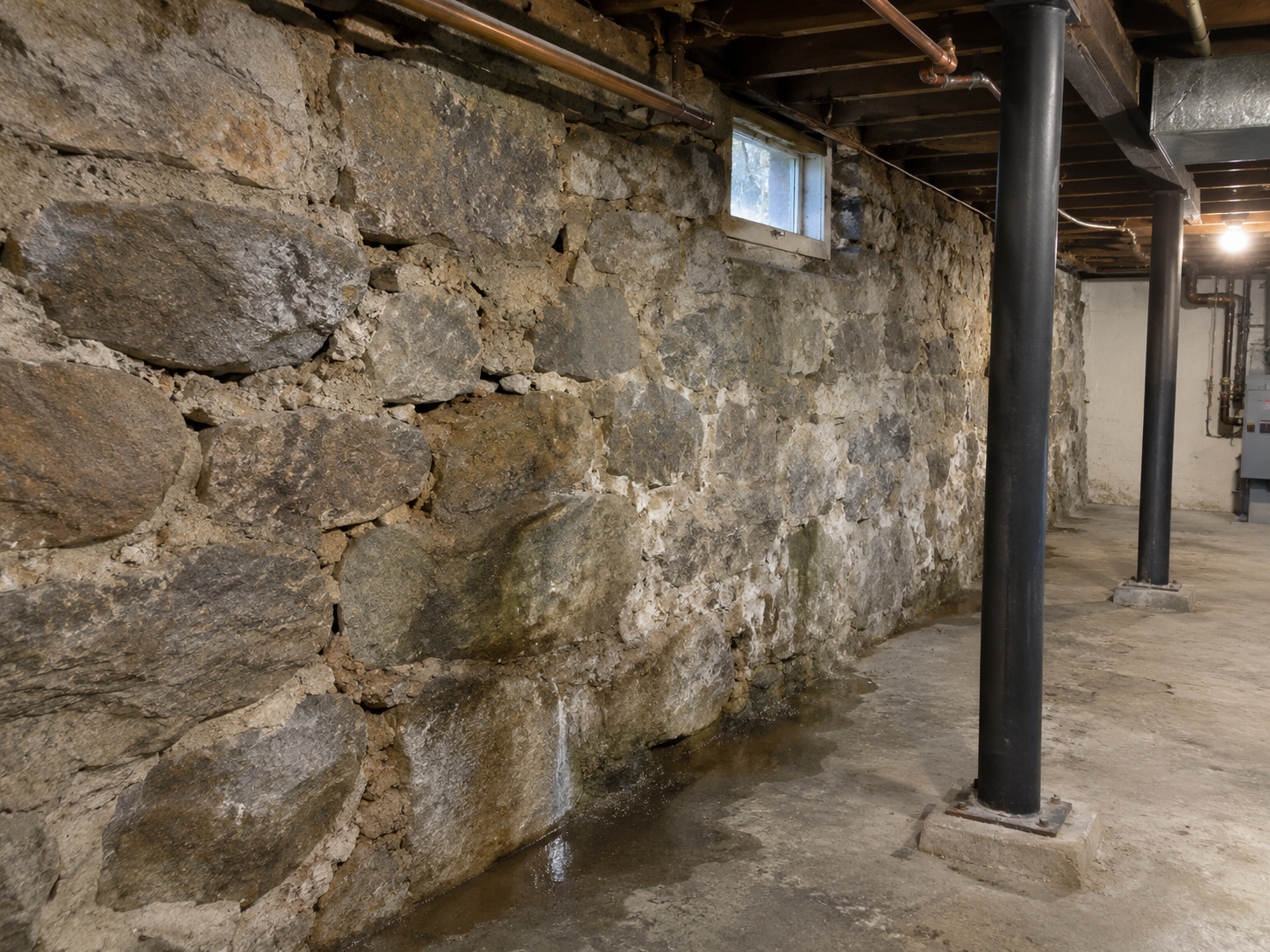
Once that happens, water can spread across the basement floor.
The speed depends on groundwater inflow, pit size, drainage conditions, and weather.
Can the Basement Flood Even If the Primary Pump Is New?
Yes. Age alone does not protect an electric sump pump from a power failure.
A new pump without electricity can provide no active pumping.
This is why homeowners should separate two questions:
- Is the primary pump working?
- Can the system still pump without household power?
Those are not the same question.
What Is a Battery Backup Sump Pump?
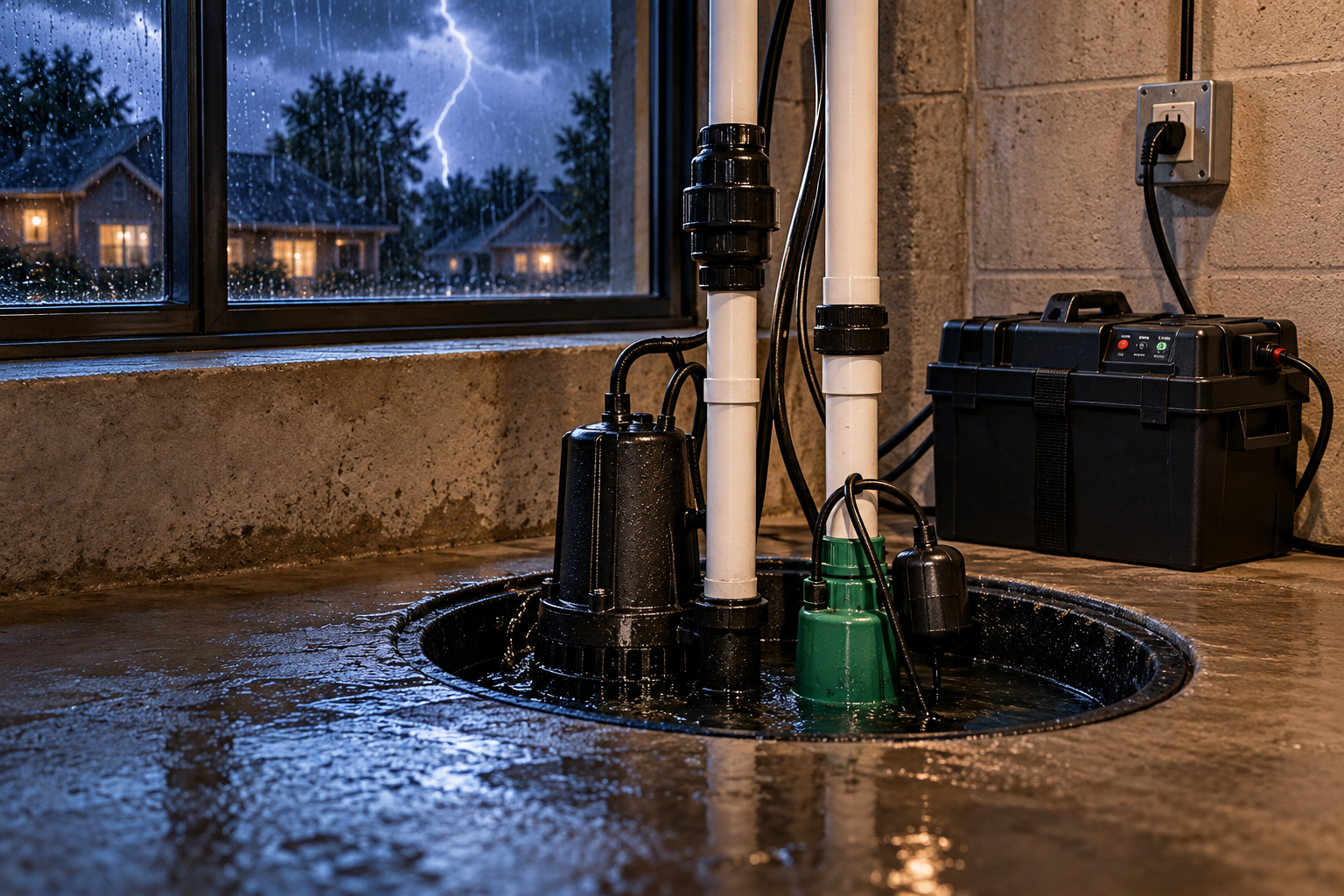
A battery backup sump pump is a secondary pumping system designed to operate using stored battery power when normal electrical service is unavailable.
It usually has its own pump, float activation, battery, charging equipment, and controls.
Its purpose is redundancy, not replacement of the primary pump during normal conditions.
Does the Backup Pump Start Automatically?
Many properly configured backup systems are designed to activate automatically when water reaches the backup float level.
The exact operation depends on the installed system.
That automatic response matters because homeowners may not be home when a storm causes an outage.
However, automatic activation only helps if the battery, pump, float, charger, and discharge path are functioning.
Is Owning a Battery the Same as Having a Backup Sump System?
No. A battery alone does not create a complete backup system.
Reliable protection depends on multiple components working together.
A professional may evaluate:
- Backup pump
- Battery condition
- Battery charger
- Float switch
- Alarm
- Wiring
- Check valve
- Discharge piping
- Water level
- Pump cycling
Each component has a different role.
Why Does Battery Condition Matter?
The battery stores the energy needed when household power disappears.
If the battery is weak, damaged, disconnected, or unable to provide the required power, backup performance may be reduced.
Battery condition should therefore be tested rather than assumed from appearance alone.
A battery that has been sitting quietly beside the sump pit is not proof that the system will work during the next outage.
How Long Will a Battery Backup Sump Pump Run?
There is no reliable universal runtime.
Battery capacity is only one factor.
Runtime also depends on how often the backup pump cycles, groundwater inflow, pump demand, system condition, and how much water must be moved.
A pump that cycles occasionally uses stored energy differently from one that runs repeatedly during severe groundwater conditions.
Therefore, fixed claims about backup runtime can be misleading.
Why Is the Battery Charger Important?
The charger helps maintain the battery so stored power is available when needed.
If the charger fails, the backup may appear installed but lack sufficient battery capacity during an outage.
A professional inspection should check charging status as part of the system rather than testing only the pump.
Can a Float Switch Prevent the Backup From Starting?
Yes. The float is an important activation component.
If it is stuck, blocked, damaged, or positioned incorrectly, the backup pump may not start when the water rises.
The primary and backup floats should have enough space to move properly inside the sump pit.
A crowded pit can create mechanical interference that is easy to overlook.
Why Is a Sump Pump Alarm Useful?
An alarm can alert homeowners that water has reached an unusual level or that part of the system needs attention, depending on the equipment installed.
It does not remove water itself.
However, an alarm may provide valuable warning that the primary system is no longer controlling the water level normally.
Can High Groundwater Overwhelm a Backup Pump?
It can if groundwater enters faster than the backup system can remove it.
Backup pumps have operating limits just like primary pumps.
That is why selecting a system requires consideration of actual groundwater demand.
A battery backup sump pump should be matched to the home’s conditions rather than chosen only because it fits inside the basin.
What Does Frequent Pump Cycling Tell You?
Frequent cycling can indicate substantial groundwater inflow, a small effective pumping range, check valve problems, or other system conditions.
During an outage, frequent cycling also increases demand on the backup battery.
Therefore, normal pump behavior should be understood before an emergency occurs.
Can a Failed Check Valve Affect Backup Performance?
Yes. A check valve helps prevent discharged water from falling back toward the sump pit after the pump shuts off.
If water repeatedly returns, the pump may cycle more often.
That can increase wear and battery demand.
A professional should evaluate the valve along with both pumps and the discharge line.
Can a Blocked Discharge Line Defeat a Battery Backup?
Yes. A battery backup sump pump still needs an open path for water to leave the house.
If the discharge piping is blocked, both the primary and backup systems may struggle to move water.
More pumping power cannot overcome every physical obstruction.
This is why discharge inspection is part of backup reliability.
Can a Frozen Discharge Line Cause the Same Problem?
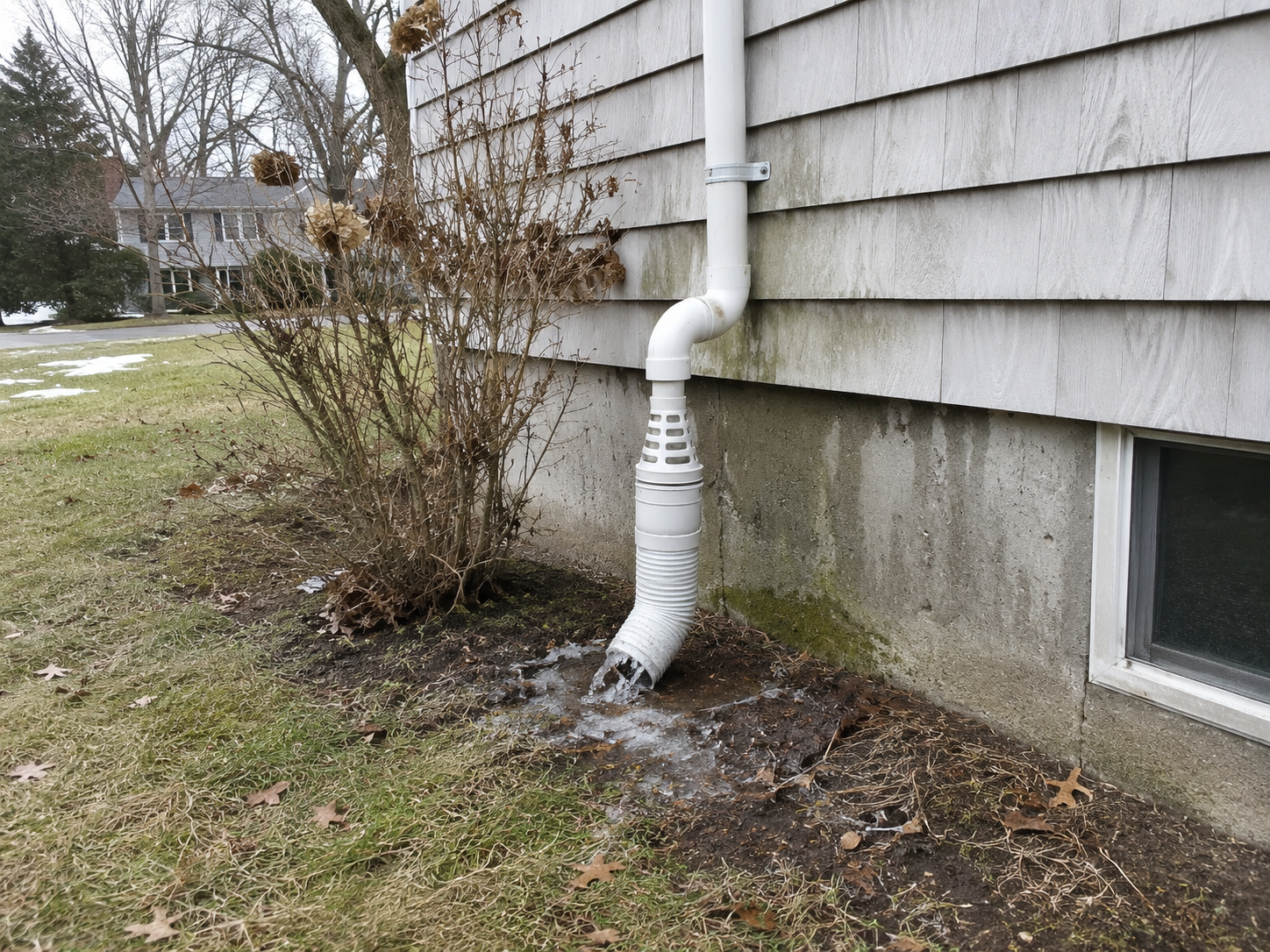
Yes. In Massachusetts winters, exterior discharge piping can become vulnerable to freezing if water remains trapped or the outlet becomes blocked by ice or snow.
A backup pump may have power and still fail to remove water effectively if the discharge route is frozen.
Freeze protection and backup power solve different problems.
Why Does New England Weather Make Backup Protection Important?
Massachusetts can experience thunderstorms, nor’easters, winter storms, heavy rain, strong winds, snowmelt, and saturated soil.
Several of those conditions can affect power and groundwater at the same time.
Massachusetts emergency guidance notes that wet snow, freezing rain, high winds, thunderstorms, and winter storms can cause power outages.
That overlap is what makes sump backup planning important.
Can Spring Snowmelt Create a Sump Pump Risk?
Yes. Melting snow can add water to already wet soil and raise groundwater around foundations.
If a power interruption occurs while the sump system is active, the pit may continue receiving water without normal pumping.
Spring conditions can therefore stress a backup system even without a dramatic thunderstorm.
What About Homes in Ashland and Holliston?
Homes in Ashland and Holliston can experience the same regional combination of heavy rain, seasonal groundwater, snowmelt, and storm-related outages seen around Hopkinton.
The individual risk still depends on the property.
Lot grading, soil conditions, foundation design, drainage, and sump activity all influence how quickly a basement responds to groundwater.
Can Homes in Upton Have Different Groundwater Conditions?
Yes. Even nearby homes can behave differently.
A property in Upton may have different soil, grading, elevation, drainage, and water-table conditions than a home several miles away.
That is why sump pump recommendations should be based on the actual property rather than the town name alone.
Why Should Southborough Homeowners Watch Storm Patterns?
Homes around Southborough can experience changing groundwater conditions during periods of prolonged rain and seasonal thaw.
The important clue is how the sump system behaves during those events.
If a pump begins cycling much more frequently during storms, backup capacity becomes more important to evaluate.
What Should Medway Homeowners Check Before Severe Weather?
Homeowners in Medway and nearby communities should know whether the sump system can operate when normal power is unavailable.
Massachusetts emergency guidance recommends checking sump pump operation as storms approach.
The inspection should include more than pressing a test button.
Water movement, float operation, discharge, battery status, and alarms all matter.
How Can I Tell Whether My Basement Is Protected During an Outage?
The system should be tested under controlled conditions.
A professional can confirm whether the primary pump works, then verify whether the backup responds when required.
Important inspection points include:
- Primary pump operation
- Backup pump activation
- Battery status
- Charger status
- Float movement
- Alarm operation
- Check valve
- Discharge flow
- Outlet condition
The goal is to confirm actual operation rather than assume protection because equipment is present.
Why Is Hearing the Primary Pump Run Not Enough?
Because normal pump operation proves only that the system works while power is available.
It says nothing about what happens when the electrical supply disappears.
A homeowner may hear the pump cycle successfully every week and still have no pumping capacity during an outage.
That is one reason a battery backup sump pump should be tested separately from the primary unit.
Can a Tripped Breaker Look Like a Power Outage Problem?
Yes. A pump may lose power because of a local electrical issue rather than a neighborhood outage.
A tripped breaker, failed receptacle, wiring problem, or disconnected plug can stop the primary pump.
Electrical hazards should be handled safely and evaluated by the appropriate professional.
The key point is that loss of power at the pump can create the same water-management problem regardless of why electricity disappeared.
How Does a Professional Separate a Power Problem From a Pump Failure?
Diagnosis begins by checking whether electricity reaches the equipment.
Then the pump, float, basin, discharge, check valve, and groundwater inflow can be evaluated.
If the primary pump operates normally once power is restored, the outage may have been the main failure point.
If it still does not pump, another mechanical or electrical problem may exist.
Can a Backup System Fail Even When Power Is Available?
Yes. A backup system may have a weak battery, failed charger, obstructed float, pump issue, alarm problem, or discharge restriction.
Because the equipment is used less often, a hidden problem may go unnoticed.
That is why installation alone is not enough.
A battery backup sump pump needs periodic testing and inspection as part of the overall groundwater-management system.
Why Should the Discharge Outlet Be Inspected Too?
Both pumps depend on the water being able to leave the property safely.
A blocked outlet, damaged pipe, poor routing, or frozen section can limit discharge.
The system should be evaluated from the sump pit all the way to the exterior termination point.
Backup power without a usable discharge route provides incomplete protection.
Can a Larger Backup Pump Solve Every Flooding Risk?
No. Pump capacity is only one part of the system.
A larger pump cannot correct a frozen pipe, blocked outlet, failed check valve, poor drainage, or inadequate battery.
It also cannot prevent groundwater from reaching the foundation.
The correct approach matches pumping capacity with drainage, discharge, backup power, and groundwater conditions.
Why Should Backup Protection Be Evaluated Before the Next Storm?
Storm conditions are when hidden weaknesses become expensive.
Testing before severe weather allows problems with batteries, floats, chargers, pumps, alarms, or discharge piping to be identified under controlled conditions.
Massachusetts emergency preparedness guidance specifically advises homeowners with flood-prone basements to use sump pumps with backup power and check them regularly.
How Does All Pro Basement Evaluate Sump Backup Systems?
All Pro Basement evaluates backup protection as part of the complete sump and drainage system.
That means looking beyond whether a battery is physically installed.
The inspection can consider primary pump performance, backup activation, battery condition, charging, floats, alarms, check valves, discharge routing, freeze protection, and groundwater demand.
With more than 25 years of hands-on experience, the family-owned company works with sump systems, smart battery backups, waterproofing, drainage, and foundation conditions across the Hopkinton area.
Owner Diego Tameirao personally oversees projects, while Project Manager Keila Tameirao helps coordinate the homeowner experience.
The goal is to determine whether the system will actually move water when normal electrical power is unavailable.
A reliable battery backup sump pump depends on the pump, battery, charger, float, discharge path, and groundwater conditions working together as one system.
That system-level view matters because backup protection is only as strong as the weakest component.
A reliable system must be able to detect rising water, start the backup pump, draw energy from the battery, move water through the discharge line, and alert the homeowner if something is wrong.
How Does a Battery Backup Sump Pump Work?
A battery backup sump pump uses stored battery power to operate a secondary pump when normal household electricity is unavailable.
The backup typically has its own float switch and control system.
When water rises to the backup activation level, the system can start independently of the primary pump.
That gives the basement another layer of protection during an outage.
Does the Backup Start Automatically During a Power Outage?
A properly installed system is generally designed to activate automatically when rising water reaches the backup float.
The homeowner should not need to be present to switch it on manually.
However, automatic activation depends on the float, battery, pump, controls, and discharge path functioning correctly.
Why Should the Backup Float Be Tested?
The float tells the backup system when water has reached a level that requires pumping.
If the float cannot move freely, the pump may never receive the signal to start.
Objects, wiring, narrow sump pits, or incorrect positioning can interfere with float movement.
That is why visual inspection alone is not enough.
How Do I Know Whether the Backup Battery Is Reliable?
Battery condition should be checked through the system’s recommended testing procedure rather than judged by appearance.
A battery can look normal while providing reduced performance.
A professional may inspect battery status, terminals, charger operation, system indicators, and actual backup activation.
Should the Battery Charger Be Checked Too?
Yes. The charger is responsible for maintaining the battery while normal power is available.
If it is not working correctly, the battery may not be ready when an outage occurs.
Battery health and charger condition should therefore be evaluated together.
Should a Battery Backup Sump Pump Be Tested Before a Storm?
Yes. Controlled testing before severe weather can reveal problems while normal power and safe working conditions are still available.
Testing may verify:
- Backup pump activation
- Float movement
- Alarm operation
- Battery status
- Charger status
- Water discharge
- Check valve behavior
A successful test provides more useful information than simply seeing equipment installed beside the sump pit.
Can a Backup Pump Handle Heavy Groundwater?
It depends on the pump and the amount of water entering the system.
A backup pump has a defined pumping capability.
Groundwater inflow can vary greatly from one home to another.
During prolonged rain or spring snowmelt, the sump pit may receive water much faster than during normal conditions.
That is why backup capacity should be matched to actual system demand.
Why Does Sump Pit Size Matter?
The sump pit affects how often the pumps cycle.
A small effective pumping range may cause frequent starts when groundwater is entering rapidly.
During a power outage, frequent backup cycles increase battery demand.
The pit, float settings, pump capacity, and groundwater inflow should therefore be considered together.
Can a Larger Battery Solve Every Backup Problem?
No. A larger battery cannot correct a blocked discharge line, failed float, defective pump, damaged check valve, or poor drainage.
More stored energy is useful only if the rest of the system can move water correctly.
The backup should be designed as a complete water-management system rather than a collection of individual parts.
Can a Larger Backup Pump Solve the Problem?
Not automatically.
A larger pump may provide more pumping capacity, but only if the discharge system can handle the flow.
If the outlet is blocked or the pipe is frozen, increased pump size will not create an open discharge path.
The cause of the risk should be identified before equipment is upgraded.
What Happens If Both Pumps Share a Blocked Discharge Line?
Both may lose the ability to remove water effectively.
A primary pump and battery backup sump pump can be mechanically healthy while still depending on the same restricted pipe.
The discharge route must remain open from the sump pit to the final outlet.
A blocked path can turn an electrical backup problem into a drainage failure.
Can Freeze Protection Affect Backup Reliability?
Yes. In a Massachusetts winter, a frozen exterior discharge can prevent water from leaving even if the backup pump has power.
Freeze flow protection may help in suitable systems.
However, it should not replace correct pipe slope, proper routing, outlet maintenance, or inspection for trapped water.
Why Should the Exterior Outlet Be Checked?
The outlet is where discharged water finally leaves the system.
Snow, ice, debris, soil movement, or poor placement can restrict flow.
An outlet should also direct water away from the foundation rather than allowing it to return toward the basement.
Water that is pumped out but sent back toward the home can increase groundwater demand again.
Can a Check Valve Affect Battery Runtime?
Yes. A failed or poorly performing check valve can allow water in the discharge pipe to fall back into the sump pit.
That can cause additional cycling.
More cycling means the backup pump must start more often.
During a power outage, unnecessary cycling can increase demand on stored battery energy.
Should a Backup System Have an Alarm?
An alarm can be valuable because it alerts homeowners when the system detects abnormal water levels or backup activity, depending on the installed equipment.
An alarm does not pump water.
However, it can provide time to investigate before the situation becomes more serious.
Alarm function should be tested along with the pump.
Can a Backup Pump Fail?
Yes. A backup pump is mechanical equipment and can experience problems.
Failures may involve the battery, charger, pump, float, wiring, alarm, check valve, or discharge line.
Because a backup may sit unused for long periods, hidden problems can remain unnoticed unless the system is tested.
When Should a Battery Backup System Be Upgraded?
An upgrade may be appropriate when the existing system no longer matches the home’s groundwater demand or when key components are unreliable.
Reasons for evaluation can include:
- Repeated backup activation
- Aging or weak battery
- Failed charger
- Pump problems
- Float issues
- Increased groundwater
- Discharge changes
The correct upgrade depends on the cause.
Can Primary Pump Replacement Be Necessary Too?
Yes, if the primary pump itself is worn, unreliable, incorrectly sized, or failing to operate properly.
However, a functioning primary pump should not be replaced simply because a power outage occurred.
The diagnosis should determine whether the problem is electrical, mechanical, hydraulic, or related to groundwater demand.
Do Homes in Milford Face the Same Backup Risks?
Homes in Milford can face heavy rain, high groundwater, spring thaw, and storm-related power interruptions similar to other communities near Hopkinton.
However, every property behaves differently.
Foundation depth, drainage, soil, lot slope, and sump activity all influence backup needs.
What About Properties Around Westborough?
Properties around Westborough may experience seasonal groundwater changes that increase sump activity during wet periods.
A system that rarely runs during dry weather may cycle frequently after prolonged rain.
That changing demand is important when evaluating a battery backup sump pump.
Can Homes in Grafton or Northborough Need Different Systems?
Yes. Even nearby homes can have very different groundwater conditions.
One property may receive only occasional sump inflow.
Another may depend heavily on drainage and pumping after storms.
The backup system should be selected for the individual house rather than by town alone.
Why Does Framingham Storm Exposure Matter?
Storms affecting Framingham and surrounding communities can bring heavy rain and wind at the same time.
That combination matters because groundwater demand can increase while power reliability decreases.
Backup protection is most valuable when both conditions occur together.
Can Marlborough Homes Benefit From Backup Testing Before Winter?
Yes. Winter conditions can introduce both electrical and discharge risks.
Testing can confirm that the battery backup sump pump activates properly before snow, ice, wind, or freezing temperatures create harder conditions for emergency service.
The discharge outlet and freeze protection should also be inspected.
When Should I Call a Sump Pump Professional?
Call a professional when the backup system does not activate, the battery shows trouble, the pump cycles unusually, or water remains high in the sump pit.
Professional inspection is also useful when the system has never been tested under backup conditions.
The goal is to find weaknesses before a real outage exposes them.
What Should a Complete Backup Inspection Include?
A complete inspection should evaluate more than the battery.
It may include:
- Primary pump
- Backup pump
- Battery
- Charger
- Float switches
- Alarm
- Check valve
- Discharge piping
- Exterior outlet
- Freeze protection
- Water level
- Pump cycling
Together, these components determine whether the system can actually protect the basement.
Why Is Groundwater Management Part of Backup Planning?
Because backup equipment only removes water that reaches the sump system.
Poor exterior drainage, foundation seepage, saturated soil, and high groundwater can increase the amount of water that must be pumped.
Reducing unnecessary water around the foundation can lower demand on the sump system.
That does not eliminate the need for backup protection where groundwater pumping remains important.
Frequently Asked Questions About Battery Backup Sump Pumps
Will My Sump Pump Work During a Power Outage?
A standard electric primary sump pump usually cannot operate without electricity.
A battery backup sump pump is designed to provide another pumping source when household power is unavailable.
The backup must still be charged, functional, and connected to a clear discharge path.
Do I Need a Battery Backup Sump Pump?
It may be valuable when your basement depends on a sump pump to control groundwater and a power outage could allow the pit to overflow.
The decision should consider sump activity, groundwater volume, drainage conditions, outage risk, and the consequences of pump downtime.
Does a Battery Backup Sump Pump Start Automatically?
Most properly configured systems are designed to start automatically when the backup float detects rising water.
However, the system must be tested.
A stuck float, weak battery, failed charger, or pump problem can prevent expected operation.
How Long Does a Battery Backup Sump Pump Run?
There is no single runtime that applies to every system.
Runtime depends on battery capacity, pump demand, cycling frequency, groundwater inflow, equipment condition, and how long the outage lasts.
Heavy groundwater can require more frequent pumping and use stored energy faster.
Can One Discharge Line Serve Both Pumps?
Some systems may be designed with shared discharge components, but the exact configuration must be appropriate for the equipment and installation.
Regardless of design, the discharge path must remain open.
A restriction can affect both pumps.
Does a Battery Backup Help If the Discharge Line Is Frozen?
Not by itself.
A battery backup provides pumping power when electricity is unavailable.
It cannot force water through a completely frozen or blocked discharge line.
Freeze protection and discharge maintenance remain essential.
Can a Generator Replace a Battery Backup Sump Pump?
A generator can provide emergency electrical power when properly installed and operated.
However, it serves a different role from an automatic battery backup.
The best emergency-power strategy depends on the home, equipment, outage conditions, and how quickly pumping must resume.
Should I Test My Backup Sump Pump Before a Storm?
Yes. Testing before severe weather can confirm that the pump, float, battery, charger, alarm, check valve, and discharge system are ready.
Finding a problem before the storm is far safer than discovering it while groundwater is rising and household power is already out.
What Is the Best Way to Protect a Basement During a Power Outage?
The strongest approach is redundancy combined with good water management.
The primary sump pump should be reliable during normal conditions.
The backup should be capable of operating when normal power disappears.
Both pumps need a clear discharge path.
The battery, charger, floats, check valve, alarms, and outlet should also work correctly.
For Massachusetts homes, the system should account for heavy rain, windstorms, nor’easters, spring snowmelt, high groundwater, and freezing conditions.
A battery backup sump pump can add valuable protection, but it works best when installed as part of a complete sump and drainage strategy.
All Pro Basement evaluates primary pumps, smart battery backup systems, discharge routing, freeze protection, drainage, and groundwater conditions together.
The family-owned company has more than 25 years of hands-on experience with Massachusetts basement systems.
Owner Diego Tameirao personally oversees projects, while Project Manager Keila Tameirao helps homeowners through planning and coordination.
The focus is on honest evaluation and selecting the protection the property actually needs without high-pressure sales.
A perfectly functioning primary pump cannot protect the basement during a power outage if it has no electricity.
More importantly, a backup system is reliable only when the battery, pump, float, charger, check valve, and discharge path are all ready to perform.
Contact All Pro Basement Today to find out whether your sump pump system can keep protecting your basement during a power outage and whether a smart battery backup solution fits your home.