Introduction
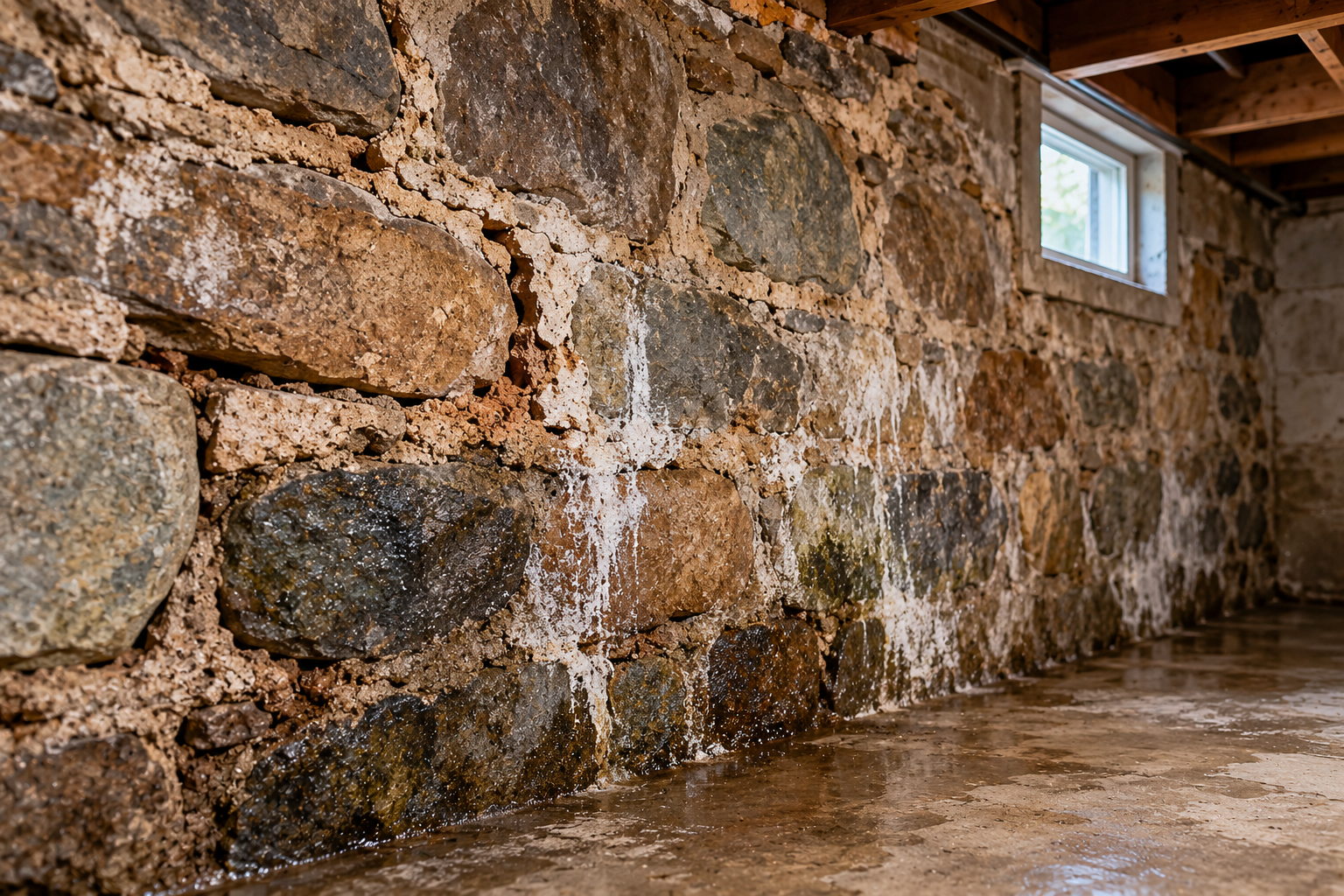
Yes. Old fieldstone mortar can contribute to a damp basement when joints become porous, loose, cracked, or missing. Moisture can move through weakened joints as vapor or seepage, especially during high groundwater, snowmelt, or saturated soil conditions, even when no major crack is visible.
Author: All Pro Basement
Updated: October 21, 2026
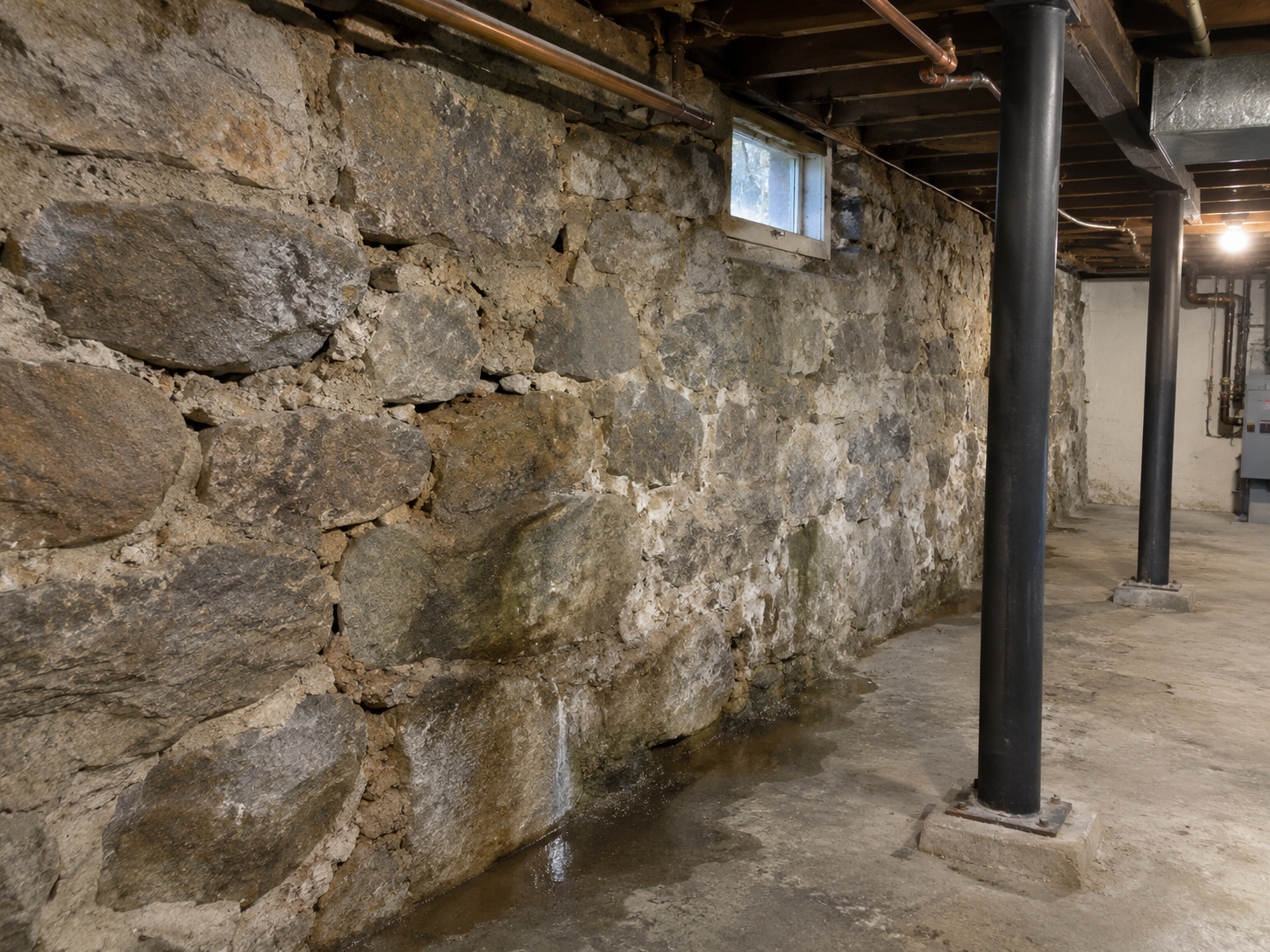
A fieldstone wall can look massive and solid while the mortar between the stones is slowly deteriorating.
That mortar matters because it fills joints, helps stabilize the masonry, and influences how moisture moves through the wall.
When those joints weaken, basement dampness can appear without dramatic flooding.
Can Old Fieldstone Mortar Cause Basement Dampness?
Yes. Deteriorated mortar can create pathways for moisture between stones.
That moisture may appear as damp joints, mineral deposits, musty air, or small areas of seepage rather than a visible stream of water.
Fieldstone foundation repointing may help when failed mortar joints are part of the problem.
However, the entire moisture source should be diagnosed first.
Why Are Fieldstone Foundations Different From Poured Concrete?
Fieldstone foundations are built from individual stones joined with mortar.
That creates many joints throughout the wall.
A poured concrete wall behaves more like one continuous material.
In a fieldstone wall, moisture can follow mortar joints, irregular gaps, and porous masonry.
Therefore, deterioration may appear across many small areas instead of one obvious foundation crack.
Why Does Old Mortar Deteriorate?
Mortar can weaken because of age, repeated moisture exposure, freeze-thaw cycles, salt deposits, previous repairs, and general weathering.
Some historic mortars were intentionally softer and more vapor-permeable than modern cement-rich materials.
The National Park Service explains that historic mortar should be evaluated carefully before repointing.
https://www.nps.gov/orgs/1739/upload/preservation-brief-02-repointing.pdf
What Does Crumbling Mortar Mean?
Crumbling mortar means the joint material is losing strength or cohesion.
It may powder when touched, fall from joints, or leave deeper gaps between stones.
This does not automatically mean the entire foundation is structurally unsafe.
However, it is a sign that the masonry deserves closer inspection.
What Are Common Signs of Mortar Deterioration?
Homeowners may notice:
- Powdery mortar
- Missing joint material
- Loose mortar fragments
- Open gaps
- Damp joints
- Efflorescence
- Water staining
- Loose stones
- Musty odors
Several signs together provide more useful information than one symptom alone.
Can Water Move Through Mortar Joints?
Yes. Water can move through porous masonry and deteriorated joints.
It may travel as liquid water, capillary moisture, or water vapor.
This is why a basement wall can feel damp without showing active dripping.
The moisture pathway may be spread across many joints rather than concentrated in one crack.
What Is Capillary Moisture?
Capillary moisture occurs when porous materials draw water through very small spaces.
Masonry and mortar can absorb and redistribute moisture when they remain in contact with damp soil or wet materials.
The process can create persistent dampness even without visible flowing water.
Building Science Corporation explains that below-grade walls must manage groundwater, capillary moisture, and vapor.
Can Mortar Look Dry and Still Be Moving Moisture?
Yes. Surface appearance only shows conditions at that moment.
Moisture can enter the wall, migrate through the joint, and evaporate into basement air.
By the time you inspect the wall, the visible surface may already look dry.
Repeated evaporation can still contribute to basement humidity and musty conditions.
What Does Efflorescence Mean on a Fieldstone Wall?
Efflorescence is a white mineral residue left behind when moisture passes through masonry and evaporates.
It is not the same as mold.
However, it can be evidence of past or ongoing moisture movement.
Efflorescence around mortar joints can help identify areas that have been repeatedly exposed to moisture.
Can Old Mortar Cause a Musty Basement Smell?
Indirectly, yes.
Mortar itself may not be the only source of odor.
However, deteriorated joints can allow enough moisture into the basement to keep surrounding materials damp.
That moisture may affect wood, stored items, insulation, or finished surfaces.
As a result, the basement may develop a persistent musty smell.
Does Every Damp Fieldstone Basement Need Repointing?
No. Basement dampness can come from several sources.
The problem may involve:
- High humidity
- Condensation
- Groundwater
- Poor grading
- Plumbing leaks
- Floor moisture
- Failed mortar joints
- Exterior drainage
Fieldstone foundation repointing should be recommended only when mortar condition actually contributes to the problem.
How Does a Professional Inspect Old Fieldstone Mortar?
A professional looks at more than surface appearance.
The inspection should evaluate:
- Mortar hardness
- Joint depth
- Missing mortar
- Powdering
- Loose stones
- Wall alignment
- Dampness
- Efflorescence
- Water staining
- Previous repairs
Exterior drainage and groundwater conditions should also be reviewed.
Why Does Wall Alignment Matter?
Loose mortar is different from structural movement.
If stones remain aligned and stable, the issue may primarily involve deteriorated joints.
However, bulging, leaning, displaced stones, or changing wall geometry can indicate a more serious condition.
Fieldstone foundation repointing is not a substitute for structural evaluation when the wall itself is moving.
Can High Groundwater Make Mortar Problems Worse?
Yes. High groundwater keeps more moisture in contact with below-grade masonry.
That increases the opportunity for water to move through porous joints.
Groundwater may rise after prolonged rain or spring snowmelt.
Consequently, an old fieldstone wall may feel much damper during certain seasons.
Why Does Spring Snowmelt Matter in Massachusetts?
Snowmelt can saturate soil around older Massachusetts homes.
That water may remain underground long after snow disappears from the yard.
If old mortar joints are porous or deteriorated, increased soil moisture can make seepage more noticeable.
This is why seasonal patterns provide valuable diagnostic clues.
Can Heavy Rain Affect Fieldstone Mortar Even Without Flooding?
Yes. Heavy rain can increase soil saturation around the foundation without causing standing water indoors.
The wall may simply become more humid.
Mortar joints may darken, feel damp, or develop additional efflorescence.
A basement can therefore become noticeably damper after storms without experiencing a traditional flood.
How Does Poor Exterior Drainage Affect Fieldstone Foundations?
Poor drainage keeps water close to the foundation.
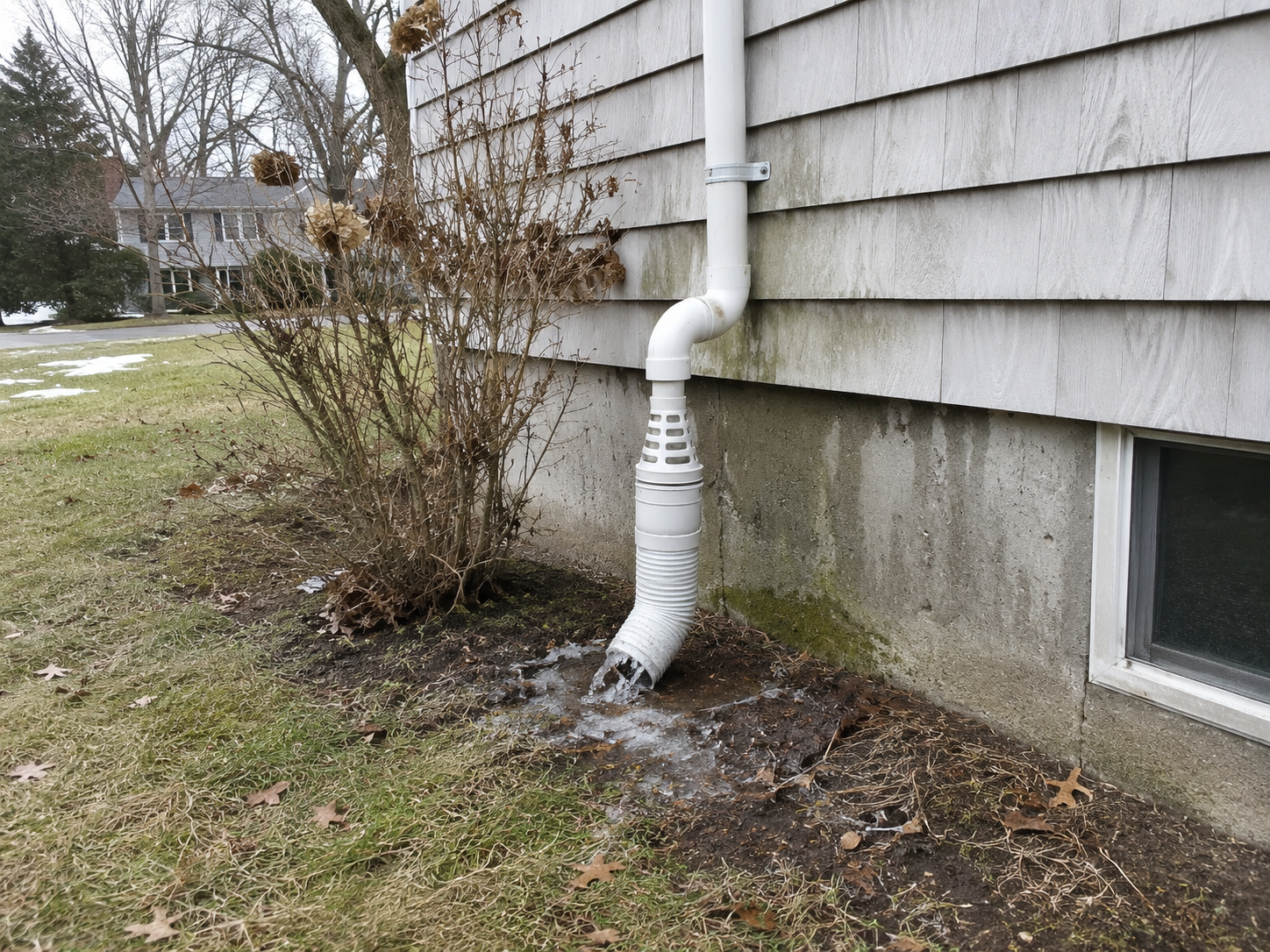
Grading that slopes toward the home or downspouts that release water beside the wall can increase soil saturation.
The EPA recommends directing surface water away from foundations as part of moisture control.
Improving exterior drainage can reduce the amount of water reaching old masonry.
Can Freeze-Thaw Cycles Damage Fieldstone Mortar?
Yes. Moisture inside vulnerable masonry can be affected by repeated freezing and thawing.
Over time, those cycles may contribute to surface deterioration, loosened joints, or damaged repair materials.
This is especially relevant in New England, where older foundations face repeated winter temperature changes.
Drainage remains important because less moisture in the wall generally means less exposure to freeze-thaw stress.
Can Humid Summers Make Fieldstone Basements Feel Wetter?
Yes. Warm summer air can carry significant moisture.
When that air enters a cool basement, relative humidity can rise.
A fieldstone wall may already contain some foundation moisture.
Therefore, groundwater-related dampness and summer humidity can occur at the same time.
Not every damp joint means active groundwater seepage.
How Can I Tell Condensation From Mortar Moisture?
Condensation is more likely to appear on cooler surfaces during humid weather.
Mortar-related moisture often follows joints or changes after rain, snowmelt, or groundwater increases.
A professional compares several clues:
- Humidity
- Surface temperature
- Weather
- Joint appearance
- Efflorescence
- Seasonal changes
The cause should not be judged from touch alone.
Can Previous Repairs Make Moisture Problems Worse?
Sometimes. Old foundations may contain patches made with materials that behave differently from the original masonry.
A repair that is much harder or less vapor-permeable than surrounding mortar can alter how moisture moves through the wall.
That does not mean every cement-based repair is automatically wrong.
Compatibility depends on the existing stone, mortar, exposure, and condition of the foundation.
Why Can Very Hard Mortar Be a Concern?
The National Park Service advises that replacement mortar in historic masonry should be compatible with the original masonry and generally should not be stronger than necessary.
https://www.nps.gov/orgs/1739/upload/preservation-brief-02-repointing.pdf
If repair mortar is significantly harder than the surrounding materials, stresses may be transferred into softer masonry.
Moisture behavior may also change.
That is why fieldstone foundation repointing should not begin with a universal mortar recipe.
Is Lime Mortar Always the Right Choice?
No. Historic foundations often contain lime-rich mortar, but the correct repair material depends on the existing masonry.
A professional should evaluate the mortar and stone before specifying a replacement.
The goal is compatibility, not simply choosing a product because it is labeled historic.
Strength, permeability, workability, and existing material conditions all matter.
Can You Repoint Over Loose Mortar?
Loose and deteriorated material generally needs to be addressed before new mortar can form a durable joint.
Simply covering weak material can leave the underlying problem in place.
Proper fieldstone foundation repointing focuses on rebuilding deteriorated joints rather than hiding them.
The amount of mortar removal depends on the condition of the existing joint.
Can Paint or Coating Hide Mortar Problems?
Yes. Coatings can hide the appearance of mortar joints without restoring deteriorated material underneath.
Some coatings may also change how a wall dries.
A clean-looking surface does not guarantee that the masonry behind it is healthy.
That is why inspection should focus on the actual foundation condition whenever possible.
Can Repointing Alone Stop Groundwater?
Not necessarily.
Fieldstone foundation repointing can restore deteriorated mortar joints, but it does not eliminate groundwater surrounding the foundation.
If saturated soil or hydrostatic pressure is the main issue, drainage or basement waterproofing may also need to be considered.
The repair should match the moisture source.
How Can You Tell If Repointing Is Actually Needed?
Repointing becomes more relevant when mortar is visibly missing, loose, deeply eroded, powdering, or failing around stable stones.
Moisture patterns around those joints add another clue.
However, stable historic mortar should not automatically be removed simply because it is old.
The National Park Service emphasizes retaining sound historic mortar when possible.
That principle helps avoid unnecessary intervention.
What Does Fieldstone Foundation Repointing Actually Do?
Fieldstone foundation repointing removes failed joint material where needed and replaces it with compatible mortar.
The goal is to restore joint integrity around the stones.
Proper repointing can help reduce open pathways for moisture while supporting the masonry.
However, it does not replace drainage, structural repair, or groundwater management when those conditions are also present.
Why Must Moisture Be Diagnosed Before Repointing?
Because the wall may be showing a symptom of a larger water-management problem.
If groundwater continually saturates the foundation, new mortar alone may remain exposed to the same conditions.
Likewise, if condensation is causing the damp feeling, repointing may have little effect on basement humidity.
Fieldstone foundation repointing works best when the role of the mortar has been clearly identified.
Why Are Massachusetts Fieldstone Foundations Unique?
Many older Massachusetts and New England homes were built with fieldstone foundations long before modern waterproofing systems became common.
These foundations can remain functional for generations when maintained correctly.
However, age, moisture, drainage, and past repair methods can create very different conditions from one house to another.
That makes inspection especially important.
Why Does All Pro Basement Inspect the Whole Foundation System?
Because deteriorated mortar is only one possible source of basement dampness.
All Pro Basement evaluates masonry condition, groundwater, drainage, sump activity, foundation movement, and moisture patterns before recommending repairs.
The company brings more than 25 years of hands-on experience with Massachusetts foundations.
Owner Diego Tameirao personally oversees projects, while Project Manager Keila Tameirao helps coordinate homeowners throughout the process.
When old fieldstone mortar is part of the problem, fieldstone foundation repointing may become one piece of a larger plan based on masonry condition, drainage, and the actual path moisture is taking through the basement.
When Does Old Fieldstone Mortar Need Repointing?
Old fieldstone mortar may need repointing when joints are loose, deeply eroded, powdery, missing, or no longer holding surrounding stones securely.
Dampness alone is not enough to justify the work.
The condition of the mortar must be inspected first.
What Is Fieldstone Foundation Repointing?
Fieldstone foundation repointing removes failed mortar from deteriorated joints and replaces it with a compatible repair mortar.
The goal is to restore joint integrity while respecting the existing masonry.
It is not simply covering old mortar with a new surface layer.
Can Repointing Reduce Basement Dampness?
Yes, when deteriorated joints are allowing moisture to move through the wall.
Restoring those joints can reduce open pathways for seepage and dampness.
However, fieldstone foundation repointing does not eliminate groundwater outside the foundation.
That distinction is important.
Can Repointing Stop Groundwater?
No. Repointing repairs the masonry joints, but it does not lower the water table or redirect groundwater.
If saturated soil continues pressing moisture against the wall, drainage or waterproofing may also be necessary.
The correct solution depends on where the water originates.
Why Should Mortar Compatibility Matter?
Historic masonry can be damaged when repair mortar is much harder or less permeable than the materials around it.
The National Park Service emphasizes matching replacement mortar to the physical properties of historic masonry.
https://www.nps.gov/orgs/1739/upload/preservation-brief-02-repointing.pdf
That includes characteristics such as strength, permeability, and appearance.
What Type of Mortar Should Be Used on Old Fieldstone?
There is no universal mix that is right for every fieldstone foundation.
The existing mortar, stone type, age, exposure, and wall condition all matter.
Some historic foundations may require softer, more vapor-permeable mortar.
Others may contain previous repairs that need special evaluation.
The safest approach is to inspect the existing masonry before specifying the repair material.
Can Hard Cement Mortar Damage Historic Masonry?
It can in some cases.
A very hard repair mortar may transfer stress into softer stone or older mortar.
It may also change how moisture moves through the wall.
The National Park Service warns against using replacement mortar that is harder than the historic masonry requires.
https://www.nps.gov/orgs/1739/upload/preservation-brief-02-repointing.pdf
Compatibility matters more than simply choosing the strongest material.
Should Loose Mortar Be Removed Before Repointing?
Yes, deteriorated mortar generally needs to be removed where it has failed so the new mortar can bond properly.
However, sound historic mortar should not be removed unnecessarily.
The National Park Service recommends retaining intact historic mortar where possible.
Removing too much sound material can create avoidable damage.
How Deep Should Mortar Be Removed?
The depth depends on the condition of the joint and the original masonry.
Loose material should be removed until stable mortar is reached.
However, aggressive cutting can damage stone edges.
Fieldstone foundation repointing should be controlled and selective rather than destructive.
Can Loose Stones Be Repointed in Place?
Sometimes.
If the stone remains stable and aligned, mortar repair may be sufficient.
However, loose or displaced stones may require additional stabilization.
Repointing should not be used to hide structural movement.
Wall alignment and stone stability should be checked first.
When Is Structural Repair More Important Than Repointing?
Structural evaluation becomes more important when stones are shifting, the wall is bulging, or sections are leaning.
Large changes in wall geometry indicate more than surface mortar deterioration.
Fieldstone foundation repointing is not a substitute for structural foundation repair when the masonry itself is moving.
Can Exterior Drainage Protect Fieldstone Mortar?
Yes. Keeping unnecessary water away from the foundation can reduce moisture exposure.
Proper grading, gutters, downspouts, and drainage can all help.
The EPA recommends directing surface water away from foundations to reduce moisture problems.
Reducing exterior water can also lessen stress on repaired mortar.
Why Does Grading Matter So Much?
Soil that slopes toward the foundation concentrates runoff beside the wall.
That increases the amount of water available to move through old masonry.
Correct grading helps direct rain and snowmelt away from the house.
In Massachusetts, this can be especially important during spring thaw and prolonged wet weather.
Can Downspouts Damage Fieldstone Foundations?
Indirectly, yes.
Downspouts that release roof water beside the foundation can repeatedly saturate the same area of soil.
That water may migrate into mortar joints.
Over time, repeated wetting can increase basement dampness and accelerate deterioration of vulnerable masonry.
Extending discharge away from the foundation may help reduce that moisture load.
When Is Basement Waterproofing Also Necessary?
Basement waterproofing may be necessary when groundwater continues reaching the foundation even after mortar joints are repaired.
Repointing and waterproofing solve different problems.
Repointing restores masonry joints.
Waterproofing and drainage manage water movement.
Some basements may need both.
Can an Interior Drainage System Help a Fieldstone Basement?
Yes, when groundwater repeatedly reaches the interior perimeter.
An interior drainage system can collect that water and direct it toward a sump basin.
Building Science Corporation explains that below-grade water management often requires drainage as well as foundation moisture control.
This can reduce the amount of water left to migrate through old masonry.
Can a Sump Pump Help a Fieldstone Foundation?
Yes. A sump pump can remove groundwater collected by an interior drainage system.
It does not repair mortar, but it can reduce water accumulation beneath or around the basement.
A sump system is most useful when groundwater is part of the moisture problem.
It should not be treated as a substitute for failed masonry repair.
Does Every Fieldstone Basement Need a Sump Pump?
No. The need depends on groundwater conditions, drainage design, water entry, and basement use.
Some homes primarily need repointing.
Others need drainage improvements.
Some need both.
The correct recommendation should follow inspection rather than assumption.
Can Humidity Still Be a Problem After Repointing?
Yes. Repointing can reduce moisture pathways through deteriorated joints, but indoor humidity may still remain high.
Condensation, groundwater vapor, and poor ventilation can also make a basement feel damp.
A dehumidifier may help with humidity, but it does not replace drainage or masonry repair.
Can Coatings Replace Repointing?
Usually not when mortar is physically deteriorated.
A coating may change the appearance of the wall without restoring failed joints underneath.
Some coatings can also affect drying behavior.
The actual mortar condition should be addressed before relying on surface finishes.
Should Fieldstone Mortar Be Repaired Before Basement Finishing?
Yes, if the mortar is deteriorated or moisture is still moving through the wall.
Finishing over unresolved masonry problems can hide important evidence.
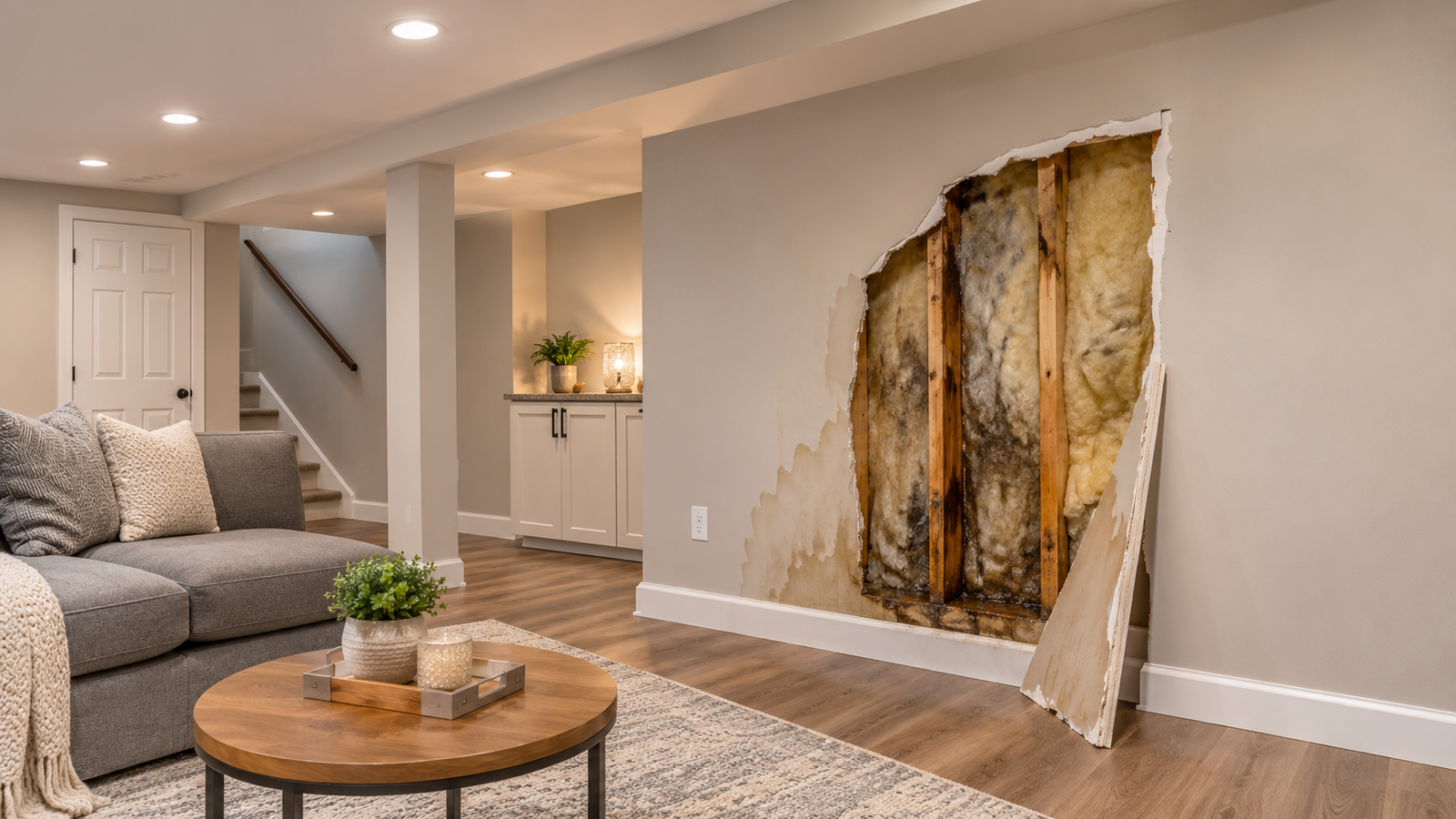
Drywall, insulation, and framing may conceal future seepage.
Fieldstone foundation repointing and moisture control should be evaluated before enclosing the foundation.
How Can I Tell If Repointing Is Working?
The repaired joints should remain stable and intact over time.
Moisture patterns should also be monitored.
Look for:
- Reduced mortar loss
- Stable joints
- Less recurring dampness
- Less efflorescence
- No loose stones
- No new movement
However, persistent groundwater can still create moisture even after the mortar performs correctly.
Can Fieldstone Foundation Repointing Be Localized?
Yes. Localized repointing may be appropriate when deterioration is limited to specific sections.
Not every wall requires complete repointing.
A professional should identify which joints are actually failing.
This avoids unnecessary removal of sound historic mortar.
When Is Complete Repointing More Appropriate?
Broader repointing may be appropriate when mortar deterioration is widespread across large areas.
However, the decision should still consider stone stability, drainage, moisture, and previous repairs.
Complete fieldstone foundation repointing should be based on condition, not simply the age of the house.
Why Should Previous Repairs Be Inspected?
Older fieldstone walls may contain patches made from several different materials.
Some may be compatible.
Others may be too hard, poorly bonded, or already failing.
Previous repairs can also hide the original mortar.
Understanding what is already in the wall helps determine the safest next step.
Can Freeze-Thaw Damage Return After Repointing?
Yes, if the repaired wall remains heavily saturated.
New mortar can still be exposed to repeated moisture and freezing.
That is why drainage and groundwater control matter alongside masonry repair.
Reducing water exposure can help protect the repaired foundation during New England winters.
Why Does Massachusetts Climate Matter?
Massachusetts combines historic housing stock with humid summers, snowmelt, heavy rain, high groundwater, and freeze-thaw cycles.
These conditions can affect both old mortar and surrounding soil.
A fieldstone foundation repair strategy should account for seasonal moisture rather than treating the wall in isolation.
When Should I Call a Fieldstone Foundation Professional?
Call a professional when mortar is crumbling, joints are open, stones are loose, the wall remains damp, or previous repairs are failing.
Professional evaluation is also appropriate when you see wall movement or recurring water intrusion.
The inspection should determine whether the main issue is masonry, drainage, groundwater, or several factors together.
All Pro Basement evaluates fieldstone foundations as part of the entire basement moisture system.
The company is family-owned and operated with more than 25 years of hands-on experience.
Diego Tameirao personally oversees projects, while Project Manager Keila Tameirao helps coordinate homeowners throughout the process.
The goal is an honest evaluation without high-pressure sales.
That may lead to localized repair, full fieldstone foundation repointing, drainage improvements, waterproofing, or a combination based on actual conditions.
Frequently Asked Questions About Old Fieldstone Mortar
Can Old Mortar Make a Basement Damp?
Yes. Porous or deteriorated mortar can allow moisture to move through fieldstone joints.
The result may be dampness, efflorescence, or musty air rather than obvious flooding.
Other sources such as groundwater and condensation should also be evaluated.
How Do I Know If My Fieldstone Foundation Needs Repointing?
Look for missing mortar, powdering joints, loose fragments, deep erosion, or open gaps between stable stones.
Persistent dampness around those joints can add another clue.
However, sound historic mortar should not be removed simply because it is old.
What Does Crumbling Mortar Between Fieldstones Mean?
Crumbling mortar means the joint material is losing strength.
It may result from age, moisture, freeze-thaw cycles, or incompatible past repairs.
The condition deserves inspection to determine whether localized or broader fieldstone foundation repointing is needed.
Can Water Seep Through Fieldstone Mortar?
Yes. Moisture can move through porous or deteriorated mortar joints.
It may enter as seepage, capillary moisture, or vapor.
That is why a fieldstone wall can feel damp without a large visible crack.
Will Repointing Waterproof a Fieldstone Basement?
Not by itself.
Fieldstone foundation repointing repairs failed mortar joints, but it does not remove groundwater around the foundation.
If water pressure or saturated soil remains, drainage or basement waterproofing may also be necessary.
What Is the Best Mortar for an Old Fieldstone Foundation?
There is no universal best mix.
The repair mortar should be compatible with the existing masonry in strength, permeability, and other physical characteristics.
Historic masonry should be inspected before a mortar specification is chosen.
Can Fieldstone Foundations Be Waterproofed?
Yes, but the approach depends on the foundation and moisture source.
Drainage, sump systems, exterior water control, and interior waterproofing may all be considered.
The goal is to manage water without ignoring the condition of the historic masonry.
Should I Repair Fieldstone Mortar Before Finishing My Basement?
Yes, if the mortar is deteriorated or moisture is unresolved.
Finishing can conceal joint failure and water intrusion.
Masonry, drainage, and moisture conditions should be corrected before new walls, insulation, or flooring are installed.
What Is the Best Long-Term Approach?
The best approach is to treat mortar condition and water management as related but separate issues.
Repointing restores deteriorated joints.
Drainage manages groundwater.
Waterproofing controls water entry.
Humidity control addresses moisture in the air.
Fieldstone foundation repointing works best when it is part of a plan based on the actual foundation condition and the source of moisture.
Contact All Pro Basement Today to find out whether deteriorated fieldstone mortar is contributing to your damp basement and whether repointing, drainage, or waterproofing is the right solution for your Massachusetts home.