How to Prevent Future Basement Water Damage: Long-Term Waterproofing Tips
When water gets into a basement, it often leads to more than just a wet floor. It can damage walls, ruin storage areas, and even weaken the foundation of your property. For business owners, property managers, or anyone maintaining a commercial or residential building, preventing basement water damage is one of the smartest long-term investments you can make.
Basement moisture problems often begin small, but over time they can grow into costly issues. A few drops of water after a storm can become a steady leak, leading to mold, unpleasant odors, or major structural repairs. Taking early and consistent steps to stop water before it causes harm is the best approach to long-term protection.
This guide explains the common causes of water problems, how to prevent them, and the best long-term waterproofing methods that actually work. It is focused on basement water damage repair and designed to be useful, practical, and easy to follow for everyday property owners and managers.
Why Basements Often Have Water Problems
Understanding why basements get wet in the first place helps you choose the right solution.
Hydrostatic pressure occurs when water in the soil around your foundation pushes against the basement walls. Heavy rain, melting snow, or a high water table can increase this pressure. Over time, moisture can find small openings and enter through cracks or joints.
Poor drainage around the home or building can make things worse. If rainwater or melted snow collects near the foundation, it can easily soak into concrete, which naturally absorbs moisture.
Cracks in walls and floors allow small leaks that often go unnoticed until the damage becomes visible. Concrete expands and contracts over time, creating paths for water.
Humidity and condensation inside the basement can also create moisture problems, even without visible leaks. When warm air meets cool basement surfaces, water droplets can form and increase dampness.
All these factors make basements naturally prone to water intrusion. Without proper waterproofing, they can lead to ongoing repair costs and even foundation damage.
Key Principles for Long-Term Basement Waterproofing
Long-term protection starts with the right system and consistent maintenance. The following steps create a strong barrier against moisture and reduce the chances of expensive basement water damage repair later.
1. Keep Water Away from the Foundation
The easiest way to stop water from entering your basement is to make sure it never gets close to the foundation.
Keep the ground around your property slightly sloped so that rainwater naturally flows away instead of pooling near basement walls. Regularly check your yard or driveway to ensure the grading directs water outward.
Downspouts should move water at least five to ten feet away from the building. You can add extensions to existing downspouts or install underground drainage pipes.
Another helpful solution is a French drain, which is a pipe buried underground that collects and redirects water away from your property. This system reduces pressure on your foundation and helps prevent seepage.
Taking care of surface water may sound simple, but it is one of the most effective long-term waterproofing actions you can take.
2. Use Exterior Waterproofing for Stronger Protection
Protecting your basement from the outside is often more effective than relying on interior fixes alone.
Applying a waterproof membrane to the exterior foundation walls creates a protective barrier that stops moisture from entering. These membranes are flexible and can move with small shifts in the foundation, preventing cracks or tears.
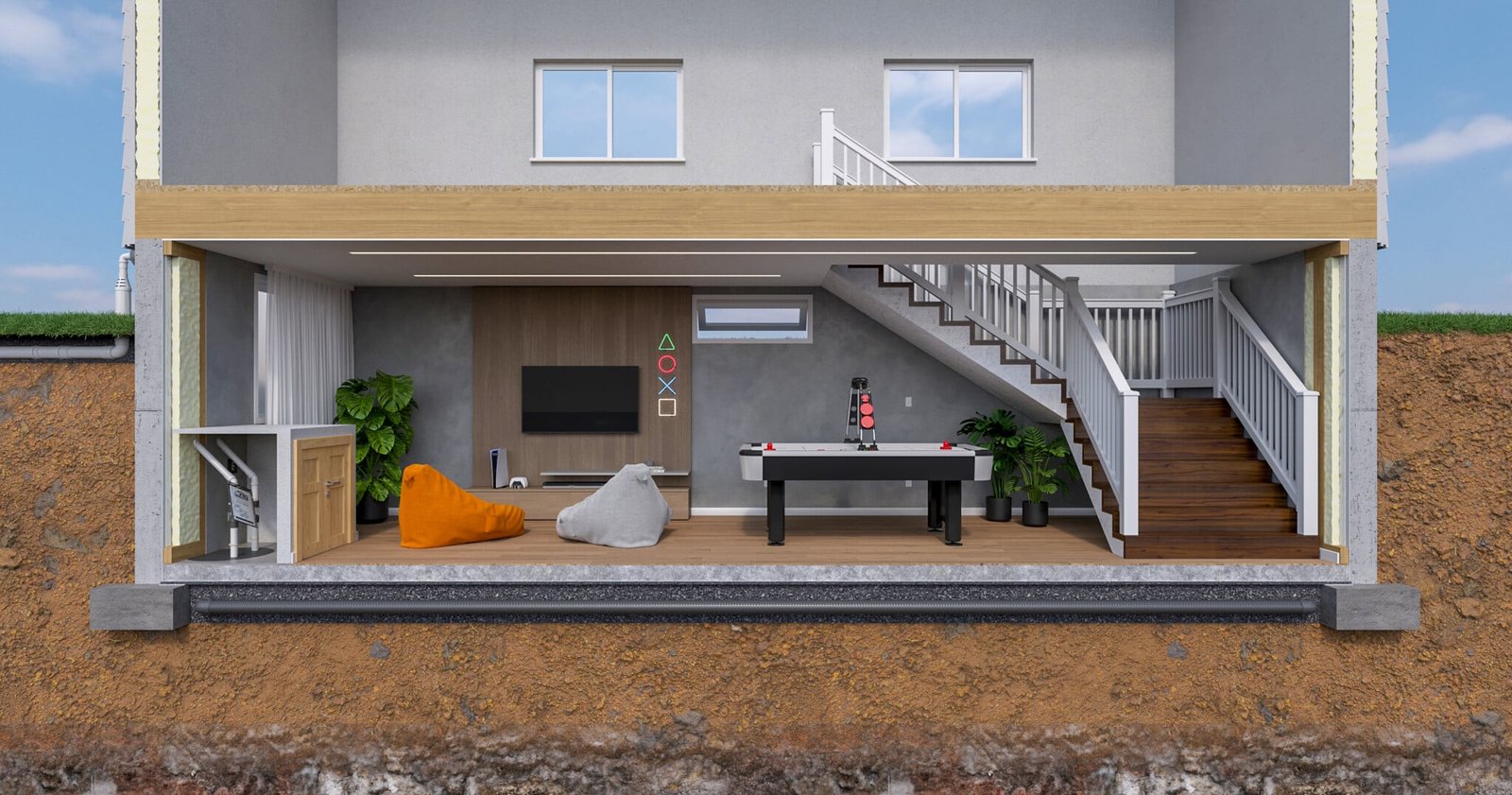
Another useful option is installing a drain tile system or footing drain around the foundation. This type of system collects water from the soil and carries it safely away before it can reach your basement.
While exterior waterproofing can be more expensive than interior methods, it usually provides the strongest and longest-lasting protection for your property.
3. Combine with Interior Waterproofing Systems
Even with exterior protection, it’s important to control moisture that might still find its way inside. Interior systems help manage water once it enters and keep the space dry.
An interior perimeter drain is installed along the inside edges of the basement walls. It catches any water that seeps in and channels it to a safe exit point. This type of drainage works well for homes or buildings where exterior digging isn’t an option.
A sump pump is another key part of an interior waterproofing system. It collects water in a pit and pumps it away from your foundation. Choosing a model with a battery backup ensures it continues to work even during a power outage caused by a storm.
These systems are highly effective in combination with exterior waterproofing, providing both layers of defense against leaks and flooding.
4. Repair Cracks and Seal Walls Properly
Even small cracks can allow water to enter your basement. Over time, these openings expand and worsen, especially when exposed to freeze-thaw cycles or high pressure.
Sealing cracks with epoxy or polyurethane prevents leaks and reinforces the structure. These materials stay flexible, so they can move slightly with the concrete without breaking.
You can also use interior wall sealants or coatings to reduce moisture penetration. Though not a full waterproofing solution on their own, they help protect against condensation and small leaks.
Consistent inspections and timely repairs keep small issues from becoming major water damage problems later.
5. Control Indoor Moisture
Moisture doesn’t always come from the outside. Basements can also become damp because of poor ventilation or humidity.
Running a dehumidifier helps keep indoor moisture at a comfortable level and reduces the risk of mold growth.
Make sure air can circulate freely by using fans or vents. Avoid blocking air vents with furniture or stored items.
Regular cleaning and monitoring also make a big difference. Dust, mold, and mildew can grow quickly in humid environments, so keeping the space clean helps prevent bigger issues.
A dry basement not only prevents damage but also improves indoor air quality and comfort.
Simple Maintenance Habits for Lasting Protection
Preventive maintenance is the key to keeping your waterproofing system strong and reliable.
- Check your basement walls and floors once a year for new cracks or damp spots
- Test your sump pump every few months to ensure it’s working properly
- Clean gutters and downspouts at least twice a year to keep water flowing freely
- Inspect the grading around your property after heavy rain to confirm it still directs water away
- Track humidity levels inside the basement and use a dehumidifier when needed
These small, consistent steps can save you from expensive basement water damage repair in the future.
Common Mistakes That Lead to Water Damage
Sometimes, water problems happen because small details are overlooked. Avoiding these mistakes will help you maintain long-term waterproofing success.
- Ignoring outdoor drainage problems can undo all your efforts. If water constantly pools near your foundation, even the best waterproofing membrane may not last.
- Relying only on DIY fixes can be risky. While waterproof paint or sealant might stop small leaks for a while, they don’t fix deeper issues like hydrostatic pressure or poor drainage.
- Forgetting to maintain your sump pump can also lead to flooding when you need protection most. Always check your pump’s power source and clean the pit to keep it working effectively.
Taking these points seriously helps you avoid unnecessary damage and repairs.
Conclusion
Do you want to avoid costly basement water damage repair and protect your property for the long run? A strong waterproofing system is more than just a one-time fix. It’s a smart investment that keeps your foundation dry, your air clean, and your space ready for future use.
If you are in Ashland or nearby areas, All Pro Basement Waterproofing is a trusted name for dependable waterproofing solutions. Their experienced team provides professional inspections, foundation protection, and water management systems that stand the test of time.
Whether you plan to start basement remodeling or simply want to secure your property before the next storm, now is the right time to act.
Contact US today to schedule a consultation and keep your basement protected for years to come.
Frequently Asked Questions About Basement Waterproofing
How often should a waterproofing system be checked?
It’s best to inspect your system once a year and after major storms. Early detection helps prevent big problems later.
Can I waterproof my basement myself?
You can handle small tasks such as sealing minor cracks or running a dehumidifier, but complete waterproofing systems should be installed by professionals to ensure lasting results.
Does waterproofing increase property value?
Yes, it does. A dry basement adds usable space and increases buyer confidence when selling a property.
Can waterproofing stop mold?
Proper waterproofing greatly reduces the moisture that mold needs to grow. Pair it with ventilation and dehumidifiers for the best outcome.
What affects the cost of waterproofing?
The price depends on your basement’s size, the level of water damage, and the type of system used. Exterior systems tend to cost more but last longer.
Text Here